

99 Stunning Inspirations About Islamic Wall Art.
99 Stunning Inspirations About Islamic Wall Art. About Islamic Wall Art. Did you know that geometric patterns in traditional faith-inspired artwork can have up to 12 symmetry points? This shows the mathematical precision that has shaped this art for over 1,400 years. A mix of maths and spirituality makes these pieces so special.
99 Stunning Inspirations About Islamic Wall Art. 99 names of allah Decorating spaces with calligraphy and detailed designs comes from a deep spiritual base. Unlike many other styles, these pieces are both beautiful and meaningful. They turn simple walls into places of inspiration and thought.
Let’s explore how these meaningful pieces can improve your home. They connect you to centuries of artistry. Each piece, from Quranic verses to geometric patterns, shares stories of faith, culture, and skill.
Over time, these designs have changed but kept their spiritual heart. Now, they mix old traditions with new designs, making them great for both old and new homes.
Key Takeaways
- Faith-inspired wall decorations combine mathematical precision with spiritual symbolism
- These artistic expressions serve both aesthetic and devotional purposes in the home
- Traditional calligraphy and geometric patterns carry deep cultural significance
- Modern interpretations make these pieces suitable for contemporary interiors
- Quality craftsmanship ensures each piece becomes a lasting family heirloom
- These decorative elements create focal points that inspire conversation and reflection
The Rich Heritage of Islamic Wall Art
islamic home decor Islamic wall art began in the 7th century and has grown into stunning works worldwide. It combines faith, creativity, and cultural exchange. This art form emerged with Islam, showing a blend of spirituality and skill that inspires people everywhere.
Origins and Historical Significance
Islamic wall art started in the Arabian Peninsula in the early days of Islam. As Islam grew, it met many art traditions, shaping its own unique style. Muslims faced a challenge: creating meaningful art without figures, as their faith forbade them.
This challenge led to extraordinary creativity. Artists used calligraphy, geometric shapes, and stylised plants instead of figures. These elements are now key to Islamic art, showing how limits can spark new ideas.
https://www.youtube.com/watch?v=3OXrPUgerMgIslamic wall art is more than decoration. It helps people think about divine order and harmony. The patterns and calligraphy reflect Allah’s infinity and the importance of sacred texts.
This art also helped create a shared identity among Muslims. As Islam spread, from Spain to India, it brought believers together while respecting local differences.
Evolution Through Different Islamic Periods
Islamic wall art’s evolution is a journey through various dynasties, each adding its own touch. The Umayyad Caliphate (661-750 CE) laid the groundwork for Islamic art, with the Dome of the Rock being a prime example.
The Abbasid period (750-1258 CE) saw art reach new heights. This era’s focus on maths and geometry led to more complex patterns. These patterns showed advanced understanding of maths.
Different regions developed their own styles. The Ottoman Empire (1299-1922) loved floral designs and fine calligraphy. Like the Blue Mosque, their buildings show how art and architecture merged to create spiritual spaces.
The Safavid dynasty in Persia (1501-1736) added great sophistication to Islamic art.. Their work, like illuminated manuscripts, was incredibly detailed. Meanwhile, the Mughal Empire in India (1526-1857) mixed Islamic art with local styles, creating the Taj Mahal’s unique look.
99 Stunning Inspirations About Islamic Wall Art. Throughout, Islamic wall art stayed true to its core values. It focused on non-figurative designs, celebrated calligraphy, and explored endless patterns. These shared principles connected diverse art forms to their spiritual roots.
Regional differences made Islamic art richer, not poorer. North African tilework and Central Asian muqarnas are just a few examples. These specialities enriched the art world, making it diverse yet unified.
Knowing the history of Islamic wall art makes us appreciate its beauty and significance today. Each piece is a bridge to centuries of tradition, innovation, and spiritual depth.
Understanding the Spiritual Significance
Islamic wall art turns ordinary places into sacred spaces. It invites us to reflect and remember the divine. Islamic wall arts hold deep meanings that have uplifted many for centuries. They remind us of our faith every day, helping us stay connected to the spiritual in our daily lives.
Islamic art is unique because it doesn’t show divine figures or prophets. Instead, it uses abstract shapes, geometric patterns, and Quranic verses to share spiritual truths. This way, it reflects Islam’s belief in Allah’s greatness and the need to avoid idol worship.

Religious Symbolism in Islamic Art
Islamic art uses symbols to share deep spiritual messages. Each symbol in these artworks connects us to divine truths. It touches our hearts and minds, offering a complete spiritual experience.
The geometric patterns in Islamic wall arts mean more than just shapes. They stand for spiritual principles:
- Repeating patterns show Allah’s endless nature
- Perfect symmetry represents divine harmony
- Interlocking designs symbolise unity and connection
- The centre of designs often shows divine oneness (tawhid)
Floral motifs and arabesques remind us of paradise and Allah’s creation. These stylised natural forms highlight the beauty of Allah’s work. The flowing lines suggest the eternal presence of the divine.
“Allah is beautiful and loves beauty.”
Hadith narrated by Muslim
The Connection Between Art and Faith
In Islam, art and faith go hand in hand. Beautiful objects aim to uplift the spirit and help us pray and remember Allah. This blend of beauty and spirituality enriches our lives.
Quranic verses in calligraphic art are very special. Displaying these verses in homes keeps believers connected to divine guidance. These artworks become meditation points, helping us reflect on their meaning every day.
Making Islamic art is seen as a form of worship. Artists start with “Bismillah” (In the name of Allah), treating their work as a devotional act. This intention makes the art blessed, more than just decorations.
Many people buy Islamic wall arts to reflect their values. These artworks are more than decorations; they are symbols of identity and faith. They make homes into places of spiritual connection, especially for Muslims in non-Muslim societies.
Looking at Quranic verses and Islamic patterns helps us pause in our busy lives. Islamic wall art gently reminds us to stay spiritually aware. Its beauty attracts us, while its spiritual content nourishes our souls.
About Islamic Wall Arts: A Comprehensive Overview
99 names of allah Islamic wall arts are a mix of styles, techniques, and materials. They show spiritual devotion and artistic skill. These pieces are more than decorations; they express faith and cultural identity.
Islamic wall art has grown in different places and times. Each area has brought its own twist while keeping Islamic art’s core values. Artists use abstract shapes, geometry, and words to show the divine.
Types of Islamic Wall Art
99 Stunning Inspirations About Islamic Wall Art. Islamic wall art comes in many forms, each with its own meaning and look. Calligraphy is highly valued islamic home decor, making written words into art. It often uses Quranic verses and prayers in beautiful scripts.
Geometric patterns are another key part of Islamic art. They show math and cosmic order. These patterns, with their symmetry, invite thought and spiritual reflection.
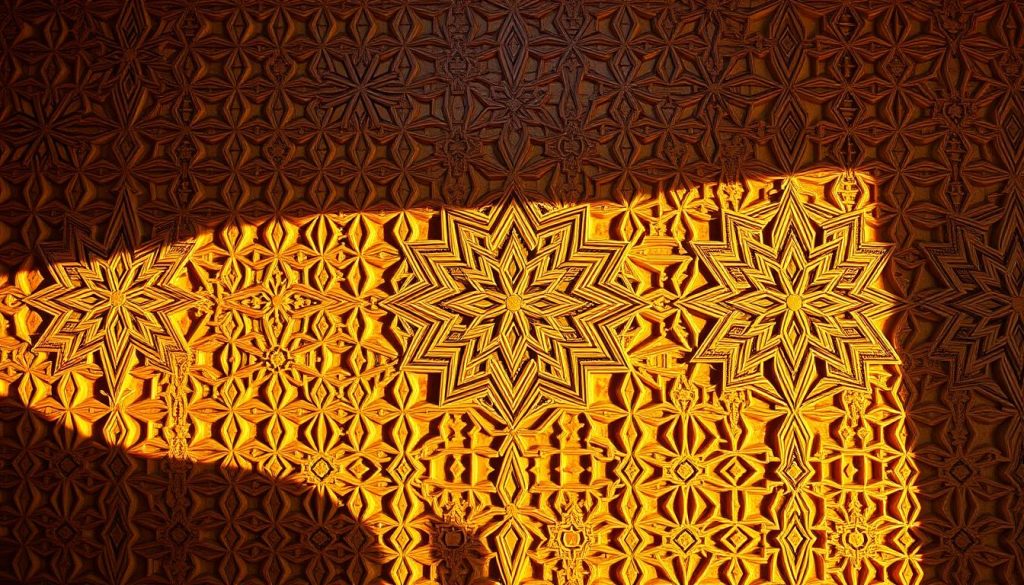
Arabesque designs use floral and vegetal shapes in flowing patterns. They celebrate creation and follow Islamic art rules. These patterns show the divine in all life.
Architectural representations are inspired by Islamic buildings like the Kaaba. They link homes to sacred places, creating a spiritual bond.
Mixed-media compositions combine old and new to create modern takes on traditional themes. These works appeal to those who want new views on old ideas.
Materials and Techniques
Islamic wall art uses many materials and techniques that have changed over time. Artists have worked with parchment, paper, wood, and more. Each material adds its own touch to the art.
Illumination is a special technique in Islamic art. It uses gold and colours to make artworks glow. This shows the artist’s dedication and skill.
Other old techniques include inlay work and relief carving. These add depth and texture to art. Painting with natural colours and special brushes is also used.
Today, Islamic artists mix old ways with new ones. They use digital tools and modern materials, keeping the art fresh while staying true to its roots.
We at Islamic Wall Arts celebrate this mix of old and new. Our collection shows the beauty of Islamic art, both traditional and modern.
The Mesmerising World of Islamic Calligraphy
Islamic calligraphy is a special art form that turns written words into beautiful pictures. It’s found in homes, mosques, and public places across the Muslim world. At Islamic Wall Arts, we celebrate this tradition with pieces that carry centuries of history.
This art form started because of the Quran’s sacred nature. Early artists wanted to make the divine words beautiful and dignified. They believed Allah’s message deserved the finest art.
Calligraphy in Islam is more than just decoration. It’s a spiritual practice that needs years of training and patience. For the calligrapher, each stroke is a prayer that connects them to a long tradition.
Different Calligraphic Styles
Over time, Islamic calligraphy developed many styles, each with its own look and feel. These styles show the influence of different places, times, and uses in Islamic art.

The Kufic script is one of the oldest styles, known for its sharp, geometric look. It was used for early Quran manuscripts and building inscriptions. Its strong lines make it stand out.
Naskh script is more rounded and flowing, making it easy to read. It became the standard for the Quran from the 10th century on. Its balanced look is great for wall art.
Thuluth is the most majestic style, with curved letters and lots of decoration. It has long vertical strokes and flowing curves. Thuluth is popular in modern Islamic wall art for its beauty.
| Calligraphic Style | Origin | Characteristics | Common Applications |
|---|---|---|---|
| Kufic | Kufa, Iraq | Angular, geometric, bold | Early Qurans, architecture |
| Naskh | Middle East | Rounded, clear, balanced | Quranic manuscripts, books |
| Thuluth | Ottoman Empire | Curved, ornate, flowing | Decorative panels, mosques |
| Diwani | Ottoman court | Dynamic, complex, intertwined | Official documents, art |
| Nastaliq | Persia (Iran) | Hanging letters, poetic rhythm | Persian poetry, decorative art |
The Diwani script was developed in the Ottoman court. It’s known for its complex, flowing letters. Originally for secret documents, it adds mystery to art.
Persian Nastaliq is famous for its poetic beauty. It has hanging letters and a rhythmic feel. It’s perfect for Persian poetry and modern Islamic art.
Famous Calligraphers and Their Contributions
Many master calligraphers have shaped this art over the centuries. Their work continues influencing today’s Islamic wall art, linking our homes to a rich tradition.
Ibn Muqla (886-940 CE) changed calligraphy by creating a system for letter sizes. His work, Khat Man Sub, brought harmony and balance to Arabic calligraphy.
Ibn al-Bawwab (died 1022 CE) built on Ibn Muqla’s work, adding his own flair. He perfected Naskh script, elevating calligraphy to a new level of elegance. His Quran manuscript in Dublin shows his skill.
Yaqut al-Musta’simi (died 1298 CE) perfected six classic scripts. In Baghdad, he introduced new techniques for pens and ink, improving calligraphy’s fluidity and expression.
In the Ottoman era, Hafiz Osman (1642-1698 CE) became a leading figure. His Thuluth and Naskh scripts set high standards. Osman’s style combines technical skill with spiritual depth, creating impactful works.
Knowing about these styles and masters helps us appreciate the skill and tradition in calligraphic art. Each piece in our collection carries this rich heritage, offering more than decoration.
When choosing Islamic calligraphy, pick a style that fits your taste and beliefs. Whether Kufic’s boldness or Nastaliq’s elegance, authentic calligraphy adds timeless beauty and spirituality to any space.
Arabic Calligraphy: The Art of Beautiful Writing
Arabic calligraphy is where language meets visual art. It turns letters into beautiful symbols that touch both the eye and soul. This art has grown over centuries, becoming a key part of Islamic culture. Let’s dive into the world of Arabic calligraphy and see why it’s loved by many.
Distinctive Features of Arabic Script
Arabic script is special because it’s fluid and dynamic. Letters flow smoothly into each other, creating a beautiful page.
Arabic letters can be stretched or compressed, yet they stay true to themselves. This makes calligraphy very flexible and open to different styles.
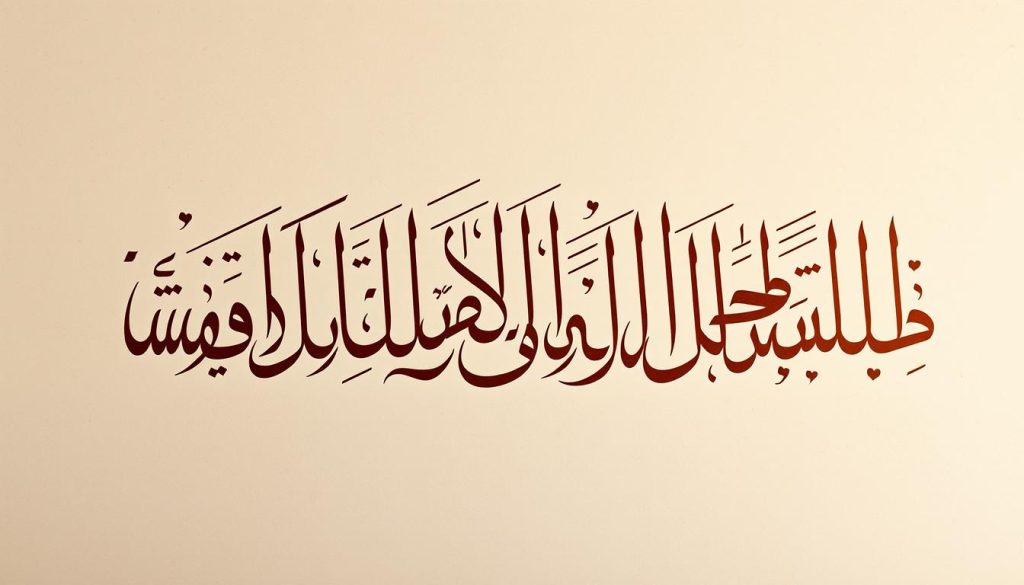
Arabic script is also very versatile. It can be written vertically, unlike many other scripts. This allows for complex, layered artworks that invite deep thought.
The geometric nature of Arabic letters balances precision with fluidity. As Hassan Massoudy says,
“In Arabic calligraphy, each letter is a universe unto itself, containing infinite possibilities for beauty and meaning.”
Modern Interpretations of Traditional Forms
Today, artists are reimagining Islamic calligraphy with a modern twist. They respect the old ways but also explore new ideas.
Some artists use abstraction to make letters into flowing shapes. These pieces focus on the beauty of the script, even if the words are hard to read.
Digital tools have opened up new ways to create calligraphy. Artists mix traditional skills with digital tools, making colourful, large-scale works that are difficult to do with old methods.
Three-dimensional calligraphy is another new area. Artists make sculptures from letters, turning flat art into immersive experiences. Viewers can see these works from all sides.
Calligraphy also tackles today’s issues. It shows how this ancient art is still relevant today. It talks about current problems while keeping its spiritual roots.
Arabic calligraphy keeps evolving, showing its strength and ability to adapt. Today’s artists blend tradition with innovation, ensuring this art will continue to amaze and inspire.
Quranic Verses as Artistic Expressions
The union of divine words and artistic skill is seen in Quranic verses as wall art. These texts go beyond their spiritual value to become stunning pieces that decorate homes and mosques. They show the deep link between faith, beauty, and everyday life.
When sacred texts meet artistic talent, a special form of devotion emerges. This art form has grown for centuries, keeping its spiritual core while evolving.
Popular Verses Used in Wall Art
Some Quran passages are often used in Islamic wall art. They are chosen for their deep meaning, universal message, or relevance to daily life. These verses bring guidance and beauty to believers and art lovers.
Ayatul Kursi (The Throne Verse, 2:255) is a favourite. It talks about Allah’s power and protection. Many display it in their homes for blessings and safety.
The Shahada, or declaration of faith, is also popular. It reminds one of one’s faith commitment. This statement is a key part of Islamic belief.

Bismillah (“In the name of Allah”) is special. It starts almost every chapter of the Quran. Its simple beauty makes it fit many calligraphic styles and spaces.
Surah Al-Ikhlas is known for its short yet deep meaning. It talks about divine unity. The Prophet Muhammad said it’s as important as one-third of the Quran.
| Quranic Verse | Meaning | Spiritual Significance | Common Placement |
|---|---|---|---|
| Ayatul Kursi (2:255) | The Throne Verse describing Allah’s attributes | Protection and divine sovereignty | Entrance halls, living rooms |
| Shahada | Declaration of faith | Foundation of Islamic belief | Prayer rooms, prominent walls |
| Bismillah | “In the name of Allah” | Beginning all actions with divine remembrance | Doorways, study areas, and kitchens |
| Surah Al-Ikhlas | Affirmation of divine unity | Essence of monotheism | Prayer spaces, bedrooms |
| 99 Names of Allah | Divine attributes | Contemplation of Allah’s qualities | Meditation spaces, family rooms |
Verses about patience, gratitude, and mercy are also common. They reflect life’s challenges and blessings. They offer comfort and insight to those who see them.
The Aesthetic and Spiritual Impact
Turning Quranic text into art creates a powerful experience. It engages the mind with its meaning and the heart with its beauty.
This mix of form and content makes Quranic wall art great for creating a spiritual atmosphere. The presence of divine words reminds us of our faith and values.
The art of calligraphy gives the line spiritual meaning; it is a form of spiritual communication and discipline.
Seyyed Hossein Nasr, Islamic philosopher and scholar
Displaying Quranic verses is a way of showing devotion. These artworks turn ordinary places into sacred spaces. They remind us of divine guidance as we go about our daily lives.
The beauty of Quranic calligraphy affects us in many ways. At first, we notice the overall design. Then, we see the detailed letterforms, showing the calligrapher’s skill and dedication.
People choose verses for different spaces based on the energy they want to create. For example, a verse about hospitality might be in an entrance hall, and a verse about family harmony might be in a living room.
The spiritual impact goes beyond just being religious. Even those who don’t know Arabic or Islam often feel peace and contemplation when seeing beautiful Quranic calligraphy.
This shows how Islamic calligraphers have created art that crosses cultural and linguistic boundaries. It touches something deep in us, connecting us to beauty and spirituality.
Geometric Patterns in Islamic Wall Art
Geometric patterns in Islamic art are very smart. They turn simple shapes into beautiful, endless designs. These patterns are found everywhere, from mosques to homes, and inspire many.
These patterns mix math with spiritual meaning. They use shapes that everyone can understand, making them universal. Islamic geometric art celebrates order and endless possibility.
Mathematical Precision and Symbolism
Islamic geometric art is based on math. This shows how important math was in medieval Islamic culture. Artists use math to create amazing designs that still amaze us.
Artists start with simple shapes like circles and squares. They use rules to create patterns that seem to go on forever. Techniques like tessellation and symmetry help create these intricate designs.
These designs are not just pretty. They have deep meaning. They show the endless nature of creation and the order of the universe. Scholars see them as symbols of unity and the infinite.
- The unity of all things (tawhid)
- The infinite nature of God
- The cosmic order of creation
- The transformation from simplicity to complexity
The star pattern is very common in Islamic art. It shows how everything comes from one source. This makes these patterns very meaningful in both sacred and everyday spaces.

Regional Variations in Geometric Designs
As Islamic art spread, different styles emerged. Each region kept the math but added its own twist, showing how Islamic art can adapt to many places.
In Spain, artists made vibrant star patterns. The Alhambra Palace is a famous example. It shows the beauty of Andalusian geometry.
Morocco is known for zellij tilework. These patterns use bold colours and math. They show the skill of North African craftsmen.
Persian art often mixes curves with straight lines, creating a unique look. Persian artists also use flowers and calligraphy, adding layers to their designs.
Ottoman designs are known for their balance. Turkish art often has complex star patterns. These designs show harmony through math and symmetry.
In India, art combines local styles with Islamic geometry. Mughal designs often have flowers and geometric shapes together. This shows how Islamic art can blend with local traditions.
These different styles show how Islamic art can adapt. Yet, they all share a love for math and spiritual meaning.
Today, artists use these styles to create new Islamic wall art. They honour tradition while appealing to today’s tastes.
Geometric patterns in Islamic art are special. They share deep ideas through beauty. They add order and beauty to our spaces, connecting us to something greater.
Islamic Architecture Influences in Wall Décor
The blend of Islamic architecture into wall décor is fascinating. For ages, the grand buildings of Islamic cities have inspired artists. They turn these structures into decorative pieces for homes and public spaces worldwide.
The bond between Islamic architecture and wall art is strong. Both share a love for geometric patterns, spiritual symbols, and beauty. Wall art inspired by architecture shows how artists turn three-dimensional spaces into two-dimensional art.
Architectural Elements Translated to Wall Art
The world of Islamic architecture offers a wealth of elements for wall décor. These features, when turned into wall art, keep their beauty and meaning. The process needs skill and a deep understanding of the culture.
One key architectural feature in wall art is the muqarnas. This honeycomb vaulting is a marvel of design. Artists use relief carving, layered paper, or painting to bring these complex forms to life.
Another popular motif is the mashrabiya. These wooden lattice screens filter light and provide privacy. In wall art, they appear as laser-cut wood, metal filigree, or painted designs, capturing the essence of Islamic interiors.
Arabesque patterns adorn architectural surfaces and wall art alike. These flowing designs reflect the Islamic view of divine boundlessness. They connect viewers to centuries of artistic tradition.
The mihrab, a prayer niche, is a significant architectural element in wall décor. It is a beautiful decoration and a reminder of prayer direction in Muslim homes.
Arches are a hallmark of Islamic architecture and appear in wall art. From Andalusian to South Asian styles, these arches frame calligraphy or patterns or stand alone as elegant silhouettes.
Artists use many techniques to bring these architectural elements to life in wall décor:
- Relief carving in wood, stone, or plaster for depth
- Metal embossing for light and shadow effects
- Mixed media for texture
- Digital printing for detailed reproductions
- Traditional painting for interpretation
Famous Architectural Inspirations
Throughout the Islamic world, certain buildings have inspired wall art. These structures represent the pinnacle of Islamic architectural achievement and continue influencing art today.
The Alhambra Palace in Spain is a top inspiration. Its blend of geometric patterns, calligraphy, and natural forms has inspired wall art for centuries. Artists often focus on its star patterns or the muqarnas of the Hall of the Two Sisters.
Istanbul’s Blue Mosque is another source of inspiration. Its domes and minarets, along with the blue Iznik tiles, often appear in wall art, which can be direct reproductions or modern interpretations.
The Sheikh Zayed Grand Mosque in Abu Dhabi has quickly become influential. Its white marble, floral inlays, and massive carpet offer new motifs for artists.
India’s Taj Mahal inspires wall art with its symmetry and inlay work. Artists often focus on the pietra dura technique, where stones are inlaid in marble.
The Great Mosque of Cordoba, with its striped arches, is a unique inspiration. Its blend of styles makes it fascinating for artists exploring cultural dialogue.
Contemporary wall art inspired by these buildings takes many forms:
- Stylised silhouettes of famous structures
- Detailed renderings of decorative elements
- Abstract interpretations of spiritual essence
- Mixed media pieces combining photography and design
- Three-dimensional models of architectural details
When choosing Islamic wall art inspired by architecture, look for pieces that connect to cultural heritage. The best works interpret architectural elements in ways that resonate today while respecting tradition.
Wall décor inspired by architecture brings the beauty and spirituality of Islamic spaces into our homes. These pieces are decorations and bridges to centuries of art and contemplation.
Exploring Islamic wall art shows how architecture inspires art that remains relevant today. The dialogue between architecture and wall art is a vibrant part of Islamic visual culture, evolving while staying true to timeless values.
Incorporating Islamic Wall Art in Modern Homes
99 Stunning Inspirations About Islamic Wall Art The beauty of Islamic wall art can turn modern homes into spiritual havens. These pieces blend tradition with modern design, creating a perfect balance. At Islamic Wall Arts, we help you make spaces that show your spiritual values and look great.
Knowing how to place and match Islamic wall art can make your home look and feel better. Here are some tips to help you add these beautiful pieces to your home.
Design Tips and Placement Suggestions
Where you put Islamic wall art matters a lot. It affects how it looks and feels. Prayer rooms or quiet spaces are great for verses that make you think. Living areas can have bigger designs or architectural pieces.
Size and scale are key. Big walls are perfect for big pieces or groups of art. Small spaces need smaller, focused art that still makes a big impact.
Here are some key tips for placing art:
- Put important pieces where you see them every day
- Make a focal point by placing art on main walls
- Make sure you can see the art from important spots in the room
- Give each piece space to stand out
- Use the right light to show off the art’s details
The entryway is a great place for Islamic wall art. It welcomes guests with beauty and blessings. Many choose verses or calligraphy about hospitality here.
Lighting is important for showing off Islamic wall art. Natural light is best for calligraphy and patterns. Accent lighting can make metal details and three-dimensional art stand out.
| Room | Recommended Art Style | Ideal Placement | Lighting Considerations |
|---|---|---|---|
| Living Room | Large calligraphy or geometric panels | Above sofa or main seating area | Ambient lighting with accent spots |
| Prayer Room | Quranic verses, mosque motifs | Facing prayer direction | Soft, warm lighting |
| Bedroom | Serene calligraphy, nature-inspired designs | Above headboard or opposite bed | Gentle, dimmable lighting |
| Dining Area | Hospitality-themed verses, botanical motifs | Visible from dining table | Warm, inviting illumination |
Complementary Décor Elements
Islamic wall art looks great with the right décor. It’s about creating a space that feels complete and meaningful. Think about how different elements work together.
Textiles are a great way to match your wall art. Use prayer rugs, cushions, throws, or tapestries with similar patterns or colours. They add warmth and comfort while enhancing the art’s message.
Architectural details inspired by Islamic traditions can make your wall art stand out. Look for:
- Arched doorways or niches like those in mosques
- Decorative screens or dividers with geometric patterns
- Carved wooden details on furniture or trim
- Mosaic tile accents in matching colours
Lighting fixtures can also help create a cohesive look. Choose traditional lanterns, pendant lamps with geometric shapes, or brass fixtures with detailed designs. They add beauty and function, highlighting your wall art.
Natural materials like wood, stone, ceramic, and metal complement Islamic wall art well. They add warmth and contrast to the art’s precision and beauty.
Adding plants brings life to spaces with Islamic wall art. They remind us of paradise gardens in Islamic art. Choose plants with architectural shapes or cultural significance.
By combining these elements thoughtfully, you can create spaces that feel complete and meaningful. The goal is to honour Islamic art traditions while fitting your modern lifestyle and taste.
Selecting Quality Islamic Wall Art
Finding meaningful Islamic wall art starts with knowing what makes it quality. When you add Islamic art to your home, you’re not just decorating. You’re bringing spiritual presence and cultural heritage into your space. At Islamic Wall Arts, we think quality art should show authenticity, great craftsmanship, and be made ethically.
Authenticity Markers
True Islamic wall art respects old traditions but also brings new ideas. When checking if art is authentic, look for these things:
- Accurate calligraphy – It’s very important for Quranic verse pieces, as mistakes are both wrong and disrespectful
- Appropriate use of traditional patterns – Real art shows it understands Islamic geometric shapes and their meanings
- Cultural sensitivity – It should show respect for religious elements without changing them in a bad way
Real pieces usually tell you about their inspiration and meaning. This helps you understand the importance of art.
We make sure all our art at Islamic Wall Arts is authentic. Each piece comes with info on its significance and where it comes from. This helps you choose art that fits your home.
Craftsmanship Indicators
Great Islamic wall art shows off in its details. When looking at art, check for these signs of quality:
- Calligraphic excellence – The Arabic script should be even and smooth
- Geometric precision – The patterns should be mathematically correct, with clean lines and balance
- Construction quality – The frame should be strong, the mounting secure, and the finish professional
Hand-made art often has small differences that show the artist’s touch. These aren’t mistakes but signs of real skill. Even machine-made art should show careful design and making.
The materials used are key for how the art looks and lasts. Good art uses papers that last, real gold leaf, and treated woods or metals that will last a long time.
Sustainable and Ethical Considerations
Today, people who buy art want to know it’s made fairly and with care for the planet. When picking Islamic wall art, think about:
- Fair labour practices – The artists and makers should get fair pay for their work
- Environmental responsibility – The art should be made with materials and processes that are good for the planet
- Cultural preservation – The art should help keep traditional skills alive and support the community
Companies that are open about how they make their art are more likely to be ethical. At Islamic Wall Arts, we think beautiful art should not harm people or the planet.
Choosing durable, high-quality art is better for the planet than buying cheap, throwaway pieces. A well-made piece with Quranic verses or traditional patterns can be passed down for generations.
By picking Islamic wall art that is real, well-made, and made ethically, you get art that lasts and has spiritual and beauty value. These pieces will make your home beautiful and remind you of your faith and culture every day.
Preserving and Caring for Your Islamic Wall Art
Islamic wall art can last for generations with the right care. These pieces are both spiritually and artistically valuable. Keeping them in good condition is key to preserving their beauty and spiritual importance.
Maintenance Tips for Different Materials
Different materials need different care to stay in top shape. Knowing what each needs helps keep your collection looking great.
Paper-based calligraphy and prints are sensitive to light and humidity. Avoid direct sunlight and humid places like bathrooms. UV-protective framing can help preserve valuable pieces.
Metal artwork like brass and copper needs dusting with a soft cloth. Use metal polishes as needed to keep it shiny. Always follow the instructions to avoid damage.
Wooden items should not face extreme temperatures. Apply wood conditioner every few months to protect the wood.
Textile art needs care to avoid damage from moths and dust. Rotate these pieces to reduce light exposure. Use cotton gloves when handling them. For antique textiles, seek professional advice.
Ceramic or glass pieces must be secured to prevent accidents. Clean them gently with non-abrasive products. Avoid harsh chemicals that can damage the art.
“Art is not what you see, but what you make others see. Preserving Islamic art is preserving a visual connection to our spiritual heritage.”
Conservation Techniques for Longevity
There are special ways to keep your Islamic wall art lasting longer. These methods show respect for the art and its spiritual value.
Proper installation is key. Use the right hanging mechanisms for each piece. For heavy items, get professional help to avoid damage.
The environmental conditions in your home affect your art. Try to keep a stable temperature and humidity. Avoid extreme changes and pollution.
For valuable or antique pieces, professional conservation advice is a good idea. Experts can give specific tips for your art. This can save you money in the long run.
Keeping records of your collection is important. Store photos, purchase details, and any history of your pieces. This helps with insurance and keeps the art’s value.
Consider rotation of your collection. This refreshes your home and gives delicate pieces a break from light and stress.
By following these care tips, you protect your Islamic wall art. You also honour its spiritual and cultural heritage. With the right care, these pieces can become family treasures that connect you to your faith and traditions.
Conclusion: The Timeless Appeal of Islamic Wall Art
Islamic wall art connects us to the past while making our homes beautiful. Its intricate patterns and sacred texts touch our hearts and minds.
The beauty of Islamic calligraphy is in its beauty and spiritual depth. Each line and curve carries tradition and devotion. Displaying these pieces in our homes creates a space for reflection and remembrance.
Many of our clients say that art with Quranic verses makes their homes peaceful sanctuaries. These pieces remind us of our faith and add beauty to any room.
At Islamic Wall Arts, we’re proud to offer pieces that celebrate this heritage and meet today’s design needs. Our collection includes traditional patterns and modern takes on classic forms, all made with care and quality.
We invite you to see our collection at Islamic Wall Arts and find out how these timeless pieces can improve your home. Whether you love geometric art or Arabic script, these pieces offer more than just decoration. They connect us to timeless beauty.