



Prophet Muhammad (PBUH)
Prophet Muhammad (PBUH), In Islamic tradition, the Prophet Muhammad (PBUH )’s names are not just identifiers, but carry deep significance and spiritual meaning. The name of Prophet Muhammad (PBUH) is special to millions worldwide.
The name Muhammad comes from the Arabic root “hamd,” which means praise. It is a passive participle, meaning whosoever is praised. This name reflects many praiseworthy qualities. Knowing the deep meaning of his name helps us connect more with his teachings.
Key Takeaways
- The name Muhammad is derived from the Arabic root “hamd,” meaning praise.
- In Islamic tradition, names carry deep significance and spiritual meaning.
- Understanding the meaning behind Prophet Muhammad’s (PBUH) name can deepen our connection to his teachings.
- The name Muhammad means whosoever is praised, possessing many praiseworthy qualities.
- Exploring the significance of Prophet Muhammad’s (PBUH) name can enrich our spiritual practice.
The Significance of Names in Islamic Tradition
In Islamic tradition, names are more than just labels. They shape a person’s identity and character. They reflect the values and hopes of the Muslim community.
Cultural and Spiritual Importance of Names
Names in Islam are significant. They are not just labels. They are chosen for their meaning and the qualities they represent.
For example, names linked to Allah or prophets are highly respected. They are seen as carrying special qualities.
How Names Shape Identity in Islamic Thought
In Islamic thought, a person’s name is key to their identity. It is believed to affect their personality and future. The Prophet Muhammad (PBUH) taught the importance of choosing good names.
He said good names shape a person’s character and actions. This shows how names are crucial in Islam.
The Power of Beautiful Names in Quranic Teachings
The Quran talks about the power of beautiful names, especially Allah’s. These names, known as Asma ul Husna, are seen as divine. They are used in prayers and are very important.
The Quran’s teachings on beautiful names show their value in Islamic faith. They highlight the beauty and significance of names in Islam.
| Aspect | Significance in Islam | Example |
|---|---|---|
| Cultural Importance | Reflects community values | Names like Muhammad and Ali |
| Spiritual Significance | Associated with divine attributes | Asma ul Husna (Names of Allah) |
| Influence on Identity | Shapes character and destiny | Prophet Muhammad’s name meaning “Praised One” |
The Name Prophet Muhammad (PBUH) and Meaning: Etymology and Origins
The name Muhammad comes from the Arabic root “hamd,” which means praise. It has a long history across centuries and cultures. Knowing this background helps us understand the importance of the name in Islam.
Linguistic Roots of the Name “Muhammad”
The name Muhammad comes from “hamada,” which means “to praise.” This verb is the base of names like Muhammad, Ahmad, and Mahmud. These names all relate to praise or commendation. The roots of Muhammad show how important praise is in Islamic culture and theology.
Historical Context of the Name Before Islam
Before Islam, Muhammad was not a rare name in Arabia. Though not common, records show people with this name or its variants. This shows Muhammad’s deep roots in Arabic culture and language.
Why This Name Was Chosen for the Final Prophet
The name Muhammad was chosen for the final prophet for a reason. In Islam, Muhammad is seen as the “Praised One.” This name reflects his role and mission, his character, and the high respect Muslims have for him.
In conclusion, Muhammad’s name is rich in etymology and history. It’s key to understanding Islam’s culture, spirituality, and language. Knowing its origins gives us insight into Islamic tradition.
The Multiple Dimensions of Prophet Muhammad’s Name
The name Muhammad has many qualities that show the prophet’s identity and what he taught. In Islam, names are more than just labels. They carry deep meanings that show a person’s character and role. Muhammad’s name reflects his mission and teachings perfectly.
The Praised One: Primary Meaning
The main meaning of Muhammad is “the praised one.” It comes from the Arabic word “hamd,” which means “praise.” This name shows the prophet’s role as someone praised by Allah and Muslims. It highlights his good character and how he inspired praise through his actions and words.
Secondary Meanings and Interpretations
There are also other meanings to Muhammad’s name. It’s linked to guidance, mercy, and wisdom. These are key to the prophet’s mission. His teachings and prophet Muhammad quotes show his focus on compassion, justice, and spiritual growth.
How the Name Reflects His Character and Mission
The name Muhammad is closely tied to the prophet’s character and mission. His life and teachings show the qualities of praise, guidance, and mercy. The prophet aimed to guide humanity to the right path. His name and character inspired many to follow Islam.
| Aspect | Description | Reflection in the Prophet’s Life |
|---|---|---|
| Primary Meaning | The Praised One | Recipient of Allah’s praise and admiration from the Muslim community |
| Secondary Meanings | Guidance, Mercy, Wisdom | Teachings and quotes emphasizing compassion, justice, and spiritual growth |
| Mission Reflection | Conveying Islam’s message | Guiding humanity towards the right path through his character and teachings |
Looking into the different sides of Prophet Muhammad’s name helps us understand him better. Muhammad’s name reminds us of his important role in Islam and the qualities he had.
Prophet Muhammad’s Other Names and Titles
Prophet Muhammad is known by many names and titles in Islam. These names show his important roles and the respect he has. They are not just different names; they highlight his attributes and the high esteem in which he is held.
Al-Mustafa: The Chosen One
One of Prophet Muhammad’s notable titles is Al-Mustafa, meaning “The Chosen One.” This title shows Allah chose him for a special task. It highlights his unique status among prophets.
Ahmad, Mahmud, and Other Derivative Names
The name “Muhammad” is connected to names like Ahmad and Mahmud. Ahmad is mentioned in the Quran and means “the one who praises Allah abundantly.” Mahmud means “the praised one,” showing the prophet’s high standing.
Titles of Honour Bestowed Upon the Prophet
Many titles also refer to the Prophet Muhammad as honourable. These reflect his character, mission, and the respect he commands. Titles like “Rahmatal-lil-Alamin” (Mercy to the Worlds) and “Khatam an-Nabiyyin” (Seal of the Prophets) highlight different aspects of his prophethood.
References to These Names in the Quran and Hadith
The Quran and Hadith often mention the names and titles of the Prophet Muhammad. These scriptures explain the meaning and importance of his different names. For example, the Quran calls him Ahmad in Surah As-Saff, verse 6. This shows the significance of understanding these names in Islam.
In summary, the many names and titles of the Prophet Muhammad are key to understanding his role in Islam. They show the depth and respect with which Muslims around the world view him.
Key Events in Prophet Muhammad’s Biography Reflecting His Name
The life of Prophet Muhammad (PBUH) shows the deep meaning of his name. It reflects the values and character that made him a great prophet. Looking at his biography, we see key events that connect his life to the essence of his name.
Early Life and Character Before Prophethood
Before becoming a prophet, Muhammad was known for his honesty and kindness. These qualities made him respected by his community. They set the stage for his role as a messenger.
His early life was simple and guided by strong morals. These traits would later shine in his prophetic mission.
The Revelation and His Role as the Praised Messenger
The Quran’s revelation to Muhammad marked the start of his role as a praised messenger. This event showed the importance of his name. He became the one through whom God’s message reached humanity.
His actions and conduct during this time showed the qualities of his name.
How His Life Embodied the Meaning of His Name
Throughout his life, Muhammad lived up to his name. He was known for his mercy, justice, and compassion. These traits were seen in his daily life, not just his prophetic mission.
By looking at the prophet muhammad biography and life of prophet muhammad, we understand his name’s significance. The prophet muhammad timeline is filled with moments that show his praised status. This reinforces the importance of his name in Islamic tradition.
Prophetic Teachings About Names and Identity
The Prophet Muhammad’s teachings on names and identity are very deep. He showed us that names are more than just labels. They shape who we are and what we stand for.
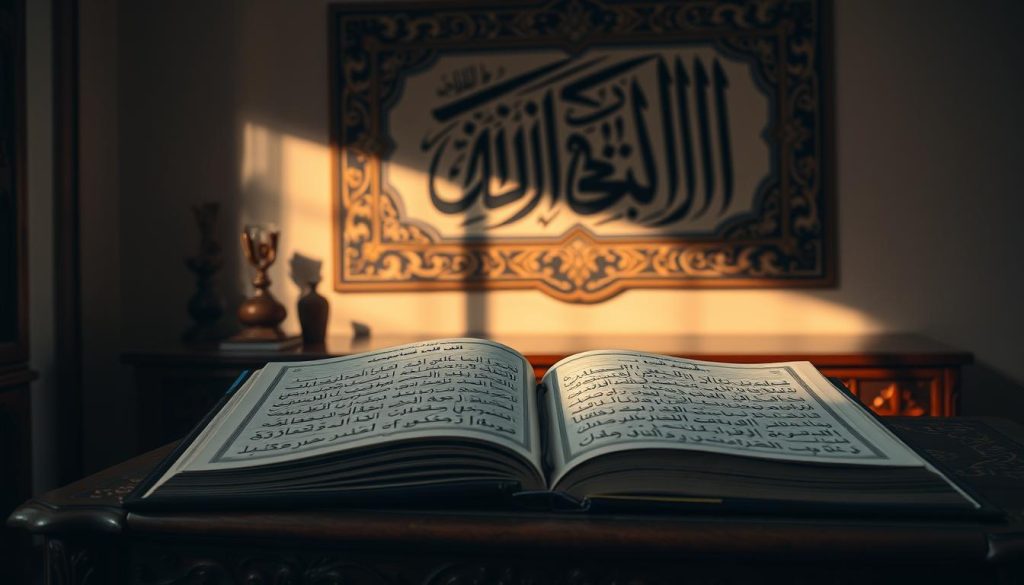
Hadith About the Prophet’s Own Names
The Prophet Muhammad had many names and titles. Each one showed a different side of him and his mission. For example, he was called Al-Mustafa, meaning “the chosen one.” These names are found in prophet Muhammad quotes and Hadiths, showing their importance.
Prophet Muhammad’s Guidance on Naming Children
The Prophet advised on naming children. He said it’s crucial to choose good names. He taught, “You will be called on the Day of Judgment by your names and the names of your fathers, so have good names” (Abu Dawud). This Hadith shows how important names are in Islamic culture.
The Connection Between Names and Character in His Teachings
The Prophet also taught about the link between names and character. He believed a person’s name can shape their character and future. He encouraged choosing names with positive meanings, as seen in prophet muhammad quotes.
In conclusion, the Prophet Muhammad’s teachings on names and identity are very valuable. By following these teachings, we can understand the importance of names in our lives and strive to live up to the qualities our names represent.
Artistic Representations of Prophet Muhammad’s Name in Islamic Calligraphy
In Islamic calligraphy, the name of the Prophet Muhammad (PBUH) is treated with great respect and beauty. This art form has been cherished for centuries, and the way the Prophet’s name is shown is a key part of this tradition.
Traditional Calligraphic Styles for Writing “Muhammad”
Many traditional calligraphic styles are used to write “Muhammad.” These include Kufic, Diwan, and Naskh scripts. Each style has its own look and history. The artist chooses the script based on the context and their preference.
The Kufic script is one of the oldest and most respected styles. It is known for its sharp, geometric shapes and is often found in large, architectural inscriptions.
Symbolic Elements in Muhammad’s Name Art
The art with Prophet Muhammad’s name is not just beautiful; it’s also full of symbols. These symbols carry deeper meanings and spiritual significance.
Colour Symbolism and Meaning
Calligraphy colours are chosen carefully. For example, green is linked with paradise and wealth, while blue stands for spirituality and the heavens. The colour used can add to the artwork’s spiritual impact.
Geometric Patterns and Sacred Geometry
Geometric patterns are key in Islamic art, including calligraphy. These patterns come from sacred geometry. They show the universe’s order and unity.
Evolution of Calligraphic Art Featuring His Name
Over time, the calligraphic art with the Prophet Muhammad’s name has changed. It has been influenced by different cultures and artistic styles. From Ottoman calligraphy’s detailed designs to modern styles that mix old and new, the art keeps growing.
“The calligraphy of the name Muhammad is a visual representation of the love and reverence Muslims have for the Prophet.”
This change shows how Islamic calligraphy is always evolving. It keeps its spiritual core while adapting to new styles.
Islamic Wall Art Featuring Prophet Muhammad’s Name
Islamic wall art with the Prophet Muhammad’s name is a meaningful way to show faith and decorate homes. It mixes spirituality with beauty, uniquely honouring the Prophet’s legacy.
Contemporary Designs from the Islamic Wall Arts Collection
Today’s Islamic wall art offers many designs that align with the Prophet Muhammad’s name. These designs mix old calligraphy with new styles, creating stunning pieces that can make any home look better.
Incorporating the Prophet’s Name in Home Decor
Adding the Prophet’s name to home decor through Islamic wall art is thoughtful. It brings spirituality into everyday life. Here are some tips:
- Choose a piece that speaks to your faith journey.
- Think about your home’s style and colours when picking a piece.
- Put the art where everyone can see it, like the living room or entryway.
Spiritual Benefits of Displaying the Prophet’s Name
Islamic wall art with the Prophet’s name has spiritual benefits. It reminds us of the Prophet’s teachings and legacy. It brings peace and spirituality to our homes.
“The name of Prophet Muhammad (PBUH) is a blessing and a reminder of the divine message.”
Selecting Meaningful Pieces for Different Spaces
When picking Islamic wall art with the Prophet’s name, consider where it will go. For example, a calm piece is great for a bedroom, while a lively piece is better for a living area.
| Space | Recommended Style |
|---|---|
| Living Room | Vibrant and large pieces |
| Bedroom | Serene and calming designs |
| Entryway | Bold and elegant pieces |
By choosing and displaying Islamic wall art with Prophet Muhammad’s name wisely, we can make our homes beautiful and spiritually rich.
Honouring the Prophet’s Name in Daily Muslim Life
In Islamic tradition, honouring the Prophet Muhammad’s name is key. We show our love and respect through various practices, which reflect our admiration for the Prophet.
Saying “Peace Be Upon Him” (PBUH)
Muslims often say “Peace Be Upon Him” (PBUH) after mentioning the Prophet’s name. This act is not just a sign of respect. It also brings peace and blessings upon the Prophet.
It’s a reminder of the Prophet’s teachings. His teachings guide us towards a righteous path.
Naming Children After the Prophet
Naming children after the Prophet Muhammad is a significant tradition. It’s believed to be a blessing, inspiring children to follow the Prophet’s noble character and teachings.
Many Muslim families name their children Muhammad or its variants. This shows their love and reverence for the Prophet.
Respecting and Revering the Name in Speech and Writing
Muslims are encouraged to respect the Prophet’s name in speech and writing. They avoid disrespect or misuse of the Prophet’s name. When writing or typing the Prophet’s name, many Muslims use honorifics like “PBUH” as a sign of respect.
Modern Expressions of Love for the Prophet Through His Name
In modern times, Muslims find new ways to show their love for the Prophet. They create beautiful calligraphy and art featuring the Prophet’s name, which is used in home decor and Islamic art.
Such expressions beautify our surroundings. They also remind us of our faith and the Prophet’s teachings.
By honoring the Prophet’s name, we strengthen our faith. We are reminded to live by the Prophet’s teachings. We aim to spread peace and kindness in our daily lives.
Conclusion: The Enduring Legacy of Prophet Muhammad’s Blessed Name
The name of the Prophet Muhammad (PBUH) is deeply meaningful in Islamic tradition. It reflects his character, mission, and values. This name is not just a label but a symbol of his life’s work.
In Islamic culture, the Prophet Muhammad’s name is highly revered. It’s seen in Islamic calligraphy and home decor, symbolizing faith and spirituality. His name inspires and guides people every day.
As we wrap up, Prophet Muhammad’s name will continue to influence us for years. We honour his legacy by understanding and respecting his name. His name’s enduring power shows the lasting impact of his teachings.