



Understanding the Second Pillar of Islam, Did you know Muslims around the world pray Salah over 5 billion times daily? This shows how important Salah is as the second pillar of Islam. It’s a key part of the Islamic faith.
So, why is Salah so important? It’s not just a prayer. It’s a way to connect with God. It helps Muslims grow spiritually, stay disciplined, and feel part of a community.
Learning about Salah can change how you see it and strengthen your faith. For those wanting to add Islamic culture to their lives, beautiful Islamic wall art is available at Islamic Wall Arts.
Key Takeaways
- Salah is the second pillar of Islam, a fundamental aspect of the Islamic faith.
- Muslims perform Salah more than 5 billion times daily, worldwide.
- Salah is a means of spiritual growth, discipline, and community building.
- Understanding Salah is crucial for grasping Islamic faith requirements.
- Salah plays a significant role in the daily life of Muslims.
The Five Pillars Framework: Where Prayer Fits
The Five Pillars of Islam are the core of a Muslim’s faith. Prayer is a key part of these pillars. These practices are essential for every Muslim, forming a strong spiritual base.
Overview of the Five Pillars System
The Five Pillars are obligatory acts for Muslims. They are:
- Shahada (Declaration of Faith)
- Salat (Prayer)
- Zakat (Charity)
- Sawm (Fasting during Ramadan)
- Hajj (Pilgrimage to Mecca)
The Sequential Importance of Each Pillar
Each pillar is vital and together they guide a righteous life. The second pillar, Salat or prayer, is especially important. It connects the believer directly with Allah.
| Pillar | Description | Significance |
|---|---|---|
| Shahada | Declaration of Faith | Affirmation of belief in one God and the Prophet Muhammad |
| Salat | Prayer | Direct communication with Allah, five times a day |
| Zakat | Charity | Purification of wealth through giving to the needy |
Knowing the Five Pillars and their importance helps Muslims see the role of prayer. It shows how prayer meets Islamic faith requirements in daily life.
What is the Second Pillar of Islam?
In Islam, the second pillar is Salah, a daily ritual prayer. It connects each Muslim to Allah, creating community and unity.
Definition and Terminology of Salah
Salah is an Arabic term for the daily prayer Muslims perform five times a day. It includes specific postures, recitations, and intentions.
Arabic Terms You Should Know
Learning Arabic terms for Salah can enrich your understanding. “Salah” means prayer, “Ruku” is the bowing posture, and “Sujood” is prostration.
Meaning Behind the Words
The words in Salah carry deep meaning. For example, in Ruku, Muslims say “Subhana Rabbiyal ‘Adheem,” which means “Glory be to my Lord, the Supreme.”
Historical Context of Prayer in Islam
The practice of Salah comes from the Quran and Hadith, the Prophet Muhammad’s sayings and actions. The five daily prayers were introduced during the Prophet’s journey from Mecca to Jerusalem, known as the Isra’ wal-Mi’raj.
| Prayer | Time | Significance |
|---|---|---|
| Fajr | Dawn | Beginning of the day |
| Dhuhr | Noon | Middle of the day |
| Asr | Afternoon | Preparation for the end of the day |
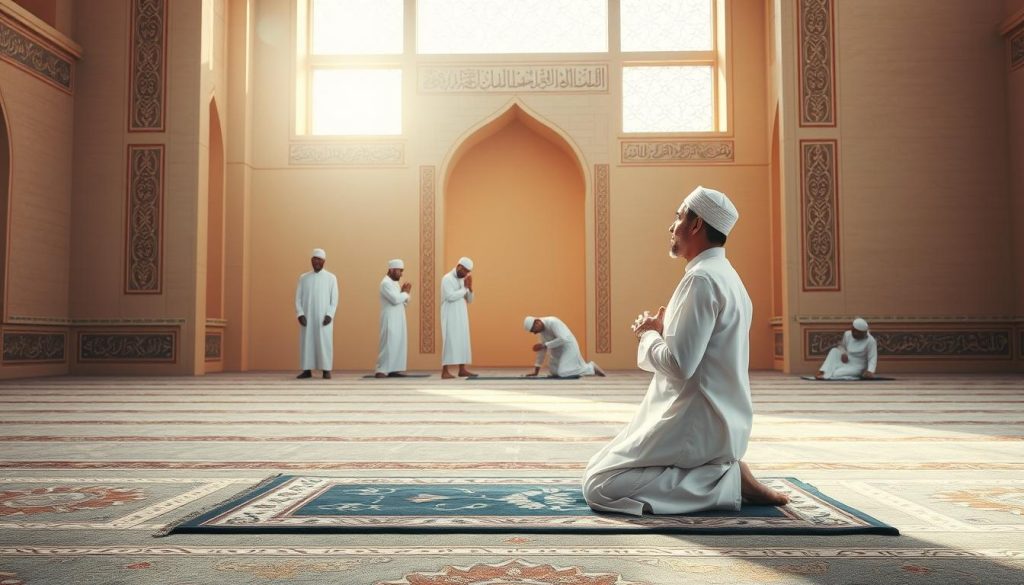
The Spiritual Significance of Daily Prayers
Daily prayers help Muslims grow spiritually and feel closer to Allah. Salah is key in Islam, strengthening faith and deepening dependence on God.
Connection Between the Believer and Allah
Daily prayers connect believers directly with Allah, building a personal bond. This bond grows through Quran recitation and Salah supplications.
The spiritual significance of Salah is in its comfort and solace. It’s a time for reflection, forgiveness, and spiritual renewal.
Purification of the Soul Through Regular Prayer
Regular prayer purifies the soul, removing bad traits and behaviors. This is crucial for spiritual growth.
Mental Benefits
- Reduces stress and anxiety
- Improves mental clarity and focus
- Enhances emotional well-being
Spiritual Growth
Salah helps believers grow spiritually by living Islam’s values. It’s a path of self-improvement and enlightenment.
Muslims benefit greatly from daily Salah, which impacts their spiritual and mental health. It’s a vital part of the Islamic faith, supporting a strong spiritual life.
The Five Daily Prayers Explained
The five daily prayers are key in Islam. They are done at specific times, each with its own spiritual meaning. These prayers help you connect with Allah.
Fajr: The Dawn Prayer
The Fajr prayer is between first light and sunrise. It’s a time for spiritual renewal and sets the day’s tone.
Dhuhr: The Noon Prayer
Dhuhr is when the sun is highest. It’s a time to pause and reconnect with your faith.
Asr: The Afternoon Prayer
The Asr prayer is in the late afternoon. It reminds you to stay focused on your actions and faith.
Maghrib: The Sunset Prayer
Maghrib is right after sunset. It’s a time to reflect on the day and be thankful.
Isha: The Night Prayer
Isha is the last prayer of the day, between darkness and midnight. It’s for introspection and getting ready for the night.
| Prayer | Time | Significance |
|---|---|---|
| Fajr | Before sunrise | Spiritual rejuvenation |
| Dhuhr | Noon | Pause from daily activities |
| Asr | Late afternoon | Mindfulness of actions |
| Maghrib | After sunset | Reflection and gratitude |
| Isha | Night | Introspection |
Understanding and following the five daily prayers can greatly improve your spiritual journey. It gives a structured way to live your day.
Prerequisites for Prayer in Islam
To pray well, Muslims must prepare physically and spiritually. This is key for the second pillar of Islam. It involves several important steps to ensure the prayer is respected and follows Islamic faith requirements.
Physical and Spiritual Cleanliness
Physical cleanliness comes from specific rituals. The two main methods are Wudu (Ablution) and Ghusl (Full Purification).
Wudu (Ablution) Process
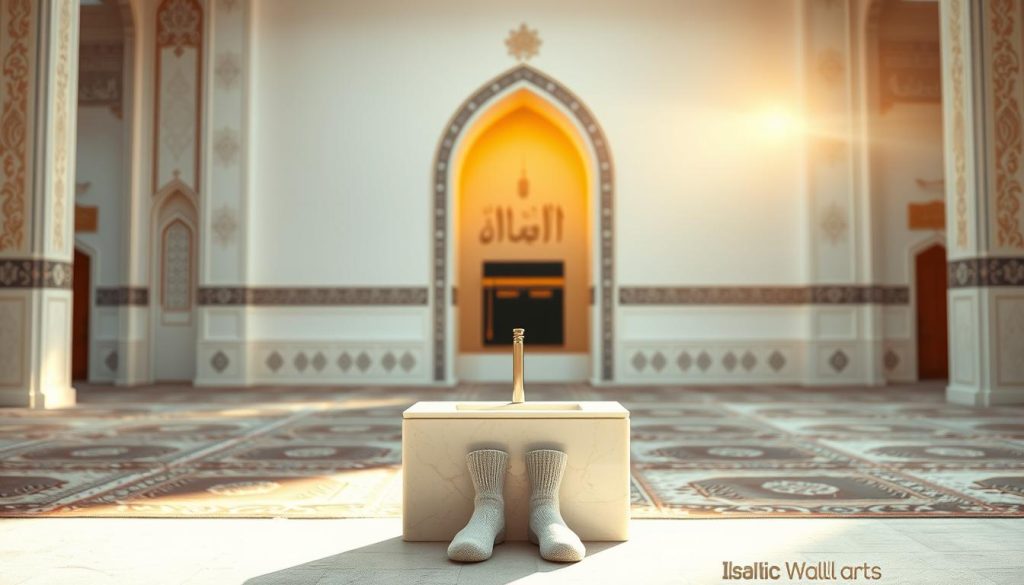
Wudu cleans the body before prayer. It includes washing hands, mouth, nose, face, arms, and feet. You also wipe your head and ears.
Ghusl (Full Purification)
Ghusl is needed in some cases, like after intimate relations or menstruation. It’s a full-body wash for complete purification.
Proper Attire and Direction
Muslims must dress modestly and face the Qibla during prayer. The Qibla is towards Mecca.
Intention (Niyyah) Before Prayer
The intention to pray is crucial. Muslims must have a clear Niyyah, or intention, to pray for Allah. This shows their commitment to their faith.
| Prerequisite | Description |
|---|---|
| Physical Cleanliness | Achieved through Wudu or Ghusl |
| Proper Attire | Modest clothing covering the body |
| Correct Direction | Facing the Qibla (Mecca) |
| Intention (Niyyah) | Clear intention to pray for Allah |
The Step-by-Step Prayer Process
Performing Salah, the second pillar of Islam, is a journey of precise movements and recitations. It connects you with Allah. This spiritual path is not just about physical prayer; it’s about understanding and doing it right.
Standing (Qiyam) and Beginning the Prayer
The prayer starts with standing (Qiyam). Here, you recite the opening chapter of the Quran, Surah Al-Fatihah, and another passage. Standing is a moment to talk directly to Allah, expressing your intention (niyyah) to pray.
Bowing (Ruku) and Prostration (Sujood)
Next, you move into Ruku, or bowing, to praise Allah’s greatness. Then, you do Sujood, or prostration, to humble yourself before Allah. These actions show your submission and gratitude.
Sitting (Tashahhud) and Concluding the Prayer
After Sujood, you sit for Tashahhud. Here, you recite phrases that affirm Allah’s oneness and Muhammad’s prophethood. The prayer ends with Tasleem, a greeting of peace to the right and left, marking the prayer’s end.
Common Mistakes to Avoid
To ensure your prayer is correct, avoid mistakes like wrong recitations, bad timing, and wrong posture. Paying attention to these details improves your Salah.
Prayer Accommodations for American Muslims
As an American Muslim, you might face unique challenges in fulfilling your Islamic faith requirements, particularly when it comes to the second pillar of Islam, Salah. The practice of prayer is fundamental to your faith, and finding ways to maintain it amidst the demands of daily life is crucial.
Praying at Work or School
Praying at work or school requires some planning and understanding of your rights. You have the right to practice your faith in the workplace or educational institution, and there are practical ways to do so.
Legal Rights and Practical Solutions
Under Title VII of the Civil Rights Act of 1964, employers must accommodate your religious practices, including prayer, unless it causes undue hardship. You can negotiate with your employer or school administration to find a suitable space for prayer. This could be a quiet room or a designated prayer area. “Employers must make reasonable accommodations for employees’ religious practices,” as stated by the U.S. Equal Employment Opportunity Commission.
Travel Considerations
When travelling, you can still maintain your prayer obligations by planning ahead. Research mosques or prayer rooms at your destination. You can use a portable prayer mat and adjust your prayer schedule according to your travel itinerary.
Adaptations for Health Limitations
If you’re facing health limitations, you can adapt your prayer practice. For instance, you can perform prayers while seated or even lying down if standing is not possible. The Islamic faith emphasizes ease and flexibility in worship, ensuring that you can maintain your spiritual practices despite physical challenges.
By understanding your rights and being proactive, you can successfully balance your Islamic faith requirements with the demands of modern life in America. Maintaining the second pillar of Islam, Salah, is not only a spiritual obligation. It is also a means of achieving inner peace and stability.
Creating a Prayer-Friendly Home Environment
As you work on the second pillar of Islam, making your home prayer-friendly is key. You need a space that helps you pray and think deeply.
Designating Prayer Spaces
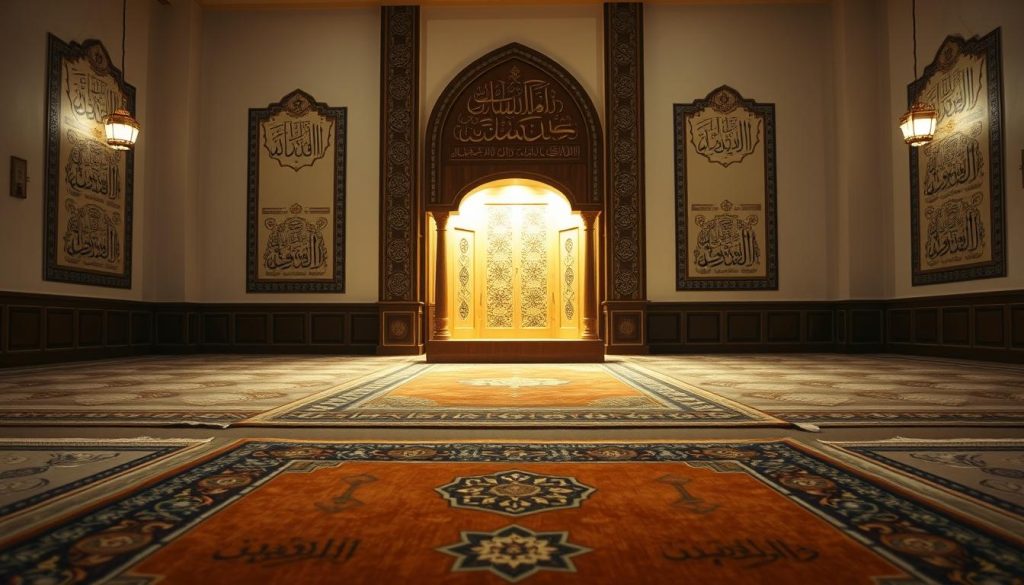
Having a special area for prayer at home can improve your prayers. This spot should be quiet, clean, and free from distractions. You can use a prayer mat or a musallah to mark it.
Islamic Wall Art as Spiritual Reminders
Islamic wall art can remind you of your faith and make your home more spiritual. Calligraphy is a popular choice for this.
Calligraphy and Its Meanings
Calligraphy is more than just pretty art; it’s deeply spiritual. It often includes Quran verses or Allah’s names, reminding readers of their faith.
Selecting Meaningful Pieces from IslamicWallArts.co.uk
IslamicWallArts.co.uk sells many Islamic wall art pieces. You can check out their collection at https://islamicwallarts.co.uk/shop/ to find art that speaks to you.
Prayer Accessories for Your Home
Adding prayer accessories to your home can also improve your prayer time. For example, you might use prayer mats, beads, and clocks to remember prayer times.
| Prayer Accessory | Description | Benefit |
|---|---|---|
| Prayer Mat | A clean and comfortable surface for prayer | Enhances focus during prayer |
| Prayer Beads | Used for dhikr or remembrance of Allah | Facilitates mindfulness and spiritual reflection |
| Prayer Time Clock | Helps keep track of prayer times | Ensures timely performance of daily prayers |
By adding these elements, you can make your home a better place for your spiritual practices. This will help you connect more deeply with your faith.
The Communal Aspect of Islamic Prayer
The communal aspect of Islamic prayer is key, bringing unity and solidarity to the faith.
Praying together is a big deal in Islam, offering many spiritual benefits. It’s encouraged for Muslims to pray certain prayers with others, especially in the mosque.
Praying in Congregation vs. Individually
Praying with others is seen as more rewarding than praying alone. It strengthens the sense of community and unity among Muslims. The Prophet Muhammad said praying together is 27 times more virtuous than praying alone.
While praying alone is important, praying together offers a chance for social interaction. It also brings mutual support and a stronger sense of belonging to the community.
Finding Muslim Communities in America
For Muslims in America, finding a local Muslim community is crucial. Many mosques and Islamic centres offer congregational prayers and community activities.
You can find Muslim communities online or ask local Muslim friends or family. Please be sure to look for Islamic organizations that provide resources and support.
The Role of the Mosque in Prayer Life
The mosque is central to a Muslim’s prayer life. It’s not just a place of worship but also a community hub. Mosques host various activities, including prayers, educational programs, and social events.
By attending mosque prayers, you can connect with other Muslims. You can build relationships and strengthen your faith. Many mosques also have facilities for women and children, making them welcoming for families.
In conclusion, the communal aspect of Islamic prayer is vital. It promotes unity, solidarity, and a sense of community among Muslims. By praying together and engaging with local Muslim communities, you can deepen your spiritual practice. You can also connect with others who share your faith.
Special Prayers Beyond the Five Daily Obligations
You can deepen your connection with Allah by observing special prayers beyond the five daily prayers. These prayers offer additional opportunities for spiritual growth and community bonding.
Friday Prayer (Jumu’ah)
The Friday Prayer, or Jumu’ah, is a congregational prayer that replaces the Dhuhr prayer on Fridays. It is a significant communal event where Muslims gather in mosques to pray and listen to a sermon.
Eid Prayers and Their Significance
Eid prayers are performed on the mornings of Eid al-Fitr and Eid al-Adha. These prayers are obligatory for Muslims and are accompanied by specific rituals and acts of charity, emphasizing the importance of gratitude and community.
Taraweeh Prayers During Ramadan
Taraweeh prayers are special night prayers performed during the month of Ramadan. They involve reciting the Quran throughout the month, fostering a deeper connection with the holy book.
Prayers for Special Occasions
Islam also includes prayers for special occasions, such as during natural disasters, for rain, or for personal needs. These prayers reflect the religion’s emphasis on turning to Allah in all circumstances.
| Special Prayer | Occasion | Significance |
|---|---|---|
| Jumu’ah | Friday | Communal prayer and sermon |
| Eid Prayers | Eid al-Fitr and Eid al-Adha | Obligatory prayer with rituals and charity |
| Taraweeh | Ramadan nights | Recitation of the Quran |
These special prayers enrich the spiritual lives of Muslims, providing diverse ways to connect with Allah and the community.
The Benefits of Regular Prayer in Modern Life
Regular prayer, the second pillar of Islam, boosts your mental and emotional health. It brings calm and stability as you make Salah a part of your day.
Psychological and Emotional Well-being
Prayer positively affects your mind. It offers a moment of peace, reducing stress and anxiety. Connecting with Allah gives you a fresh view on life’s hurdles.
Structure and Discipline in Daily Routine
The five daily prayers add structure to your life and help you stay disciplined and focused. This is especially helpful in today’s world, which is full of distractions.
Mindfulness and Spiritual Awareness
Salah promotes mindfulness and spiritual awareness. It reminds you of your faith and values, keeping you grounded and focused on your spiritual path.
Scientific Research on Prayer Benefits
Research shows that prayer and meditation are good for the mind. They help reduce stress and improve well-being. Spiritual practice is widely seen as beneficial.
Embracing regular prayer can greatly improve your life. It brings many benefits to your mental and emotional health.
Conclusion: Embracing the Second Pillar in Your Spiritual Journey
Exploring Salah, the second pillar of Islam, has shown its importance in your spiritual path. It offers a way to connect with Allah through daily prayers. This connection deepens your spirituality and discipline.
Adding Salah to your daily life can purify your soul and strengthen your faith. Remember, Salah is a journey, not just a goal. It helps you live more mindfully and spiritually.
Embracing the second pillar of Islam means living a disciplined, spiritual, and community-focused life. You can use the insights from this article to deepen your Salah practice. This will enrich your spiritual journey.
FAQ
What is the second pillar of Islam?
The second pillar of Islam is Salah, or prayer. It’s a key act of worship. Muslims pray five times a day to connect with Allah and seek guidance.
What is the significance of Salah in Islam?
Salah is crucial for Muslims. It helps them feel close to Allah, grow spiritually, and find peace.
How do Muslims perform Salah?
Muslims follow a set of actions for Salah. They stand, bow, prostrate, and sit. They also recite prayers and Quran verses.
What are the prerequisites for performing Salah?
To pray, Muslims must be clean, wear modest clothes, face the right direction, and have the right intention.
Can Muslims pray in congregation?
Yes, Muslims are encouraged to pray together. It strengthens community bonds and makes prayer more rewarding.
How can American Muslims accommodate their prayer obligations in daily life?
American Muslims can find prayer spaces at work or school. They can also pray during travel and adapt to their health needs.
What are some special prayers beyond the five daily obligations?
Special prayers include Jumu’ah, Eid, and Taraweeh during Ramadan, as well as prayers for special occasions. These prayers are spiritually and communally valuable.
How can Muslims create a conducive environment for prayer at home?
Muslims can set up a prayer space at home and use Islamic art and prayer accessories to remind them to pray.
What are the benefits of regular Salah in modern life?
Regular prayer improves mental and emotional health. It also brings structure, discipline, and spiritual awareness.