



Fourth Pillar of Islam
Fourth Pillar of Islam Fourth Pillar of Islam., Did you know that Zakat, or obligatory charity, is a key part of the Islamic faith? Millions of Muslims around the world practice it every year. Zakat is more than just giving; it’s a way to build community and show social responsibility.
Zakat is about purifying one’s wealth and making the economy fairer. Muslims help make society more just and caring by sharing their wealth with those in need. We think mixing Islamic traditions with modern art can inspire faith and create spaces that show these values.
Key Takeaways
- Understanding Zakat and its significance in the Islamic faith
- Exploring the role of Zakat in promoting social responsibility
- Discovering ways to incorporate Zakat into daily life and home decoration
- Learning how Islamic heritage can be combined with modern art to inspire faith
- Creating meaningful spaces that reflect Islamic values
The Fourth Pillar of Islam: An Overview
Zakat is the Fourth Pillar of Islam, key to spiritual growth and community. Giving a part of one’s wealth to those who need it is a duty.
Definition and Etymology of Zakat
The word “Zakat” comes from “zakāh,” meaning “purification” and “growth” in Arabic. In Islam, Zakat means giving wealth to the needy to purify it and build community.
Zakat is more than charity; it’s a core part of Islamic faith that helps one grow spiritually. The Quran says, “Take alms of their wealth so that you might purify and cleanse them” (9:103). It cleanses both wealth and soul.
Key aspects of Zakat include:
- Purification of wealth
- Support for the needy
- Fostering a sense of community
| Category | Description | Benefit |
|---|---|---|
| Purification | Cleaning one’s wealth | Spiritual growth |
| Charity | Giving to those in need | Social cohesion |
Understanding Zakat helps Muslims deepen their faith and build a fairer society. We invite our readers to learn more about Zakat’s role in their lives and communities.
The Spiritual Dimensions of Zakat
Zakat is more than just giving to charity. It’s a spiritual journey that cleanses one’s wealth and soul. Through Zakat, Muslims learn to be thankful, compassionate, and humble. This leads to a more balanced and fulfilling life.
Purification of Wealth and Soul
Giving Zakat purifies one’s wealth and soul. The Quran says, “Take alms of their wealth, wherewith thou mayst purify them and mayst make them grow” (Quran 9:103). This process helps Muslims let go of material things and focus on their spiritual health.

By giving Zakat, Muslims help those in need and start a journey of self-reflection and spiritual growth. This practice builds a sense of community and compassion, which are key to a harmonious society.
| Spiritual Benefits | Practical Outcomes |
|---|---|
| Purification of wealth and soul | Support for the needy |
| Cultivation of gratitude and humility | Fostering a sense of community |
Historical Context of Zakat in Islamic Tradition
Zakat was key in forming the Islamic community’s social and spiritual structure during the Prophet’s time. It’s one of the Five Pillars of Islam. Zakat cleanses wealth and builds community and responsibility.
Zakat During the Prophet Muhammad’s Era
In the Prophet Muhammad’s time, Zakat was given and shared based on Quran and Hadith teachings. The early Muslims saw Zakat as essential to their faith. It helped the poor and encouraged kindness and generosity.
Zakat’s role in the community was significant. It:
- Reduced economic gaps
- Boosted social unity
- Created a feeling of brotherhood and unity
The table below shows essential Zakat aspects during the Prophet Muhammad’s era:
| Aspect | Description |
|---|---|
| Collection | Zakat was collected from Muslims who met the nisab threshold |
| Distribution | Zakat was given to the poor, needy, and others |
| Impact | It lessened poverty and supported social justice |
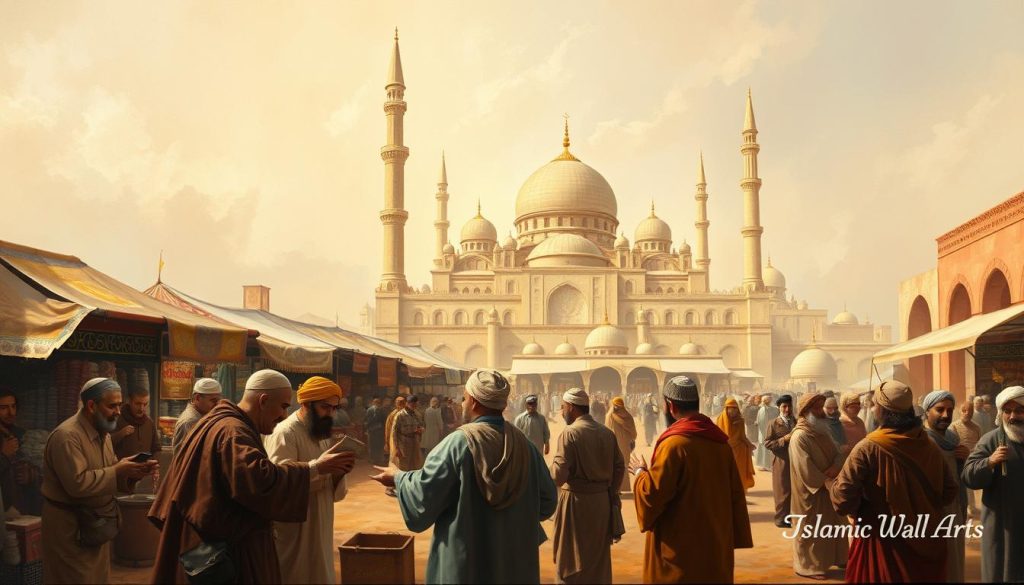
Zakat’s practice during the Prophet Muhammad’s time showed its lasting value. It highlighted the role of charity and responsibility in Islam.
Who Is Obligated to Pay Zakat?
Zakat is a key part of Islam and is required for some people. It’s based on how much wealth someone has. You only have to pay Zakat if your wealth is above a certain amount, which is called nisab.
Conditions of Wealth for Zakat
To have to pay Zakat, two things must be true about your wealth:
- Your wealth must be something that Zakat applies to, like money, gold, silver, or animals.
- You must have more wealth than the nisab, which is the minimum needed to pay Zakat.
Also, your wealth must be more than what you need for living. It must have been yours for a whole year, called a hawl. Zakat doesn’t apply to money you just got or plan to use immediately.
| Wealth Type | Nisab Threshold | Zakat Rate |
|---|---|---|
| Cash and Savings | Equivalent to 3 ounces of gold | 2.5% |
| Gold | 20 mithqal (approx. 3 ounces) | 2.5% |
| Silver | 200 dirham (approx. 595 grams) | 2.5% |
Islamic scholars say Zakat does more than clean your wealth. It also helps those who are less fortunate. The Prophet Muhammad (peace be upon him) taught, “Charity is a duty upon every Muslim.” This shows how important Zakat is in Islam.
“Zakat is a means of purifying one’s soul and wealth, and it is a demonstration of one’s commitment to the welfare of the community.”
— Islamic principle
Knowing these rules helps people determine whether they must pay Zakat. It also builds a sense of community and responsibility.
Calculating Zakat: Understanding Nisab
Zakat’s calculation relies on knowing Nisab, a key idea in Islamic finance. Nisab is the minimum wealth a Muslim must have to pay Zakat.
The Concept of Nisab in Islamic Finance
Nisab sets the line for when a Muslim must give Zakat. It’s based on gold and silver values. It looks at a person’s total wealth, like cash, savings, and other assets.
Determining Nisab: Nisab was once the value of 87.48 grams of gold or 612.36 grams of silver. This value helps figure out the wealth that needs Zakat.
Modern Equivalents and Digital Calculators
Today, we use modern values of Nisab to make Zakat easier. These values update the old gold and silver amounts to today’s money. This helps Muslims know if they meet the Nisab level.
| Asset Type | Nisab Threshold | Zakat Rate |
|---|---|---|
| Cash and Savings | Equivalent to 87.48 grams of gold | 2.5% |
| Gold and Silver | 87.48 grams (gold), 612.36 grams (silver) | 2.5% |
| Business Assets | Varies based on asset valuation | 2.5% |
Digital calculators and online tools help Muslims figure out their Zakat. They use today’s gold and silver prices. This makes it simpler to find out one’s Nisab and Zakat amount.
Knowing Nisab and using modern tools makes paying Zakat easier. It helps Muslims give generously and support their community.
Types of Assets Subject to Zakat
Zakat is a key Islamic principle that requires Muslims to give to those in need. But what exactly is considered wealth for Zakat? It’s important to know which assets are subject to Zakat to fulfill this duty correctly.
Cash, Savings, and Monetary Holdings
Cash, savings, and other money in your hands or accounts are subject to Zakat. This includes:
- Cash in hand or in bank accounts
- Savings accounts and fixed deposits
- Other liquid assets that can be easily converted into cash
These assets are considered zakatable if they meet the nisab threshold. Nisab is the minimum wealth a Muslim must have before paying Zakat.
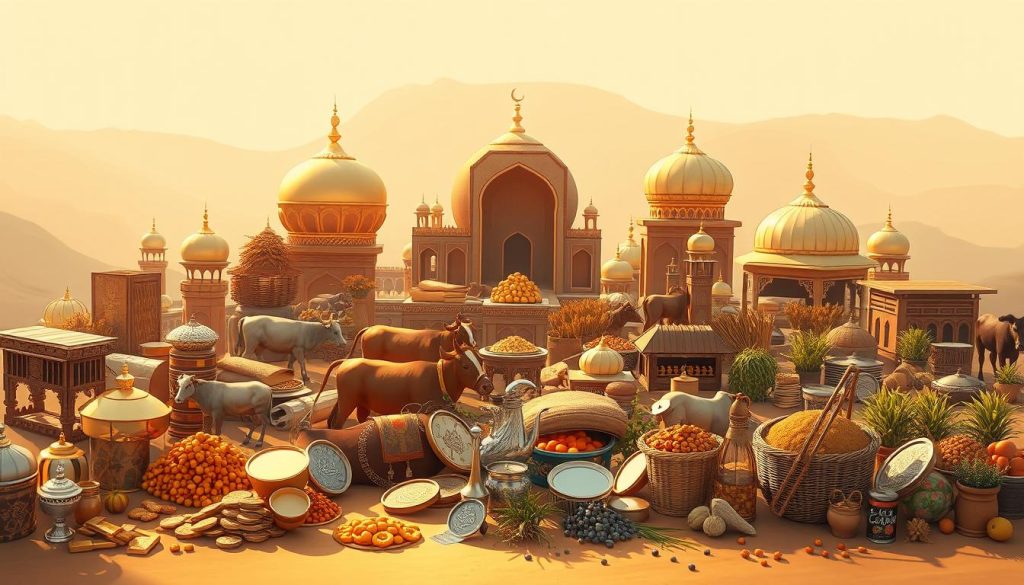
Precious Metals and Jewellery
Precious metals like gold and silver, and jewellery made from them, are also subject to Zakat. They must be owned for trade or savings, not just for personal use. The nisab for gold and silver is based on their weight, with specific thresholds for Zakat.
Key considerations for precious metals and jewellery:
- Gold and silver coins or bars
- Jewellery that is not used for personal adornment but held as an investment
- The value of these items is calculated based on their market value at the time of Zakat calculation
Not all jewelry is subject to Zakat. The reason you own it matters greatly in determining if it’s zakatable.
Understanding which assets are subject to Zakat helps Muslims fulfil their religious duties accurately and with the right intention.
The Eight Categories of Zakat Recipients
The Quran lists eight groups who should get Zakat. These groups are based on Islamic law to help those who need it most.
The Poor (Fuqara) and Needy (Masakin)
The poor (Fuqara) and needy (Masakin) are key Zakat recipients. “Fuqara” means those who can’t afford basic needs. “Masakin” are even worse off, unable to get the basics.
To find who needs Zakat, we look at their money situation. We check their income, expenses, and financial health. Giving Zakat to those who really need it is very important.
The eight categories of Zakat recipients are:
| Category | Description |
|---|---|
| The Poor (Fuqara) | Those who lack sufficient resources to meet their basic needs. |
| The Needy (Masakin) | Those who are unable to afford basic necessities. |
| Those in Debt (Riqab) | Individuals are burdened with debt and unable to pay it off. |
| Travellers (Ibn al-Sabil) | Travellers who are stranded or in need while on a journey. |
| Those in the Cause of Allah (Fi Sabilillah) | Individuals working for the cause of Allah, including those involved in Islamic activities and services. |
| Slaves or Captives (Al-Riqab) | Historically, this referred to slaves or captives whose freedom was being purchased. |
| New Muslims | New converts to Islam may need financial support to establish their new faith. |
| Administrators of Zakat | Those responsible for collecting and distributing Zakat. |
By knowing and following these categories, Zakat can be given out correctly, ensuring it goes to those who really need it.

Practising Zakat in America: Practical Guidance
In the United States, Zakat is easier to practice thanks to trustworthy Zakat organizations. These groups ensure Zakat is given out fairly and honestly. For Muslims in America, giving Zakat becomes simple with the help of these organizations.
Reputable Zakat Organisations in the United States
Many organizations in the U.S. are known for their honest Zakat practices. Here are a few:
- Islamic Relief USA: Known for its global humanitarian efforts, Islamic Relief USA also provides Zakat distribution services within the United States.
- Zakat Foundation of America: This organisation is dedicated to providing aid to those in need, both domestically and internationally, with a strong focus on transparency.
- Muslim Aid USA: Muslim Aid USA works to alleviate poverty and provide emergency assistance, and it is committed to accountability in its Zakat distribution.
When choosing a Zakat organisation, look for transparency and accountability. Make sure your Zakat is used wisely. This is key to fulfilling your Islamic duty.

Conclusion: Embracing the Spirit of Zakat in Contemporary Life
Zakat in Islam has a big impact on our spiritual lives and our community. It’s not just giving to charity. It’s about making our wealth and souls pure, and showing compassion and empathy.
Learning about Zakat helps us follow our Islamic duties. We find out who must give Zakat and how to figure out the amount. We also learn about the different things we can give, like money and gold, and who we should give them to, like the poor.
Trying to live by Zakat’s spirit every day is important. We can get help from trusted Islamic charities in the U.S. This way, we build a stronger community and grow spiritually. We truly embrace the spirit of Zakat.