



The Fifth Pillar of Islam
the fifth pillar of islam. Every year, over 2 million Muslims from around the world go to Mecca for the Hajj pilgrimage. This journey is a once-in-a-lifetime duty for those who can physically and financially do it.
We examine the importance of the Hajj pilgrimage in the Islamic faith. It is a key part of a deep spiritual journey.
The Hajj is more than a ritual. It’s a deeply personal and spiritual experience that brings Muslims together. At places like Islamic Wall Arts, this journey inspires faith and reflection.
Key Takeaways
- The Hajj is a once-in-a-lifetime obligation for physically and financially capable Muslims.
- It represents a significant spiritual journey to the holy city of Mecca.
- The Hajj pilgrimage is a unifying experience for Muslims worldwide.
- It is considered a fundamental aspect of Islamic faith.
- The journey is deeply personal and spiritual, inspiring faith and reflection.
Understanding the Five Pillars of Islam
Islam is based on five key pillars that guide Muslims’ daily lives and spiritual practices. These pillars are more than just rituals; they are a way of life. They connect Muslims to their faith and to each other. Let’s dive into each pillar and see how they form the heart of Islamic belief and practice.
The Foundation of Islamic Faith
The Five Pillars include declaring faith (Shahada), praying (Salah), giving to the poor (Zakat), fasting in Ramadan (Sawm), and making the pilgrimage to Mecca (Hajj). Each pillar is important for strengthening a Muslim’s faith and commitment to Islam.
- Declaration of Faith (Shahada): There is no god but Allah, and Muhammad is His Messenger.
- Prayer (Salah): Performing five daily prayers, facing Mecca.
- Almsgiving (Zakat): Giving some of one’s wealth to the poor, promoting charity and fairness.
- Fasting (Sawm): Fasting in Ramadan to improve self-control and understand the struggles of others.
- Pilgrimage (Hajj): Visiting Mecca at least once in a lifetime, if possible.
How the Pillars Work Together
The pillars are connected and form a complete guide for Muslim life. For example, prayer (Salah) keeps a direct link with Allah, while almsgiving (Zakat) builds community and responsibility. Fasting in Ramadan helps with self-control, and the pilgrimage to Mecca brings Muslims together worldwide.
By following these pillars, Muslims show dedication to their faith and living righteously. The Five Pillars are not just duties; they help Muslims grow spiritually and connect with their community.
Learning about the Five Pillars deeply looks at Islamic beliefs and practices. These pillars are essential to the Islamic faith, guiding Muslims in their daily lives and spiritual paths.
The Fifth Pillar of Islam: Hajj Explained
The Hajj is a deep expression of Islamic faith. It honours the journey of Prophet Ibrahim and his family. It’s a once-in-a-lifetime duty for those who can afford it and are physically able.
Definition and Meaning
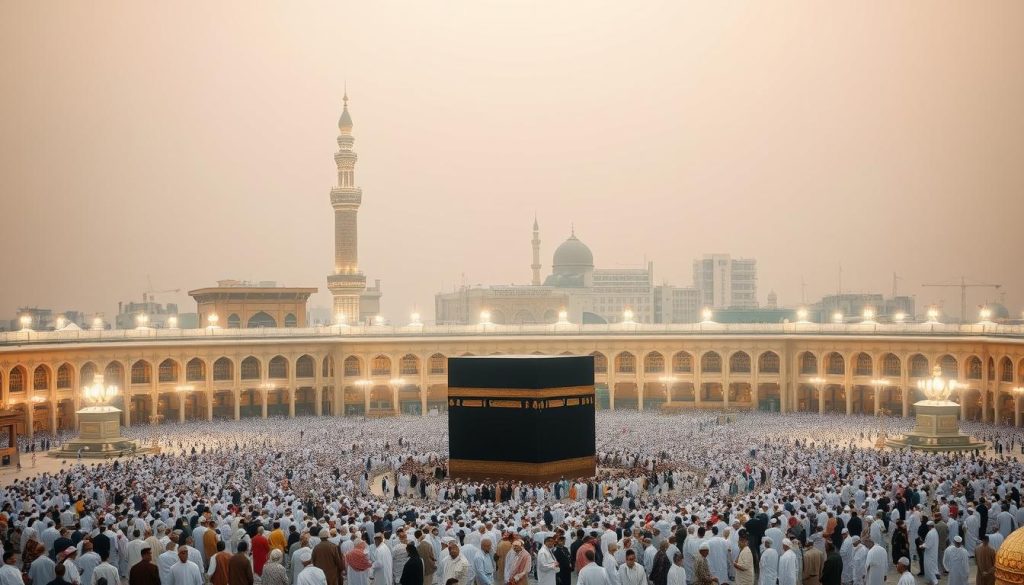
The Hajj is a set of rituals done over several days. It shows unity, equality, and devotion to Allah. It takes Muslims to Mecca and other sacred places, reliving key moments in Islamic history.
At its heart, the Hajj is a spiritual journey of self-reflection and renewal. Muslims from all over come together, wearing simple clothes and performing the same rituals, creating a sense of global unity.
Historical Origins from Prophet Ibrahim
The Hajj comes from the story of Prophet Ibrahim. He is a common ancestor for Muslims, Jews, and Christians. Ibrahim was told by Allah to leave his wife, Hagar, and son, Ismail, in the desert. This act of obedience is remembered during the Hajj.
| Event | Significance | Ritual |
|---|---|---|
| Prophet Ibrahim’s journey | Demonstrates faith and obedience | Reenactment of Hagar’s search for water |
| Hagar’s search for water | Symbolizes trust in Allah’s provision | Sa’i: Running between Safa and Marwa hills |
Continuation Through Prophet Muhammad
The Hajj continued through the Prophet Muhammad, who cleansed the Kaaba of idols and made it a place of monotheistic worship. Today, the Hajj is a key part of Islamic practice, with millions attending yearly.
The Hajj’s significance is in its history and ongoing impact on Muslims. It reminds us of the importance of faith, unity, and spiritual renewal.
For those interested in Islamic art and decor, there are many resources. Islamic Wall Arts, for example, offers beautiful and meaningful pieces.
Who Must Perform Hajj?
The need to go on Hajj depends on a few key points. The main one is Istita’ah, or being able to afford it. This rule is key in determining who must go on the Hajj pilgrimage.
Financial Ability (Istita’ah)
Istita’ah means you have enough money for Hajj. This includes paying for travel, staying somewhere, and other needs. It also means you don’t have debts that would make it hard to go.
To check if you can go on Hajj, consider a few things:
- Do you have enough money?
- Are you healthy enough to travel?
- Do you have any debts or financial duties?
- Have you made plans for your family, if you have one?
Islam makes the Fifth Pillar only for those who can perform it. This keeps the Hajj pilgrimage meaningful and spiritual.
For those who can afford it, Hajj is more than a duty. It’s a deep spiritual experience tied to Islamic practices. Islamic art, like what you can find at https://islamicwallarts.co.uk/, reminds us of the importance of this journey.
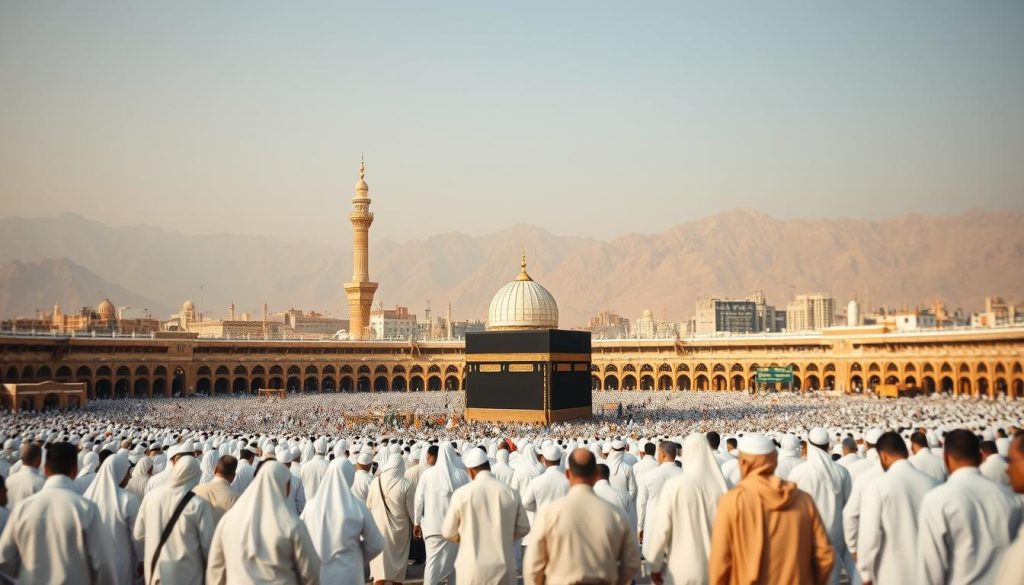
In short, Istita’ah is crucial in deciding who must go on Hajj. It ensures this critical Islamic practice is done by those who are physically and financially ready.
The Spiritual Significance of Hajj
Hajj is more than a trip; it’s a soul journey where Muslims seek closeness to Allah. It’s a deep spiritual experience rooted in the Islamic faith. For those who can, it’s a once-in-a-lifetime journey.
Purification and Renewal
The Hajj pilgrimage is a chance for spiritual purification and renewal. Through rituals, Muslims connect with their Islamic heritage. They believe it cleanses their soul of past sins.
They return home with a renewed sense of purpose and faith. Key rituals include:
- The donning of the Ihram, a sacred state that symbolises unity and equality among pilgrims.
- The Tawaf, or circling of the Kaaba, represents Allah’s unity and centrality in the lives of Muslims.
- The Sa’i, or walking between the hills of Safa and Marwa, commemorates Hagar’s search for water and demonstrates faith and perseverance.
Equality Before Allah
Hajj shows the equality of all before Allah. Pilgrims from all walks of life come together. This unity shows the Islamic values of equality and brotherhood.
“The most noble of you in the sight of Allah is the most righteous of you.” – Quran 49:13
This Quran verse highlights the importance of being righteous over worldly status. It’s a key part of the Hajj experience.
Reflecting on Hajj’s spiritual significance, we see its profound impact on Muslims. It’s not just a physical journey but a spiritual one. It builds community, renewal, and devotion to Islam.
Preparing for the Hajj Journey
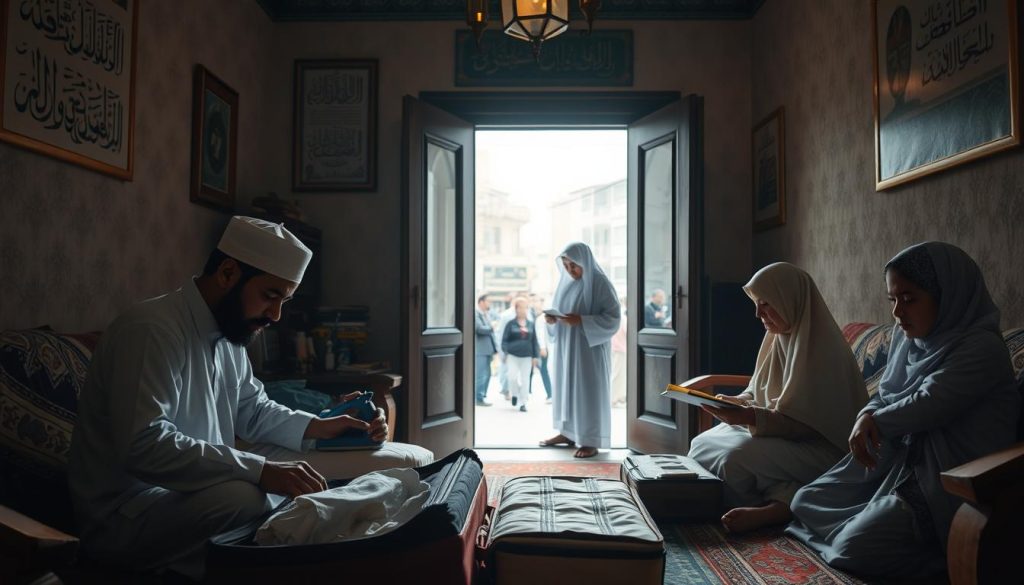
Getting ready for Hajj means being ready spiritually and practically. Muslims going on this sacred trip need to prepare both ways.
Spiritual Preparation
Spiritual prep is key for Hajj. It’s about looking inward, asking for forgiveness, and growing your faith. Learning about Hajj’s rituals and meaning helps deepen the spiritual journey.
- Introspection: Reflecting on one’s actions and seeking forgiveness.
- Learning: Understanding the rituals and history of Hajj.
- Spiritual Growth: Focusing on personal growth and spiritual development.
By focusing on these areas, pilgrims can have a rich and meaningful spiritual experience. Beautiful Islamic art, like the serene Islamic wall arts at islamicwallarts.co.uk, can also inspire and enhance this prep.
Financial Planning and Saving
Planning your finances is also crucial for Hajj. You need to save for travel, accommodation, and other costs.
- Budgeting: Create a budget for all Hajj expenses.
- Saving: Start saving early to cover costs.
- Researching: Look for the best deals on travel and accommodation.
Good financial planning helps reduce stress. It lets pilgrims focus on their spiritual journey. Remember to plan for any extra costs or emergencies during the trip.
Essential Steps of the Hajj Pilgrimage
The Hajj pilgrimage is a deep journey with many sacred rituals. Exploring these steps helps us understand the spiritual and historical value of this Islamic practice.
Ihram: The Sacred State
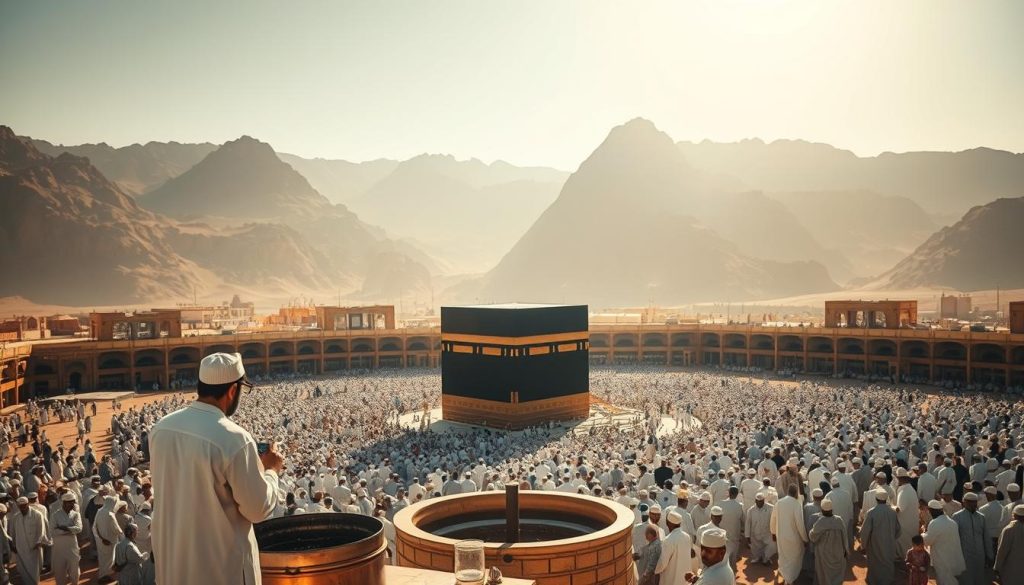
The Hajj starts with Ihram, a special state where pilgrims wear simple clothes. This shows equality and unity before Allah. It’s the start of their spiritual journey, preparing through intention and purification.
Prophet Muhammad (peace be upon him) said, “The reward of Hajj is Paradise.” This
“Whoever performs Hajj for the sake of Allah and does not talk indecently nor does evil, he will return (free from sin) as his mother bore him.”
shows how important it is to keep the sacred state during Ihram.
Tawaf: Circling the Kaaba
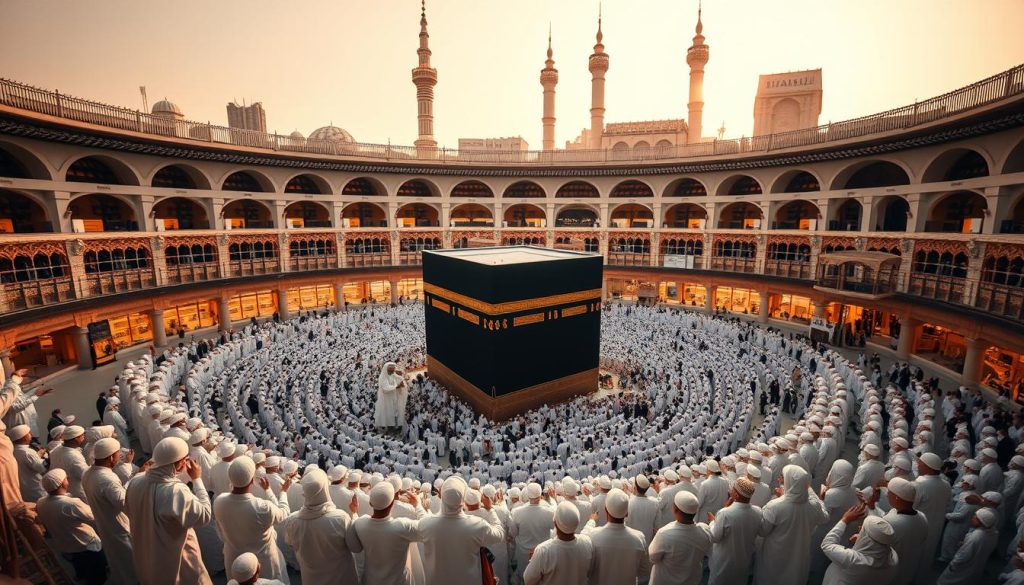
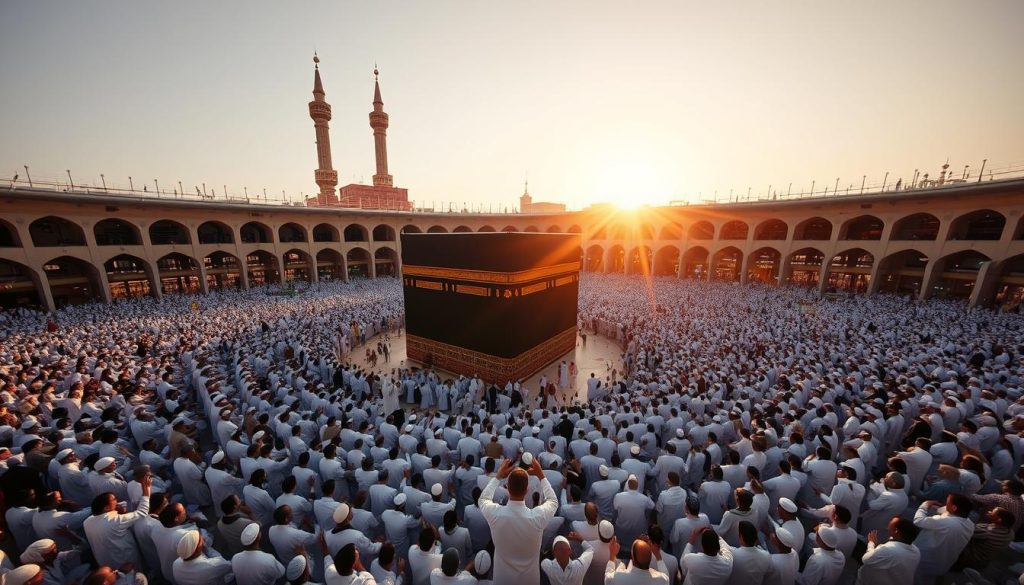
When they reach Mecca, pilgrims do Tawaf, circling the Kaaba seven times. This act shows the unity and devotion of Muslims worldwide. They gather around the heart of their faith.
Tawaf is more than a physical act. It’s a spiritual expression of love and reverence for Allah. Circling the Kaaba helps us reflect on our faith and renew our commitment.
Sa’i: Walking Between Safa and Marwa
After Tawaf, pilgrims do Sa’i, walking between Safa and Marwa. This ritual remembers Hagar’s search for water for her son Ismail. It symbolizes perseverance and trust in Allah’s providence.
Walking between Safa and Marwa teaches us about faith, patience, and trust in Allah’s plan. It connects us to our faith’s historical and spiritual roots.
Standing at Arafat
The Hajj’s climax is Standing at Arafat, where pilgrims gather to seek forgiveness and reflect on their lives. This moment reminds us of the Day of Judgment and the need to seek mercy and forgiveness.
At Arafat, we are encouraged to reflect, seeking forgiveness for past actions and committing to a righteous path. This sacred moment is key to the Hajj experience, leading to spiritual renewal and growth.
The Hajj pilgrimage is a transformative journey. It guides pilgrims toward spiritual enlightenment and a deeper faith connection. Reflecting on these rituals reminds us of the wisdom and guidance behind this profound journey.
Rituals and Practices During Hajj
Pilgrims journey through sacred sites during Hajj, participating in rituals rooted in Islamic tradition. These rituals show their devotion and recall important Islamic events.
Stoning of the Jamarat
The stoning of the Jamarat is a key ritual, symbolizing the rejection of evil. Pilgrims throw stones at three pillars, seen as the devil, in defiance.
Animal Sacrifice (Qurbani)
The animal sacrifice, or Qurbani, honours Prophet Ibrahim’s readiness to sacrifice his son Ismail. It reminds us of the value of submitting to Allah’s will.
Cutting of Hair (Halq or Taqsir)
After the Sa’i ritual, pilgrims cut their hair, a sign of purification and renewal. This marks their return to normalcy after being in the sacred state of Ihram.
Farewell Tawaf (Tawaf al-Wida)
The farewell Tawaf is done before leaving Mecca, with pilgrims circling the Kaaba seven times. It marks the end of Hajj, a poignant moment for many.
These rituals are at the heart of Hajj, offering a deep spiritual journey. By taking part, pilgrims strengthen their faith and bond with the Muslim world.
Hajj vs. Umrah: Understanding the Difference
Hajj and Umrah are both pilgrimages to Mecca. But they have different meanings and rituals. It’s key for Muslims to know these differences before they go.
Ritual Differences
Umrah, or the “lesser pilgrimage,” can be done anytime. It has fewer rituals than Hajj.
Umrah Rituals:
- Entering into Ihram, a sacred state
- Performing Tawaf, circling the Kaaba
- Sa’i, walking between the hills of Safa and Marwa
- Cutting or shaving hair to exit the Ihram state
Hajj, on the other hand, is more complex. It includes more rituals:
- Performing Umrah rituals during the Hajj period
- Standing at Arafat
- Stoning the Jamarat
- Sacrificing an animal
Islamic scholars say the Hajj shows unity and equality among Muslims. People from all walks of life come together to worship Allah. This unity is seen in both Hajj and Umrah, highlighting the importance of spiritual cleansing and devotion.
Decorating your home with Islamic wall art can be a meaningful way to remember your pilgrimage. Check out Islamic Wall Arts for a variety of designs.
The Journey to Sacred Sites
As we explore the sacred sites of Hajj, we see the deep meaning of this journey in Islamic faith. The Hajj takes pilgrims to Mecca, Mount Arafat, Muzdalifah, and Mina. Each site holds a special place in the hearts of those who visit.
Mecca and the Grand Mosque
Mecca, where Prophet Muhammad was born, is the spiritual centre of the Hajj. The Grand Mosque, with the Kaaba at its heart, is key to the Hajj rituals. Pilgrims circle the Kaaba seven times, symbolising unity and devotion to Allah.
For many, visiting Mecca is a once-in-a-lifetime journey. It’s filled with spiritual reflection and a deep connection to their faith. Islamic art and decor, like that at Islamic Wall Arts, can remind pilgrims of their spiritual journey at home.
Mount Arafat and Its Significance
Mount Arafat, also known as Jebel Rahmah or Mount of Mercy, is a crucial site during Hajj. It’s where Prophet Muhammad gave his Farewell Sermon. It’s a place of great spiritual importance. Pilgrims spend the day praying and reflecting, seeking Allah’s forgiveness and mercy.
The day at Arafat is often seen as the highlight of the Hajj. It is a moment of deep spiritual awakening and renewal.
Muzdalifah and Mina
After Arafat, pilgrims go to Muzdalifah to gather pebbles for the stoning of the Jamarat ritual. This act symbolizes rejecting evil and reminds us of the battle between good and evil.
Mina is another key location for the stoning ritual. Pilgrims stay there during Tashreeq days, continuing their spiritual journey with acts of worship and reflection.
The journey to these sites is more than physical travel. It’s a spiritual experience that connects pilgrims with their faith and each other. Reflecting on these locations reminds us of the unity and shared purpose of Hajj.
Modern Hajj Experience
The modern Hajj experience has changed a lot to accommodate more pilgrims. Millions of people go on this journey every year, and the Saudi Arabian government and others work hard to make it safe and smooth for everyone.
Logistics and Organisation
The way the Hajj is organized has improved a lot. New tech, like crowd management systems and digital identification, greatly helps. These tools help keep the crowds under control and make the journey safer.
Mecca and its areas have also been updated to welcome more pilgrims. New transportation systems and better facilities have been built, making it easier for everyone to get around.
Health Services and Safety Measures
Health and safety are very important during the Hajj. The Saudi government has set up a big healthcare system. This includes hospitals, clinics, and mobile medical units to help pilgrims.
Many safety measures are also in place. These include crowd control measures, emergency response plans, and security personnel. They all work together to keep everyone safe.
We know how crucial these services are for a good Hajj experience. With better logistics and health care, the modern Hajj is safer and more organized than ever.
Hajj in Art and Cultural Expression
The spiritual journey of the Hajj has inspired a rich tapestry of artistic expressions in Islamic culture. For centuries, the rituals and significance of the Hajj have been the subject of profound artistic representation, reflecting its importance in the Muslim faith.
Depictions in Islamic Calligraphy
Islamic calligraphy, considered one of the highest forms of art in Islamic culture, has beautifully captured the essence of Hajj. Artists have used intricate calligraphic designs to represent various aspects of the pilgrimage. This includes the Kaaba and the rituals performed during Hajj.
Some of the key elements depicted in Islamic calligraphy related to Hajj include:
- Verses from the Quran that reference Hajj and the Kaaba
- Prophetic sayings (Hadith) that highlight the significance of Hajj
- Calligraphic representations of the Kaaba and other holy sites
These artistic representations not only beautify the spaces where they are displayed. They also serve as a reminder of the spiritual significance of Hajj. For instance, beautiful calligraphic works often adorn the walls of mosques and homes. They inspire a sense of connection to the divine.
At Islamic Wall Arts, we see how Islamic art, including calligraphy, creates meaningful spaces that inspire faith. The intricate designs and calligraphic works not only reflect the beauty of Islamic art but also highlight the deep spiritual significance of the Hajj.
The use of Islamic calligraphy to represent the Hajj is a testament to the pilgrimage’s impact on Muslim culture and faith. It shows the importance of art in expressing spiritual experiences and connecting with the divine.
Conclusion
The Hajj pilgrimage is more than a ritual; it’s a deep expression of Islamic faith. It’s the Fifth Pillar of Islam, where Muslims come together in their devotion to Allah.
We’ve examined the Hajj’s history, spiritual meaning, and special rituals. Understanding the Hajj shows its importance in unity, equality, and spiritual renewal. Beautiful Islamic art, like that found at islamicwallarts.co.uk, reminds us of its significance and values.
The Hajj pilgrimage shows the strength of faith and the connections between Muslims. As we learn more about Islamic heritage, we see the beauty and importance of this journey. It inspires a sense of community and spiritual growth.