



As we explore Islamic civilisation, we witness its profound influence on the world. From the Prophet’s era to today, Islamic culture is a tapestry of diversity, resilience, and elegance.
We will examine the critical periods and events that have moulded this civilisation. We will trace the journey from the Prophet’s successors to the Abbasids’ golden era. We’d like to provide a detailed and insightful overview.
By exploring history and culture of this interesting civilisation, we aim to deepen understanding and respect for it.
Key Takeaways
- Understanding the significance of Islamic civilisation in world history.
- Exploring the significant periods that have shaped Islamic culture.
- Gaining insights into the diversity and richness of Islamic heritage.
- Appreciating the impact of Islamic civilisation on modern society.
- Discovering the key events that have influenced Islamic history.
The Origins and Foundations of Islam
Islam began in the Arabian Peninsula, a land of beauty and challenges. It was here that Prophet Muhammad first shared his message. The area, with its deserts and trade paths, was home to many tribes and cultures. This was the backdrop for the rise of a new faith.
The Birth of Islam in the Arabian Peninsula
In the 7th century, the Arabian Peninsula was a mix of cultures and beliefs. It was here that Islam was born from a mostly tribal and pagan society. The city of Mecca, with its trade and the sacred Kaaba, was key in Islam’s early days.
Essential aspects of the Arabian Peninsula at that time included:
- A society mainly tribal
- Trade routes that linked the area to the world
- A religious scene, mostly pagan, with the Kaaba as a major shrine
The Life and Teachings of the Prophet Muhammad
At Islam’s core is the Prophet Muhammad’s life and teachings. Born in Mecca around 570 CE, Muhammad got his first message from Allah (God) at 40. This was the start of his prophethood and the Quran, Islam’s holy book.
https://www.youtube.com/watch?v=wn6cpFKkNDYProphet Muhammad taught about monotheism, prayer, charity, fasting in Ramadan, and pilgrimage to Mecca. His message was about moral responsibility, justice, and kindness, appealing to those unhappy with their social and economic lives.
Some key teachings are:
- The unity of God (Tawhid)
- The value of prayer (Salat) and charity (Zakat)
- The importance of compassion and fairness in society
The Spread of Islamic Civilisation
The spread of Islamic civilisation is a story of faith, resilience, and cultural exchange. It moved from the Arabian Peninsula to the world’s edges quickly and deeply.
The Rightly Guided Caliphs and Early Expansion
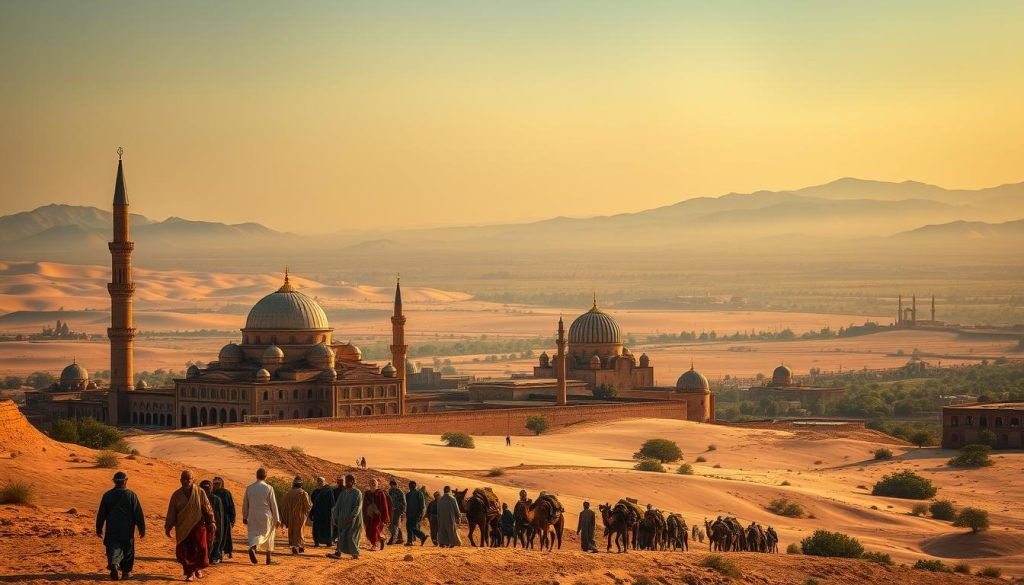
The period of the Rightly Guided Caliphs (632-661 CE) was key to Islam’s growth. Caliphs Abu Bakr, Umar, Uthman, and Ali led the expansion. They conquered much of the Sassanid and Byzantine Empires.
This growth wasn’t just about war. It also included establishing a strong administration, spreading Islamic values, and encouraging cultural exchange.
“The conquests of the Arabs in the 7th and 8th centuries CE brought about a significant cultural and religious transformation across the regions they touched.”
Islam’s Journey Across Continents
Islam spread through the Middle East, North Africa, Europe, Asia, and more. It left a lasting impact on cultures everywhere. Its message of monotheism, justice, and personal responsibility appealed to many.
| Region | Period of Significant Islamic Influence | Cultural Achievements |
| Middle East | 7th century onwards | Advancements in science, mathematics, and literature |
| North Africa | 7th-8th centuries | Development of Islamic architecture, trade networks |
| Spain and Europe | 8th-15th centuries | Translation of classical texts, philosophical debates |
The journey of Islamic civilisation across continents shows its adaptability and resilience. It also shows how it enriched and was enriched by other cultures.
The Islamic Golden Age: A Pinnacle of Knowledge and Innovation
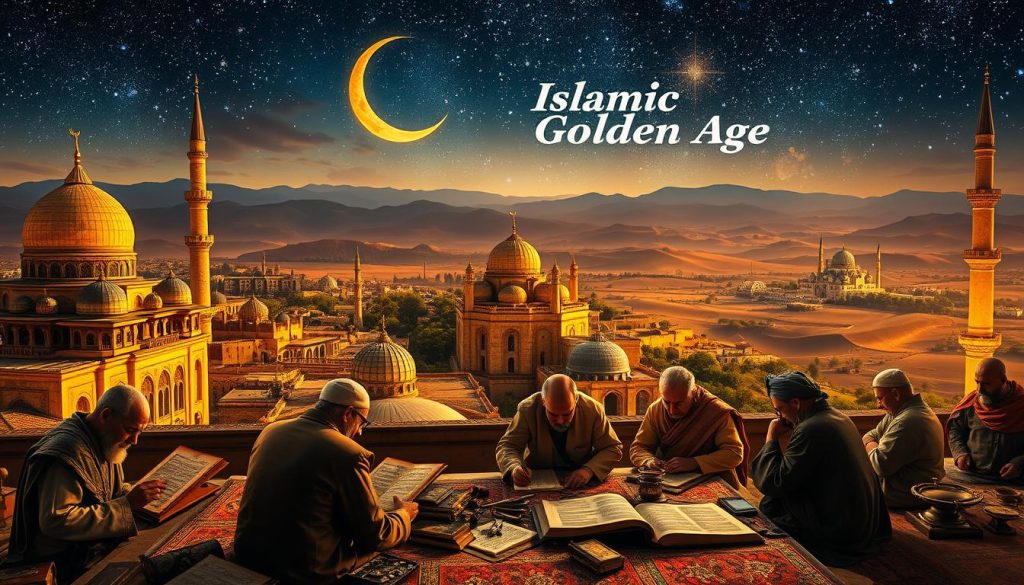
The Islamic Golden Age was a time of great learning and new ideas. It lasted from the 8th to the 14th century. During this time, people from all over were eager to learn and share knowledge.
Islamic scholarship grew a lot during this era. Famous scholars like Al-Khwarizmi, Ibn Sina (Avicenna), and Ibn Rushd (Averroes) changed many fields. Their work helped others to build on their discoveries.
Scientific Advancements and Discoveries
Science made big steps forward during the Islamic Golden Age. Scholars translated old texts, found new ways to study, and made big discoveries in astronomy, physics, and chemistry.
For example, Al-Biruni’s work on astronomy and geography was very important. He was very good at figuring out the Earth’s size.
Mathematical Contributions to World Knowledge
Islamic scholars were brilliant in math. They made big changes that greatly improved European math. Al-Khwarizmi’s work on algebra was a major step forward.
They also introduced Arabic numerals (0-9) to Europe. This made math easier and helped with trade and science.
Medical Breakthroughs and Healthcare Systems
In medicine, Islamic doctors made big discoveries. Ibn Sina’s “The Canon of Medicine” was a big hit in Europe. It helped teach medicine for a long time.
Hospitals in this era were also new. They had special departments and trained nurses, a big step forward in healthcare.
The Islamic Golden Age was a time of great learning and culture. It was driven by a love for knowledge and a desire to understand the world better. Its legacy inspires scholars today.
Islamic Art and Architecture Through the Ages
The beauty of Islamic art and architecture shows the rich culture of Islamic civilisation. We will look at what makes Islamic art and architecture special. We will see how they show Islamic faith and culture.
Distinctive Features of Islamic Architectural Design
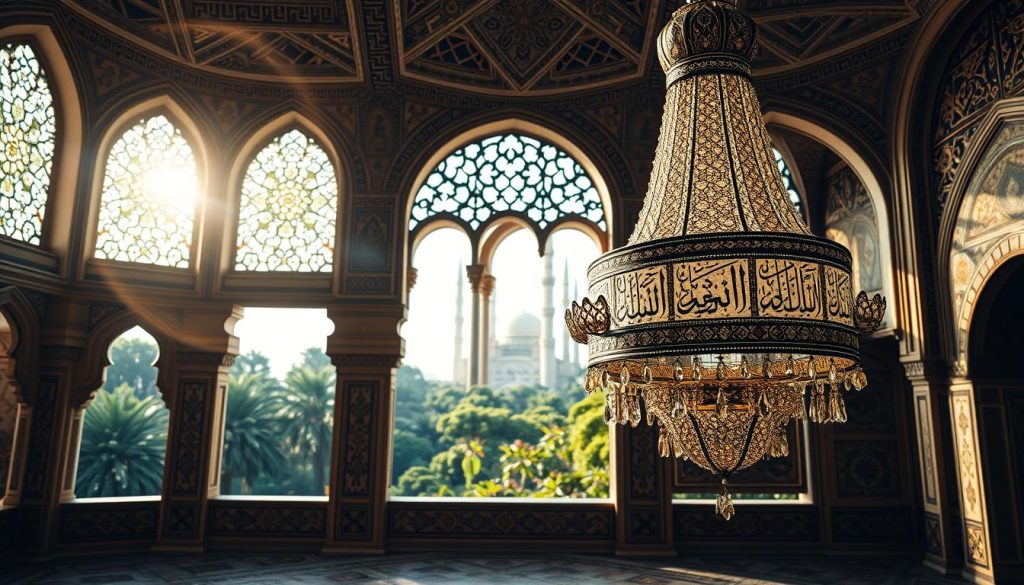
Islamic architecture is known for its grandeur and detailed designs. Mosques, palaces, and big buildings show the skill of Islamic architects. Key features include arches, domes, and minarets. These add beauty and have deep meanings.
Arches symbolise unity and the link between the world and the divine. Domes, with their patterns, represent the sky. Tall and thin minarets call people to prayer.
| Architectural Element | Symbolic Meaning | Example |
| Arches | Unity and connection between the earthly and divine | Taj-ul-Masjid, Bhopal |
| Domes | Celestial vault | Dome of the Rock, Jerusalem |
| Minarets | Beacon for prayer | Masjid al-Haram, Mecca |
Calligraphy as a Sacred Art Form
Calligraphy is highly valued in Islamic art and is seen as a sacred form. It carries the word of God from the Quran. Beautiful handwriting is pretty and spiritual, connecting us to the divine.
Styles like Kufic and Naskh have developed over time. Kufic is angular and geometric and used in buildings and decorations. Naskh is more flowing, found in Quran manuscripts.
Mathematical Contributions to World Knowledge
Islamic scholars were geniuses in math. They made huge changes that greatly improved European math. Al-Khwarizmi’s work on algebra was a significant step forward.
They also introduced Arabic numerals (0-9) to Europe. This made math easier and helped with trade and science.
Medical Breakthroughs and Healthcare Systems
In medicine, Islamic doctors made big discoveries. Ibn Sina’s “The Canon of Medicine” was a big hit in Europe. It helped teach medicine for a long time.
Hospitals in this era were also new. They had special departments and trained nurses, a big step forward in healthcare.
The Islamic Golden Age was a time of great learning and culture. It was driven by a love for knowledge and a desire to understand the world better. Its legacy inspires scholars today.
Islamic Art and Architecture Through the Ages
The beauty of Islamic art and architecture shows the rich culture of Islamic civilisation. We will look at what makes Islamic art and architecture special and see how they show Islamic faith and culture.
Distinctive Features of Islamic Architectural Design
Islamic architecture is known for its grandeur and detailed designs. Mosques, palaces, and big buildings show the skill of Islamic architects. Key features include arches, domes, and minarets. These add beauty and have deep meanings.
Arches symbolise unity and the link between the world and the divine. Domes, with their patterns, represent the sky. Tall and thin minarets call people to prayer.
| Architectural Element | Symbolic Meaning | Example |
| Arches | Unity and connection between the earthly and divine | Taj-ul-Masjid, Bhopal |
| Domes | Celestial vault | Dome of the Rock, Jerusalem |
| Minarets | Beacon for prayer | Masjid al-Haram, Mecca |
Calligraphy as a Sacred Art Form
Calligraphy is highly valued in Islamic art, seen as a sacred form. It carries the word of God from the Quran. Beautiful handwriting is pretty and spiritual, connecting us to the divine.
Styles like Kufic and Naskh have developed over time. Kufic is angular and geometric and used in buildings and decorations. Naskh is more flowing, found in Quran manuscripts. Geometric Patterns and Their Symbolic Meanings
Geometric patterns are everywhere in Islamic art, found in mosques and palaces. These patterns, made of shapes like triangles and circles, are not just for looks. They show the infinite and God’s unity, reflecting Islamic beliefs.
The complex patterns show the connection of all things and the unity of the Islamic community. They also represent the Islamic view of the universe, where the physical and spiritual are linked.
Islamic History and Culture: Influence on Global Civilisation
Islamic history and culture have greatly shaped our world. They have done this through cultural exchange and scholarly work. The Islamic world has been a hub of ideas, cultures, and civilisations. This has created a rich heritage that affects us today.
Cultural Exchange Between East and West
The Islamic world helped bridge East and West during the medieval period. This wasn’t just about trade; it was also about sharing knowledge, ideas, and innovations.
Key aspects of this exchange included:
- Translation of classical texts into Arabic, which later influenced European scholarship.
- Advancements in mathematics, astronomy, and medicine were transmitted to Europe.
- Cultural influences on art, architecture, and literature.
Islamic Contributions to the European Renaissance
Islamic scholars made big steps in science, philosophy, and maths. Their work changed the European Renaissance a lot.
| Field | Islamic Contributions | Impact on Europe |
| Mathematics | Development of Algebra, introduction of Arabic numerals. | Revolutionised mathematical understanding and calculations. |
| Astronomy | Accurate astronomical observations and new astronomical tables. | Influenced European astronomers like Copernicus. |
| Medicine | Comprehensive medical encyclopedias and advancements in surgery. | Shaped medical education and practice in Europe. |
These contributions show Islamic civilisation has big role in global knowledge and culture. They highlight the lasting impact of Muslim heritage on our world.
Islamic Scholarship and Educational Traditions
For centuries, Islamic schools have been key to Islamic learning. They have a long tradition of education. Islamic teachings stress the importance of knowledge and education.

The Development of Madrasas and Universities
Madrasas and universities have evolved in Islamic education. Initially, madrasas focused on religious studies. Now, they teach various subjects, including mathematics, astronomy, and medicine.
Key Developments:
- Al-Azhar University in Cairo is one of the oldest universities in the world.
- The Nizamiyya madrasas, started in the 11th century, set a model for schools across the Islamic world.
These institutions have played a vital role in preserving Islamic knowledge. They have also contributed to global understanding.
Notable Muslim Scholars and Their Works
Muslim scholars have made significant contributions to various fields. Figures like Ibn Sina (Avicenna) and Ibn Rushd (Averroes) have impacted philosophy, medicine, and science.
“The Canon of Medicine” by Ibn Sina showcases the advancements in medical science during the Islamic Golden Age. It was a foundational text in European universities for centuries.
“The pursuit of knowledge is obligatory upon every Muslim.”
Quotes from the Prophet Muhammad underscore the importance of education in Islam. The efforts of Muslim scholars have enriched Islamic knowledge. They have also influenced many areas globally.
Islamic Heritage Sites Around the World
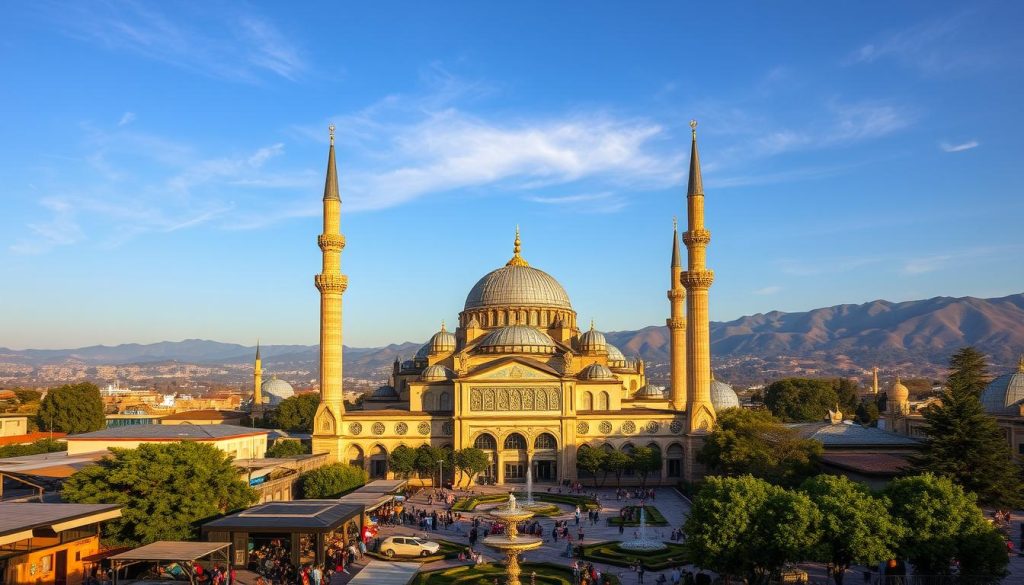
Islamic heritage sites worldwide are more than historical buildings. They symbolise a vibrant culture. Found in the Middle East, South and Southeast Asia, and Britain, these sites highlight Islamic civilisation’s achievements.
Architectural Marvels in the Middle East
The Middle East boasts significant Islamic heritage sites, reflecting the region’s critical role in Islamic history. The Al-Aqsa Mosque in Jerusalem and the Umayyad Mosque in Damascus exemplify early Islamic architecture.
- The Al-Aqsa Mosque, a sacred site in Islam, has undergone numerous transformations and restorations.
- The Umayyad Mosque, renowned for its stunning mosaics and minarets, represents the pinnacle of Umayyad architecture.
Islamic Monuments in South and Southeast Asia
South and Southeast Asia are home to numerous Islamic monuments. These sites showcase the cultural and architectural diversity of the regions. The Taj Mahal in India and the Masjid Sultan Omar Ali Saifuddien in Brunei are exemplary.
“The Taj Mahal, with its perfect proportions and detailed marble inlays, is a masterpiece of Mughal architecture. It combines Indian, Persian, and Islamic styles.”
The UNESCO World Heritage Centre
Islamic Cultural Heritage in Britain
Britain also boasts many Islamic heritage sites, reflecting its rich Islamic cultural heritage. The Shacklewell Lane Mosque in London is one of the oldest mosques in Britain. It serves as a hub for Islamic worship and community activities.
These Islamic heritage sites underscore the architectural and cultural achievements of Islamic civilisation and highlight the importance of preserving our shared cultural heritage.
Islamic Traditions and Practices in Daily Life
In Muslim lives, Islamic traditions are fundamental. They shape daily routines and community life. These practices are not mere rituals but are deeply woven into the social fabric and personal beliefs of Muslims worldwide.

The Five Pillars of Islam
The Five Pillars are the heart of Islamic practice. They guide a Muslim’s life and spiritual journey. Shahada, the declaration of faith, is key. It confirms belief in one God and Muhammad’s prophethood.
Salat, or prayer, is done five times a day. It connects the individual with God and is a time for spiritual renewal and reflection.
- Zakat: Giving charity, fostering community and social responsibility.
- Sawm: Fasting in Ramadan, teaching self-discipline and empathy.
- Hajj: The pilgrimage to Mecca, uniting Muslims worldwide.
Islamic Festivals and Celebrations
Islamic festivals unite communities. Eid al-Fitr, celebrated with feasting, ends Ramadan. Eid al-Adha honours Prophet Ibrahim’s sacrifice, showing obedience and faith.
These events strengthen family bonds and social ties.
Family Values and Social Structures
Family is highly valued in Islam. Respect for parents and care for children are key. The community is seen as an extended family. Muslims are encouraged to be compassionate and supportive.
Islamic teachings promote a balanced society. They advocate for justice, equality, and mutual respect.
Islamic Literature and Poetry
Islamic literature is a treasure of human experiences and spiritual quests. It includes works by classical authors and Sufi poets. We will explore how Islamic literature enriches world culture, focusing on its classic works and the beauty of Sufi poetry.
Classical Islamic Literary Works
Classical Islamic literature is known for its beauty and depth. It includes poetry, prose, and historical accounts that have shaped Islamic thought and culture. For example, the Mu’allaqat, a collection of pre-Islamic Arabic poetry, is celebrated for its eloquence and insight into Arabian society.
Many classic works treat subjects like theology, jurisprudence, and medicine. The early Islamic literary tradition was vital in spreading knowledge across the Islamic world and beyond.
| Genre | Notable Works | Significance |
| Poetry | Mu’allaqat, Diwan al-Hamasah | Reflects pre-Islamic and Islamic Arabian society |
| Prose | Kalila wa Dimna, The Meadows of Gold | Conveys moral teachings and historical accounts |
| Historical Accounts | The History of al-Tabari, The Muqaddimah | Provides detailed histories of the Islamic world |
Sufi Poetry and Its Universal Appeal
Sufi poetry explores love, spirituality, and the quest for divine truth. Poets like Rumi, Hafiz, and Attar have become icons of Sufi literature. Their works, translated into many languages, are cherished worldwide.
The universal appeal of Sufi poetry lies in its ability to connect with people across cultures and centuries. It speaks to the human soul, exploring themes like love, spiritual enlightenment, and the human condition.

Sufi poetry reflects the broader Islamic literary tradition, valuing spiritual and emotional expressions. This tradition inspires writers and artists today, ensuring Islamic literature remains relevant and appealing.
Contemporary Islamic Art and Cultural Expressions in Britain
The evolution of Islamic art in Britain is a mix of old and new. This mix shows how Islamic art keeps changing but stays true to its roots.
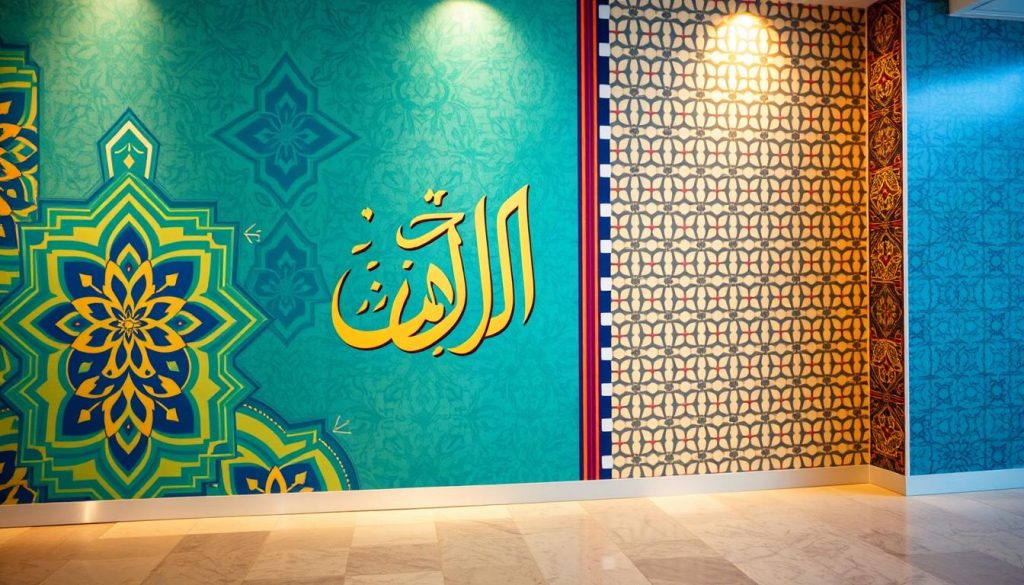
Modern Interpretations of Traditional Islamic Art
British Muslim artists are changing traditional Islamic art. They mix old and new styles, making art exciting again.
- Geometric patterns are now in modern designs, combining old Islamic motifs with new looks.
- Calligraphy, a key Islamic art, is used in new ways, from abstract to street art.
- Modern buildings use Islamic elements like arches and domes, showing a mix of old and new.
Islamic Art in British Museums and Galleries
British museums and galleries are key in showing Islamic art and culture. The British Museum and the Victoria and Albert Museum have big collections. They show the beauty and importance of Islamic art.
These collections keep Islamic art alive, let more people see it, and help spread the love for Muslim heritage.
Key exhibitions and collections include:
- The British Museum’s collection of Islamic art features intricately made ceramics, textiles, and metalwork.
- The V&A’s Islamic art collection includes beautiful calligraphy, miniatures, and architectural pieces.
British Muslim Artists and Their Contributions
British Muslim artists are making a significant impact on today’s art scene. Their work often shows their cultural background while tackling today’s themes and issues.
Some notable British Muslim artists include:
- Artist Name, known for their creative use of Islamic calligraphy in modern art.
- Another Artist who explores identity and culture through their work.
These artists and others are shaping Islamic art in Britain today. They are pushing limits and changing how we see things.
Conclusion
Our guide has shown the deep impact of Islamic civilisation on the world. It’s a story of rich history and culture.
Islam started in the Arabian Peninsula and spread far and wide. It has changed the lives of millions. The Islamic Golden Age brought great scientific and medical progress.
Knowing about Islamic history and culture is key today. It helps us appreciate and respect each other more. As we face the world’s challenges, Islamic civilization’s importance grows.
By celebrating Islamic traditions, we can build a more united society. We hope this guide helps you understand and appreciate Islamic history and culture. It’s a journey into a vibrant and diverse heritage.
FAQ
What is the significance of Islamic history and culture?
Islamic history and culture have greatly shaped our world. They have influenced art, architecture, science, and literature. They continue to inspire faith and cultural expression today.
What were the significant contributions of the Islamic Golden Age?
During the Islamic Golden Age, Muslim scholars made considerable strides in science, mathematics, medicine, and philosophy. Their work had a lasting impact on global knowledge and paved the way for the European Renaissance.
How has Islamic art and architecture evolved over time?
Islamic art and architecture have changed a lot. They now include many styles while keeping unique features like calligraphy and geometric patterns. These designs show Islamic faith and culture.
What is the importance of Islamic heritage sites?
Islamic heritage sites are architectural wonders with deep cultural and historical value. They give us a peek into Islamic civilization’s rich history and cultural diversity.
How do Islamic traditions and values shape daily life?
Islamic traditions and values, like the Five Pillars, shape daily life. They influence family, community, and individual practices. They give Muslims a sense of purpose and belonging.
What is the significance of Sufi poetry in Islamic culture?
Sufi poetry is very important in Islamic culture. It conveys spiritual themes and emotions. It is celebrated for its universal appeal and timeless beauty.
How is Islamic art represented in British museums and galleries?
Islamic art is shown in British museums and galleries. These places display a wide range of artefacts, like textiles and ceramics. They highlight the richness and complexity of Islamic art and culture.
What are the contemporary expressions of Islamic art in Britain?
In Britain, Islamic art is getting a modern twist. It shows the creativity of British Muslim artists. They are making Islamic art relevant for today.
How has Islamic scholarship influenced global knowledge?
Islamic scholarship has played a big role in global knowledge, most evident during the Islamic Golden Age. It has shaped science, mathematics, and medicine.