



Did you know we spend almost 90% of our lives indoors? Most of this time is in our homes. This shows our living spaces’ importance for our wellbeing, identity, and spiritual connection.
In today’s fast-paced world, having a peaceful, meaningful, and faithful home can change our lives. For Muslims in Britain, our homes are more than just places to live. They are sanctuaries where faith grows, children learn, and we remember Allah daily.
The muslim lifestyle in modern Britain blends tradition with today’s needs. Adding Islamic wall art and thoughtful decor makes homes beautiful and nourishing for the soul.
These design choices remind us of our faith quietly. Each piece of calligraphy is a reminder to remember Allah. Each geometric pattern shows the beauty of divine order. Such spaces help families stay connected to their faith in today’s fast world.
Key Takeaways
- Creating faith-centred homes provides essential spiritual anchoring in our busy modern lives
- Thoughtful design choices can transform ordinary spaces into sanctuaries of peace and remembrance
- Islamic wall art serves as a form of dhikr (remembrance) in the home environment
- Balancing traditional Islamic aesthetics with contemporary design creates harmonious living spaces
- Intentional home environments support families in maintaining spiritual awareness
- A well-designed Islamic home addresses both practical needs and spiritual nourishment
The Foundations of Modern Islamic Living
Creating a modern Islamic home starts with understanding Islamic art and architecture. These principles are not just for looks but carry deep spiritual values. They can turn any space into a peaceful place of remembrance.
The Quran and Sunnah teach us to fill our homes with Allah’s remembrance. Islamic reminders strengthen our faith and guide our children. By adding Islamic culture elements to our homes, we support spiritual growth and beauty.
Modern Islamic living is not about old styles. It’s about applying timeless principles in today’s Britain. This way, Muslim families can keep their heritage while meeting today’s needs.
Core Aesthetic Principles in Islamic Tradition
Islamic design follows key principles throughout the ages. These principles give Islamic spaces their unique character:
- Unity (Tawhid) – Reflects Allah’s oneness through unified designs and patterns
- Balance and Harmony – Ensures all elements work together without one dominating
- Rhythm and Repetition – Uses patterns to show Allah’s eternal nature
- Abstraction – Celebrates pattern and form over figurative art
These principles show in Islamic design’s unique features. Geometric patterns, for example, show divine order and precision. They remind us of Allah’s endless nature.
Natural forms and botanical motifs in Islamic design connect us to Allah’s creation and encourage us to see beauty in nature as a sign of divine art.
“Beauty is a manifestation of truth, and in Islamic tradition, surrounding oneself with beauty is a way of remembering the Divine.”
Applying these principles to contemporary Islamic values in home design makes spaces authentic and relevant. Modern Islamic living is not about sticking to old styles. It’s about understanding the spiritual essence behind these choices.
For British Muslim families, this means finding creative ways to include these principles in homes. The challenge is to adapt these timeless principles to British contexts.
| Islamic Design Principle | Traditional Expression | Modern Application | Spiritual Significance |
| Unity (Tawhid) | Interconnected geometric patterns | Cohesive colour schemes and integrated design elements | Reflects the oneness of Allah |
| Balance | Symmetrical architectural features | Thoughtful furniture arrangement and proportional spaces | Represents equilibrium and justice |
| Rhythm | Repeating arches and motifs | Consistent design elements throughout the home | Symbolises the eternal nature of divine presence |
| Abstraction | Non-figurative art and calligraphy | Contemporary abstract art with Islamic influences | Focuses attention on meaning over material form |
Understanding these principles helps us make meaningful choices in our homes. We should look for items that truly reflect Islamic values and design principles.
The beauty of modern Islamic living is its ability to adapt. These principles can be expressed in new materials, colours, and forms. This flexibility lets British Muslim families create timeless and modern homes.
Essential Islamic Design Elements for Contemporary UK Homes
Reimagining your UK home with an Islamic lens involves key design elements. These elements form the basis for spaces that honour faith and modern living. They transform ordinary homes into havens that reflect Muslim identity and appeal to today’s tastes.
Islamic design is versatile and fits various UK architectural styles. Whether your home is Victorian, modern, or suburban, these principles can blend faith and function seamlessly.
Geometric Patterns: Mathematical Beauty with Spiritual Meaning
Geometric patterns are at he heart of Islamic decorative arts. They show mathematical precision and infinite patterns, symbolising Allah’s boundlessness. These designs are more than just decoration; they hold deep spiritual meaning through their symmetry and endless repetition.
The spiritual essence of Islamic geometric patterns is in their divine order and unity. The shapes create a visual meditation on creation’s infinite nature, reminding us of Allah’s perfect universe.

In UK homes, these patterns can be used in many ways to fit existing styles. They add depth and meaning, expressing Muslim identity through architectural details or bold pieces.
| Application | Level of Prominence | Best UK Room Placement | Maintenance |
| Wall Art | High | Living Room, Prayer Space | Low (occasional dusting) |
| Rugs & Carpets | Medium to High | Living Room, Bedroom | Medium (regular vacuuming) |
| Tile Work | High | Kitchen, Bathroom | Medium (regular cleaning) |
| Textiles (Cushions, Throws) | Low to Medium | Throughout Home | Medium (washing as needed) |
| Architectural Details | Medium | Doorways, Windows | Low (occasional dusting) |
When choosing geometric patterns, consider the scale and complexity for your room size. Smaller homes look better with simpler patterns, while larger spaces can handle more complex designs.
Arabic Calligraphy: Words as Artistic Expression
Arabic calligraphy turns written language into artistic beauty, making it a key Islamic design feature. In modern Islamic living, it serves as both decoration and spiritual reminder.
The art of Arabic calligraphy has evolved, with styles ranging from geometric Kufic to elegant Diwani. Each style adds its character to home décor, allowing for personal expression within Islamic traditions.
Incorporating calligraphy into British homes creates focal points that inspire and uplift. Verses from the Quran or meaningful phrases can adorn walls, reminding us of our faith and expressing Muslim identity.
Contemporary uses of calligraphy in UK homes include:
- Framed wall art featuring ayat from the Quran in traditional or modern calligraphic styles
- Custom canvas prints with favourite duas or Islamic phrases
- Laser-cut wooden or metal calligraphy for three-dimensional impact
- Subtle calligraphic motifs on textiles like cushions or throws
When choosing calligraphy, consider the text’s meaning and how it fits your interior design. Calligraphy can be bold or subtle, commanding attention or blending with other design elements.
For smaller UK properties, calligraphy is an ideal way to express faith without needing much space. A well-placed calligraphic piece can turn even the smallest area into a spiritually meaningful space that reflects modern Islamic living.
By incorporating these essential Islamic design elements, UK homeowners create spaces that honour their Muslim identity and embrace modern aesthetics. The result is a home that feels both timeless and contemporary—a sanctuary that nurtures faith and meets today’s lifestyle needs.
Islamic Wall Art: Centrepieces of Modern Muslim Homes
The walls of a Muslim home are like a canvas. They mix faith and art, making powerful focal points. These pieces define the living space.
In modern Islamic living, wall art is more than decoration. It’s a daily reminder of values and beliefs. It turns rooms into spaces of reflection, inspiration, and beauty.
Islamic art has always had a deeper meaning. It turns your home into a sanctuary that reminds you of your faith. It also creates a calm atmosphere.
Placing meaningful pieces in your home creates a cohesive environment. It honours tradition while embracing modern design.
Contemporary Quranic Calligraphy Pieces
Quranic calligraphy is a deep expression of Islamic art. It brings sacred words into the home. Modern calligraphers have updated this art, making it relevant today while keeping its spiritual value.
Today’s calligraphy artists offer many styles. Minimalist designs with single ayahs in bold scripts are striking. They use negative space and clean lines that fit modern décor.

Ornate calligraphy brings timeless elegance to homes. Many British Muslim homeowners are drawn to Allah wall art. It marries classic techniques with modern hues, blending the old with the new.
Contemporary Quranic calligraphy is adaptable. It can be bold in public spaces or subtle in private ones. The same verse can be interpreted in many ways, from geometric to abstract, allowing for personal expression.
Mixed Media Islamic Artwork for Statement Walls
Islamic art has evolved, embracing new techniques for unique pieces. Mixed media artwork is a new frontier in reconciling faith and modernity. It allows artists to express Islamic principles in a contemporary manner.
These works might combine calligraphy with architectural photos or use digital techniques. British Islamic artists excel at merging their cultural heritage with modern British experiences.
Statement walls with mixed-media Islamic artwork make a significant impact. They encourage deeper contemplation. A piece that blends traditional patterns with abstract elements showcases the balance between order and creativity.
When selecting mixed media artwork, choose pieces that reflect your faith. They add cultural depth and interest to your home.
Please take a look at where to place Islamic wall art carefully. In living areas, large pieces can set the room’s tone. Prayer areas need calligraphy that inspires reflection. Bedrooms might have more serene pieces for peace.
British Islamic design studios create pieces for UK homes. They consider UK architecture and lighting. These works often feel more connected to UK Muslim homeowners, reflecting shared experiences and tastes.
Whether it’s a bold calligraphy piece or a mixed-media work, Islamic wall art is the heart of the modern Muslim home. It does more than decorate. It transforms spaces, sparks conversations, and offers daily chances to reflect on faith and beauty.
Colour Theory in Modern Islamic Interior Design
Colour theory is key in modern Islamic interior design. It connects old symbolism with new looks. Choosing colours in Muslim homes makes spaces beautiful and soul-nourishing.
Knowing Islamic colour palettes and how to use them today lets homeowners create spaces that respect Islamic culture. They can also fit modern tastes.
Traditional Islamic Colour Palettes and Their Symbolism
Islamic art and architecture use special colours with deep meanings. Turquoise blue stands for paradise and enlightenment. It’s seen in mosques and palaces worldwide.
Cobalt blue means protection and spiritual strength. It’s found in prayer rugs and buildings, making them feel divine. Emerald green is linked to the Prophet Muhammad and life, growth, and paradise.
Terracotta and earthy reds show humility and connection to the earth. Gold, used sparingly, means divine light. These colours express spiritual ideas through art.
“Colour gives the human soul such a shock of happiness and rich impression because in an instant it transports man to the midst of paradise.” – Ibn al-Haytham, 11th-century Islamic scholar.

Contemporary Adaptations for British Homes
Bringing Islamic colours to British homes requires careful thought. We use neutral colours like whites and greys, which are valued in Islamic design and modern British interiors.
We suggest adding jewel tones with accent pieces. A blue ottoman or green cushions can add Islamic flair without overwhelming the space. This balances tradition with modern taste.
British homes, with less natural light, benefit from careful colour use. Dark days are brightened by colour accents. Seasonal colour changes also work well, with deeper tones in winter and lighter ones in summer.
The Islamic Wall Art collection shows how to adapt traditional colours for today. Their “Set of 3 Islamic Wall Art in Grey and Black” uses modern colours while keeping spiritual value.
Creating Visual Harmony Through Strategic Colour Choices
Colour theory is key for Islamic-inspired interiors. The colour wheel helps create balanced schemes. Complementary colours add energy, seen in Islamic buildings.
For calm spaces, use analogous colours. The 60-30-10 rule helps with colour distribution. This rule guides in choosing colours for different areas.
Colour zoning defines areas in open-plan homes. A colour change can separate a prayer space from a living area. This respects contemporary Islamic values of openness and boundaries.
Consider light when choosing colours. In the UK, use colours that reflect light. Lighter colours on north walls and deeper tones on south walls work well.
Choose colours that feel right to you. The colours that resonate with your spirituality and beauty will create a true and nurturing home. This thoughtful colour selection respects Islamic design and modern living.
Furniture and Accessories with Islamic Character
In Islamic home design, furniture and accessories show Muslim identity and are practical. They fill spaces and create a special atmosphere. This way, Muslim homes in the UK show their values and style.
Choosing furniture and decor is key to a home’s spiritual feel. The right items can make rooms that support body and soul. This creates a space for family and prayer.
Minimalist Approaches to Traditional Islamic Furniture
Traditional Islamic furniture had intricately carved and geometric shapes. Today, minimalist designs keep these features but fit modern homes. Low-profile seating encourages talking and connection, which is essential in Muslim culture.
Modern majlis-style seating is comfy and flexible. Its clean lines and geometric patterns honour Islamic design. These pieces fit well in any room.

Room-by-Room Transformation Guide for Modern Islamic Living
Creating a harmonious Islamic living environment requires careful thought. Each space in your home should meet both practical and spiritual needs. By applying Islamic principles to each room, we can make our homes beautiful and supportive of our faith. This guide will help you turn each area of your home into spaces that honour Islamic traditions and modern design.
Geometric side tables with brass or copper add beauty and function. They have shapes like hexagons and octagons, found in mosques. Choose quality to last, as Islam values avoiding waste.
Storage with lattice work or mashrabiya screens is valuable and interesting. They’re great in British homes where space is limited. They add beauty and function.
| Traditional Element | Minimalist Interpretation | Practical Benefits | Best Room Placement |
| Ornate wooden divans | Low-profile modular sofas with subtle geometric upholstery | Flexible seating, contemporary appeal | Living room, family room |
| Carved wooden tables | Geometric metal and glass side tables | Easy to clean, visually light | Throughout home |
| Elaborate storage chests | Streamlined cabinets with Islamic pattern inlays | Ample storage, subtle cultural reference | Bedroom, hallway |
| Ornate wooden screens | Laser-cut metal room dividers | Privacy, light filtration, and decorative elements | Open-plan spaces, prayer areas |
Decorative Elements That Enhance Spirituality
Decorative items are key in creating a spiritual home. They remind us of our faith every day. Lanterns and lamps inspired by famous designs add beauty and light.
Prayer bead displays are both beautiful and meaningful. A wooden stand for tasbih beads is a functional and artistic piece. It can be placed on a shelf or table.
Moroccan-inspired pouffes or ottomans add colour and culture. They can be used as seats or decor, bringing warmth and heritage to modern spaces.
Incense burners and oud diffusers engage our sense of smell. They create a sensory experience. Traditional materials like brass and ceramic are made modern, keeping cultural significance.
Functional Items with Subtle Islamic Design Touches
Islamic design adds meaning to everyday items. Kitchen and dining items are great for this. Look for dinnerware and platters with geometric or arabesque designs.
Textiles are another way to add Islamic design to your home. Cushion covers and throws with calligraphy or geometric patterns add texture and meaning. They can be changed with the seasons or design preferences.
Ottoman-inspired furniture adds luxury and heritage. From sofas to coffee tables, these pieces bring a touch of opulence. Their unique shapes reference Islamic design traditions.
Lighting with perforated metal shades casts beautiful patterns. These pieces transform rooms, making them special in the evening. Their patterns dance across walls and ceilings.
Desk accessories with Islamic design elements are perfect for the home office. A pen holder or notebook with geometric inlay adds beauty to work. These small touches create a cohesive design language.
Furniture and accessories show the Muslim lifestyle. Each item celebrates heritage and meets modern needs. By choosing pieces that resonate with Islamic tradition and personal taste, homes reflect identity and values.
When looking for Islamic-inspired items in the UK, check specialist stores and mainstream shops. Many British Muslim designers create innovative pieces that blend tradition and modern style, supporting local craftsmanship and cultural expression.
Room-by-Room Transformation Guide for Modern Islamic Living
Creating a harmonious Islamic living environment requires careful thought. Each space in your home should meet both practical and spiritual needs. By applying Islamic principles to each room, we can make our homes beautiful and supportive of our faith. This guide will help you turn each area of your home into spaces that honour Islamic traditions and modern design.
Creating a Serene and Practical Prayer Space
The prayer space is the most sacred area in a Muslim home. It could be a dedicated room or just a corner. Creating a space for salah is key for modern Islamic living.
If space is limited, think about a corner for prayer. A foldable prayer mat is great for small UK homes. For a dedicated room, soft, natural lighting makes it peaceful for spiritual connection.
Consider these practical things:
- Comfortable floor cushions or a padded prayer mat
- Clear qibla indication (a subtle compass or wall marking)
- Storage solutions for prayer items and Qurans
- Soft lighting that enhances focus without causing eye strain
Decorative elements can include framed verses from the Quran, minimalist Islamic wall art, or subtle geometric patterns. The goal is to create a space that feels like a sanctuary for spiritual connection.
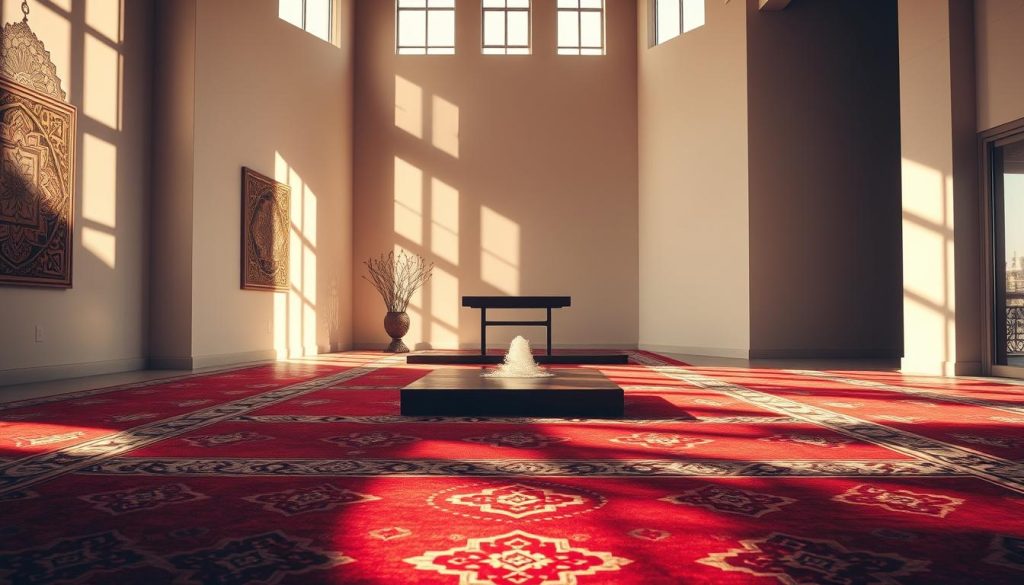
Living Room Design: Balancing Hospitality and Islamic Aesthetics
The living room is where we welcome family and guests. When applying Islamic principles here, we aim for both beauty and function.
Seating should encourage conversation and connection. You can modernise traditional floor seating or use sofas that promote interaction.
Wall décor is a chance to show Islamic art. A family gallery wall with personal photos and calligraphy or Quranic verses is a great idea. It celebrates faith and family, making the room welcoming.
For homes where gender separation is desired, consider:
- Flexible furniture arrangements that can be easily reconfigured
- Folding screens or room dividers with Islamic patterns
- Open-plan designs with subtle visual breaks using rugs or furniture placement
Media integration should respect Islamic values and meet today’s needs. TVS can be housed in cabinets that can be closed during prayer or when guests prefer conversation.
Bedroom Sanctuaries with Subtle Islamic Elements
Bedrooms should be peaceful retreats for rest and reflection. Modern Islamic living principles can make these spaces sanctuaries for physical and spiritual renewal.
Start with a clean design that promotes calm. Choose natural materials for bedding in calming colours that reflect Islamic traditions. Small-scale geometrics or abstracted botanical motifs add interest without overwhelming the space.
Wall décor should be minimal but meaningful. A single piece of calligraphy featuring a bedtime dua or a verse about rest is a good choice. Place it where it can be seen from the bed as a reminder of gratitude before sleep.
Consider these practical elements:
- Prayer mats or small prayer spaces within larger bedrooms
- Modest window treatments that ensure privacy
- Bedside tables with space for religious texts
- Soft, adjustable lighting for reading and reflection
Storage solutions should keep the room serene by organising possessions and keeping them out of sight. Built-in wardrobes with simple, clean lines support the Islamic principle of order while addressing contemporary needs.
Kitchen and Dining Areas: Combining Function with Cultural Heritage
Kitchens and dining spaces offer unique chances to apply Islamic principles to daily life. These areas support food preparation and the Islamic traditions of hospitality and breaking bread together.
In the kitchen, consider the practical aspects of halal food preparation. Separate storage for meat and dairy products makes halal practices easier. If space allows, dedicated preparation surfaces can simplify dietary guidelines.
Design elements might include:
- Subtle geometric tile patterns for splashbacks
- Natural materials like wood and stone that reflect Islamic appreciation for nature
- Herbs commonly used in Islamic culinary traditions are displayed in decorative containers
- Calligraphy or artwork featuring food-related verses or hadiths
Dining areas should honour the Sunnah while meeting today’s needs. Low tables with floor cushions offer a traditional dining experience, while conventional dining tables can be designed to facilitate sharing and conversation. Round or oval tables often work best for promoting the communal aspect of meals central to Islamic tradition.
Displaying family heirlooms or cultural items that connect your space to Islamic heritage is a good idea. Decorative serving pieces, traditional textiles as table runners, or handcrafted items from Muslim artisans add meaning to these functional spaces.
By thoughtfully applying Islamic principles to each room, we create homes that support our spiritual journey and practical daily needs. These spaces become more than just beautiful environments—they become meaningful contexts for living out our faith in the modern world.
Applying Islamic Principles to Home Organisation and Layout
Muslim families can make their homes beautiful by mixing faith with modern living. How we arrange our homes affects our faith, family life, and how we welcome guests. By thinking about Islamic values in our design, we make spaces for spiritual growth and daily life.

Privacy Considerations in Open-Plan UK Homes
Open-plan homes are loved in the UK for their light and space. But, they can be tricky for Muslim families who value privacy and modesty.
Creating zones in open spaces helps keep privacy without losing the open-plan feel. Strategic furniture placement can define areas while maintaining the flow. Use sofas and bookcases as natural dividers that don’t block light or conversation.
Flexible solutions are excellent in UK homes where space is limited. Folding screens, sliding doors, and curtain dividers offer privacy when needed, like during prayer or mixed-gender gatherings. They can be adjusted easily.
Good circulation patterns also help privacy. Design paths through your home that let family members move without disturbing others or losing modesty. This might mean creating secondary routes to bathrooms or placing bedrooms away from central areas.
Creating Spaces for Family Gatherings and Community
Islamic tradition values hospitality and community. Our homes should show this by being ready for family moments and big gatherings.
Multipurpose rooms are flexible for different gatherings. A dining area for Eid celebrations or a living room for study circles makes your home versatile. Use extendable tables and stackable seating that can be stored when not in use.
Think about how indoor and outdoor spaces can work together. Even small gardens or balconies can add to your living area in warmer months. This connection to nature shows Islamic appreciation for Allah’s creation.
Start small when changing your spaces. Pick a key area, like the living room or prayer corner, and add Islamic touches that mean something to your family. This gradual approach makes the changes meaningful and less overwhelming.
Balancing Modesty and Openness in Home Design
Finding the right balance between modesty and openness is key in applying Islamic principles to homes. This affects everything from window treatments to entrance designs.
Window treatments need careful thought. Layered approaches work well, with sheer curtains for daytime privacy and heavier drapes for complete privacy at night. This keeps the outdoors visible while respecting Islamic values.
Entrance design is also essential for privacy. Consider a transitional space between the front door and main living areas. A small foyer or hallway gives the family time to adjust if unexpected visitors arrive.
Sight lines in the home should be planned carefully. Arrange furniture and doorways so private areas aren’t seen right away. This modest design choice keeps things welcoming without being too open.
| Design Element | Traditional Approach | Modern Adaptation | Benefits |
| Room Division | Separate rooms for men and women | Flexible dividers in open-plan spaces | Maintains privacy while preserving contemporary aesthetic |
| Entrance Design | Indirect pathways to the main living areas | Foyer or hallway as a transition space | Creates a privacy buffer while welcoming guests |
| Windows | Small windows with fixed coverings | Layered window treatments | Balances natural light with privacy needs |
| Gathering Spaces | Formal majlis or salon | Multipurpose rooms with flexible furniture | Accommodates various gathering sizes and purposes |
Incorporating Islamic Values in Everyday Living Spaces
Islamic values can guide the design of specific areas in the home. These details enhance spiritual practice and daily life.
Bathroom design can support wudu (ablution) practices with simple changes. A small bench near the sink, a handheld shower attachment, or a dedicated wudu station makes this ritual easier. These additions show how faith influences even practical spaces.
Create dedicated spaces for Quran reading and reflection, even in small homes. A well-lit corner with comfortable seating and a small shelf for religious texts creates a focal point for spiritual practice. Even a small nook can serve this purpose beautifully.
Storage solutions that reduce clutter align with Islamic principles of moderation and mindfulness. Organised spaces promote mental clarity and make homes welcoming. Consider built-in storage that keeps possessions accessible but not displayed, creating serene environments that encourage focus on what matters most.
Please be sure to include your children in creating these meaningful spaces. Let them choose Islamic art pieces for their rooms or help design family prayer areas. This creates excitement about Islamic home design and strengthens their connection to faith traditions.
Mixing traditional elements with modern design, we create homes honouring our Islamic heritage while embracing modern British living patterns. This thoughtful reconciliation of faith and modernity creates spaces that nurture spiritual growth and family connection, truly making our houses into homes.
Sustainable and Ethical Aspects of Islamic Home Design
Modern Islamic living is not just about beauty but also about being responsible for our planet and communities. Islamic values guide us in choosing sustainable and ethical options for our homes. By making wise choices, we create spaces that reflect Islamic values and help improve the world.
Eco-Friendly Materials Aligned with Islamic Stewardship
The Islamic idea of khalifah teaches us to care for Allah’s creation. This idea is reflected in using sustainable materials for our homes. These choices help reduce environmental harm and make our homes healthier.
Natural fibres like jute, wool, and organic cotton are great for rugs and upholstery. They reduce our ecological footprint and add warmth and texture. These materials have been used in Islamic design for centuries.
Reclaimed wood is another sustainable option that fits Islamic values. It can be used for furniture or decorative elements. This choice prevents waste and adds character to your home. Artisans often transform old wooden items into stunning pieces with Islamic patterns.

Creating a Modern Islamic Living Space
Designing a modern Islamic home is both an art and a spiritual journey. It involves using elements like geometric patterns and calligraphy. These elements make your home reflect Islamic traditions while fitting into modern British life.
Your home should support your faith, offer comfort, and show the beauty of Islamic principles. It’s not about strict rules. It’s about making choices that reflect your Islamic values in today’s world.
In Britain, the Muslim lifestyle is changing. Homes are now peaceful and lively, perfect for family and community gatherings. This mix lets families keep their cultural roots while enjoying modern life.
Even small changes can make a big difference in your home. Start with a meaningful piece of art, add subtle patterns, or create a prayer space. These changes can bring peace and beauty to your daily life.
The key to modern Islamic living is blending faith and modernity. By designing spaces that show both spiritual and modern beauty, your home becomes a symbol of Islamic design’s enduring value.
We encourage you to start your journey. Create spaces where faith grows, beauty inspires, and family bonds strengthen. Do it all within the elegant tradition of Islamic design.
FAQ
What is Modern Islamic Living?
Modern Islamic Living blends Islamic values with today’s style. It creates homes that show Muslim identity and are practical, making them spiritual and useful for British Muslim families.
How can I incorporate Islamic design elements without making my home look outdated?
Use modern takes on old designs like geometric patterns and calligraphy. Choose simple classic motifs and modern colours. Pick furniture with clean lines and add Islamic art that fits your style.
What are the core principles of Islamic design that I should understand?
Islamic design is based on unity, balance, and natural forms. It avoids pictures to follow Islamic rules. These ideas make spaces feel calm and connected.
How can I create a prayer space in a small British home?
Use a room corner for prayer with a rug that rolls up. Add a shelf for Quran and prayer items. Make sure it faces qibla and add Islamic art above. Use dividers for privacy while keeping the space open.
What colours are traditionally used in Islamic design, and how can I modernise them?
Islamic design often uses turquoise, blue, green, terracotta, and gold. Modernise these by using them as accents or in muted tones. This keeps the Islamic feel while making the space look new.
How can I balance privacy needs with the open-plan layout of my UK home?
Use screens, panels, or curtains for privacy. Place furniture to divide spaces naturally. For more privacy, consider partial walls or glass partitions. This keeps privacy while keeping the space open.
What types of Islamic wall art are suitable for contemporary homes?
Choose modern calligraphy, abstract geometric art, or mixed media. Look for pieces that fit your style and add spiritual meaning. From bold to subtle, there’s something for every taste.
How can I incorporate Islamic elements in my home without cultural appropriation?
Understand the meaning of Islamic design and its cultural significance. Support Muslim artists and choose authentic pieces. This shows genuine respect and appreciation for Islamic traditions.
What furniture styles work well with Modern Islamic Living?
Opt for furniture with clean lines and geometric shapes. Choose wood and minimalist designs. Furniture with Middle Eastern flair or traditional woodwork in modern forms is ideal.
How can I make my kitchen and dining area reflect Islamic values?
Add practical touches like halal food storage and separate prep areas. Use geometric tiles and calligraphy-inspired textiles. These touches honour Islamic values of hospitality and community.
How does sustainability connect with Islamic home design?
Sustainability fits with Islamic values of caring for the earth. Choose natural materials and support artisans. Quality, long-lasting items reflect Islamic values of avoiding waste and moderation.
Where can I find authentic Islamic home décor items in the UK?
Please be sure to look for Muslim-owned businesses and online marketplaces. Visit shops in Muslim areas and museums with Islamic art. These places offer authentic items with a modern twist.
How can I blend Islamic design with the architectural features of my British home?
Please work with your home’s architecture, not against it. Islamic patterns can complement Victorian tiles or mouldings. Use adaptable items like artwork and textiles to introduce Islamic design without changing the structure.
How can I create a cohesive look incorporating Islamic elements into my décor?
Use a consistent colour palette and choose pieces that fit your style. Introduce elements gradually. This makes your home feel authentic and meaningful, not themed.
What are some simple ways to begin incorporating Islamic design into my home?
Start with small, meaningful items like calligraphy or geometric cushions. Add decorative items like lanterns or a prayer rug. These touches bring Islamic character to your space without overwhelming it.