

Type of Islamic Calligraphy
Type of Islamic Calligraphy: Did you know that a single Islamic calligraphy masterpiece can take over a year to finish? Some historical manuscripts have sold for more than £2 million at auction. This ancient art has become the most valued visual expression in Muslim culture for over 1,400 years.
The Arabic alphabet turns simple writing into something divine. Its curves and angles grace mosques, the Quran, and everyday items, creating a visual beauty that touches our hearts and souls.
Over the centuries, many calligraphy styles have emerged in the Islamic world. Kufic script, from 7th-century Iraq, is known for its bold, geometric shapes. Nasta’liq, from Persia, is famous for its fluid elegance. Each style has its own spiritual meaning and regional flair.
In Islamic art, calligraphy is both a religious act and artistic expression. Scribes who master these styles are not just copyists. They are spiritual artists, bringing divine beauty to life with their pens. This guide aims to help you understand the deep beauty and variety of this sacred tradition.
Key Takeaways
- Islamic calligraphy represents the highest form of artistic expression in Muslim culture
- Different regions developed unique calligraphic styles with distinct characteristics
- Calligraphy serves both religious and decorative purposes in Islamic art
- The practice of calligraphy is considered a spiritual discipline by many practitioners
- Traditional techniques require years of dedicated study under master calligraphers
- Contemporary artists continue to innovate while honouring classical traditions
The Rich Heritage of Islamic Calligraphy
Islamic calligraphy is a blend of faith, culture, and art that has existed for over 14 centuries. It has grown from simple beginnings to become a sophisticated art form. This tradition brings together Islamic societies through the beauty of words.
Calligraphy’s lasting appeal is in turning text into visual poetry. It keeps a deep spiritual meaning.
The Sacred Art of Writing in Islam
In Islam, writing is seen as sacred, unlike any other art. The reverence for the written word comes from the Qur’an, Allah’s message in Arabic calligraphy. This is why calligraphy became the top art form in the Islamic world.
The rule against figurative art in early Islamic art made calligraphy even more important. Scholars had different views, but many agreed calligraphy was the best way to express art.
Calligraphers were highly respected in Islamic society. They were seen as both artists and spiritual practitioners. The training to master calligraphy started early and lasted a lifetime, showing the high regard for this skill.
Historical Development and Cultural Significance
The history of Islamic calligraphy is tied to the spread of Islam. The first examples date back to the seventh century, when the Prophet Muhammad received the Qur’an. These early Islamic manuscripts set the foundation for future styles.
As Islam spread, calligraphy changed to fit local tastes but kept its core values. The Umayyad and Abbasid dynasties saw big changes in calligraphy, with more standard styles and techniques.
By the 10th century, calligraphy had become a complex art form. Calligraphers like Ibn Muqla and Ibn al-Bawwab created systems that added math to the art, bringing harmony to their work.
Calligraphy’s impact went beyond religious texts. It decorated buildings, pottery, textiles, and metalwork, creating a common visual language across the Islamic world. In palaces and public spaces, calligraphy conveyed political and religious messages.
Calligraphy also played a key role in preserving knowledge. It helped copy scientific, philosophical, and literary works. These manuscripts were not just beautiful but also kept knowledge alive through generations.
The tradition’s ability to adapt allowed it to thrive under different influences. From Persian scripts to North African styles, calligraphy kept its essence while embracing regional differences.
Understanding the Types of Islamic Calligraphy
Islamic history shows various script styles, each with its own look and feel. These styles evolved from basic Arabic script into beautiful art forms, serving both practical and spiritual needs.
Islamic calligraphy is split into angular and curved scripts. Angular styles were used for early Qur’ans and decorations. Curved scripts were used more widely. This division helps us see the variety of Arabic scripts in the Islamic world.
The Six Classical Calligraphic Scripts
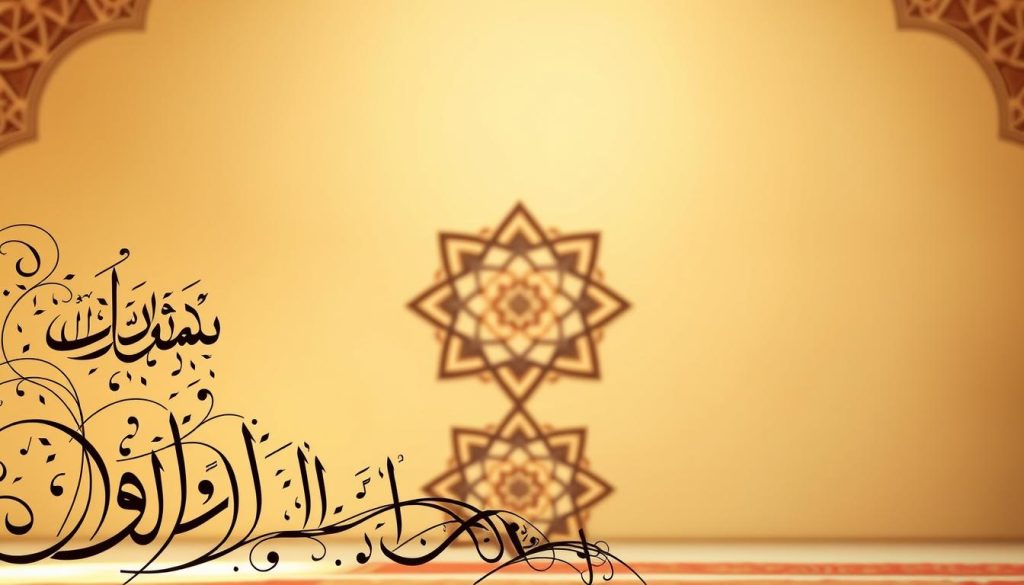
In the 10th century, Ibn Muqla created a system called “al-aqlam al-sitta” or the Six Pens. This system set rules for all calligraphic styles that followed.
Ibn Muqla’s system was based on geometry. It used the dot as a unit of measurement. Each letter was made with specific proportions, creating harmony and balance.
The six classical scripts include:
- Thuluth: A majestic script with long vertical strokes and curved ends, often used for decorations and Qur’anic verses.
- Naskh: A clear script used for copying the Qur’an and other texts because of its simplicity.
- Muhaqqaq: A mix of Thuluth and Naskh, used for Qur’anic manuscripts.
- Rayhan: A delicate script similar to Muhaqqaq but with more curves, used for special Qur’ans.
- Riqa: A simple script for everyday writing and documents.
- Tawqi: A script for official signatures and decrees, combining Thuluth and Riqa.
These six scripts were the base for later styles. Each had its own purpose in Islamic society, from sacred texts to everyday writing.
| Script | Primary Use | Key Characteristics | Historical Period |
| Thuluth | Decorative inscriptions, titles | Elongated letters, curved endings | Abbasid period onwards |
| Naskh | Qur’an copies, books | Clear, legible, balanced proportions | 10th century onwards |
| Muhaqqaq | Luxury Qur’an manuscripts | Bold horizontal strokes, dignified appearance | 12th-15th centuries |
| Rayhan | Special Qur’anic editions | Delicate, rounded forms | 13th-15th centuries |
| Riqa | Everyday correspondence | Compact, simplified, practical | Throughout Islamic history |
Regional Variations and Influences
As Islam spread, different calligraphic styles emerged. These styles showed local cultural influences while keeping the core principles of classical scripts.
In Persia, Ta’liq and Nasta’liq scripts were developed. Nasta’liq became famous for Persian poetry, capturing the language’s lyrical quality. This style also spread to South Asia, becoming key to Indo-Islamic art.
North Africa and Islamic Spain created the Maghribi script. It has rounded letters and unique forms, showing the western Islamic lands’ artistic tastes.
Ottoman Turkey was another hub for calligraphy. They developed Diwani for court documents and Riq’a for everyday writing. Ottoman calligraphers also perfected Thuluth, creating stunning examples of Islamic calligraphy.
These regional styles were shaped by:
- Political centres that supported certain styles
- Trade routes for cultural exchange
- Local artistic traditions
- Materials and tools available
- Religious and cultural institutions
The variety of Arabic scripts across the Islamic world shows how a unified tradition can celebrate cultural differences. Each style kept the sacred essence of calligraphy while showing the unique voice of its culture.
“Calligraphy is the geometry of the spirit manifested through the body.”
– Traditional Islamic saying
Understanding these calligraphic styles helps us appreciate Islamic civilisation’s artistic and cultural richness. Each script is not just a writing system but a visual expression of spiritual values and cultural identity, inspiring artists and viewers.
Materials and Tools of the Calligrapher’s Craft
Islamic calligraphy is more than just art. It needs deep knowledge of tools made over centuries. These tools and materials show the beauty and spiritual value of calligraphy. The process starts long before the first stroke, with tools prepared for over a thousand years.
Traditional Writing Implements
The qalam, a reed pen, is central to Islamic calligraphy. It’s made from specific reeds near rivers and lakes. Choosing the right reed is an art, with calligraphers looking for the perfect size and flexibility.
Shaping the qalam’s nib is precise. Different angles create the thick and thin lines of each script, making each script unique.
Artisans often prepare several pens for a single piece. Each is cut differently:
- Broad-tipped pens for bold strokes in scripts like Thuluth
- Medium-cut nibs for everyday writing in Naskh
- Fine-pointed pens for the delicate details of Nastaliq
- Specialised cuts for geometric Kufic script
The calligrapher’s toolkit includes a penknife for nib reshaping, a makta for cutting, and more. These tools help during long writing sessions.
Specialised Papers and Inks
Writing surfaces in Islamic calligraphy have evolved. Early works were on parchment and vellum, made from animal skins. This process was very time-consuming.
By the 8th century, paper came to the Islamic world from China. Innovations in Samarkand and Ottoman territories followed. These papers were treated with ahar, a special coating for smooth writing.
Making ink (midād) is also complex. Traditional recipes mix:
- Soot or gallnuts for pigment
- Gum arabic as a binder
- Additives for consistency and shine
- Honey or sugar for gloss
For luxury manuscripts, gold and silver inks needed special techniques. Gold leaf was ground and mixed with a medium. After drying, it was burnished for a shiny surface.
The candlestick is a masterpiece of calligraphic art. The inscription, written around the body in thuluth script, is finely executed, and retains much of its original silver inlay. The inscription is large and clearly legible, yet carefully arranged so that the ascending letters like lam and alef are evenly spaced to lend a regular rhythm to the inscription.
Objects like the candlestick show calligraphy’s influence beyond manuscripts. Artisans adapted their techniques for silver inlay.
The bond between calligrapher and tools is deep and sacred. Many recite prayers before starting a new piece. This spiritual connection turns simple materials into instruments of devotion, creating works that inspire awe for centuries.
Kufic Script: The Oldest Form of Arabic Calligraphy
Kufic calligraphy is known for its monumental look and precise shapes. It was the first standard Arabic script, key to Islamic visual culture. This style laid the groundwork for Arabic calligraphy, blending spiritual depth with artistic skill. It still inspires artists today.
Origins and Characteristics of Kufic Script
Kufic script started in the late 7th century in Kufa, Iraq. It was a time of great cultural and religious growth in Islam. It became famous for its unique, angular look and bold shapes.
Kufic is easy to spot because of its straight lines and sharp angles. Its letters are straight and precise, giving it a solid feel. This made it perfect for big buildings and early Qur’ans.
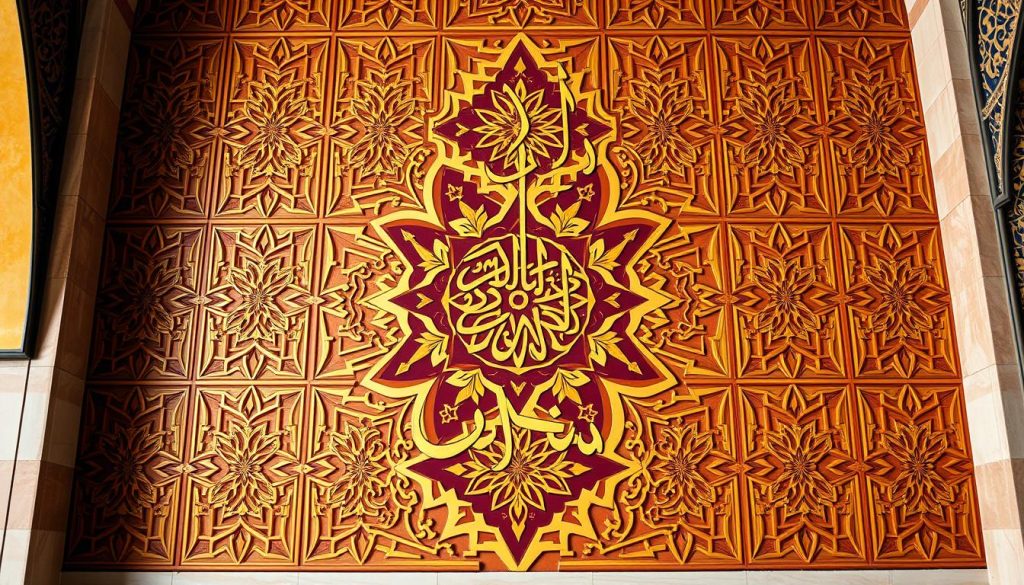
In early Islam, Kufic was used for the Holy Qur’an. This made it very special. Its clear, dignified look matched the Qur’an’s importance, fitting well with Islamic values.
Variations of Kufic Calligraphy
As Islamic art grew, Kufic script changed in different places. Each change brought new features:
- Square Kufic – This version uses square shapes, loved in Central Asia for decorating buildings.
- Floriated Kufic – Adds flowers to the letters, making them more beautiful.
- Foliated Kufic – Ends letters with leaves, mixing nature with calligraphy.
- Eastern Kufic – Found in Iran and Central Asia, it has longer, more angular letters.
These changes show how Kufic adapted to different tastes while keeping its core. Calligraphers kept its essence alive, even as styles evolved.
Notable Examples in Islamic Architecture
The Dome of the Rock in Jerusalem is a prime example of Kufic. Built in 691 CE, it has some of the oldest Kufic inscriptions. The Qur’an’s verses surround the dome in bold letters.
The Great Mosque of Cordoba in Spain also beautifully showcases Kufic. Here, the calligraphy blends with the building, creating a spiritual and artistic unity.
Many Qur’anic manuscripts from the 8th to 10th centuries show Kufic’s evolution in book art. The Blue Qur’an, with its gold script on blue parchment, is a stunning example.
“Kufic script represents the perfect synthesis of meaning and form, where the word of God is manifested in a visual language of profound geometric harmony.”
Kufic’s appeal is in its timeless beauty and spiritual depth. Today, artists and designers still find inspiration in it. They adapt its principles for modern uses, keeping its rich heritage alive. Kufic is more than a historical style; it’s a living tradition in Islamic art.
Thuluth Script: The Majestic Cursive Style
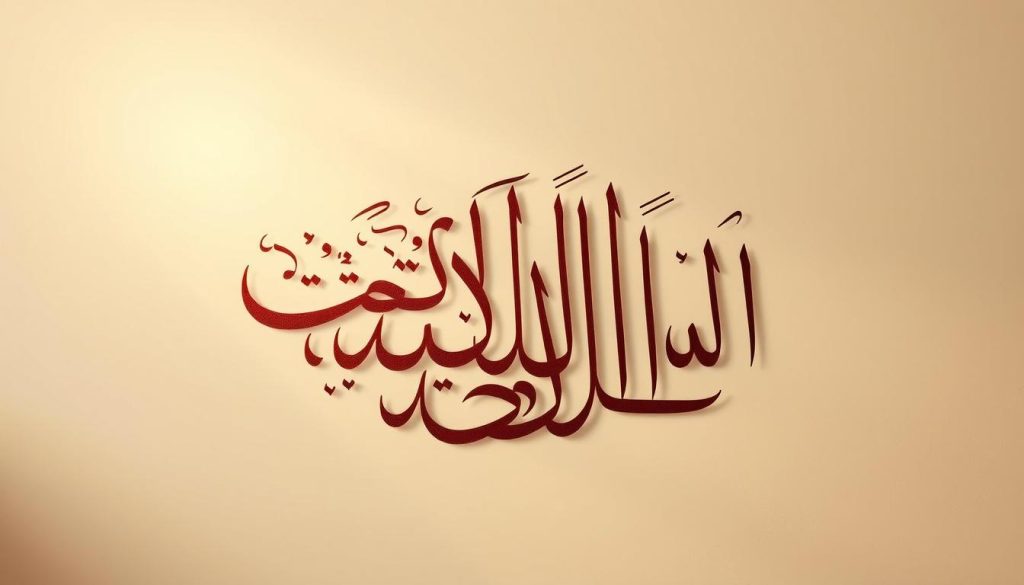
The Thuluth script is a masterpiece in Islamic calligraphy. It has sweeping curves and dramatic contrasts. Its name comes from the Arabic word for “one-third,” showing the size of the pen nib used.
This script is bold and balanced. It’s highly valued in Islamic art.
Development and Features of Thuluth
Thuluth script started in the 10th century during the Abbasid dynasty’s cultural boom. It was perfected by Ottoman calligraphers later.
The defining characteristics of Thuluth include:
- Elongated vertical strokes that create a sense of majesty and elevation
- Dramatic contrast between thick and thin lines, adding visual rhythm
- Flowing curves that balance the script’s bold presence
- Intricate ligatures where letters connect in harmonious ways
- Elaborate flourishes that demonstrate the calligrapher’s skill
Thuluth needs lots of space. Its letters are placed carefully for balance. The script follows precise math, showing Islamic love for geometry.
Spiritual Significance in Qur’anic Manuscripts
In Qur’anic manuscripts, Thuluth script holds a special place. It’s used for chapter headings and key verses. Its grand appearance is seen as fitting for divine messages.
The beauty of Thuluth lies not merely in its aesthetic appeal but in its capacity to elevate the sacred text, creating a visual experience that complements the spiritual message.
Thuluth script in Qur’anic calligraphy is powerful. It combines beauty and meaning, making it perfect for sacred texts.
How to Identify Thuluth Script
Spotting Thuluth script is easy with its pronounced vertical emphasis. Letters often stack vertically, creating a sense of upward movement.
Other identifying characteristics include:
- Sweeping curves that often extend below the baseline
- Elaborate diacritical marks that enhance both decoration and legibility
- Balanced composition where negative space is as important as the letters themselves
- Letters that maintain their elegant proportions regardless of their position in a word
Notable examples of Thuluth script can be found in the Blue Mosque in Istanbul. Golden calligraphy against deep blue creates a celestial effect. Royal Qur’ans from the Mamluk and Ottoman periods also showcase Thuluth at its finest.
Thuluth’s appeal is in its balance of beauty and clarity. It’s decorative but never loses readability. This script inspires artists today, linking past and present.
Naskh Script: The Everyday Calligraphy
Naskh script is a key part of Islamic calligraphy. It’s known for being both useful and beautiful. The name “Naskh” means “copying” or “transcription,” showing its role in everyday writing.
Developed in the 10th century, Naskh became popular thanks to Ibn Muqla. It’s great for reading because of its clear letters and balanced look. Thomas van Erpe called it the “noblest and true writing style” in 1617.
Clarity and Legibility of Naskh
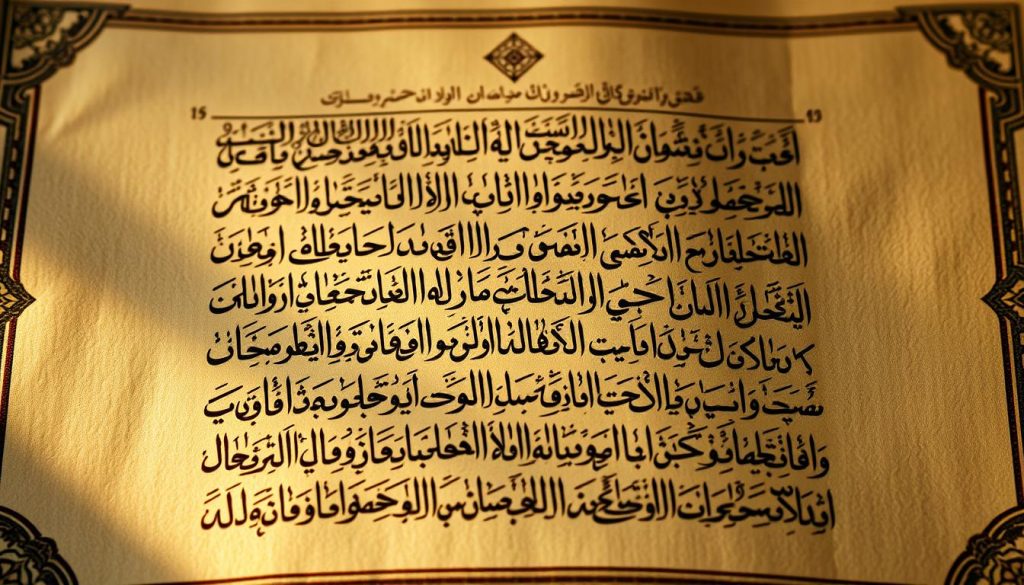
Naskh script is straightforward to read. It’s simple yet elegant, and its rounded letters make reading smooth.
What makes Nathe skh script special includes:
- Consistent proportions between letters, creating visual harmony
- Well-defined letter shapes that remain distinct even at smaller sizes
- Balanced spacing between words and characters
- Moderate thickness in strokes, avoiding extremes that might impede reading
- Clear distinction between similar letters through precise dot placement
This makes Naskh great for long reading sessions. Scholars and students could read for hours without getting tired. It helped spread knowledge accurately over time.
Use in Qur’anic Texts and Literature
By the 11th century, Naskh became the top choice for the Qur’an. This change made sacred texts more accessible. Its clear letters helped share the divine message widely.
Naskh was also used for:
- Literary works and poetry collections
- Scientific and medical treatises
- Administrative documents and correspondence
- Educational materials and scholarly commentaries
Naskh’s flexibility made it perfect for many uses. In manuscripts, it was often used for the main text. This allowed the content to be clear, even with decorative elements.
“Naskh is the script of clarity and tradition, the quiet foundation upon which Islamic literary culture was built and preserved.”
Distinguishing Naskh from Other Styles
Identifying Naskh script can be tricky. It’s known for its simple yet elegant look. This simplicity sets it apart from more elaborate scripts.
Here’s how to spot Naskh:
- Rounded letterforms with moderate size
- Horizontal orientation with minimal vertical extension
- Clear, standardised connections between letters
- Sparse use of decorative flourishes
- Consistent baseline alignment
Naskh looks different from Thuluth and Diwani. It has a horizontal focus, unlike Thuluth’s vertical lines or Nastaliq’s diagonal flow.
| Script | Primary Characteristics | Main Uses | Visual Orientation |
| Naskh | Round, clear letterforms with consistent proportions | Qur’ans, books, everyday documents | Horizontal with balanced spacing |
| Thuluth | Elongated letters with dramatic curves | Architectural inscriptions, titles | Vertical emphasis with sweeping lines |
| Diwani | Complex, densely structured letterforms | Official documents, decorative pieces | Curved with intricate overlapping |
| Nastaliq | Hanging letters with diagonal flow | Persian poetry, South Asian texts | Diagonal with suspended letters |
Naskh script’s lasting appeal comes from its balance of beauty and usefulness. It may not be as flashy as other scripts, but its elegance and readability have made it a cornerstone of Islamic writing for over a thousand years.
Diwani Script: The Ottoman Court Style
Diwani script is a royal masterpiece from the Ottoman imperial chancery. It emerged in the 16th century. This distinctive Arabic script was used for official documents and sultanic decrees. It became a symbol of Ottoman power and artistic skill.
Royal Origins and Distinctive Features
The name Diwani comes from “Diwan,” the Ottoman council for state affairs. Only palace calligraphers learned this secret style, serving the Ottoman sultans.
Diwani is known for its flowing letterforms and complex arrangements. Letters and words intertwine, with curved endings that sweep upward. This makes the script hard to read for those not trained.
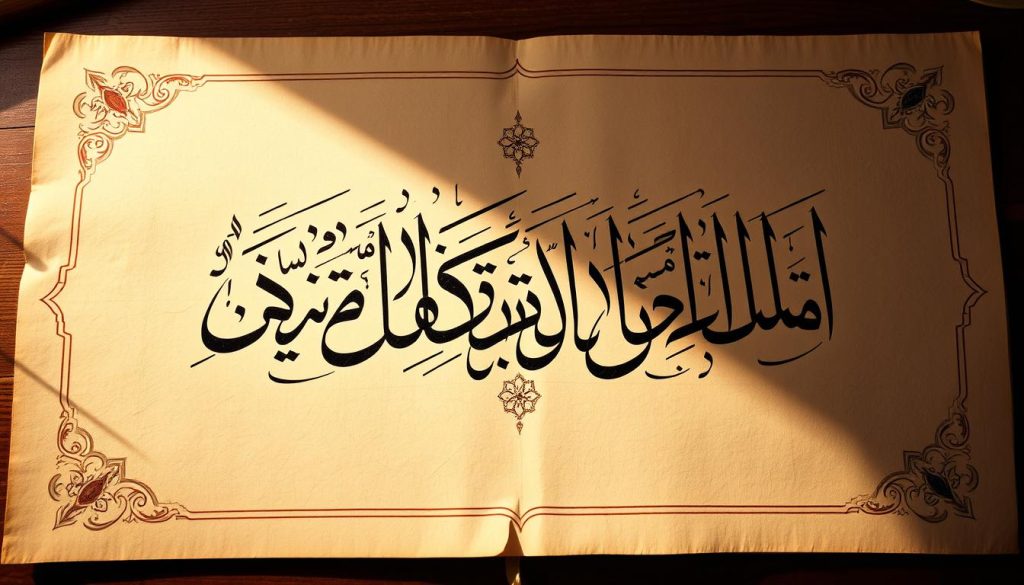
Diwani script has no spaces between words, creating a flowing look. This made it hard to forge official documents.
The script’s letterforms have thick and thin strokes. This allows for artistic freedom while following the script’s rules.
Jali Diwani: The Ornate Variation
Jali Diwani is an even more elaborate version of Diwani script. Shahla Pasha, a renowned Ottoman calligrapher, developed it. This style adds incredible decorative complexity.
Jali Diwani is known for filling spaces with decorative elements, such as dots, patterns, and floral motifs. This creates a lace-like effect, balancing text and decoration.
Creating Jali Diwani is very precise and time-consuming. Calligraphers might spend months on a single piece. This is why it was used for the most prestigious works.
Ceremonial Uses and Modern Applications
Diwani script was used for ceremonies in the Ottoman Empire. It adorned imperial decrees and diplomatic letters. Its beauty and complexity showed the sultan’s power and culture.
Diwani was also used in poetry and architecture. Its flowing nature was perfect for circular compositions in mosques and palaces.
Today, Diwani continues to evolve. Modern calligraphers use it in fine art, honouring tradition while introducing new ideas. It’s popular for special occasions like weddings.
Digital tools have made Diwani more accessible. Graphic designers use it in branding, showing Islamic artistic heritage. Yet, mastering Diwani still takes years of study.
Diwani’s appeal lies in its beauty and readability. It stands out among Arabic scripts for its fluid movement and rhythmic grace.
Nastaliq Script: The Persian Masterpiece
The Nastaliq script is known for its unique hanging style and flowing lines. It emerged in 14th-century Persia. This script is a blend of Naskh and Ta’liq, as shown in its name. It’s considered one of the most striking and challenging Islamic calligraphic traditions.
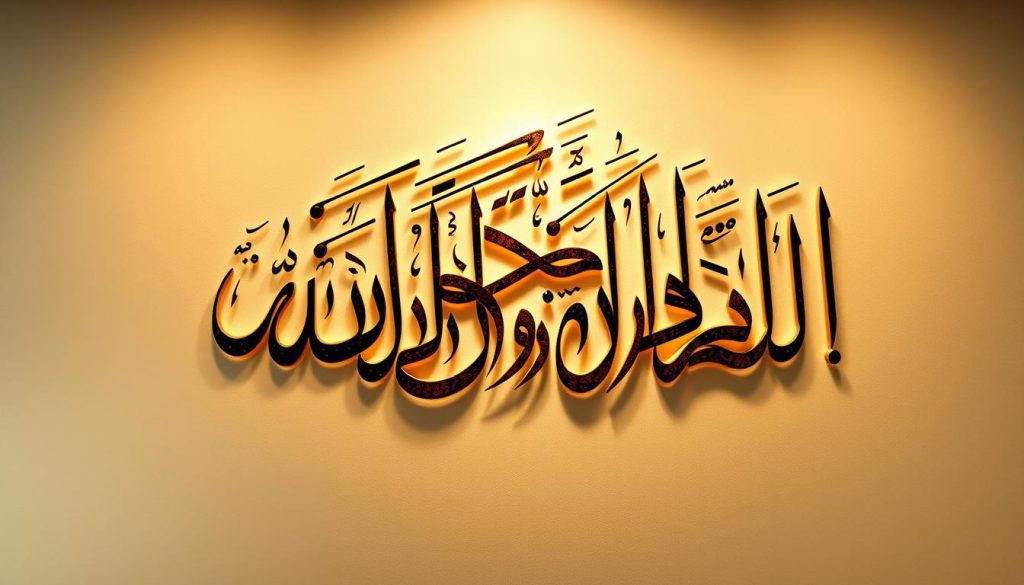
Nastaliq stands out because of its diagonal flow across the page. This makes it instantly recognizable among Islamic calligraphic art.
The Elegant Hanging Style
Nastaliq is known for its unique “hanging” look. Letters flow diagonally, creating a sense of movement. This sets it apart from other scripts.
Creating Nastaliq requires skill with a reed pen. Calligraphers must control the contrast between thick and thin lines for delicate curves. The smooth movement of letters adds to its elegance.
When done well, Nastaliq looks like it’s floating on the page. Its lightness and complexity make it both beautiful and challenging to master.
Persian Poetry and Nastaliq
Nastaliq was perfect for Persian poetry, matching its rhythm and emotion. The script’s flow echoes the poetry’s beauty, making it the go-to choice for copying famous works.
Manuscripts of Hafez, Sa’adi, and Rumi often used Nastaliq on gold paper. The script and poetry together created a stunning experience. The diagonal flow of Nastaliq mirrors the poetry’s rhythm.
For fans of Persian literature, Nastaliq adds a special visual layer to poems. This blend of calligraphy and poetry is a highlight of Islamic art.
Influence on South Asian Calligraphy
Persian culture’s spread eastward deeply influenced South Asian calligraphy. Nastaliq became key for writing Persian, Urdu, and more. In the Mughal Empire, calligraphers created unique styles that showed local tastes.
Nastaliq’s use in South Asia was more than just borrowing. It became a core part of literature and administration in the Indian subcontinent. Today, it’s still vital for Urdu literature and influences modern art and design.
Nastaliq’s lasting impact in South Asia shows how calligraphy can evolve and become part of new cultures. Its journey highlights the dynamic nature of Islamic calligraphy.
| Characteristic | Nastaliq Script | Naskh Script | Thuluth Script |
| Visual Flow | Diagonal, hanging appearance | Horizontal, regular spacing | Horizontal with elongated verticals |
| Line Contrast | Extreme contrast between thick and thin | Moderate contrast | Strong contrast with bold strokes |
| Primary Use | Persian poetry, Urdu literature | Qur’anic texts, everyday writing | Monumental inscriptions, titles |
| Regional Association | Persia, South Asia | Throughout Islamic world | Ottoman Empire, religious contexts |
Riq’a and Maghribi: Regional Specialities
Islamic calligraphy shows a wide range of styles, each with its own charm. These styles reflect the beauty of Arabic scripts in different parts of the Islamic world. Riq’a and Maghribi are great examples of how calligraphy changed to meet local tastes and needs.
Riq’a: The Practical Handwriting of the Middle East
Riq’a became a common script in the Ottoman Empire. It was simple and easy to use, perfect for everyday writing. People used it for official documents and personal letters in the Middle East.
Riq’a is known for its simple letters and few diacritical marks. Its letters are short and connected closely, making it quick to write. This made Riq’a great for fast and clear writing.
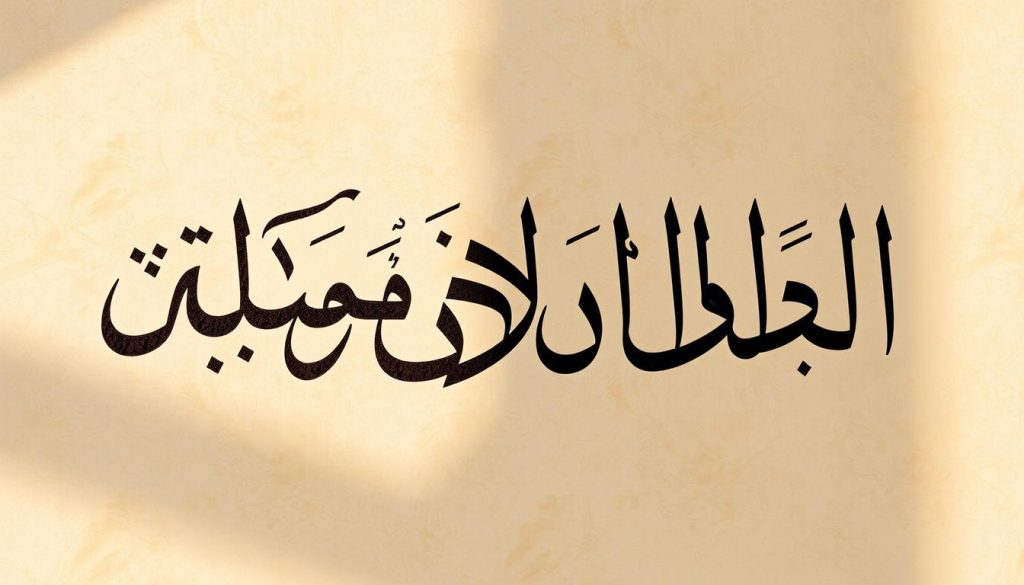
Ottoman officials loved Riq’a for its speed and clarity. It was great for quick documents and records. Unlike fancy scripts for religious texts, Riq’a was practical for the empire’s work.
Today, Riq’a is still taught in schools in many Middle Eastern countries. It’s a good start for learning Arabic, focusing on clear and efficient writing. Its lasting popularity shows how useful scripts can also be beautiful.
Maghribi: North African Elegance and Distinction
North Africa and Islamic Spain had their calligraphy, Maghribi. This style is unique and different from Eastern Arabic scripts. It evolved from Kufic and became special through cultural changes.
Maghribi is known for its flowing letters and big curves. It has open spaces between letters, making it look spacious. This gives Maghribi a special rhythm and balance.
Maghribi manuscripts are famous for their colours. Scribes used brown or reddish-brown for the text and bright colours for marks and decorations. This made the manuscripts beautiful and showed the region’s love for art.
Maghribi has many variations, each with its style. Andalusi Maghribi is more refined, while Fasi Maghribi from Fez, Morocco, has bold curves. Sudani Maghribi in West Africa adds its twist to the style.
Today, Maghribi is still used in North and West Africa. It’s used for religious texts, official documents, and art. Its unique style shows how Arabic calligraphy adapted to different cultures while keeping its beauty and spirit.
Riq’a and Maghribi show how Islamic calligraphy changed to fit local needs. These styles add richness to the tradition, showing Arabic script’s ability to adapt across Islamic cultures.
Contemporary Islamic Calligraphy: Tradition Meets Innovation
Today, Islamic calligraphy is a mix of old traditions and new ideas. Calligraphers blend centuries of spiritual art with modern styles, creating fresh, meaningful works that keep the art’s spiritual heart alive.
Modern Masters and Their Techniques
In the 21st century, amazing calligraphers have emerged. Hassan Massoudy, from Iraq but living in France, mixes traditional Arabic scripts with abstract art. His work feels alive, full of emotion.
An American convert, Mohamed Zakariya keeps traditional standards but appeals to Western tastes. His work has even been on U.S. stamps, making Islamic calligraphy known in America.
Exploring the Art of Islamic Calligraphy
Nihad Nadam, from Egypt, is a new voice in calligraphy. He blends old techniques with fresh ideas. Modern calligraphers spend years learning before showing their unique styles.
Today’s calligraphers are pushing the boundaries of their art. They explore the beauty and spirit of Arabic letters. This makes art that touches the soul.
“Calligraphy is the geometry of the soul expressed through the body,” says Hassan Massoudy. This quote shows the spiritual depth of calligraphy, even in modern times.
Calligraphy in Digital Art and Design
The digital world has changed Islamic calligraphy a lot. It has opened up new ways to create and share this art. Artists use special software to make precise, flexible calligraphy.
Calligraphers now make art for websites, apps, films, and more. Islamic calligraphy looks great in digital spaces, where it can move and change.
Typography is also evolving. Designers create Arabic fonts that look like hand-drawn calligraphy but work on screens. These fonts bring Islamic beauty into our daily lives.
This digital shift raises questions about staying true to tradition. Some say real calligraphy needs old tools, while others see digital art as just the next step in a long tradition.
| Aspect | Traditional Approach | Contemporary Innovation | Spiritual Significance |
| Tools | Reed pens, natural inks | Digital styluses, software | Mindful creation regardless of medium |
| Composition | Strict geometric rules | Experimental layouts | Divine harmony expressed in new forms |
| Purpose | Religious manuscripts | Fine art and commercial design | Spreading beauty and spiritual awareness |
| Learning | Master-apprentice system | Formal education and self-teaching | Preservation of sacred knowledge chains |
Global Appreciation and Exhibitions
Islamic calligraphy is now recognized worldwide. Museums and galleries show both old and new calligraphy. This introduces it to many people.
The British Museum, the Louvre, and the Metropolitan Museum of Art have big calligraphy shows. Places like Istanbul’s Museum of Turkish and Islamic Arts also showcase old and new works.
International calligraphy events in Dubai and Kuala Lumpur bring artists together. These events celebrate new ideas and share knowledge.
This global interest shows that Islamic calligraphy is loved for its beauty and spiritual depth. It speaks to human experiences like language and creativity.
In the UK, this calligraphy renaissance is exciting. It lets people bring beauty and spirituality into their homes and work.
Conclusion: The Enduring Beauty of Islamic Calligraphy
Our exploration of Islamic calligraphy shows us an art form that has lasted for centuries. It started in the 7th century, with Arabic calligraphy becoming both an art and a sacred act. It has grown into the many styles we love today.
Styles like Kufic and Thuluth script contain spiritual meaning and cultural history. The making of islamic manuscripts is not just about skill. It’s about devotion. Each line shows respect for the sacred texts.
Islamic calligraphy’s charm comes from its mix of old and new. It stays true to its roots but also explores new ways in art and design. Styles like Thuluth script connect people from different cultures and beliefs.
We encourage you to dive into this rich tradition through museums, books, and modern artists. Islamic calligraphy is valued for its spiritual depth, historical importance, and beauty. It’s a language that speaks across time.
Today, people of all faiths enjoy Islamic calligraphy for its beauty. Its enduring nature and ability to inspire new generations mean it will continue to grow for many years.
FAQ
What is Islamic calligraphy, and why is it significant in Muslim culture?
Islamic calligraphy is the art of writing Arabic script beautifully. It’s essential in Muslim culture because it helps preserve and beautify the word of God, like the Qur’an. This art form is highly valued for its spiritual and artistic value, connecting Muslims worldwide through a shared visual language.
What are the “Six Pens” in Islamic calligraphy?
The “Six Pens” are six classic scripts created by Ibn Muqla in the 10th century. These scripts are Thuluth, Naskh, Muhaqqaq, Rayhan, Riqa, and Tawqi. Each script has its look and purpose, shaping Islamic calligraphy for centuries.
What tools and materials are traditionally used in Islamic calligraphy?
Islamic calligraphy uses special tools like the reed pen (qalam) and high-quality paper. The reed pen’s angle affects the script’s style. Inks are made from soot or gallnuts mixed with gum arabic. For luxury work, gold and metallic pigments need special tools.
What are the distinctive features of Kufic script?
Kufic script is known for its angular, geometric look with bold strokes. It was first used in Kufa, Iraq, in the late 7th century. Its geometric style makes it perfect for architectural inscriptions, blending with Islamic architecture.
How can I identify Thuluth script in Islamic calligraphy?
Thuluth script is recognised by its flowing lines and dramatic contrasts. Look for its elongated strokes and balanced composition. It’s often used for chapter headings in Qur’anic manuscripts, seen in places like the Blue Mosque in Istanbul.
What makes Naskh script different from other calligraphic styles?
Naskh script is known for its beauty and clarity. It has round, clear letterforms and balanced proportions. Unlike Thuluth, it’s not overly decorative, making it ideal for copying the Qur’an.
What is Diwani script and where was it used?
Diwani script was created in the Ottoman imperial chancery in the 16th century. It’s ornate and ceremonial, used for official documents and sultanic decrees. Its complexity makes it perfect for artistic expressions today.
How did Nastaliq script influence Persian poetry and South Asian calligraphy?
Nastaliq script is perfect for Persian poetry, with its flowing rhythm. It was developed in Persia in the 14th century and became the standard for copying famous poets. It’s still used in South Asia for writing Persian, Urdu, and other languages.
What are the distinctive features of Maghribi script?
Maghribi script is known for its rounded, flowing forms and dramatic curves. It’s used in North Africa and Islamic Spain, with different styles in each region. It’s still used for religious texts and artistic expressions.
How is Islamic calligraphy evolving in the contemporary world?
Islamic calligraphy is evolving with a mix of tradition and innovation. Modern calligraphers like Hassan Massoudy and Mohamed Zakariya blend old and new styles. The digital world has opened up new possibilities, making calligraphy more accessible.
What is the spiritual significance of calligraphy in Islamic tradition?
Calligraphy is deeply spiritual in Islamic tradition, seen as a way to preserve and beautify divine revelation. It connects the writer to the divine word. The act of writing is considered sacred, mirroring religious contemplation.
How can beginners learn Islamic calligraphy?
Beginners should start with the basics and tools. Study Naskh script and use quality materials. Look for workshops or online courses. Practice regularly and join calligraphy communities for feedback.