



Did you know 78% of modern homes mix spiritual elements with minimalism? This trend shows our wish for meaningful yet simple spaces. It combines faith-inspired looks with clean living, making homes nourish both soul and senses.
Minimalism and Spiritual Decor: A Harmonious Blend
Minimalism and spiritual decor seem like opposites. But they can work well together. By choosing meaningful items, we make each piece special. This way, every item in our home has a story to tell.
The idea of authentic faith-inspired wall art fits perfectly with minimalism. Both focus on what’s important and what’s not. Together, they make homes that are both timeless and modern.
We’ll guide you through blending tradition with modern simplicity in your home. Whether you’re redoing your whole house or just one room, these ideas will help. They’ll make your space reflect your true values.
Key Takeaways
- The fusion of spiritual decor and minimalism creates balanced, meaningful spaces
- Quality over quantity allows each decorative element to have a greater impact
- Both design philosophies emphasise intentionality and purpose
- Geometric patterns serve both traditional and contemporary aesthetics
- Thoughtful curation creates homes that reflect personal values and faith
- Neutral colour palettes enhance the visual impact of meaningful pieces
The Harmonious Blend of Faith and Simplicity
Islamic minimalist home decor brings together faith and simplicity beautifully. This mix makes our homes look good and feel good spiritually. Looking at Islamic values and minimalist design, we see they both value simplicity and purpose in home design.
Islamic teachings talk about living simply, which fits well with minimalism’s “less is more” idea. Together, they help create homes that are modern yet deeply traditional.
The Shared Philosophy of Simplicity and Purpose
Islamic teachings and minimalist design both love intentionality and purpose. In Islam, every action should mean something, just like minimalism removes things that don’t add value.
This shared belief shows in home design in a few ways:
- Getting rid of clutter that takes away from what’s important
- Picking items that serve a purpose
- Choosing quality over quantity in our belongings
- Making spaces for peace, reflection, and spiritual connection
The Prophet Muhammad lived, teaching us not to get too attached to stuff. He said:
“Be in this world as if you were a stranger or a traveller along a path.”
This advice helps Muslims stay detached from material thiemphasisedngs, just like minimalism. Today, this means homes that are open, clean, and full of purpose.
Focus on meaning over material things connects these ideas. Designing with Islamic and minimalist principles in mind, we make modern and timeless homes. They meet our needs and help us spiritually.
Historical Roots of Islamic Minimalist Design
The link between Islamic design and minimalism is not new—it’s rooted in history. Islamic architecture and design have shown minimalism for centuries, even before minimalism became a design movement.
Early mosques and buildings show remarkable restraint and precision in design. The geometric patterns are more than decoration; they show mathematical order and cosmic harmony.
Traditional Arabian homes were known for:
- Clean, uncluttered spaces for many uses
- Simple furniture for talking and gathering
- Use of natural materials to connect with nature
- Light and shadow to create mood without too much decoration
These features show a design that values simplicity as a form of elegance. By removing the unnecessary, designers have highlighted the importance of light, proportion, and craftsmanship.
Today’s Islamic minimalist design builds on this rich history. Using geometric patterns, calligraphy, or traditional materials in modern spaces connects us to centuries of design principles.
This view shows that simplicity in Islamic homes is not about emptiness. It’s about creating spaces where every element has a purpose and beauty comes from careful thought and spiritual intention.
Islamic Home Decor and Minimalism: Core Principles
The mix of Islamic design and minimalism is rooted in key principles. These principles respect faith and function. They help make spaces that show spiritual values and are clear in their simplicity.
Modern Islamic homes show how these principles work today. They keep traditional values but are also contemporary. This creates timeless and current homes, linking us to our heritage and today’s needs.
Functionality and Intentionality in Design
Functionality is central to Islamic design and minimalism. Every item in the home has a purpose, not just to look good. This makes spaces clean and functional for daily life and worship.
In Islamic homes, furniture and decor are chosen for their usefulness. This idea is still followed today. The Prophet Muhammad lived, showing that things should serve real needs, not just status.
Designing with Intention: The Core Principles
Designing with intention is more than picking items. It’s about making rooms easy to move around in and good for socialising. This careful planning makes homes welcoming and respectful.
| Principle | Islamic Design Application | Minimalist Interpretation | Combined Benefit |
| Functionality | Items serve practical and spiritual needs | Elimination of unnecessary objects | Purposeful spaces that support faith and daily life |
| Intentionality | Thoughtful selection based on Islamic values | Conscious decision-making about possessions | Homes that reflect personal and spiritual priorities |
| Simplicity | Avoidance of excess as per Islamic teachings | Clean lines and uncluttered spaces | Peaceful environments free from distraction |
| Balance | Harmony between elements is a reflection of divine order | Proportional design with visual breathing room | Spaces that feel naturally balanced and calming |
Balance Between Aesthetics and Practicality
Islamic design values beauty as a reflection of divine creation. It balances beauty with practicality. Minimalism shows that beauty comes from careful restraint, not too much decoration.
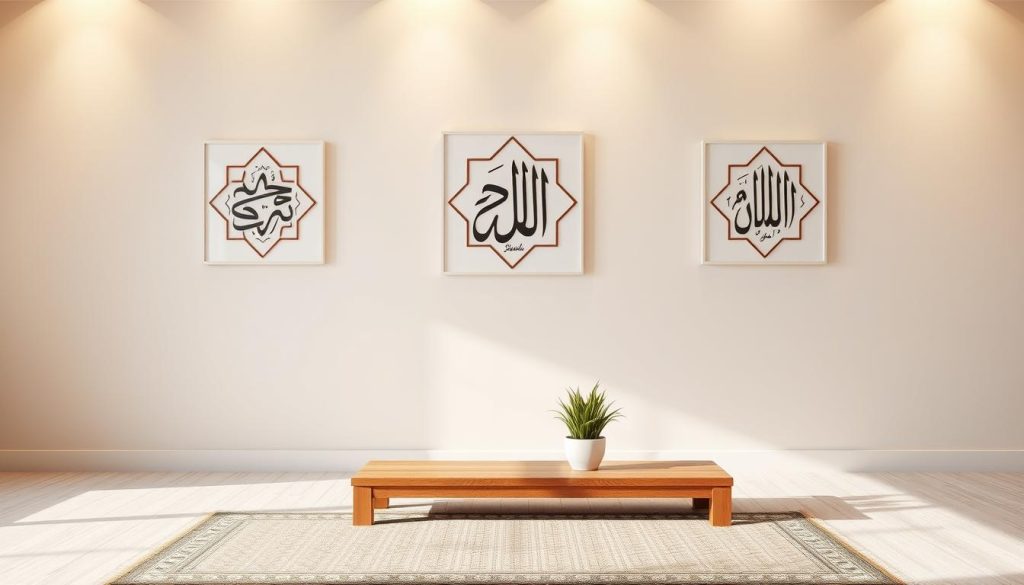
In modern Islamic minimalist homes, quality is more important than quantity. A single piece of calligraphy might be the room’s focus, avoiding the need for many decorations. This approach brings visual harmony and simplicity.
The aesthetic elements in these homes often include geometric patterns, calligraphy, and natural motifs. These carry symbolic meaning and please the eye. When balanced with practical needs, they make spaces beautiful and functional.
“Beauty is in that which is moderate.” – Prophet Muhammad (peace be upon him)
The Concept of Baraka (Blessing) in Home Spaces
The idea of baraka, or blessing, is central to Islamic home design. It suggests that particular objects and practices invite divine blessing. Minimalism helps by removing distractions and focusing on what’s important.
We can increase baraka through several practices in home design:
- Maintaining cleanliness and order, which are highly valued in Islamic tradition
- Creating dedicated spaces for prayer and reflection
- Displaying meaningful religious texts or symbols
- Using natural materials that connect residents to Allah’s creation
- Eliminating excess that might distract from spiritual awareness
The minimalist approach to Islamic home decor believes less is more for spaces filled with baraka. By carefully choosing possessions and designing with intention, homeowners create environments for spiritual growth alongside daily life.
This idea goes beyond physical objects to the home’s energy and atmosphere. Spaces designed with baraka in mind feel peaceful and welcoming. They support devotion and hospitality, which are essential Islamic values. The minimalist look enhances this by reducing visual noise and creating calm backgrounds for meaningful interaction.
By following these core principles—functionality, balance, and baraka—we create homes that honour Islamic traditions and benefit from minimalist clarity. These spaces support our spiritual journey while meeting practical needs, showing that thoughtful design can nurture both body and soul.
Essential Elements of Arabian Minimalist Style
Arabian minimalist style is about carefully using space, pattern, and art. It blends old and new, keeping Islamic heritage alive in simple designs. This style is perfect for those who want a home that shows their faith and love for simplicity.
This style creates calm spaces that touch both the heart and the eye. It values quality and meaning over just decoration. So, these homes become places of peace and growth.
Clean Lines and Open Spaces
The heart of Arabian minimalist style lies in clean lines and open spaces. It’s not about having empty rooms. Instead, it’s about creating spaces that feel alive.
This approach makes even small rooms feel spacious and serene. It’s all about balance and harmony.
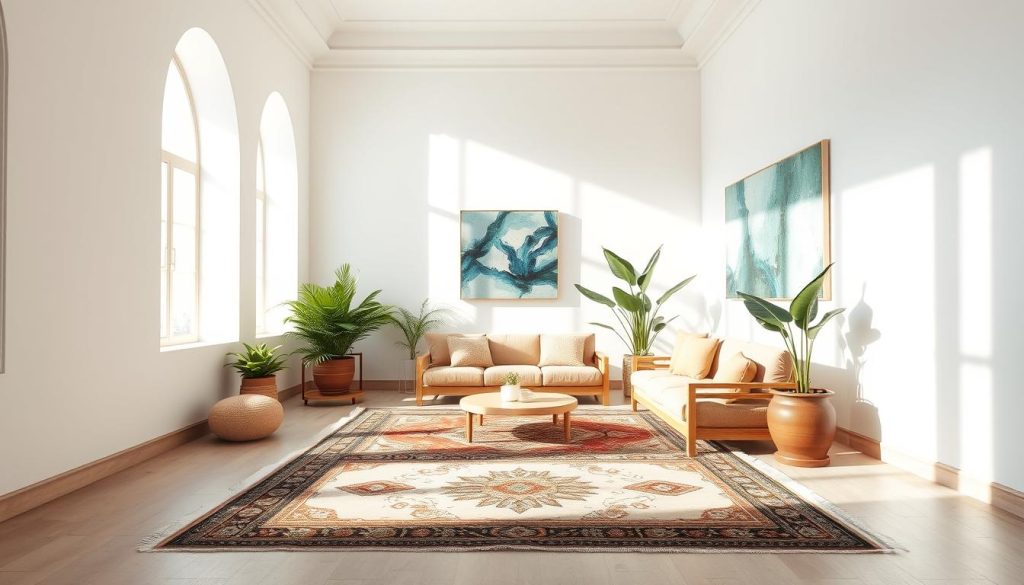
Islamic architecture was all about open spaces for air and community. Today, we apply this in our homes with open plans and fewer walls. This makes our homes feel expansive and calm, regardless of their size.
“The space between things is as important as the things themselves. In Islamic design, emptiness is not absence but presence with purpose.”
Arabian minimalist style focuses on selecting a few special items. A wooden screen or a unique lamp can be the room’s centrepiece. These pieces add beauty and function without causing clutter.
Geometric Patterns and Their Significance
Geometric patterns are central in Islamic design. They show divine order and infinity. In Arabian minimalist style, these patterns add beauty thoughtfully.
These patterns are versatile. A simple pattern might be in a floor tile, while a complex one could be in a room divider. The goal is to make an impact without being too much.
Today, we see modern takes on these patterns. A coffee table or cushions with geometric designs add interest without clutter, keeping the minimalist look clean and simple.
Calligraphy as Artistic Expression
Arabic calligraphy is both spiritual and artistic in Arabian minimalist homes. It turns words into beautiful art that decorates spaces with meaning, and it is a key part of the style.
In minimalist homes, calligraphy is often a single statement piece. A “Bismillah” might welcome guests, or a verse about hospitality might decorate a living area. The simple space lets these words shine.
Choosing calligraphy for your home, look for pieces that mix tradition with modern flair. Modern calligraphy often has clean lines, negative space, and colours that enhance the room. This way, the calligraphy adds beauty and meaning.
Calligraphy in the Arabian minimalist style communicates through beauty. Each piece is a reminder and a decoration, making spaces beautiful and spiritually rich.
By using clean lines, open spaces, geometric patterns, and calligraphy, you can create a home that reflects Arabian minimalist style. Your home will be timeless yet modern, honouring Islamic traditions while embracing simplicity.
Natural Materials in Islamic Minimalist Decor
Natural elements are key in Islamic minimalist decor. They link old traditions with today’s living. Materials from nature make spaces feel real and connected to faith. These elements follow minimalist values of simplicity and purpose.
Natural materials offer a unique feel in the home. Wood, stone, and clay engage our senses. They help us feel closer to our homes and faith.
Wood, Stone, and Clay Applications
Wood is highly valued in Islamic design. Mashrabiya screens use wood for privacy and beauty. They turn light into beautiful patterns in homes.
In modern homes, wood is used in many ways. This includes geometric panels, simple furniture, and beams. It also helps keep spaces tidy.
Stone connects homes to the earth. Marble and limestone add coolness and durability. Today, it’s used for walls, floors, and decor.
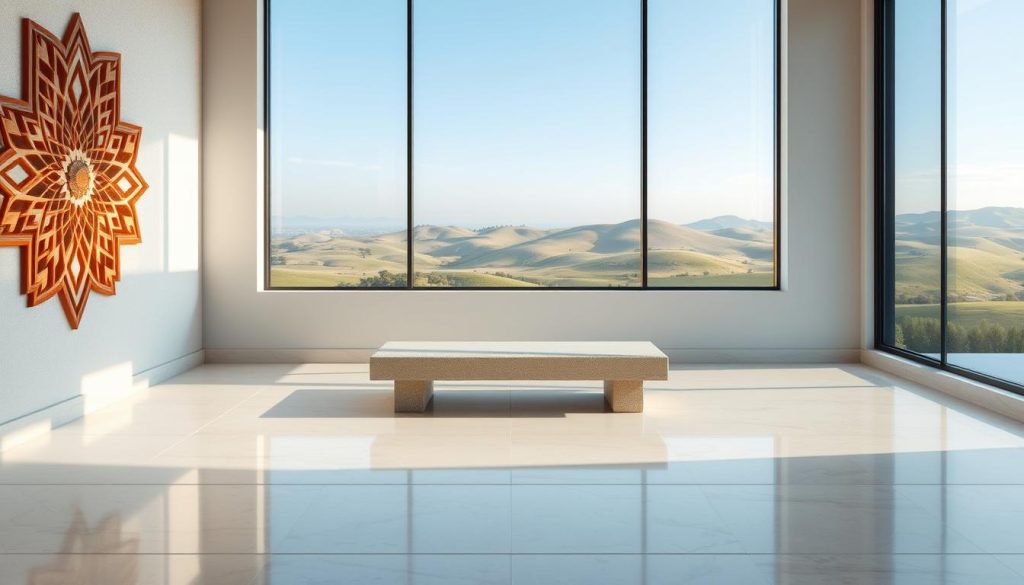
Clay and ceramics are key in Islamic culture. They blend beauty with function, from the Alhambra to everyday items. Today, they’re used in home decor and for plants.
- Unglazed pottery as decor
- Ceramic tiles with patterns
- Terracotta planters for plants
Sustainable Material Choices
The idea of khalifah (stewardship) is central in Islam. It teaches us to care for the earth. Choosing eco-friendly materials is a way to live by this principle.
Choosing sustainable materials is good for the planet and our future. Reclaimed wood, local stone, and natural fibres are good choices. They add character to spaces.
Many Muslims now choose materials that are:
- Locally sourced to support local craftspeople
- Minimally processed to save energy
- Free from harmful chemicals for health
- Durable to last long and reduce waste
Handcrafted Elements and Their Importance
In today’s world, handmade items are special in Islamic design. They connect us to Islamic craftsmanship. They add warmth and character to spaces.
Handcrafted items tell stories of the maker and the culture. They can be prayer shelves, plates, or rugs, connecting us to Islamic heritage.
Supporting craftspeople preserves cultural knowledge. This is important in Islam for the community and heritage.
| Natural Material | Traditional Applications | Modern Minimalist Uses | Sustainability Benefits |
| Wood | Mashrabiya screens, minbars, doors | Geometric wall panels, minimal furniture | Renewable resource, carbon storage |
| Stone | Mosque architecture, floor paving | Feature walls, cooling flooring | Durability, thermal mass properties |
| Clay/Ceramics | Decorative tiles, water vessels | Unglazed pottery, subtle tilework | Natural material, low processing needs |
| Natural Fibres | Prayer rugs, curtains, cushions | Jute storage, linen upholstery | Biodegradable, minimal chemical treatment |
Natural materials in Islamic decor are timeless and modern. They honour traditions while embracing simplicity. Wood, stone, clay, and other elements create beautiful and meaningful homes.
Colour Palette: Earthy Tones and Textures
Earthy hues and textures are key in Islamic minimalist design. They add warmth and spiritual depth. The colours we pick for our homes show our values and dreams, reflecting Islamic traditions and modern minimalism.
In Islamic minimalist interiors, colours do more than look good. They help create a calm, family-focused, and spiritual atmosphere. These earthy tones and textures turn ordinary rooms into special places that feel timeless and personal.
Traditional Islamic Colour Symbolism
Islamic design uses colours with deep cultural and spiritual meanings. Knowing these meanings helps us connect our homes to Islamic heritage.
Turquoise blues in mosques and palaces mean paradise. Terracottas and ochres reflect the desert that shaped early Islamic architecture. Green, a key colour in Islam, means paradise, renewal, and spiritual growth.
| Colour | Traditional Symbolism | Modern Application | Best Paired With |
| Turquoise Blue | Paradise, protection | Accent walls, decorative tiles | Warm neutrals, copper |
| Terracotta | Earth, stability | Flooring, pottery | Ivory, olive green |
| Green | Paradise, faith | Textiles, plants | Gold accents, wood |
| White | Purity, clarity | Walls, ceilings | All colours |
| Gold | Divine light, prosperity | Metallic accents, frames | Deep blues, emerald |
Creating Warmth Through Neutral Palettes
Islamic minimalist design often starts with a neutral palette. It’s not cold minimalism but warm neutrals that welcome and calm us.
Soft whites, warm beiges, and gentle greys are perfect for backgrounds. They let geometric patterns, calligraphy, and accent pieces stand out without chaos.
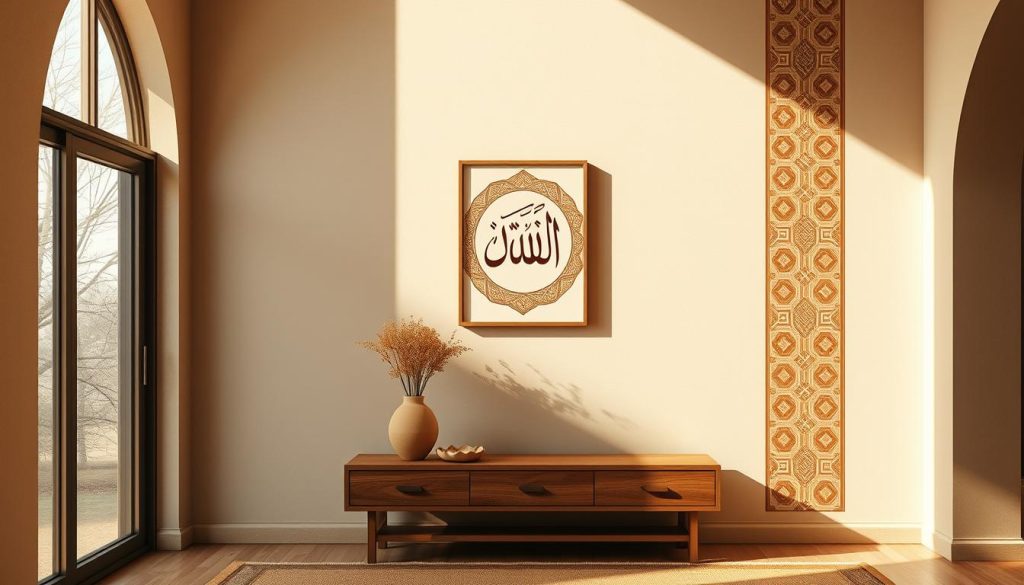
Neutral palettes become exciting with texture. Tadelakt plaster walls add depth and light play. Wooden screens cast shadows that change with the day. These textural elements add interest without bold colours.
Natural materials like jute, wool, and ceramics add variety. They engage our senses while keeping the space harmonious, making spaces sophisticated yet welcoming.
Accent Colours and Their Strategic Use
Neutrals are the base, but colours bring life to Islamic minimalist spaces. Use colours sparingly for maximum effect while keeping calm.
Traditional colours like sapphire blue, emerald green, and ruby red can be used in:
- A single piece of handcrafted pottery on a shelf
- Carefully selected cushions or a prayer rug
- A framed piece of calligraphy
- Mosaic tile details in a bathroom or kitchen
- Stained glass elements that filter natural light
These accents are focal points that delight without overwhelming. They highlight architectural features or define zones in open-plan layouts.
“In Islamic design, colour is never arbitrary. Each hue carries meaning and purpose, connecting the physical space to spiritual ideals while creating beauty through restraint.”
For modern Islamic living, use two or three colours that complement each other. This keeps the space cohesive while allowing each colour to shine. Choose colours with personal significance or reference natural elements essential to your family.
The beauty of earthy tones and textures in Islamic minimalist design is their timelessness. Unlike trendy colours, these natural palettes create lasting spaces that feel modern and connected to Islamic design tradition.
Creating Uncluttered Sacred Spaces
Designing uncluttered sacred spaces in Islamic homes is an art. It blends religious reverence with minimalist aesthetics. These spaces, dedicated to prayer and reflection, are the spiritual heart of the house. They connect daily life with divine remembrance.
These areas don’t need big rooms or fancy decorations. Instead, they focus on intentional simplicity. This approach suits modern Islamic living, where families balance tradition and modernity.
Prayer Areas: Minimalist Design Approaches
The prayer area is the spiritual core of the home. Start by choosing a quiet, clean corner. A prayer rug with meaningful patterns or geometric designs is the main feature.
Use a single piece of Islamic calligraphy or art above the area. This adds a visual anchor without clutter. A simple shelf for the Quran and prayer beads keeps essentials organised.
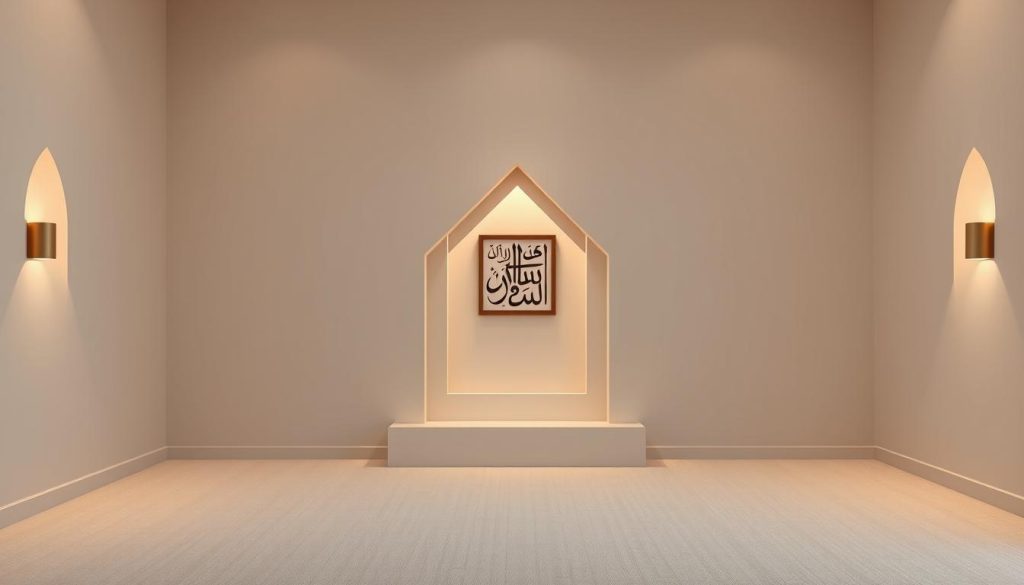
Lighting is crucial in prayer spaces. Choose soft, warm light for a calm atmosphere. A pendant light or floor lamp can define the area nicely. Natural light also enhances the serene feel.
Maintaining Order and Cleanliness
Cleanliness is vital in Islam. Simple routines keep sacred areas tidy, which matches religious values and minimalist design.
Creating zones of purpose helps keep things in order. Set up areas for wudu preparation with simple storage. This reduces clutter and supports spiritual practices.
Involve family in keeping these spaces clean. Even young children can help, removing shoes and keeping the area tidy. This teaches essential values and maintains order.
Storage Solutions for Religious Items
Religious items need thoughtful storage. Use a dedicated shelf or cabinet for the Quran and texts. Simple, unadorned wooden shelving is both functional and beautiful.
Prayer clothing and accessories need discreet storage. Consider a basket for scarves or a drawer for garments. The goal is to make daily practice easier while keeping the space calm.
For seasonal items, use modular storage. Decorative boxes in natural materials can store special items and add decor.
These uncluttered sacred spaces are the spiritual heart of the Muslim home. They are designed to facilitate connection with Allah and embody simplicity and order. By applying minimalist principles, we create spaces that support spiritual growth and aesthetic harmony.
Furniture Selection for Modest Interior Design
Choosing furniture for a modest Islamic home is all about simplicity and purpose. Each piece reflects your design beliefs, shaping how spaces work and feel. In Islamic minimalist homes, furniture meets both practical and spiritual needs, blending faith with modern living.
The furniture we pick shows our dedication to balance and meaningful living. We avoid trendy items and unnecessary pieces. Instead, we focus on items that improve our lives and support our faith.
Low-Profile Seating Arrangements
Islamic homes often use low seating to create welcoming spaces. This tradition shows humility and encourages connection during gatherings.
Using floor cushions, low divans, and majlis-style seating is a wise choice. These options are comfortable and fit well in modern homes, keeping cultural values alive. Many homes mix traditional and low seating for flexibility.
Low seating leads to closer conversations and makes rooms feel bigger. It is arranged well and supports hospitality and keeps the space clean, fitting minimalist ideals.
Multifunctional Furniture Pieces
Islamic design and minimalism both value furniture that does more than one thing. Such pieces save space and follow Islamic teachings on moderation.
Look for storage ottomans, expandable dining tables, and day beds. These are great in small urban homes where space is tight.
Choose furniture with built-in storage, like benches with prayer mat compartments or coffee tables with drawers. This thoughtful design supports daily life and spiritual practices without clutter.
Quality Over Quantity Approach
Islamic teachings promote moderation and discourage excess, aligning with minimalism. Instead of many low-quality items, invest in a few well-made pieces that last long.
Please take a look at the materials and craftsmanship of the furniture. Solid wood and traditional joinery are signs of quality that last. This reflects the Islamic value of amanah (stewardship) and responsible resource care.
Quality furniture often tells a story and holds meaning, unlike mass-produced items. Handcrafted pieces connect us to our culture and support ethical production. This approach makes our homes feel genuine and meaningful.
In modern Islamic living, the focus is on technology quality, too. Instead of many gadgets, choose a few high-quality items like a sound system for Quran recitations. This keeps the space calm and serene.
Following these principles, we create homes that respect Islamic values and meet today’s needs. Our modest interior design is timeless yet relevant, supporting our faith and providing comfort and functionality.
Textile Choices for Simplicity in Islamic Homes
Choosing the right fabrics is key to simple, culturally rich homes. Textiles add depth and meaning without clutter. In a minimalist Islamic home, every fabric has a purpose, showing that less can be more.
Textiles carry tradition in Islamic homes with care. They show the value of quality and meaningful design. This approach respects both simplicity and tradition.
Natural Fabrics and Their Benefits
Natural fabrics are a cornerstone of Islamic design. Cotton, linen, silk, and wool are favourites for their beauty and authenticity. Each fabric brings something special to a home.
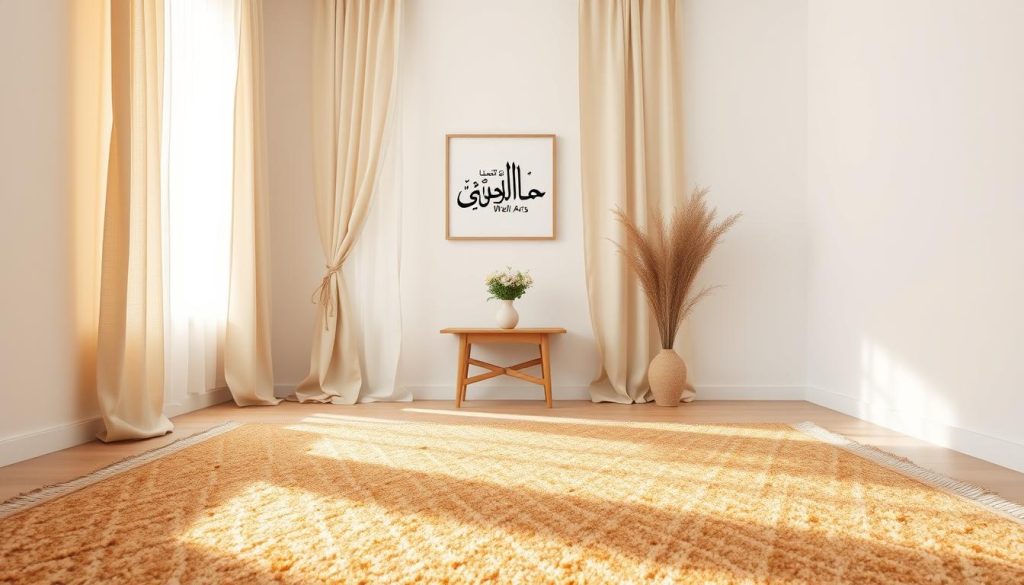
Cotton is great for everyday items like cushions and throws. It’s comfortable and fits well with the minimalist style. Linen adds texture and interest to simple spaces.
Textiles in Islamic Minimalism
Silk adds luxury but should be used sparingly. Its historical importance in Islamic textiles makes it meaningful. Wool, in rugs, brings warmth and connects to Islamic traditions.
| Natural Fabric | Aesthetic Quality | Practical Benefit | Best Application |
| Cotton | Clean, understated appearance | Breathable, washable, durable | Every day textiles, bedding, cushions |
| Linen | Natural texture, elegant drape | Cooling becomes softer with use | Curtains, tablecloths, summer throws |
| Silk | Subtle sheen, luxurious feel | Temperature regulating, lightweight | Accent pillows, prayer mats, and wall hangings |
| Wool | Rich texture, natural warmth | Insulating, soil-resistant, long-lasting | Area rugs, winter throws, floor cushions |
Natural materials reflect Islamic values of caring for the environment. They are biodegradable and renewable, fitting well with minimalist values.
Pattern Integration Through Textiles
In minimalist Islamic homes, textiles are perfect for adding traditional patterns. A single rug or textile can be a focal point, carrying cultural significance.
A rug with geometric patterns can anchor a room while keeping it simple. It’s important to choose a few statement pieces to avoid clutter. This way, Islamic patterns can be appreciated fully.
Cushions and throws are also great for adding patterns. A set of cushions with Islamic motifs can transform a sofa. Choose patterns with:
- Negative space for visual interest, Monochromatic or limited colour palettes for calm, Authentic craftsmanship that honours Islamic traditions, Meaningful motifs that reflect faith or culture
This thoughtful use of patterns creates “quiet interest.” It’s visual engagement that rewards careful observation. This approach embodies simplicity in Islamic homes, where beauty comes from balance.
Minimalist Window Treatments
Window coverings in Islamic homes need to balance privacy, light control, and simplicity. Traditional solutions like mashrabiya screens are still relevant today.
Modern interpretations of mashrabiya screens can be used as window treatments. They serve both practical and decorative purposes. These screens can be simplified to their geometric essence, creating shadow play.
Roman blinds in natural fabrics are another minimalist option. They meet Islamic privacy needs and clean aesthetic principles. Their flat surface creates a calm visual plane when lowered, while their ability to be raised completely allows for maximum light when privacy isn’t a concern.
Whatever window treatment is chosen, simplicity comes from careful thought. In Islamic minimalist homes, window coverings should feel like a natural part of the space, contributing to harmony and intentionality.
By choosing textiles mindfully, we create homes that are both authentically Islamic and minimalist. These spaces reflect our faith and values without excess. The simplicity achieved through thoughtful textile selection creates environments that feel timeless and deeply personal.
Lighting Elements in Islamic Minimalism
Lighting in Islamic minimalist spaces connects form, function, and faith. Light symbolises divine presence and guidance, making thoughtful lighting design key to creating homes that nourish body and spirit.
When done right, lighting can turn a minimalist space into a serene haven. It adds warmth and depth without losing simplicity.
Traditional Lanterns with Modern Simplicity
Islamic lighting traditions inspire modern minimalist homes. The famous lantern has been updated for today’s spaces. These new versions keep cultural heritage while fitting modern tastes.
Instead of big, ornate chandeliers, choose simple versions of traditional lights. A sleek brass pendant with geometric cutouts can make a big statement with less fuss. The focus is on pieces that stand out thoughtfully, not overwhelm.
- Clean metalwork with simple geometric patterns
- Matte finishes instead of shiny surfaces
- LED tech in traditional shapes
- Smaller sizes for today’s homes
Natural Light Maximisation
Natural light is key in Islamic architecture and minimalist design. Islamic buildings were made to welcome sunlight, which is good for our spiritual and physical health.
To get more natural light in your home, try these tips:
- Place furniture to let light flow freely
- Use mirrors to reflect light into rooms
- Choose light colours for walls and ceilings
- Go for sheer curtains to filter sunlight
The dance of light and shadow through the day adds life to minimalist spaces. It connects us to the world around us, promoting mindfulness and presence.
Shadow Play and Ambient Lighting
Islamic lighting design is known for its beautiful shadow play. Perforated screens and patterned lamps create moving light patterns. These add interest to minimalist interiors without clutter.
Creating good ambient lighting needs careful planning. Aim for a lighting scheme that changes smoothly from day to night. This supports different activities while keeping the space serene.
For balanced lighting, consider these elements:
- Wall sconces with patterned shades
- Floor uplighters behind plants for silhouettes
- Table lamps with textured shades for soft light
- Candles or flameless alternatives for cosy moments
The aim of lighting in Islamic minimalist design is tranquillity and contemplation. By blending tradition with modern simplicity, we create timeless and contemporary spaces. These homes nurture our spiritual side while embracing minimalism.
Modest Elegance in Home Aesthetics: Room-by-Room Guide
Starting a journey to modest elegance in Islamic home design means understanding minimalism for each room. It’s about creating a home that respects faith and simplicity. We need to think about how each room fits into our daily lives.
Every space is a chance to show Islamic values through design. We can balance beauty with function. Let’s see how to make our homes both spiritually uplifting and stylish.
Living Spaces: Hospitality with Restraint
In Islamic tradition, welcoming guests is key. The living room is where this happens. A minimalist approach to hospitality makes spaces for talking and relaxing without too much.
Arrange seats in circles for better conversation. Choose furniture with clean lines and natural materials. A low sofa with floor cushions is both traditional and modern.
Keep wall decor meaningful and straightforward. A striking piece of calligraphy or art can start interesting conversations. Use negative space for a calm look. A prayer rug or textile adds warmth without being too much.
Storage should be easy to find but not showy. Built-in shelves or multi-use furniture keep the room calm while keeping things handy.
Bedrooms: Tranquil Minimalist Retreats
The bedroom is a quiet place for rest and thought. It’s where we disconnect from the world. Modest elegance is key here, making a calm space for the soul.
Start with a simple bed or floor mattress in natural linens. Shades of cream, soft blue, or terracotta create a peaceful vibe for sleep.
Please make sure to keep furniture simple and valuable. A small prayer area and a shelf for books show respect for faith. A clean-lined chest or wardrobe stores things without clutter.
Choose window treatments that let in light but keep things private. Unbleached cotton or linen curtains are perfect. Avoid too many decorations, focusing on a few special pieces.
Kitchens and Dining Areas: Functional Simplicity
Kitchens are important in Islamic culture for preparing food with care. A minimalist kitchen focuses on cleanliness, organisation, and function. These values match Islamic teachings on food.
Use open shelving for essential items. Tools made from wood, ceramic, and cast iron are better and add warmth. Clear countertops are calm and practical for cooking.
In dining areas, a simple wooden table and comfy seats welcome guests. Traditional floor seating with cushions around a low table is authentic and encourages connection.
Storage should be clever and organised. Pantry items in clear containers reduce clutter and make ingredients easy to find. A tidy kitchen shows respect for Allah’s gifts.
Bathrooms: Clean Lines and Ritual Spaces
Bathrooms are key for purification rituals like wudu. Designing them with spiritual and minimalist ideas creates peaceful, functional spaces for daily prayer.
Make a dedicated ablution area with a basin and a non-slip floor. Simple storage for prayer clothes and towels supports rituals. Natural materials like stone and wood are practical and earthy.
Choose simple designs and neutral colours for calm. A small plant or geometric tiles add interest without being too much. Good ventilation and natural light make the space fresh and uplifting.
Storage should be enough, but not showy. Cabinets or shelves keep things tidy and support spiritual practice, creating a space that’s both spiritually supportive and stylish.
In every room, Islamic minimalism is about creating spaces that support faith and daily life. By applying these ideas, we can make homes that are spiritually and aesthetically pleasing. These homes nurture both body and soul.
Conclusion: Embracing the Timeless Beauty of Islamic Minimalism
Exploring Islamic minimalism shows us a design philosophy that stands the test of time. It’s rooted in geometric patterns that have decorated Muslim homes since the 7th century. These patterns bring beauty and meaning to our spaces.
Islamic minimalism is more than a style choice. It’s a way of living that respects faith through design. Clean lines, open spaces, and thoughtful layouts make homes peaceful and purposeful.
Natural materials, earthy tones, and bright lighting create authentic yet modern spaces. These elements connect us to timeless principles that have guided Muslim homes for centuries.
The charm of Islamic minimalist design is its flexibility. You can tailor these principles to suit your needs while staying true to simplicity, function, and spiritual significance.
Our living spaces greatly influence our daily lives. By blending Islamic tradition with minimalist simplicity, we create homes that nurture spiritual growth and everyday well-being. This thoughtful design approach lets us live in spaces honouring our heritage and meeting modern needs.
FAQ
How does Islamic design philosophy align with minimalism?
Islamic design and minimalism share values like intention and simplicity. They focus on quality and meaning over material things. Islamic teachings promote moderation, which fits well with the minimalist goal of simplicity.
What are the key elements of Arabian minimalist style?
Arabian minimalist style is about clean lines and open spaces. It uses geometric patterns and calligraphy. These elements bring calm and interest to a space.
Why are natural materials necessary in Islamic minimalist decor?
Natural materials like wood and stone connect us to Islamic design. They reflect Islamic values of simplicity and care for the environment, adding warmth and cultural depth to minimalist spaces.
What colour palette works best for Islamic minimalist interiors?
Islamic minimalist interiors often use earthy tones like beiges and soft whites. These colours create a calm background. Jewel tones and rich textures can add depth without cluttering the space.
How can I create a minimalist prayer area that still feels sacred?
Create a prayer area with a simple rug and minimal decor. Use a small calligraphy piece or geometric pattern. Keep it clean and well-lit, and consider storage for religious items.
What type of furniture works best in Islamic minimalist homes?
Choose low-profile seating and multifunctional furniture. Opt for quality over quantity. This approach aligns with Islamic values and minimalist principles.
How can I incorporate traditional Islamic patterns without creating visual clutter?
Use patterns sparingly, like on a feature wall or rug. Choose simplified patterns with clean lines. This adds interest without cluttering the space.
What lighting elements work best in Islamic minimalist interiors?
Use modern interpretations of traditional lighting like lanterns. Maximise natural light and create layered lighting. This supports different activities while keeping the atmosphere calm.
How can I balance modesty with contemporary design in my home?
Focus on modest elegance with beautiful yet unostentatious pieces. Prioritise function and quality over showiness. Create spaces that support Islamic values like hospitality and family connection.
Are there sustainable approaches to Islamic minimalist design?
Yes! Sustainability matches Islamic and minimalist values. Go for natural materials and support fair trade. Investing in quality pieces also helps. This way, you respect the environment and cultural heritage.
How can I incorporate Islamic calligraphy into a minimalist space?
Start with one or two calligraphy pieces as highlights. Look for designs with clean lines and lots of space. Modern or abstract calligraphy works well in today’s spaces.
What textiles work best in Islamic minimalist interiors?
Opt for natural fabrics like cotton and wool. They’re beautiful and practical. Choose subtle patterns and textures. Handwoven pieces bring a special touch to your space.