



Stories of the Sahabah
Stories of the Sahabah, Did you know that over 100,000 people were companions of the Prophet Muhammad (peace be upon him)? But only a few of their amazing stories have survived the years. These tales show the highest level of Islamic character and devotion, inspiring believers everywhere.
The Sahabah saw God’s message come to life, supported the Prophet through hard times, and laid the groundwork for a new civilisation. Their lives show how faith is lived out and how regular people can reach great spiritual heights.
These stories are more than just history—they offer practical advice for today’s problems. They inspire and deepen our understanding of Islamic heritage. For families wanting to share this legacy with kids, beautifully illustrated books can make faith fun and relatable.
By diving into these stories, we learn about the power of courage and devotion. The wisdom of the early followers still guides Muslims today, helping them stay true to timeless values in a changing world.
Key Takeaways
- The Sahabah comprised over 100,000 individuals who personally knew the Prophet Muhammad
- Their stories represent the highest standard of Islamic character and faith
- These narratives bridge historical accounts with practical wisdom for today
- The companions demonstrated extraordinary courage during Islam’s formative period
- Their examples guide contemporary Muslims facing modern challenges
- These accounts help strengthen the connection to Islamic heritage and identity
The Noble Companions: Understanding the Sahabah
The Sahabah were extraordinary men and women who lived during Islam’s early years. They showed true faith in action. Their love for Prophet Muhammad (peace be upon him) left a lasting legacy that inspires Muslims today. Knowing who they were helps us understand their essential role in Islamic history.
Who Were the Sahabah?
“Sahabah” (singular: Sahabi) refers to those who met Prophet Muhammad and believed in him. They came from various backgrounds, including wealthy merchants and former slaves. Their common bond was their connection to the Prophet and their experience of revelation.
The Sahabah were grouped based on when they became Muslims. The Sabiqun, the earliest converts, faced harsh persecution but remained steadfast. Others joined later, helping establish the first Islamic society. Each of their stories enriches the history of the Sahaba biographies.
Their Unique Position in Islamic History
The Sahabah were unique due to their close connection to Islam’s source. They witnessed the Qur’an’s revelation, saw the Prophet apply divine guidance, and learned from him directly. This gave them a deep understanding of Islam’s teachings.
As the first Muslims, the Sahabah preserved the Prophet’s teachings. They memorised his sayings, recorded his actions, and followed his example. Islamic scholars view them as the most reliable sources after the Qur’an and Sunnah, calling them righteous predecessors (as-Salaf as-Salih).
Their example is still relevant today. They teach us about faith, sacrifice, and moral values. Their lives show how Islamic principles can guide us in any situation, making them ideal role models for all Muslims.
Abu Bakr As-Siddiq: Unwavering Faith in Crisis
Abu Bakr As-Siddiq’s journey shows that true faith is not about not feeling fear. It’s about trusting in Allah even when things seem impossible. As the Prophet Muhammad’s closest friend and the first caliph, Abu Bakr’s life teaches us about staying strong, making sacrifices, and leading others. These lessons are still important today, coming from the golden era of Islam.
The Cave Incident: “Do Not Grieve, Allah Is with Us”
The cave incident during the Hijrah (migration to Madinah) is a key moment in Abu Bakr’s faith. When Meccan pursuers found the Prophet and Abu Bakr in a cave, they were very close. Abu Bakr could see their feet from inside.
Abu Bakr was worried for the Prophet’s safety. He whispered, “If one of them looks down at his feet, he will see us.” The Prophet replied, “Do not grieve, Allah is with us.” This shows the deep trust Abu Bakr had in Allah’s protection.

Spending His Entire Wealth for Islam
Abu Bakr’s love for Islam was unmatched. He gave away all his money to help early Muslims. He also freed slaves who were tortured for their faith.
When asked about his family’s future, Abu Bakr replied, “I have left them Allah and His Messenger.” The Prophet Muhammad praised his generosity. He said no one’s wealth had helped him more than Abu Bakr’s.
Leading the Ummah After the Prophet’s Death
Abu Bakr faced his biggest challenge after the Prophet’s death. The Muslim community was in turmoil. Tribes turned against Islam, and false prophets emerged.
As the first caliph, Abu Bakr showed immense courage. He vowed to fight for even a small amount of money owed to the Prophet. His leadership kept the early Islamic state united. He set the stage for the community’s future.
The stories of the Sahabah, like Abu Bakr, teach us that true faith is strongest in hard times. It’s when everything seems lost that our faith is truly tested.
Umar ibn Al-Khattab: Transformation from Opponent to Champion
Umar ibn Al-Khattab changed from wanting to kill the Prophet Muhammad to becoming a great leader. This shows the power of divine revelation. His story is one of the most striking in Islamic history, showing how faith can change a person’s life.
The Dramatic Conversion After Hearing the Qur’an
Umar wanted to stop Islam by killing the Prophet. He was armed and ready to go. But he found his sister had joined Islam.
She hid the Qur’an from him. When Umar asked to see it, he started reading. The words of the Qur’an touched his heart deeply. He felt the truth of the verses in Surah Ta-Ha.
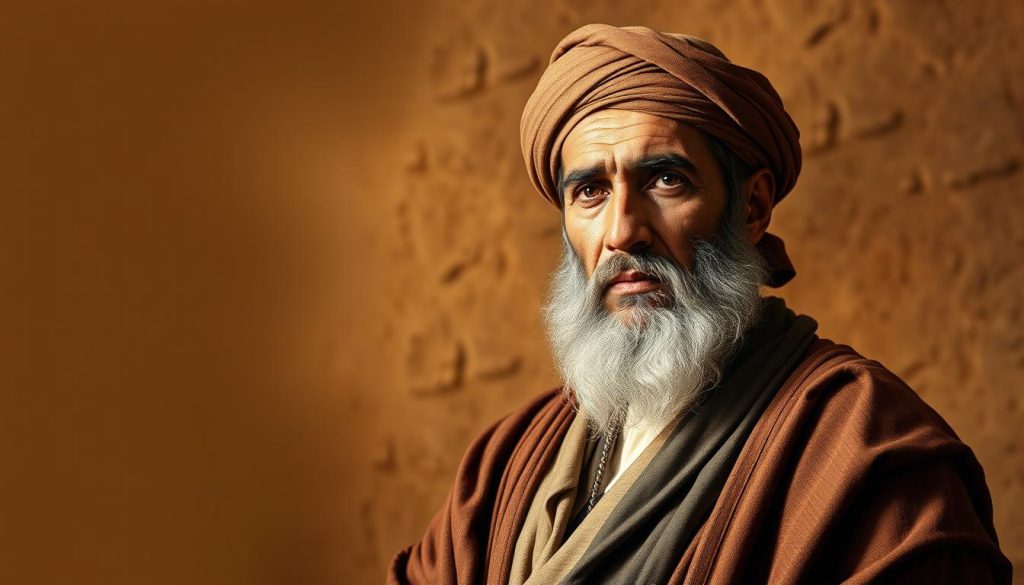
Umar ibn Al-Khattab: The Just and Fair Ruler
Umar ibn Al-Khattab was a key figure in Islam. He became a Muslim and was known as “Al-Farooq” for his ability to distinguish truth from falsehood. His strength and determination made him a crucial figure in the Islamic world.
Walking the Streets at Night to Help the Needy
Umar, despite being the leader of a vast empire, remained humble and kind. He would sneak out at night to help the poor. He carried food and supplies on his back.
One night, he found a woman trying to feed her children with boiling stones. Moved by her, Umar took flour, dates, and oil to her home. He cooked a meal for the family.
When someone said Allah would be pleased with him, Umar replied, “I don’t think Allah will be pleased with me if my people are hungry.”
Establishing the Islamic Calendar and Treasury
Umar’s wisdom helped shape the Islamic state. He made several significant changes:
| Innovation | Purpose | Lasting Impact |
| Hijri Calendar | Standardise date-keeping based on the Prophet’s migration | Still used throughout the Muslim world today |
| Bayt al-Mal | Establish a public treasury for fair distribution of resources | Created financial accountability in governance |
| Provincial System | Organise newly conquered territories | Set the foundation for Islamic administrative practices |
Umar’s life shows us that we can improve with divine guidance. His leadership was a mix of strength and compassion. His story teaches us about using power wisely and putting others first.
Uthman ibn Affan: Exemplary Generosity and Modesty
Uthman ibn Affan stands out in Islamic history for his wealth and piety. As a successful merchant, he used his wealth to help others. His story shows how to use money for good.
Purchasing the Well of Rumah for the Muslims
In Madinah, the Muslims were struggling to find water. A Jewish man owned the Well of Rumah and charged too much. Uthman offered to buy the well to help the community.
He bought the well and made it free for everyone. He said, “This well is free for everyone—the traveller and the resident alike.” This act of kindness still inspires Muslims today.
Financing the Army of Difficulty (Jaish Al-Usrah)
Uthman’s most significant act of kindness was during the Tabuk expedition. The Prophet Muhammad asked for help to equip the army. Uthman gave 950 camels, 50 horses, and 1,000 dinars from his wealth.
This generous act impressed the Prophet. He said, “Nothing will harm Uthman after today, whatever he does.” It showed the value of giving without expecting anything in return.
Compiling the Qur’an During His Caliphate
Uthman noticed different ways of reading the Qur’an. He decided to create a standard version. He formed a committee to make a mushaf (written compilation).
He then had many copies made and sent them to all parts of the Islamic world. This ensured the Qur’an’s teachings were kept true for all to follow.
Uthman was humble despite his wealth and power. He slept in the mosque with the poor and gave charity at night. His life teaches us that true greatness is giving, not keeping.
Ali ibn Abi Talib: The Embodiment of Courage and Wisdom
Ali ibn Abi Talib is a shining example of bravery and wisdom in Islamic history. He was the Prophet Muhammad’s cousin and son-in-law. This makes him a key figure among the companions of the Prophet. His qualities inspire many to improve their character and intellect.
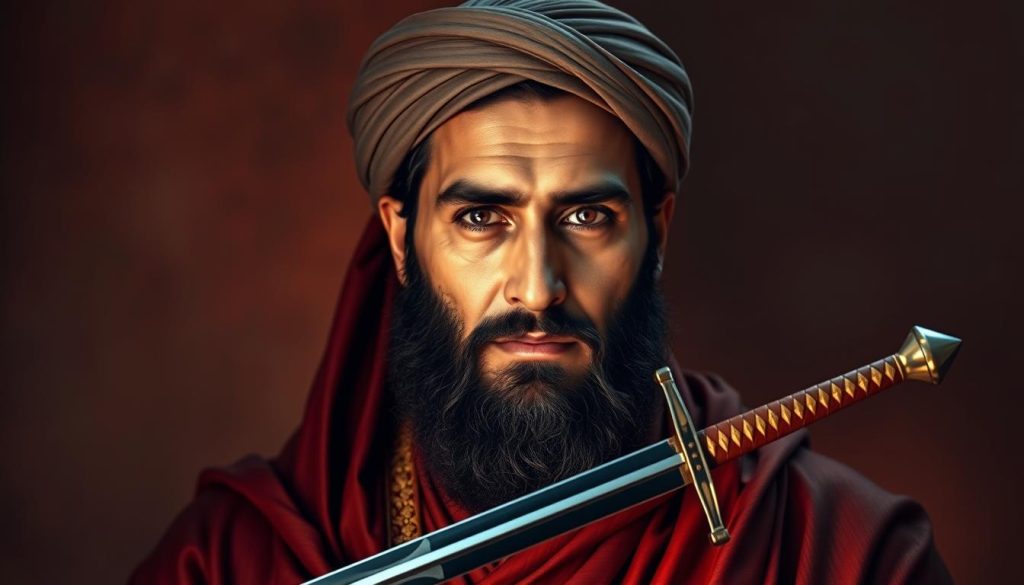
Sleeping in the Prophet’s Bed During the Migration
Ali showed incredible courage when the Quraysh tried to kill the Prophet. He volunteered to sleep in the Prophet’s bed to trick the assassins. This act saved the Prophet’s life, even though Ali might have faced death.
This story is a highlight in seerah literature. It shows Ali’s deep commitment to Islam and its messenger. At just twenty, he showed a bravery that many older believers might not have.
Heroism at the Battle of Khaybar
Ali’s bravery at the Battle of Khaybar is legendary. Despite being ill, he led the Muslim forces to victory. He used a fortress door as a shield, showing his incredible strength.
This battle solidified Ali’s reputation as a warrior of faith. His courage was unmatched.
His Profound Sayings and Judgments
Ali’s wisdom is highly valued in Islamic thought. His sayings, like “The worth of a man lies in what he does well,” inspire many. They encourage striving for excellence in all aspects of life.
Ali was known for his deep understanding of the Qur’an. He was among the most knowledgeable among the righteous predecessors—his fairness and insight in resolving disputes set essential precedents in Islamic law.
Powerful Stories of the Sahabah During Persecution
The early Muslims in Mecca faced tough times. Their stories of courage inspire us all. These tales show how faith can overcome even the toughest challenges.
Bilal ibn Rabah: “Ahad, Ahad” Under Torture
Bilal ibn Rabah, an Ethiopian slave, was tortured for his faith. His master, Umayyah ibn Khalaf, made him suffer under the desert sun. Bilal was forced to say “Ahad, Ahad” (One, One) even as he struggled to breathe.
Despite the pain, Bilal never gave up. Abu Bakr later freed him. Bilal then became the first muezzin in Islam.
Sumayyah and Yasir: Standing Firm Until Martyrdom

Edit
Full screen
View original
Delete
early islamic persecution martyrs
Sumayyah and Yasir, along with their son Ammar, were tortured for their faith. They were dragged to the desert and suffered greatly.
Sumayyah, despite her age, stood firm. Abu Jahl killed her with a spear. Her husband, Yasir, died soon after. Their son Ammar survived but was forced to deny his faith, showing the complexity of duress in Islam.
Khabbab ibn al-Aratt: Enduring Hot Metal on His Back
Khabbab ibn al-Aratt was tortured uniquely. His persecutors heated metal and placed it on his back. This burned him as he refused to give up his faith.
Years later, Khabbab showed his scars to the Prophet Muhammad. He asked for prayers instead of revenge. This shows the power of faith over anger.
| Companion | Form of Persecution | Famous Response | Legacy in Islamic History |
| Bilal ibn Rabah | Rocks on chest under the desert sun | “Ahad, Ahad” (One, One) | First muezzin in Islam |
| Sumayyah bint Khayyat | Physical torture, speared to death | Refused to renounce Islam | First martyr in Islam |
| Yasir ibn Amir | Desert torture until death | Remained steadfast until death | Early martyr, the father of Ammar |
| Khabbab ibn al-Aratt | Hot metal placed on the back | Showed scars to the Prophet later | Symbol of forgiveness over revenge |
These stories from early Islam show us that faith can conquer even the darkest times. The inspiring Muslim lives of these companions teach us about the strength of faith. Their stories give us courage when we face hardship and persecution today.
The Women Sahabiyat: Courage Beyond the Battlefield
The stories of women companions in the sahaba biographies are filled with bravery and resilience. These women showed courage that went beyond fighting. They were examples of faith, resourcefulness, and dedication to Islam during its early days.
Khadijah: Consoling the Prophet After the First Revelation
When Prophet Muhammad ﷺ returned from Mount Hira after his first revelation, Khadijah was there to support him. She believed in him, saying, “Allah would never humiliate you, for you keep good relations with your relatives, help the poor, serve your guests generously, and assist those in need.”
Her belief helped the Prophet ﷺ feel confident in his mission as the first to accept Islam, Khadijah’s courage and faith are key parts of the prophetic tradition and inspire Muslims all over the world.
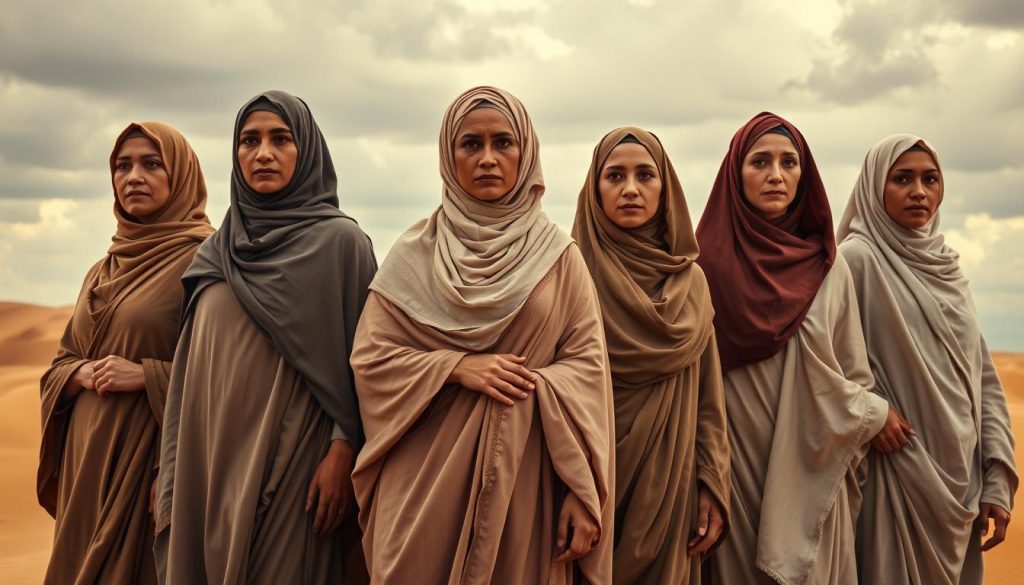
Nusaybah bint Ka’ab: Fighting to Protect the Prophet at Uhud
At the Battle of Uhud, Nusaybah bint Ka’ab (Umm Umarah) showed incredible bravery. She came to give water to the fighters but ended up defending the Prophet ﷺ with a sword and shield.
Despite being wounded many times, she stood as a human shield. The Prophet ﷺ said, “Wherever I turned during the battle, to the right or the left, I saw her fighting for me.” Her bravery is one of the most inspiring stories in early Islamic history.
Asma bint Abu Bakr: The Woman of the Two Belts
When the Prophet ﷺ and Abu Bakr migrated to Madinah, Asma bint Abu Bakr showed extraordinary resourcefulness. She tore her belt in half to carry food and tie her garment, earning her the nickname “The Woman of the Two Belts.”
Her courage was also shown when Abu Jahl threatened to find her father. Despite being intimidated, she refused to tell him anything. This shows bravery can be about standing firm, not just physical strength.
These women’s stories teach us about courage in the sahaba biographies. They show us emotional strength, physical bravery, resourcefulness, and moral courage. Their stories inspire Muslims of all genders.
Aisha bint Abu Bakr: Intelligence and Scholarly Contributions
Aisha bint Abu Bakr was a unique figure in Islamic history. She had sharp intelligence, a great memory, and direct access to the Prophet’s knowledge. As the daughter of the first caliph and wife of the Prophet Muhammad, she became a leading scholar in early Islam. Her work still shapes Islamic understanding and practice today.
Narrating 2,210 Hadith for Future Generations
Aisha narrated 2,210 authentic hadith, a major contribution to the stories of the Sahabah. Her memory kept essential details about the Prophet’s life and habits alive. These details would have been lost without her.
Living close to the Prophet Muhammad gave her a special view of his life. When asked about his character, she said, “His character was the Qur’an.” This shows her deep understanding of the Prophet’s divine guidance.
Teaching Both Men and Women Islamic Jurisprudence
Aisha’s tent became a learning hub after the Prophet’s death. Both men and women came to learn from her. Even senior companions sought her advice on complex issues.
Her teaching was groundbreaking. She would analyze hadith, comparing them with the Qur’an and using logic. This made her a key figure in prophetic tradition.
Her Quick Wit and Problem-Solving Abilities
Aisha was known for her intelligence and quick thinking. She could solve complex religious questions by connecting teachings and Qur’anic verses in new ways.
One famous story shows her problem-solving skills. When faced with conflicting inheritance laws, she explained the different contexts. Her quick thinking made her a valuable resource for the early Muslim community.
| Contribution | Impact on Islamic Knowledge | Relevance Today |
| 2,210 Hadith Narrations | Preserved the intimate details of prophetic practice | Forms the foundation of many daily Muslim practices |
| Jurisprudential Teachings | Established methodologies for deriving rulings | Continues to influence Islamic legal thought |
| Critical Analysis | Introduced verification methods for hadith | Shaped modern approaches to seerah literature |
| Women’s Education | Created precedent for female scholarship | Inspires contemporary Muslim women scholars |
Remarkable Stories of the Sahabah in Battle
The early days of Islam saw incredible bravery on the battlefield. The Prophet Muhammad’s ﷺ companions showed great faith and courage, even when faced with enormous challenges. Their stories inspire Muslims everywhere, showing how strong belief can turn ordinary people into heroes.
Hamza ibn Abdul-Muttalib: The Lion of Allah at Badr
Hamza ibn Abdul-Muttalib, the Prophet’s ﷺ uncle, was known as the “Lion of Allah“. His acceptance of Islam was a big boost to the early Muslim community, who were few and vulnerable.
At the Battle of Badr, Hamza’s bravery was a sight to behold. He wore an ostrich feather to be easily seen. His bravery helped the Muslims win, despite being outnumbered three to one.
The Prophet’s grief at Hamza’s death during the Battle of Uhud was deep. Seeing Hamza’s body, the Prophet ﷺ said, “I will never suffer a loss like this again.”
Sa’d ibn Abi Waqqas: The First to Shoot an Arrow for Islam.
Sa’id ibn Abi Waqqas was the first to shoot an arrow for Islam. He was a skilled archer, making him a key asset in battles.
The Prophet ﷺ praised Sa’d highly during battles, saying, “Shoot, Sa’d, may my father and mother be sacrificed for you!” This shows Sa’d’s importance in Islamic history.
Sa’d did more than just archery. He later led the Muslim forces that conquered Persia, expanding Islam’s territory during its golden era.
Khalid ibn Al-Walid: From Enemy General to “Sword of Allah”
Khalid ibn Al-Walid’s transformation is truly remarkable. He was once a military strategist against Muslims at Uhud but later became a brilliant general for Islam.
After converting, Khalid became known as the “Sword of Allah” by the Prophet ﷺ. He was undefeated in over a hundred battles.
Khalid’s story shows that even former enemies can become champions of their former foes. It highlights Islam’s power to change and redeem.
| Companion | Notable Achievement | Title Earned | Character Lesson |
| Hamza ibn Abdul-Muttalib | Decisive role at the Battle of Badr | Lion of Allah | Physical courage rooted in faith |
| Sa’id ibn Abi Waqqas | First to shoot an arrow for Islam | One of the ten promised in Paradise | Using talents in the service of principles |
| Khalid ibn Al-Walid | Undefeated in over 100 battles | Sword of Allah | Capacity for transformation |
Islamic history teaches us that courage comes from conviction. The companions faced enormous challenges but won through faith and strategy. Their bravery and moral courage and faith leave a lasting legacy.
Salman Al-Farisi: The Extraordinary Journey to Faith
Salman Al-Farisi’s path to Islam is a unique story of spiritual seeking. It crossed many boundaries, from culture to geography. He went from being a Persian noble to a slave before finding peace in Islam.
From Zoroastrian Priest to Christian Monk to Muslim
Salman was born into a wealthy Persian family. His father was a Zoroastrian priest. But Salman was curious and questioned his faith.
He was drawn to a Christian church and started praying with them. This led him to leave his life behind. He travelled to find proper guidance, visiting many Christian monks.
“I asked, ‘What is the origin of this religion?’ They said, ‘In Syria.’ I said to them, ‘Take me with you to Syria.'”
Salman kept searching for the truth in Syria, Mosul, and more. Each monk he met told him to find the next teacher. They all said a prophet would come to Arabia with signs to know him.
But while trying to reach Arabia, Salman was betrayed and sold into slavery. He was a slave for years before meeting Prophet Muhammad in Madinah. There, he recognised the signs and became a Muslim.
Suggesting the Trench Strategy to Defend Madinah
Salman’s background was instrumental during the Battle of the Trench. A huge army attacked Madinah, and Salman suggested digging a trench around the city.
This plan was new to the Arabs but came from Persian tactics. It stopped the enemy’s cavalry and saved the Muslims from defeat.
The Prophet helped dig the trench. When they hit a hard rock, Salman used the Prophet’s pickaxe. His strong strikes made sparks, and the Prophet had visions of future victories.
The Prophet Declaring: “Salman is from the People of my Household”
The Prophet gave Salman a great honour. The Muhajiroon and Ansar argued over where Salman belonged. The Prophet said, “Salman is from us, the People of the Household.”
This made Salman a spiritual relative of the Prophet’s family. It showed Islam’s message is for everyone, beyond tribes and cultures.
| Phase of Life | Faith Tradition | Key Challenges | Spiritual Lessons |
| Early Life in Persia | Zoroastrianism | Questioning ancestral practices | Courage to seek truth beyond comfort |
| Journey Through the Middle East | Christianity | Constant relocation, uncertainty | Persistence in spiritual seeking |
| Period of Slavery | Transition | Exploitation, loss of freedom | Patience through hardship |
| Life in Madinah | Islam | Integration, proving worth | Wisdom transcends cultural boundaries |
Salman’s journey shows wisdom can come from anywhere. His story is a beacon of hope. It shows faith can overcome any obstacle.
Lesser-Known Stories of the Sahabah That Inspire
The sahaba biographies are full of stories of companions who are not famous. Yet, their faith is firm. These stories show their bravery in facing rejection, tragedy, and speaking truth to power.
Julaybib: From Social Outcast to Honoured Martyr
Before Islam, Julaybib was shunned because of his looks and social status. The Prophet Muhammad saw beyond these and arranged his marriage. This shows Islam’s value on human dignity, regardless of appearance.
In a battle, Julaybib was forgotten among the fallen. The Prophet searched for him and found him with seven enemies. The Prophet said, “He is of me, and I am of him,” giving him a great honour.
Umm Sulaim: Offering Her Son’s Death as a Gift to Allah
Umm Sulaim’s story shows great spiritual strength. When her young son died, she stayed calm. She welcomed her husband home without sharing the news.
Later, she asked her husband if one should refuse to return something borrowed. He said yes. She then said Allah had “borrowed” their son and returned him. Her faith turned her grief into a powerful act of faith, as seen in seerah literature.
Abu Dharr Al-Ghifari: Speaking Truth to Power
Abu Dharr stood up for what was right, even when it was hard. He spoke out against injustice and wealth hoarding, and during Uthman’s rule, he criticized officials for their wealth.
His words led to his exile to Rabadha, where he lived in poverty until his death. Still, he never gave up his beliefs. His story shows the power of standing up for justice, even when it’s hard.
Conclusion: The Timeless Legacy of the Sahabah
The lives of the Prophet Muhammad’s companions still inspire us today, fourteen centuries later. Their stories are not just history but guides for Muslims in today’s world.
Their power comes from being real. The Sahabah were not flawless; they faced struggles, made errors, and triumphed through faith. Their journey shows us how to grow personally and as a community.
The companions of the Prophet showed us what Islam is all about. Bilal stood strong under torture, Aisha made important contributions, Abu Bakr showed loyalty, and Nusaybah showed courage in battle. Each story highlights a different side of faith in action.
We can follow their example by learning from their lives and applying their teachings to ours. For families wanting to connect with Islamic heritage, resources like Islamic Wall Arts are invaluable. They help young people understand their roots.
The Sahabah teach us that faith is stronger in community, in action, and in kindness. Their lessons are timeless because they speak to our common humanity, regardless of age.
FAQ
Who were the Sahabah, and why are they so important in Islam?
The Sahabah were the Prophet Muhammad’s (peace be upon him) companions. They believed in him and died as Muslims. They were the first to witness the revelation and learn from the Prophet.
Their closeness to the Prophet gave them deep insight into his teachings. They played a key role in establishing Islam, preserving the Qur’an, and setting precedents for Muslim practice.
What was the significance of Abu Bakr accompanying the Prophet in the cave during the Hijrah?
Abu Bakr’s faith was tested when they hid from pursuers in a cave. The Prophet reassured him, saying, “Do not grieve, Allah is with us.” This showed Abu Bakr’s trust in Allah and the Prophet.
It also made Abu Bakr the Prophet’s closest companion. He earned the title “As-Siddiq” for his immediate belief in the Prophet’s words.
How did Umar ibn Al-Khattab convert to Islam?
Umar was once a fierce opponent of Islam. He planned to kill the Prophet but was moved by his sister’s faith. When he read the Qur’an, his heart changed, and he accepted Islam.
His journey shows how divine guidance can change even the hardest hearts.
What was Uthman ibn Affan’s most significant contribution to Islamic history?
Uthman made a standard version of the Qur’an. He spread it across the Islamic world. This kept the Qur’an’s true form for all to follow.
The “Uthmanic codex” is still the main version of the Qur’an today.
What made Ali ibn Abi Talib unique among the companions of the Prophet?
Ali was brave and wise. He was the Prophet’s cousin and son-in-law. This gave him a special insight into Islam.
Ali’s sayings on wisdom and governance are still quoted today.
How did Bilal ibn Rabah demonstrate his faith during persecution?
Bilal was tortured for not giving up Islam. Despite the pain, he declared “Ahad, Ahad” to show Allah’s oneness. His faith never wavered.
After being freed, Bilal became the first muezzin in Islam. He was known for his beautiful voice and unwavering faith.
What role did women companions (Sahabiyat) play in early Islamic history?
Women like Khadijah and Aisha were key. Khadijah supported the Prophet emotionally and financially. Aisha became a renowned scholar, teaching both men and women.
Women like Nusaybah and Rufaida served as nurses in battles. Their contributions highlight the importance of female participation in Islam.
What makes Aisha bint Abu Bakr such an important figure in Islamic scholarship?
Aisha narrated over 2,210 hadith, making her a key figure in Islamic scholarship. Her knowledge and memory were exceptional. She taught both men and women, influencing Islamic jurisprudence.
For fourteen centuries, scholars have relied on her narrations and interpretations.
How did Salman Al-Farisi find his way to Islam?
Salman was born to a Zoroastrian priest but questioned his faith. He travelled to various religious scholars, seeking truth. Eventually, he found Muhammad (peace be upon him) and accepted Islam.
His journey highlights the importance of seeking truth and perseverance in faith.
Who was Khalid ibn Al-Walid, and how did he transform after accepting Islam?
Khalid was a skilled military strategist against the Muslims. After converting, he became Islam’s most brilliant general. The Prophet called him “Sword of Allah.” he remained undefeated in over a hundred battles.
Khalid’s transformation shows Islam’s power to redeem even former enemies.
What can we learn from the story of Julaybib?
Julaybib’s story teaches us about human dignity and spiritual worth. Despite being socially marginalized, he found acceptance in Islam. The Prophet arranged his marriage and declared him a spiritual kin.
His story shows that Islam values people based on their faith and character, not appearance or status.
How did the early Sahabah preserve the teachings of Islam for future generations?
The Sahabah preserved Islamic teachings through memorisation, documentation, and narration. They established a rigorous system of transmission and implemented the Prophet’s teachings in governance and social systems.
Their efforts ensured Islamic teachings would remain intact for future generations.
What was the significance of the Battle of Badr in the lives of the Sahabah?
The Battle of Badr transformed the Sahabah into a significant political and military force. Despite being outnumbered, they defeated the Meccan army, confirming divine support. The Prophet forgave the sins of all Badr participants.
The battle tested their faith and established their presence in Arabia.
How did the Sahabah balance worldly responsibilities with spiritual devotion?
The Sahabah integrated their faith into every aspect of life. They were successful in their careers while maintaining ethical standards and generosity. The Prophet discouraged extreme asceticism, encouraging balance in life.
Their example shows that Islam values worldly success and spiritual devotion together.
What lessons can we learn from the Sahabah relevant to Muslims today?
The Sahabah teach us about being strong, learning, and mixing faith with culture. Their stories highlight the value of women’s roles and the importance of achieving success with integrity.
They show us how people from different backgrounds can come together. They value both being united and celebrating diversity.
How did the Sahabah deal with differences of opinion among themselves?
The Sahabah were wise in handling disagreements. They looked to the Qur’an and the Prophet’s teachings first. They also valued each other’s opinions and sought collective wisdom.