



As parents, we all want the best for our children. In today’s world, teaching them strong faith and values is key.
We remember a young boy who memorised the Quran by 10. His parents’ support and guidance were crucial. This inspirational journey shows how important parents are in a child’s spiritual growth.
As Muslim parents, we aim to nurture our kids with faith, values, and education. In this article, we’ll share 10 essential tips. These will help you raise righteous Muslim children, using Islamic wisdom and practical advice.
Key Takeaways
- Understand the importance of instilling faith and values in your children.
- Discover practical Islamic parenting tips to nurture your kids’ spiritual growth.
- Learn how to balance faith and modern education for a well-rounded upbringing.
- Explore the role of parental involvement in a child’s spiritual development.
- Find out how to create a supportive environment for your child’s faith to flourish.
Understanding the Importance of Raising Righteous Children
As Muslim parents, we know that fostering Islamic values in our kids is a big responsibility. The Prophet Muhammad (peace be upon him) said, “Every child is born on fitrah,” showing their natural goodness and potential.
Teaching our children about faith is key to their moral development. By teaching them Islamic values, we help them stay on the right path. The Quran reminds us, “And be steadfast in prayer and righteous in conduct. We don’t burden any soul more than it can handle,” (Quran 7:42).
The Role of Faith in Parenting
Faith is more than just beliefs; it’s a lifestyle that shapes parenting. By using Islamic teachings in our daily lives, we create a space for spiritual growth. For example, saying dua before meals teaches kids to be thankful and rely on Allah.
Our job as parents is to help our kids understand and love their faith. This means showing them what it means to live by Islamic values. As the saying goes, “Charity begins at home,” so it’s important to show these values in our actions.
Cultivating Moral Values
Teaching moral values is a big part of nurturing pious kids. Islamic teachings offer a clear guide for moral behavior. By teaching honesty, kindness, and respect, we help our kids grow into good people.
Storytelling is a great way to teach these values. Stories of prophets and good people from Islamic history can inspire and teach our kids. For instance, the story of Prophet Yusuf (Joseph) teaches patience and forgiveness.
By linking faith with moral values, we give our kids the skills to face life’s challenges. They will stay true to their Islamic beliefs.
Instilling Islamic Principles Early On
Teaching Islamic teachings to children helps them grow in faith and morality. It’s key to introduce these principles early. This aids in their spiritual and personal growth.
Teaching the Basics of Beliefs
It’s vital to teach kids the basics of Islamic beliefs. This includes understanding the six articles of faith. These are: belief in Allah, His angels, messengers, books, the Day of Judgment, and divine decree.
We can explain these ideas to kids using stories and examples from the Quran. For example, teaching Tawhid (the oneness of God) can be done with simple examples. These show how unique and unified Allah’s creation is.
Integrating Daily Prayers
It’s important to make daily prayers a part of kids’ routines. We can make five daily prayers fun and engaging. This can be done by praying together as a family.
Explaining the importance of each prayer can also help. This way, kids learn the value of prayer in their daily lives.
| Prayer | Time | Significance |
|---|---|---|
| Fajr | Before dawn | Beginning the day with the remembrance of Allah |
| Dhuhr | When the sun is at its peak | Seeking guidance during the busiest part of the day |
| Asr | Late afternoon | Maintaining focus as the day progresses |
| Maghrib | Just after sunset | Breaking the fast and expressing gratitude |
| Isha | Night | Reflecting on the day’s actions before rest |
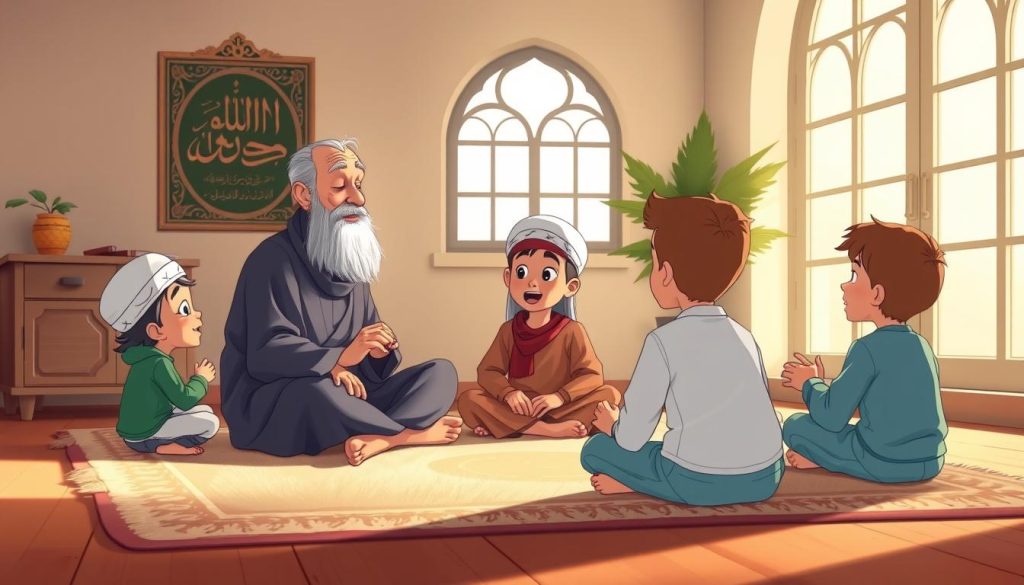
By making Islamic principles a natural part of their upbringing, we can help children develop a strong moral compass and a deep connection with their faith.
Creating a Positive Home Environment
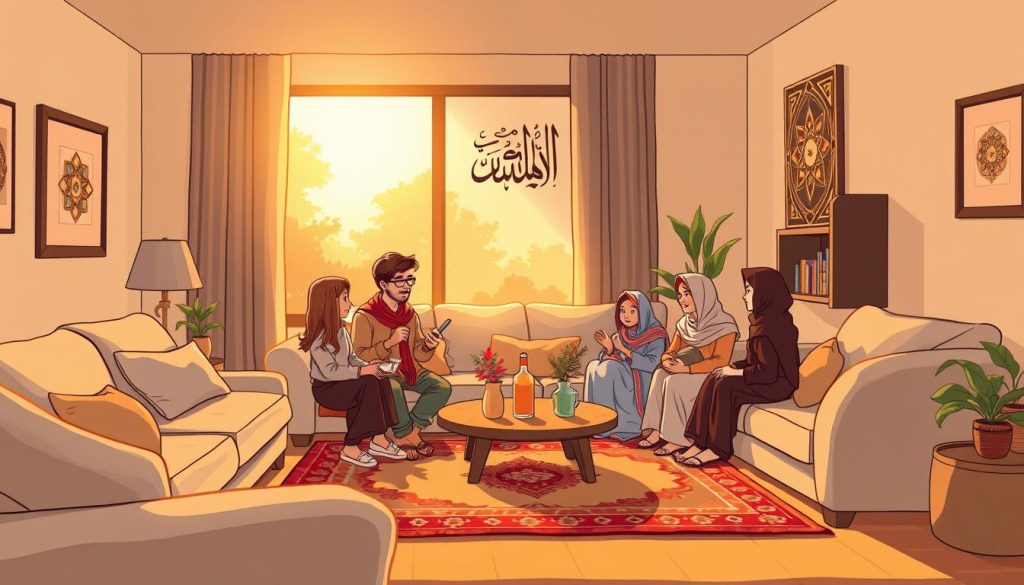
Creating a nurturing home environment is key for raising Muslim children right. As parents, we shape our kids’ values and beliefs.
A positive home is more than just a place. It’s a space for spiritual growth, emotional stability, and moral integrity. We’ll look at two important parts: open communication and being a good example.
Encouraging Open Communication
Open communication is vital for a healthy home. It lets kids share their thoughts, feelings, and worries freely. We should make our homes where children feel heard and understood.
To encourage open talk, we can:
- Have regular family talks on faith, values, and news.
- Listen well to our kids, showing empathy and understanding.
- Be ready to answer their questions about Islam and life.
This way, we bond with our kids and help them think critically and solve problems.
Setting a Good Example
Children often copy what their parents do. So, being a good example is key in guiding them right. We must watch our actions, words, and attitudes, as they affect our kids’ growth.
To be a good example, we should:
- Live by Islamic values like honesty, kindness, and patience.
- Do acts of worship and charity with our kids.
- Show respect and kindness to others, as Islam teaches.
By being a good example, we encourage our kids to follow these values. This creates a positive and righteous home environment.
| Key Elements | Benefits |
|---|---|
| Open Communication | Strengthens family bond, promotes critical thinking |
| Setting a Good Example | Inspires children to adopt Islamic values and behaviors |
Engaging with the Community
It’s crucial to engage with the community when raising righteous Muslim kids. We aim to build an environment that supports their spiritual growth and sense of belonging.
Being part of the community is more than just attending events. It’s about building a network that supports the values we teach at home. This way, our children can learn from others, make friends, and find their identity.
Involvement in the Local Mosque
The mosque is key in the Muslim community. It’s a place for worship, learning, and socialising. Encouraging our kids to join mosque activities helps them connect with their faith.
Here are some ways to get involved:
- Attend weekly prayers and sermons
- Join Quranic studies and Islamic classes
- Participate in community events and fundraisers
Being active in the mosque helps our kids form meaningful relationships with other Muslims. They also deepen their understanding of Islamic principles.
Participating in Community Events
Community events provide many chances for our kids to interact with others, learn new things, and grow their character. From charity drives to cultural festivals, these events teach the importance of community service and social responsibility.
| Event Type | Benefits for Children | How to Get Involved |
|---|---|---|
| Charity Drives | Teaches empathy and generosity | Volunteer as a family to collect donations |
| Cultural Festivals | Promotes cultural understanding and appreciation | Participate in festival planning committees |
| Community Clean-Up | Fosters a sense of responsibility and stewardship | Join local clean-up initiatives with your children |
By taking part in these events, we enrich our children’s lives and help the community too.

Engaging with the community strengthens the Islamic values we teach our children. This collective effort creates a supportive environment for them to flourish spiritually and socially.
Educating for Both This Life and the Hereafter
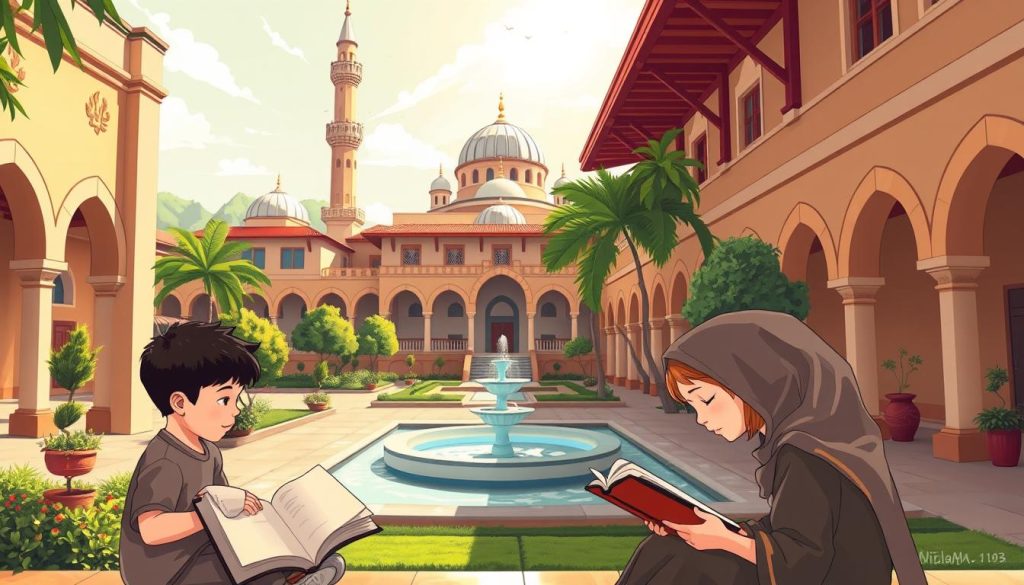
In today’s fast world, it’s vital to give our kids a balanced education. They need to do well in school and learn about Islam. This mix helps them face today’s world and stay true to their faith.
Balancing Academic and Islamic Education
It’s important to educate our kids well. They should do well in school and understand Islam deeply. We can do this by:
- Choosing schools with a strong curriculum.
- Adding Islamic studies at home or in madrasas.
- Teaching them to live by Islamic values every day.
Teaching Critical Thinking
Critical thinking is crucial for our kids. It helps them make smart choices and deal with today’s world. We can help by:
- Encouraging them to ask questions and seek knowledge.
- Talking about current events from an Islamic view.
- Doing activities that solve problems and follow Islamic values.
| Aspect | Academic Education | Islamic Education |
|---|---|---|
| Focus | Secular subjects and skills | Islamic principles and values |
| Benefits | Prepares for worldly success | Nurtures spiritual growth |
| Application | Career and personal development | Daily life and moral guidance |
By mixing school learning with Islamic studies and teaching critical thinking, we prepare our kids. They’ll do well in life and be ready for the hereafter.
Encouraging Good Deeds and Charity
Teaching our kids to be kind and charitable is key in their Islamic education. As parents, we guide them in developing these values. These values are crucial for them to become righteous Muslim kids.
The Importance of Giving
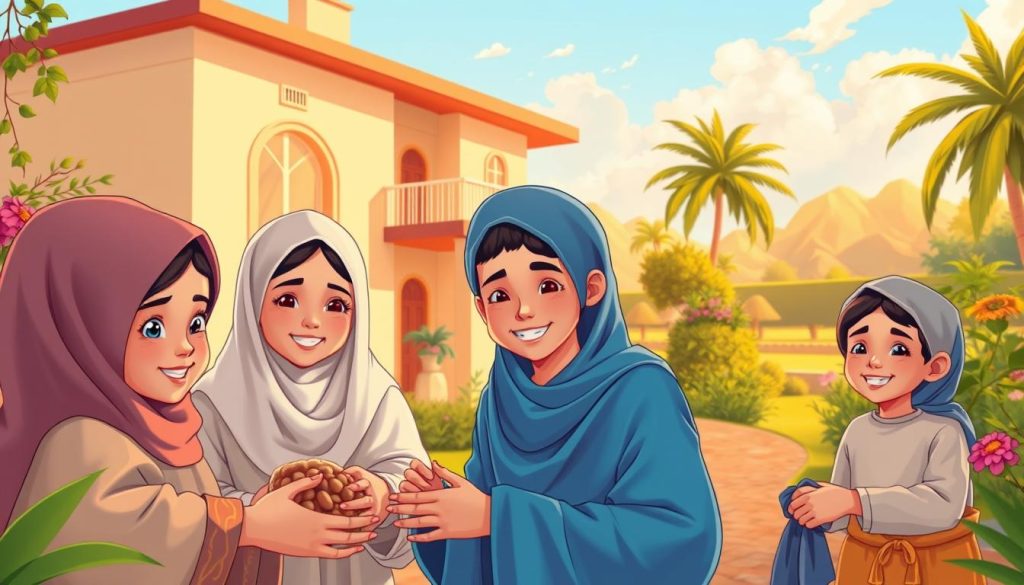
Giving is a core part of Islam, fostering community and compassion. By teaching our children about giving, we give them a strong moral base. This not only helps others but also enriches their spiritual lives.
There are many ways to encourage kids to give. They can donate to charity or help those in need in their community. It’s important to explain why their actions matter and how they help others.
Finding Ways to Volunteer
Volunteering teaches kids the value of helping others. We can get them involved in community service, like helping at a soup kitchen or cleaning up the environment.
Through volunteering, kids learn about empathy, teamwork, and the effect of their actions. It’s also a chance for them to learn new skills and feel more confident.
- Find local charities or community groups that need volunteers.
- Encourage kids to join fundraising events or campaigns.
- Plan family volunteer days to make giving fun and a shared experience.
These activities help our children understand their social responsibility. They learn to make a positive impact in the world.
Fostering Respect and Tolerance
We believe teaching children to respect different views is key to Islamic values. It’s about making a space where they can grasp and value various opinions.
Understanding Diverse Perspectives
In today’s world, it’s vital for kids to understand different views. This skill helps them deal with different social settings with kindness and insight.
To help them, we can:
- Encourage kids to meet people from different backgrounds.
- Talk openly about different cultures and faiths.
- Share stories that show the value of tolerance.
Promoting Interfaith Dialogue
Encouraging talks between different faiths helps build respect and understanding. It shows kids the shared values among various religions.
Ways to support interfaith dialogue include:
- Joining in community events that celebrate different faiths.
- Having guests from other faiths share their beliefs.
- Teaching kids to ask respectful questions and join in discussions.
By teaching respect and tolerance, we make our children kind and open-minded. This not only makes their lives richer but also helps create a more united society.

| Methods | Benefits |
|---|---|
| Encouraging diverse interactions | Enhances empathy and understanding |
| Promoting interfaith dialogue | Fosters respect and cooperation among different faiths |
| Using educational stories | Teaches valuable lessons on tolerance and respect |
Supporting Your Child’s Individuality
It’s a delicate task to balance encouraging our children’s unique talents with Islamic values. As parents, we shape their identities and help them become confident, righteous individuals.
It’s key to recognise and support each child’s distinct qualities. This helps them grow into capable and compassionate Muslims.
Recognising Unique Talents
Every child has special talents and abilities that need nurturing. As parents, identifying these talents and giving them opportunities to grow is crucial.
- Observe your child’s interests and strengths.
- Encourage them to explore different activities and hobbies.
- Provide resources and support to help them develop their talents.
By nurturing their unique talents, we help our children build confidence and find their purpose.
Encouraging Independence
Encouraging independence is vital for our children to become self-sufficient and confident. This can be done by:
| Strategy | Benefits |
|---|---|
| Giving them responsibilities | Develops a sense of accountability and duty |
| Encouraging decision-making | Fosters critical thinking and problem-solving skills |
| Providing guidance and support | Helps them navigate challenges and make informed decisions |
By finding the right balance between guidance and independence, we help our children become capable, righteous Muslims. They will be confident in their abilities and rooted in their faith.
Navigating Modern Challenges as Muslims
As Muslim parents, guiding our children in today’s world is tough. We must tackle issues like peer pressure and the digital world. This ensures they stay on the right path.
Peer Pressure and Digital Influence
Children often face peer pressure, which can clash with their faith. We can help by talking openly and being a good example. For example, sharing stories of Prophets can teach valuable lessons.
The story of Prophet Adam teaches us about humility and repentance. Prophet Joseph’s forgiveness shows the value of compassion.
Empowering Digital Literacy
The digital world brings both chances and challenges. Teaching our children about digital literacy is key. It helps them find Islamic knowledge and avoid dangers.
By using these parenting tips, we can raise a confident generation. They will be ready to face modern life’s complexities with their faith intact.
FAQ
How can I instil Islamic values in my children?
Start with the basics of Islamic teachings. Make daily prayers a part of their routine. This helps them build a strong faith foundation.
What role does the community play in raising righteous Muslim children?
Being part of the local community is key. Join the mosque and attend community events. It enriches their spiritual life and gives them a sense of belonging.
How can I balance my child’s academic education with Islamic knowledge?
Prioritise both education and Islamic studies. Integrate Islamic studies into their daily routine. This balance helps them navigate modern life while staying true to their faith.
What are some practical ways to encourage good deeds and charity in my children?
Involve them in volunteer work and talk about the importance of giving. Discussing charity together as a family also helps. It teaches them compassion and generosity.
How can I foster respect and tolerance in my children?
Teach them to understand diverse perspectives and promote interfaith dialogue. This makes them compassionate and open-minded. Explore Islamic teachings that promote respect for other faiths.
How can I support my child’s individuality while ensuring they remain grounded in their faith?
Recognise their unique talents and encourage independence. This boosts their confidence. Find ways to nurture their individuality while keeping a strong Islamic connection.
What are some strategies for navigating modern challenges as a Muslim parent?
Address peer pressure with open conversations. Use digital literacy to strengthen their faith. These strategies help them stay true to their values in modern times.
How can I create a positive home environment that fosters spiritual growth?
Encourage open communication and be a good example. Make your home a place where faith and values are discussed comfortably.
What is the significance of teaching children Islamic principles at a young age?
Teaching Islamic principles early builds a strong faith foundation. Introduce the basics and daily prayers. This has a lasting impact on their spiritual growth.