



Understanding Allah’s Name AL-BAAQI
In the vast treasury of Allah’s 99 beautiful names, AL-BAAQI (The Everlasting) is a profound reminder of divine permanence in our temporary world. This name invites us to contemplate Allah’s eternal nature while recognising our finite existence. When we understand and internalise Al-Baaqi through spiritual practices like Wazzefa, we open ourselves to a deeper connection with the divine presence that transcends time.
The Profound Meaning of AL-BAAQI in Islamic Theology
AL-BAAQI (الباقي) linguistically derives from the Arabic root “ba-qaf-ya” (ب-ق-ي), which carries meanings of continuation, permanence, and endurance. As one of Allah’s beautiful names, Al-Baaqi signifies “The Everlasting” – the One whose existence has no beginning and no end, who remains forever unaffected by time.
Unlike His creation, which is bound by temporal constraints, Allah, as Al-Baaqi, transcends time completely. This divine attribute affirms that Allah existed before time began and will continue to exist after everything else perishes. The Quran beautifully captures this reality:
“Everyone upon the earth will perish, and there will remain the Face of your Lord, Owner of Majesty and Honour.” (Quran 55:26-27)
In his profound work on Allah’s names, Imam Al-Ghazali explains that “the everlasting is such that the projection of its existence into the future has no end.” He further elaborates that Allah is “the existent whose existence is necessary in itself” – a concept that, while beyond complete human comprehension, forms the foundation of our understanding of divine permanence.

The concept of Al-Baaqi starkly contrasts with our human experience of time. While we perceive past, present, and future as distinct realities, Allah’s perception remains unchanging. Imam Ghazali notes that “only changeable things participate in past or future because past and future are temporal expressions.” Allah, as Al-Baaqi, exists in a state of eternal presence that our time-bound minds cannot fully grasp.
Quranic References to AL-BAAQI (The Everlasting)
The Quran contains several powerful references that illuminate the meaning of Al-Baaqi. These verses establish the theological foundation for this divine name and provide practical wisdom for believers seeking to align their lives with this eternal reality.
Key Verses Highlighting Allah’s Everlasting Nature
“Whatever you have will end, but what Allah has is lasting (bāqin). And We will surely give those who were patient their reward according to the best of what they used to do.” (Quran 16:96)
This verse establishes a fundamental contrast between the temporary nature of worldly possessions and the eternal rewards with Allah. It encourages believers to prioritise actions with lasting spiritual value over those with temporary benefits.
“Everyone upon the earth will perish, and there will remain the Face of your Lord, Owner of Majesty and Honour.” (Quran 55:26-27)
Here, the Quran presents the ultimate reality that all creation will perish while only Allah remains eternal. This profound truth serves as both comfort and warning, reminding us of our temporary nature while assuring us of Allah’s everlasting presence.

“And Allah is better and more enduring (abqā).” (Quran 20:73)
This statement comes from the story of the magicians who believed in Moses. Despite Pharaoh’s threats of torture, they recognized that Allah’s rewards are superior and more lasting than any worldly punishment or pleasure. Their realization demonstrates how understanding Al-Baaqi transforms one’s perspective on life’s challenges.
“And the enduring (al-bāqiyāt) good deeds are better to your Lord for reward and better for [one’s] hope.” (Quran 18:46)
This verse introduces the concept of “al-bāqiyāt as-sālihāt” (the enduring good deeds) – righteous actions that continue to benefit a person even after death. It emphasisesA that such deeds are superior to worldly wealth and children in terms of divine reward and ultimate hope.
Connecting with AL-BAAQI Through Wazzefa Practice
Wazzefa (وظيفة) in Islamic spirituality refers to a regular spiritual practice or devotional routine that helps believers connect with Allah’s attributes. When applied to Al-Baaqi, Wazzefa practices help us internalize the concept of divine permanence and align our temporary lives with eternal values.

Deepen Your Connection with Allah’s Names
Understanding Allah’s beautiful names can transform your spiritual practice and daily life.
Download Free Guide to Allah’s Names
Essential Wazzefa Practices for Connecting with Al-Baaqi

The Prophet Muhammad ﷺ emphasised the importance of connecting with Allah’s names through practice rather than mere intellectual understanding. By consistently engaging in these Wazzefa practices, believers can develop a living relationship with Al-Baaqi that transforms their perspective on this world and the Hereafter.
Practical Applications of AL-BAAQI in Daily Life
Understanding Allah as Al-Baaqi (The Everlasting) isn’t merely a theological exercise—it offers profound practical wisdom for navigating our temporary existence. Here are five ways to internalize and apply this divine attribute in your daily life:
1. Cultivating Detachment from the Temporary

When we genuinely understand that Allah alone is everlasting, we naturally loosen our grip on temporary possessions and status. This doesn’t mean abandoning worldly responsibilities, but instead holding them lightly—recognizing their transient nature while investing in what endures.
Practice: Before making significant purchases or commitments, ask yourself: “Does this have lasting value in light of eternity?” This simple reflection can transform your relationship with material possessions.
2. Finding Stability Amid Life’s Changes

Life constantly changes—relationships evolve, health fluctuates, careers shift. By anchoring yourself in Al-Baaqi, you develop inner stability that transcends external circumstances. Allah’s unchanging nature becomes your refuge during life’s inevitable transitions.
Practice: During significant change or uncertainty, establish a daily ritual of connecting with Al-Baaqi through dhikr and prayer, reminding yourself that while circumstances change, Allah’s presence and support remain constant.
3. Investing in Eternal Rewards

The Quran repeatedly emphasises that while worldly gains perish, good deeds endure. Understanding Al-Baaqi motivates us to invest our time, energy, and resources in actions with eternal value—kindness, charity, knowledge-sharing, and spiritual growth.
Practice: Establish a regular charitable practice, whether financial giving or volunteering your time and skills. Approach this not as an obligation but as an investment in what truly lasts beyond this life.
Test Your Understanding of Allah’s Names
How well do you know the meanings and applications of Allah’s beautiful names?
4. Developing Patience Through Eternal Perspective
When we view our challenges through eternity, their proportions change dramatically. Understanding Al-Baaqi helps us develop sabr (patience) by recognizing that difficulties are temporary while Allah’s rewards are everlasting.
The Quran connects explicitly this divine attribute to patience: “Whatever you have will end, but what Allah has is lasting. And We will surely give those who were patient their reward according to the best of what they used to do.” (16:96)
Practice: When facing hardship, consciously remind yourself of its temporary nature compared to the eternal reward for patience. Could you recite this verse as a spiritual practice during difficult times?
5. Creating a Legacy of Lasting Value
Al-Baaqi inspires us to think beyond our lifetimes and consider what we’ll leave behind. Rather than pursuing fame or accumulating wealth, we focus on contributing knowledge, raising righteous children, establishing ongoing charity, and leaving positive impacts that continue after we’re gone.
The Prophet Muhammad ﷺ taught that after death, a person’s deeds end except for three: ongoing charity, beneficial knowledge, and righteous children who pray for them.
Practice: Dedicate time regularly to at least one of these three areas—teaching others, contributing to sustainable charitable causes, or nurturing the spiritual development of the next generation.

Scholarly Interpretations of AL-BAAQI
Scholars have offered profound insights into the meaning and implications of Allah’s name Al-Baaqi throughout Islamic history. These interpretations help us deepen our understanding beyond surface-level definitions.
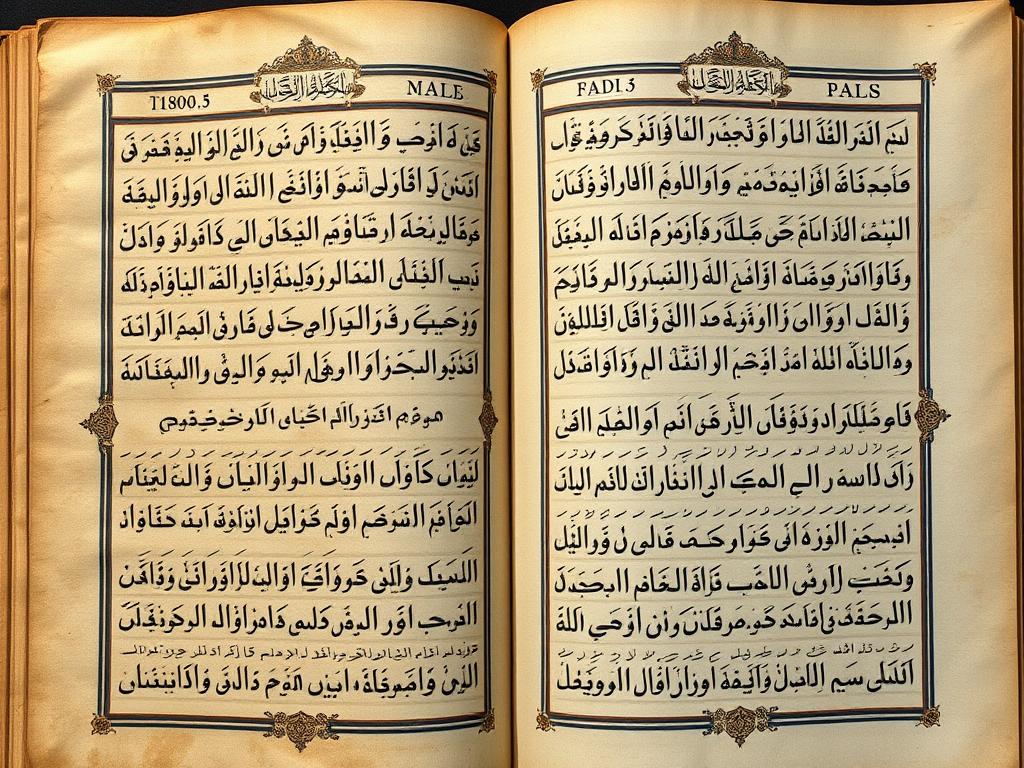
Imam Al-Ghazali’s Perspective
In his seminal work “The Ninety-Nine Beautiful Names of Allah,” Imam Al-Ghazali explains that Al-Baaqi refers to “the One whose existence has no end.” He distinguishes between things that appear permanent but eventually perish and Allah’s true permanence with no beginning or end.
Ghazali notes that “only changeable things participate in past or future because past and future are temporal expressions.” This profound insight helps us understand how Allah’s everlasting nature transcends our human experience of time.
Ibn Arabi’s Mystical Interpretation
The great Sufi scholar Ibn Arabi approached Al-Baaqi from a mystical perspective, seeing it as the divine attribute that sustains all existence moment by moment. For Ibn Arabi, Allah is not merely everlasting in a linear sense but is the continuous source of being itself.
He wrote that “everything other than Allah exists only through His sustaining presence.” This perspective invites us to recognise Allah’s everlasting nature not just as a future reality but as the current foundation of our existence.
Contemporary Scholarly Insights
Modern scholars like Shaykh Tosun Bayrak emphasize the practical implications of Al-Baaqi, noting: “There is a way to gain an eternal life during the short visit here. It is achieved by not tying one’s heart to this world… If one works for Allah’s sake, for Allah’s pleasure, for the benefit of Allah’s creation now and in the future, when all is ended, and this body has returned to dust, one’s work will carry one to Eternity.”
This perspective bridges theological understanding with practical spiritual guidance, showing how Al-Baaqi should transform our priorities and actions.
“He is the existent whose existence is necessary in itself.” — Imam Al-Ghazali on Allah as Al-Baaqi.
Finding Balance Between the Temporal and Eternal
One of the most significant challenges for believers is balancing worldly responsibilities with eternal perspectives. Understanding Al-Baaqi doesn’t mean rejecting the temporal world but rather placing it in proper perspective within the larger context of eternity.

The Prophet Muhammad ﷺ exemplified this balance perfectly. While fully engaged in family life, community leadership, and worldly affairs, he maintained an unwavering focus on eternal values. His famous prayer reflects this balance: “O Allah, make the Hereafter our greatest concern.”
Signs of Imbalance Toward Temporal Concerns
Signs of a Healthy Eternal Perspective
Strengthen Your Spiritual Practice
Join our community to receive weekly reflections on Allah’s beautiful names and practical ways to implement them in your life.
Subscribe to Weekly Reflections
The story of the magicians who believed in Moses offers a powerful example of this balance. When threatened with torture and death by Pharaoh, they responded: “We have believed in our Lord that He may forgive us our sins and what you compelled us [to do] of magic. And Allah is better and more enduring.” (Quran 20:73)
Their response demonstrates how understanding Al-Baaqi transforms our assessment of worldly threats and promises. They recognised that while Pharaoh’s punishment was temporary, Allah’s reward was eternal, allowing them to make the right choice despite severe consequences.
Frequently Asked Questions About AL-BAAQI
How is Al-Baaqi different from Allah’s names Al-Awwal (The First) and Al-Akhir (The Last)?
While Al-Awwal and Al-Akhir describe Allah as the beginning and end of all things, Al-Baaqi emphasises His everlasting nature that transcends time completely. Al-Awwal teaches us about Allah as the origin of creation, and Al-Akhir describes Him as the ultimate end. Still, Al-Baaqi affirms that Allah exists in a state of permanent being that has no beginning or end. This name particularly emphasises that Allah remains after everything else perishes.
Is Al-Baaqi mentioned explicitly in the Quran?
The exact name “Al-Baaqi” does not appear in the Quran in the specific form of Allah’s name, which is why some scholars consider it among the “disputed names.” However, derivatives of the same root (b-q-y) are used in the Quran to describe Allah’s everlasting nature, such as in verse 16:96: “What is with you must vanish, and what is with Allah will endure (bāq).” Many classical scholars, including Imam Al-Ghazali and Ibn Arabi, included Al-Baaqi in compilations of Allah’s names based on these Quranic references.
What are the spiritual benefits of connecting with Allah as Al-Baaqi?
Connecting with Al-Baaqi offers numerous spiritual benefits, including:
- Developing detachment from worldly attachments
- Finding inner stability during times of change and uncertainty
- Gaining perspective on life’s challenges by viewing them through an eternal lens
- Cultivating patience (sabr) by recognizing the temporary nature of difficulties
- Motivating investment in actions with eternal value
- Reducing fear of death by strengthening the connection with the Everlasting
What is the best Wazzefa practice for connecting with Al-Baaqi?
While various practices can help connect with Al-Baaqi, many spiritual teachers recommend a combined approach:
- Begin by reciting “Ya Baaqi” (O Everlasting One) 100 times after Fajr prayer
- Follow this with 10-15 minutes of contemplative reflection on the contrast between your temporary existence and Allah’s eternal nature.
- Throughout the day, whenever you encounter change or loss, silently remind yourself “Everything perishes except His Face” (Quran 28:88)
- Before sleep, review your day and assess which actions had eternal value versus merely temporal significance.
Consistency in this practice over time helps internalize the reality of Al-Baaqi in your consciousness.
How does understanding Al-Baaqi help with grief and loss?
Understanding Allah as Al-Baaqi provides profound comfort during times of grief and loss by:
- Reminding us that while relationships and possessions may end, our connection with Allah remains eternal
- Giving assurance that loved ones who have passed are returning to the Everlasting One
- Offering a perspective that helps us process loss within the larger context of eternal existence
- Encouraging us to transform grief into increased spiritual connection
- Reminding us that separation in this world is temporary compared to the eternal reunion in the Hereafter
The Prophet Muhammad ﷺ taught that patience is most needed at the first strike of calamity. Connecting with Al-Baaqi helps develop this initial patience by immediately placing loss in an eternal context.
Embracing the Eternal Perspective of AL-BAAQI
As we conclude our exploration of Allah’s beautiful name, Al-Baaqi (The Everlasting), we’re invited to transform our understanding into living practice. The recognition that Allah alone is truly permanent. At the same time, everything else is temporary, offering both comfort and challenge—comfort in knowing we have an eternal anchor amid life’s changes and challenge in aligning our priorities with what truly endures.

Through consistent Wazzefa practices connected to Al-Baaqi, we gradually shift our perspective from being dominated by immediate concerns to being guided by eternal values. This doesn’t mean abandoning our responsibilities in this world, but rather fulfilling them with awareness of their place in our eternal journey.
As the Quran reminds us: “Whatever you have will end, but what Allah has is lasting.” This simple yet profound truth can transform how we live each day, helping us hold worldly attachments lightly while investing deeply in our relationship with the Everlasting One and in actions that bear eternal fruit.
May our understanding of Al-Baaqi move from intellectual knowledge to heart-centred wisdom, guiding our choices and bringing peace to our souls in times of stability and change. May we find true security not in what perishes but in connection with the One who remains forever.
Continue Your Spiritual Journey
I’d appreciate it if you could deepen your understanding of Allah’s beautiful names and their application in daily life.
Download Complete Guide to Allah’s 99 Names
Understanding Allah’s Name AL-BAAQI ultimately guides us toward enlightenment.
Let us embrace Understanding Allah’s Name AL-BAAQI in our daily lives.
Understanding Allah’s Name AL-BAAQI serves as a reminder of our shared humanity.
Understanding Allah’s Name AL-BAAQI leads to greater spiritual fulfillment.
In sharing Understanding Allah’s Name AL-BAAQI, we can uplift others.
Understanding Allah’s Name AL-BAAQI invites us to contemplate our legacy.
Through Understanding Allah’s Name AL-BAAQI, we can foster community and connection.
Understanding Allah’s Name AL-BAAQI encourages us to cultivate compassion.
Acknowledging Understanding Allah’s Name AL-BAAQI helps us appreciate the divine.
Understanding Allah’s Name AL-BAAQI highlights the importance of spiritual growth.
Engagement with Understanding Allah’s Name AL-BAAQI cultivates a sense of peace.
Understanding Allah’s Name AL-BAAQI provides a guiding framework for our lives.
The study of Understanding Allah’s Name AL-BAAQI can lead to transformative experiences.
Understanding Allah’s Name AL-BAAQI fosters resilience in facing life’s trials.
Daily reflections on Understanding Allah’s Name AL-BAAQI can enhance our spiritual awareness.
Understanding Allah’s Name AL-BAAQI is fundamental for spiritual awakening.
Incorporating Understanding Allah’s Name AL-BAAQI into our lives can lead to profound insights.
Understanding Allah’s Name AL-BAAQI encourages us to reflect on our actions and intentions.
We can draw strength from Understanding Allah’s Name AL-BAAQI during challenging times.
Understanding Allah’s Name AL-BAAQI brings clarity to our purpose.
By understanding Understanding Allah’s Name AL-BAAQI, we can cultivate gratitude and humility.
Understanding Allah’s Name AL-BAAQI inspires us to strive for meaningful lives.
Exploring Understanding Allah’s Name AL-BAAQI enriches our spiritual vocabulary.
Understanding Allah’s Name AL-BAAQI helps us navigate the complexities of life.
We should reflect on Understanding Allah’s Name AL-BAAQI to align our actions with eternal values.
Understanding Allah’s Name AL-BAAQI reminds us of the transient nature of life.
We can cultivate a deeper connection through Understanding Allah’s Name AL-BAAQI.
Engaging with Understanding Allah’s Name AL-BAAQI enhances our spiritual practices.
Understanding Allah’s Name AL-BAAQI is a key to unlocking spiritual wisdom.
A deeper understanding of Understanding Allah’s Name AL-BAAQI can lead to personal transformation.
As we explore Understanding Allah’s Name AL-BAAQI, we gain insights into the nature of existence.
Understanding Allah’s Name AL-BAAQI invites reflection on how we perceive the world and our place in it.
By embracing Understanding Allah’s Name AL-BAAQI, we can deepen our faith and connection to the divine.
Understanding Allah’s Name AL-BAAQI is essential for spiritual growth and awareness of the divine.