



Among Allah’s 99 beautiful names, AL-GHANIYY (الغني) holds profound significance in Islamic theology. This divine attribute reveals Allah’s absolute self-sufficiency and independence from all creation. When we understand the depths of this name, we gain valuable insights into our relationship with our Creator and our place in the universe. This comprehensive guide explores the linguistic roots, Quranic references, and practical implications of Allah’s name AL-GHANIYY in our spiritual journey.
The Linguistic Meaning of AL-GHANIYY (الغني)
The name AL-GHANIYY derives from the Arabic root letters غ-ن-ي (ghayn-nun-ya), which carries several interconnected meanings in classical Arabic. This root conveys the concepts of being free from wants or needs, being self-sufficient, independent, and having no requirement for assistance from others. It also encompasses being content, satisfied, rich, wealthy, and flourishing.
Linguistically, AL-GHANIYY represents absolute freedom from any form of need or dependency. Unlike human wealth, which is always relative and temporary, Allah’s richness is absolute and eternal. He is completely self-sufficient in His essence, attributes, and actions.
Theological Significance in Islamic Aqeedah
In Islamic theology (aqeedah), AL-GHANIYY occupies a central position in understanding Allah’s perfection. This name affirms that Allah is independent of all creation, while all creation is utterly dependent upon Him. This concept is fundamental to Islamic monotheism (tawhid).
Key Theological Dimensions
- Allah does not need our worship, yet He deserves it completely
- Allah’s richness encompasses all forms of perfection
- All creation depends on Allah, while He depends on nothing
- Allah’s self-sufficiency is intrinsic to His divine essence
- Allah’s richness is not limited to material wealth but includes knowledge, power, mercy, and all attributes of perfection
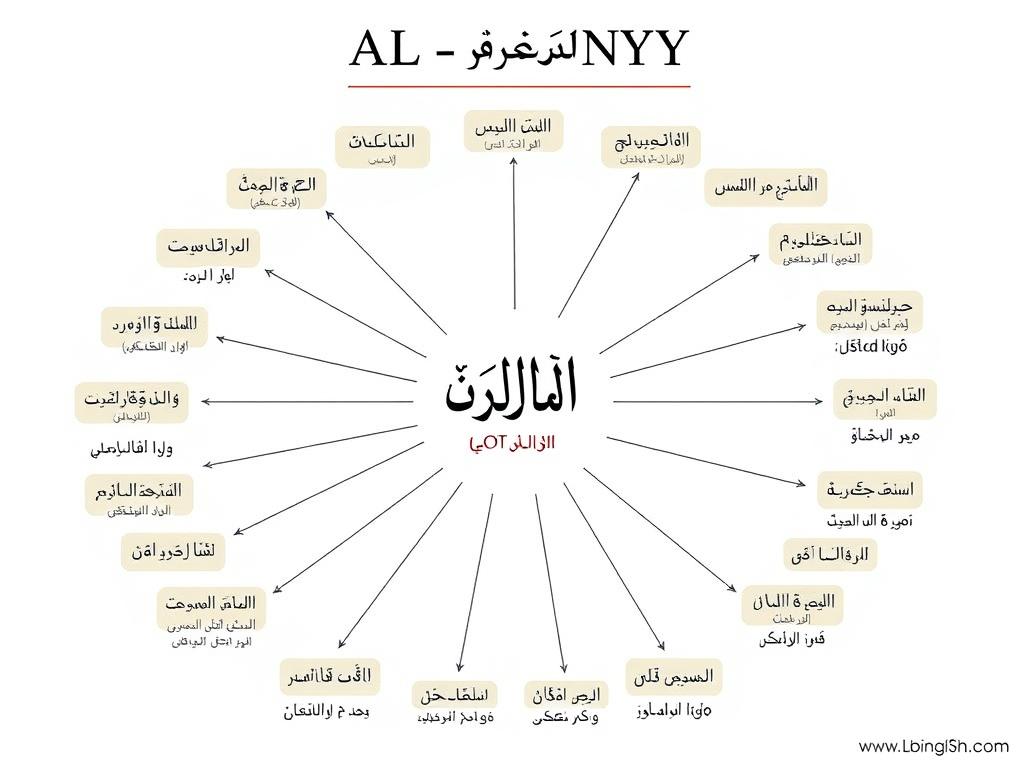
Relationship to Other Divine Names
AL-GHANIYY is closely related to other divine names such as:
- Al-Mughni (المغني) – The Enricher, who grants richness to His creation
- Al-Karim (الكريم) – The Generous, who gives abundantly
- As-Samad (الصمد) – The Eternal Refuge, upon whom all depend
- Al-Malik (الملك) – The Sovereign, who owns everything
- Al-Hamid (الحميد) – The Praiseworthy, often paired with Al-Ghaniyy in the Quran
Deepen Your Understanding of Allah’s Names
Could you reflect on how AL-GHANIYY relates to other divine names and attributes? This contemplation can enrich your spiritual connection and understanding of Allah’s perfection.
Explore More Divine NamesQuranic References to AL-GHANIYY
The name AL-GHANIYY appears 18 times in the Quran, often paired with other divine names like Al-Hamid (The Praiseworthy) and Al-Karim (The Generous). These verses provide profound insights into Allah’s self-sufficiency and our relationship with Him.
Surah Al-Baqarah 2:263
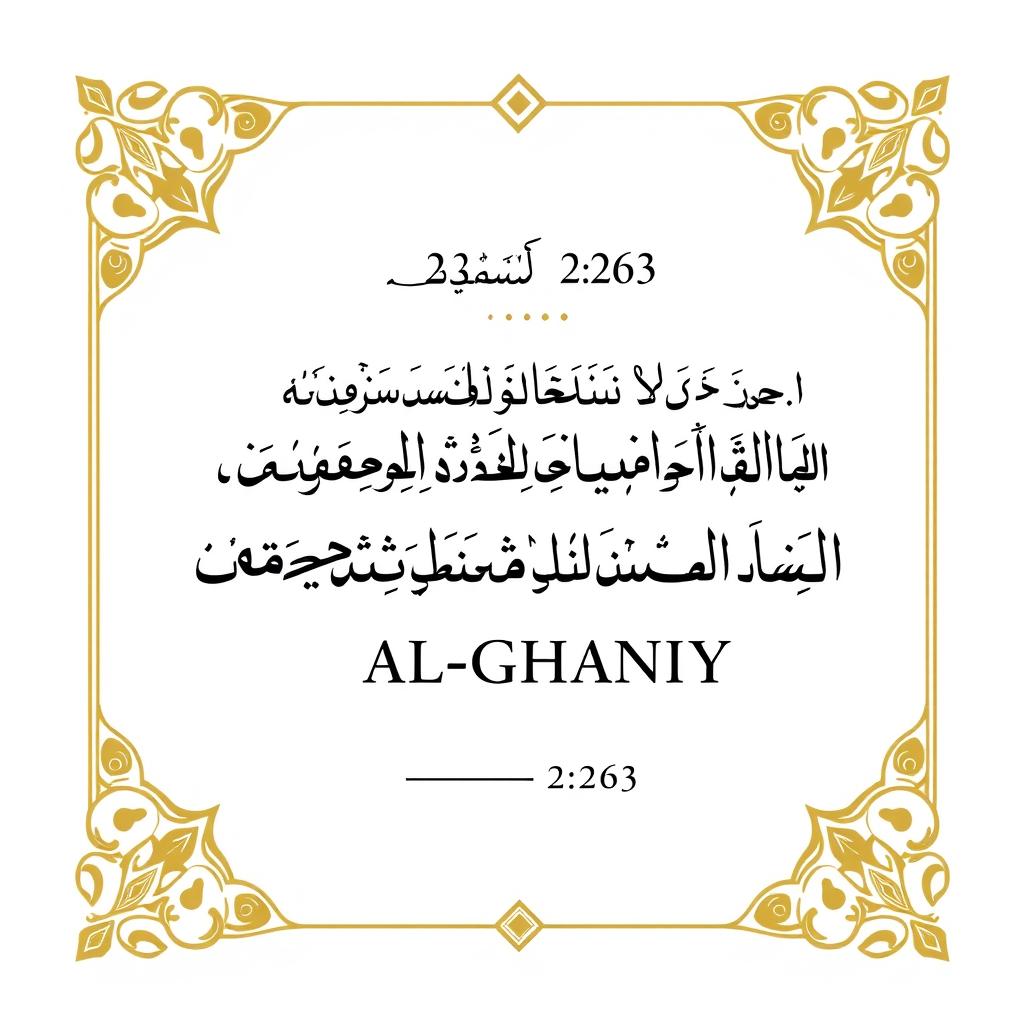
“Kind speech and forgiveness are better than charity followed by injury. And Allah is Free of need and Forbearing.”
Surah Luqman 31:26

“To Allah belongs whatever is in the heavens and earth. Indeed, Allah is the Free of need, the Praiseworthy.”
Surah Fatir 35:15
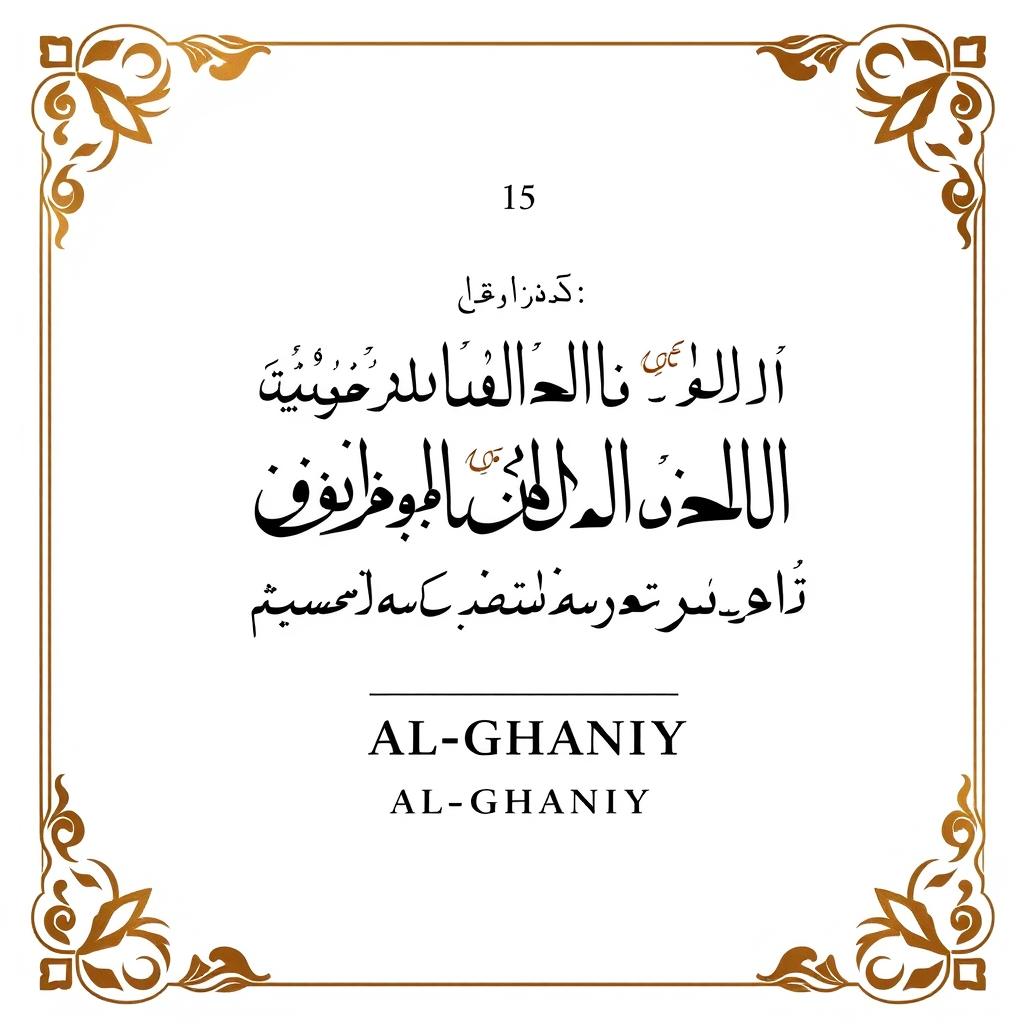
“O mankind, you are those in need of Allah, while Allah is the Free of need, the Praiseworthy.”
Tafsir Insights on AL-GHANIYY
Scholars of Quranic exegesis (tafsir) explain that these verses establish a fundamental truth: Allah’s complete independence contrasted with creation’s complete dependence. When the Quran states “Allah is AL-GHANIYY,” it affirms that Allah needs nothing from His creation, not their worship, obedience, or charity. Yet in His mercy, He invites us to worship Him for our benefit and spiritual growth.
The pairing of AL-GHANIYY with Al-Hamid (The Praiseworthy) in several verses indicates that Allah deserves all praise despite needing nothing from us. This pairing beautifully illustrates the perfection of Allah’s self-sufficiency—He is praised not because He needs praise, but because He inherently deserves it through His perfect attributes.
Reflect on Allah’s Self-Sufficiency
Take time each day to contemplate these Quranic verses about AL-GHANIYY. Consider how they reveal Allah’s perfection and your complete dependence on Him.
Download Quranic Verses About AL-GHANIYYProphetic Traditions About AL-GHANIYY
The Prophet Muhammad ﷺ frequently mentioned Allah’s attribute of AL-GHANIYY in his teachings and supplications. These authentic hadiths provide practical guidance on understanding and relating to Allah’s self-sufficiency.
Key Hadiths Mentioning AL-GHANIYY
Ali (رضي الله عنه) reported: A slave who had made a contract with his master to pay for his freedom came to me and said: “I am unable to fulfil my obligation, so help me.” He said to him, “Shall I not teach you a supplication which the Messenger of Allah (صلى الله عليه وآله وسلم) taught me? It will prove so effective that if you have a debt as large as a vast mountain, Allah will surely pay it for you. Say:
اللهم اكفني بحلالك عن حرامك، وأغنني بفضلك عمن سواك“O Allah! Grant me enough of what You make lawful so that I may dispense with what You make unlawful, and enable me by Your Grace to dispense with all but You.”
(Riyad as-Salihin Book 17, Hadith 22)
Abdullah (رضي الله عنه) reported that Allah’s Messenger (صلى الله عليه وآله وسلم) used to supplicate:
اللَّهُمَّ إِنِّي أَسْأَلُكَ الْهُدَى وَالتُّقَى وَالْعَفَافَ وَالْغِنَى“O Allah. I beg of Thee the right guidance, safeguard against evils, chastity and freedom from want.”
(Sahih Muslim 2721 a)
Abu Hurairah (رضي الله عنه) reported: The Prophet (صلى الله عليه وآله وسلم) said:
لَيْسَ الْغِنَى عَنْ كَثْرَةِ الْعَرَضِ وَلَكِنَّ الْغِنَى غِنَى النَّفْسِ“Richness is not an abundance of worldly goods; rather, richness is contentment with one’s lot.”
(Sunan Ibn Majah Vol. 5, Book 37, Hadith 4137)
These hadiths reveal that the Prophet Muhammad ﷺ taught his companions to seek true richness, not in material possessions, but in contentment and sufficiency from Allah. The supplications he taught emphasise our dependence on Allah while acknowledging His complete independence and self-sufficiency.
Incorporate These Prophetic Supplications
Make these beautiful duas part of your daily routine. The Prophet Muhammad ﷺ taught us to seek Allah’s richness and sufficiency through these powerful words.
Learn More Prophetic SupplicationsPractical Implications of Understanding AL-GHANIYY
Understanding Allah’s name AL-GHANIYY has profound implications for our spiritual journey and daily life. When we truly grasp Allah’s absolute self-sufficiency, it transforms our relationship with Him and with the world around us.
Cultivating Contentment (Qana’ah)
One of the most essential spiritual fruits of understanding AL-GHANIYY is developing contentment (qana’ah) with what Allah has provided. When we recognise that Allah is the Self-Sufficient and that all provision comes from Him, we can free ourselves from the endless pursuit of material wealth and status.
The Prophet Muhammad ﷺ said: “Whoever wakes up secure in his home, healthy in his body, having food for the day, it is as if he has been given the entire world.” (Tirmidhi)
Practical steps to cultivate contentment include:
- Practising daily gratitude for Allah’s blessings
- Comparing yourself to those who have less, not those who have more
- Focusing on needs rather than wants
- Remembering that true richness is the richness of the soul
- Reciting the prophetic supplications seeking sufficiency from Allah
Avoiding Materialism and Greed
Understanding AL-GHANIYY helps us resist the pull of materialism and greed that dominate modern society. When we recognise that Allah alone is rich and self-sufficient, we know the temporary nature of worldly possessions.
The Quran states: “Wealth and children are the adornment of the worldly life, but the enduring good deeds are better to your Lord for reward and better for [one’s] hope.” (18:46)
Practical ways to combat materialism include:
- Regular charity (sadaqah) to break attachment to wealth
- Simplifying your lifestyle and possessions
- Practising mindful consumption
- Remembering death and the temporary nature of worldly possessions
- Seeking knowledge and spiritual growth over material acquisition
Trusting in Allah’s Infinite Provision
When we truly understand that Allah is AL-GHANIYY, we develop complete trust (tawakkul) in His provision. This trust liberates us from anxiety about sustenance and allows us to focus on our spiritual journey.

The Prophet Muhammad ﷺ said: “If you were to rely on Allah as He should be relied upon, He would provide for you as He provides for the birds. They go out early in the morning hungry and return in the evening full.” (Tirmidhi)
Practical ways to strengthen trust in Allah’s provision:
- Reciting the morning and evening supplications seeking provision
- Taking appropriate means while trusting the outcome to Allah
- Remembering past instances when Allah provided unexpectedly
- Focusing on Allah’s attributes of generosity and richness
- Practising patience during times of scarcity
Transform Your Relationship with Wealth
Begin applying these principles in your daily life to experience the freedom of understanding Allah as AL-GHANIYY.
Download Our Guide to Spiritual ContentmentSpiritual Lessons from AL-GHANIYY
Beyond the practical implications, Allah’s name, AL-GHANIYY, offers profound spiritual lessons that can transform our inner lives and relationships with our Creator.
Recognising Our Complete Dependence
The Quran states: “O mankind, you are those in need of Allah, while Allah is the Free of need, the Praiseworthy” (35:15). This verse establishes the fundamental relationship between Creator and created—we are utterly dependent, while Allah is entirely independent.
This recognition should cultivate humility (khushu’) in our worship and daily life. When we genuinely understand our complete dependence on AL-GHANIYY, we approach Him with genuine need and sincerity rather than performing religious rituals mechanically.
“True spiritual poverty is not the absence of material possessions, but the recognition of our absolute need for Allah in every moment.”
Understanding Allah’s Generosity
Allah’s self-sufficiency makes His generosity all the more remarkable. Unlike human generosity, which often expects something in return, Allah gives abundantly while needing nothing from His creation.
The Quran often pairs AL-GHANIYY with other names like Al-Karim (The Generous) and Al-Hamid (The Praiseworthy), highlighting that Allah’s richness flows outward in boundless generosity. This should inspire us to emulate this divine attribute by giving generously without expecting return or recognition.
Powerful Duas Invoking AL-GHANIYY
The following supplications help us connect with Allah as AL-GHANIYY and seek His boundless provision:
“O Allah, O Self-Sufficient, O Praiseworthy, O Originator, O Restorer, O Merciful, O Loving, enrich me by Your grace so I need none but You, and with Your lawful provisions so I need not Your prohibited ones.”
“O Allah, I ask You by Your name AL-GHANIYY (The Self-Sufficient).”
“O Allah, we ask You for guidance, piety, abstinence from sin, and sufficiency.”
Incorporate These Duas Into Your Daily Worship
Make these beautiful supplications part of your daily routine to strengthen your connection with Allah as AL-GHANIYY.
Download Printable Dua CollectionContemporary Relevance of AL-GHANIYY
In our modern world dominated by materialism and consumerism, understanding Allah as AL-GHANIYY offers a powerful counternarrative that can transform our approach to life’s challenges.

Finding Contentment in a Consumer Society
Today’s society constantly pushes us to acquire more possessions, status, and wealth. Understanding Allah as AL-GHANIYY helps us resist these pressures by reminding us that true richness comes from within. When we recognise that Allah alone is self-sufficient, we can break free from the endless consumption cycle and find contentment with what we have.
Practical applications include:
- Practising mindful consumption by asking “Do I need this?” before purchases
- Setting aside regular “digital fasts” to break the cycle of online shopping
- Establishing spending limits and increasing charitable giving
- Finding joy in simple pleasures and spiritual practices
- Cultivating gratitude through daily reflection on blessings
Overcoming Financial Anxiety
Many people today suffer from financial anxiety and stress about provision. Understanding Allah as AL-GHANIYY reminds us that all provision comes from Him, and He has guaranteed sustenance for every creature. This doesn’t mean we shouldn’t work and plan responsibly, but it frees us from the paralyzing anxiety that comes from believing provision depends solely on our efforts.
The Prophet Muhammad ﷺ said: “The Holy Spirit (Angel Gabriel) inspired in me that no soul will die until it completes its appointed term and receives all its provision. So fear Allah and seek provision in a good way.” (Ibn Majah)
Experience True Contentment
Begin your journey toward spiritual richness by understanding and applying the lessons of Allah’s name AL-GHANIYY in your daily life.
Start Your Spiritual Journey TodayConclusion: Embracing the Wisdom of AL-GHANIYY
Allah’s beautiful name AL-GHANIYY offers profound insights that can transform our spiritual understanding and daily lives. By recognizing Allah’s absolute self-sufficiency and our dependence on Him, we develop humility, contentment, and trust that free us from the endless pursuit of material wealth.
The wisdom of AL-GHANIYY teaches us that true richness lies not in possessing many things, but in needing few things while having Allah. When we internalize this divine attribute, we find freedom from the anxieties of provision and the emptiness of materialism.
As we navigate the challenges of modern life, let us carry the remembrance of Allah as AL-GHANIYY in our hearts. Let us seek His richness through sincere supplication, cultivate contentment with His provision, and strive to emulate His generosity in our dealings with others.

“Whoever seeks richness without Allah will never find it, but whoever seeks Allah will find all richness with Him.”
Continue Your Spiritual Journey
Explore more of Allah’s beautiful names to deepen your understanding and strengthen your connection with your Creator.
Explore All 99 Names of Allah