



Did you know that Islamic prophets are seen as God’s messengers? They guide believers on the right path. Their stories are the key to Islamic theology, shaping the faith of Muslims everywhere.
Understanding the prophets of Islam is essential to understanding Islam. The Prophet Muhammad, seen as the last prophet, is central to Islam’s rise. He follows prophets like Moses and Jesus.
These prophets are essential as guides and messengers. They offer wisdom and spiritual light to those looking to deepen their faith.
Key Takeaways
- Islamic prophets are considered messengers of God.
- The Prophet Muhammad is believed to be the last prophet.
- Prophets in Islam include Moses and Jesus.
- Understanding prophets is essential to understanding Islam.
- Prophets provide guidance and spiritual enlightenment.
The Concept of Prophethood in Islam
In Islam, the concept of prophethood is central to understanding the faith. Prophethood, or nubuwwah, means Allah chooses people to guide us. They help us find the right path.
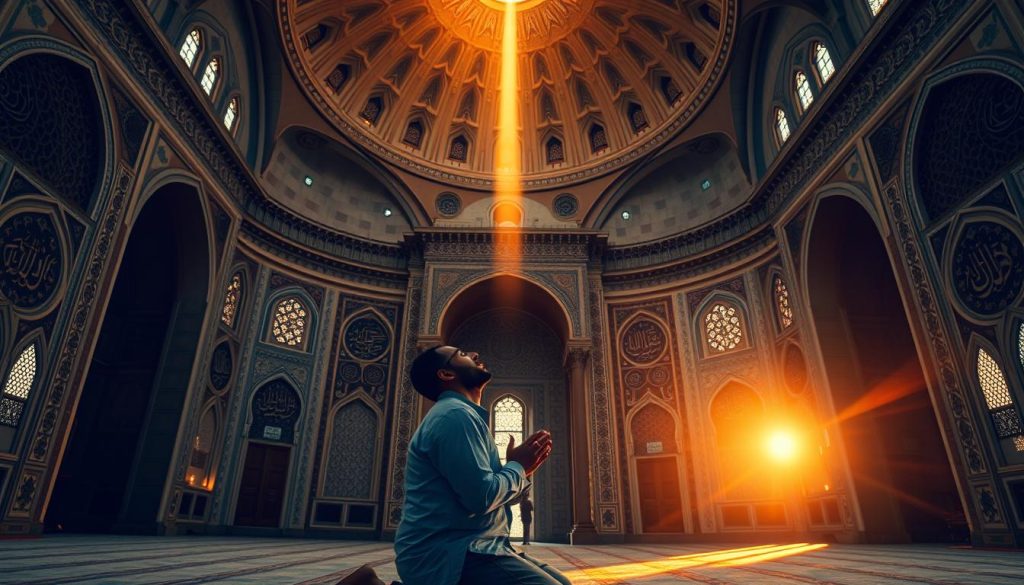
The Role of Prophets in Islamic Theology. Prophets in Islam are seen as messengers of Allah. They are sent to share Allah’s message with us, and through their teachings, they show us how to live righteously.
Difference between Prophets (Nabi) and Messengers (Rasul)
In Islam, there’s a difference between prophets (Nabi) and messengers (Rasul). Messengers have a specific message or scripture. Prophets interpret and apply Allah’s law. This shows their unique roles and duties.
Chain of Prophethood in Islamic Tradition
Islamic tradition says prophethood is a continuous chain. It starts with Adam, the first human and prophet, through Abraham, Moses, and Jesus, and ends with Muhammad, the final prophet.
The 25 Named Prophets of Islam
In Islam, the idea of prophethood is key. The Quran names 25 prophets. These prophets guided humanity to the right path.
Quranic Mention of Prophets
The Quran tells us about these prophets’ lives and missions. It shows them as examples for believers. Some prophets include:
- Adam, the first human being
- Noah, who built the ark to save his people and family
- Abraham, known for his unwavering faith
- Moses, who led the Israelites out of Egypt
- Jesus, whose miraculous birth and message are highlighted
- Muhammad is considered the final prophet in Islam. Other prophets in the Quran are: Idris, Hud, Salih, Ibrahim, Lut, Isma’il, Ishaq, Ya’qub, Yusuf, Shu’aib, Harun, Dawud, Sulaiman, Ayyub, Dhul-Kifl, Yunus, Zakariyya, and Yahya.

Total Number of Prophets in Islamic Tradition
The Quran names 25 prophets, but Islamic tradition says there were 124,000 prophets in history. This shows God’s wide guidance to humanity.
The Five Major Prophets (Ulul Azm)
Five prophets are known as Ulul Azm, or those of firm resolve. They are:
- Noah (Nuh)
- Abraham (Ibrahim)
- Moses (Musa)
- Jesus (Isa)
- Muhammad
These prophets are admired for their patience, perseverance, and unwavering commitment to their missions.
Prophet Adam: The First Human and Prophet
Prophet Adam was the first human made by Allah. His story is key in Islamic teachings. We look at his creation, role as the first prophet, and what we can learn from him.
Creation and Divine Appointment
Prophet Adam was made from clay by Allah. His story starts with a big purpose. Allah made Adam the first prophet, giving him the job to guide his family.This shows the start of prophethood in Islam. It highlights the direct link between Allah and people.
The Fall from Paradise and Repentance
Adam’s story includes a major event: the “Fall from Paradise.” He and his wife, Hawwa (Eve), disobeyed Allah. They ate from a tree they shouldn’t have.
This mistake made them leave paradise. But Adam’s true regret was accepted by Allah. This shows Allah’s mercy and forgiveness.
Adam’s Teachings and Legacy
Adam’s impact goes beyond his own story. He was the first to get divine guidance. Some critical lessons from Adam are:
- The importance of obeying Allah’s commands
- The value of repentance and seeking forgiveness
- The role of humans as caretakers of Earth
- These teachings are seen in Islamic art and culture. Adam is often shown in art, showing Islam’s deep spiritual and cultural heritage.
Prophet Abraham (Ibrahim): The Father of Monotheism
Prophet Abraham is a key figure in Islam, known as the father of monotheism. He showed strong faith and obedience to Allah. His story teaches us about the power of conviction and devotion.
Abraham’s Journey to Discovering Allah
Abraham’s journey to monotheism was not easy. It was a path of discovery and conviction. “And [mention] when Abraham said to his father Azar, ‘Do you take idols as gods? I see you and your people in manifest error'” (Quran 6:74). This shows his early understanding of idolatry’s error and his search for truth.
The Building of the Kaaba with Ismail
Abraham built the Kaaba in Mecca, a sacred site for Muslims, with his son Ismail. The Kaaba was built for monotheistic worship, free from idols. This act showed the unity and purity of faith, setting a precedent for Muslim pilgrimages.
The Sacrifice and Ultimate Test of Faith
The story of Abraham’s willingness to sacrifice his son Ismail is a profound lesson in faith. This event is celebrated during Eid al-Adha, a major Islamic holiday.
The Significance of Eid al-Adha
Eid al-Adha honours Abraham’s obedience to God’s command. It teaches us about obedience, faith and sacrifice. Muslims celebrate by praying, sacrificing animals and giving meat to the needy. This shows the spirit of charity and community. In Islamic art and culture, Abraham and Ismail’s stories inspire. They reflect faith, obedience and sacrifice. Abraham’s legacy guides Muslims, emphasising monotheism and devotion to Allah.
Prophet Moses (Musa): The Liberator and Lawgiver
Moses is a key figure in the Quran, known for his direct talks with God. This makes him highly respected in Islam. His story shows the power of faith, perseverance, and divine guidance.
Moses’ Early Life and Call at Mount Tabor
Moses was born into a Hebrew family in Egypt, where they were treated poorly. He was raised in the Pharaoh’s home but stayed true to his Hebrew roots. At Mount Sinai, Moses received his first message from God, calling him to lead his people out of slavery.
Confrontation with Pharaoh and the Exodus
Moses faced Pharaoh, asking for the Israelites’ freedom. This led to miracles and plagues, ending with the Exodus. The Red Sea parting was key, saving the Israelites from the Egyptian army.
The Torah and Moses’ Legacy in Islam
The Torah, given to Moses on Mount Sinai, is crucial in Islam. It guides the Israelites and shapes Islamic law. Moses is also celebrated for his leadership and his impact on religion.
The Significance of Moses in Interfaith Dialogue
Moses is important in talks between different faiths, including Judaism, Christianity, and Islam. His story is a common thread, showing themes of freedom, law, and divine guidance.
| Aspect | Islam | Judaism | Christianity |
|---|---|---|---|
| Reception of Divine Law | Received the Torah | Received the Torah | Seen as fulfilling the law |
| Leadership Role | Led the Israelites out of Egypt | Led the Israelites out of Egypt | Seen as a precursor to Jesus Christ |
| Significance | Revered as a prophet and liberator | Central figure in Jewish history and law | An essential figure in the lineage of Jesus |
Prophet Jesus (Isa) in Islamic Perspective
Jesus, known in Islam as Isa ibn Maryam, is a key prophet. His miraculous birth and message are crucial. In Islamic theology, Jesus is seen as a prophet and messenger. His story is found in many Quran chapters.
The Miraculous Birth and Early Life
The Quran tells of Jesus’ birth, highlighting its miraculous nature. Mary, Jesus’ mother, is described as pious and chaste. She receives news of Jesus’ birth from Gabriel, showing God’s power and Jesus’ special status.
Jesus’ Ministry, Message, and Miracles
Islamic tradition says Jesus could perform miracles, like healing the blind and raising the dead. His message was about worshipping one God and following His commandments. Jesus is seen as a forerunner to Muhammad, emphasising monotheism.
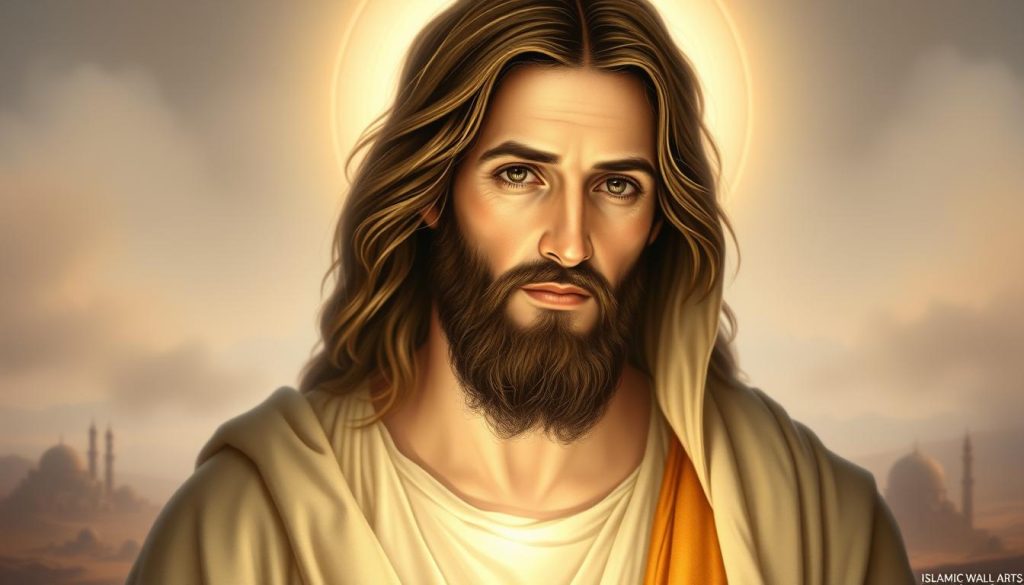
Islamic View on the Crucifixion and Ascension
Islamic belief differs from Christianity on Jesus’ crucifixion. Muslims believe Jesus was not crucified but was taken to God. This is based on Quranic verses showing God’s protection of Jesus.
Jesus’ Expected Return in Islamic Eschatology
In Islamic eschatology, Jesus is expected to return before the end of time. He will defeat the Antichrist and bring justice. This shows Jesus’ important role in the Islamic view of the end times.
Key aspects of Jesus’ role in Islam include:
- His miraculous birth and the significance of his mother, Mary.
- The miracles he performed as a sign of his prophethood.
- The Islamic perspective on his crucifixion and ascension.
- His anticipated return and role in the end times.
Jesus is mentioned 93 times in the Quran, showing his importance in Islamic theology. His story reminds us of God’s power and the value of faith and righteousness.
Prophet Muhammad: The Seal of the Prophets
Prophet Muhammad’s life shows the power of faith, perseverance, and compassion. He is a guiding light for Muslims everywhere, and his teachings and actions have deeply impacted the world.
Early Life and the First Revelation
Prophet Muhammad was born in Mecca in 570 CE. He was known for his honesty and integrity, earning the title Al-Amin (the trustworthy). At 40, he received his first revelation from Allah through Gabriel, starting his prophethood.
The Meccan and Medinan Periods
Muhammad’s mission in Mecca faced a lot of opposition. This led to his followers being persecuted. In 622 CE, he moved to Medina, starting the Islamic calendar. In Medina, he built a strong Muslim community, uniting people under Islam.
Completion of the Message and Final Sermon
In 632 CE, Muhammad gave his Farewell Sermon in Mecca. He summarized Islam’s core teachings. He stressed the importance of compassion, justice, and equality among Muslims.
Muhammad’s Character and Personal Examples
Muhammad’s character was an example of patience, kindness, and humility. His life showed what his teachings meant. Key traits included:
- Compassion towards all creatures
- Justice and fairness in all dealings
- Humility despite his prophetic status
For more insights into the name and significance of Prophet Muhammad, you can visit Discover the Name of Prophet Muhammad.
| Characteristic | Description |
|---|---|
| Compassion | Showing mercy to all, including enemies |
| Justice | Ensuring fairness in all matters |
| Humility | Remaining humble despite prophetic status |
In conclusion, Prophet Muhammad’s life and teachings inspire and guide Muslims worldwide. They offer timeless wisdom on living a righteous life.
Stories of Resilience: Job, Jonah, and Joseph
Prophets Job, Jonah, and Joseph show us the value of patience, repentance, and trusting God’s plan. Their stories in the Quran tell of significant challenges that tested their faith. Yet, they stood strong, offering lessons for all believers.
Prophet Job (Ayyub) and the Test of Patience
Prophet Job’s tale is one of unshakeable patience and trust in God. He lost everything: wealth, family, and health. Yet, he never blamed God, showing us the strength of faith and endurance.
- Job’s trials tested his faith and patience.
- He stood firm, showing the power of resilience.
- His story teaches us to trust in God’s wisdom and justice.
Prophet Jonah (Yunus) and the Lesson of Repentance
Prophet Jonah’s story highlights the importance of repentance and God’s mercy. He disobeyed God but learned a hard lesson about the consequences of his actions. This teaches us the value of fulfilling our duties.
Key lessons from Jonah’s story include:
- The importance of obeying God’s commands.
- The power of repentance in seeking forgiveness.
- God’s readiness to forgive those who turn back to Him.
Prophet Joseph (Yusuf) and the Triumph Over Adversity
Prophet Joseph’s life is a stunning example of overcoming adversity through faith and integrity. Sold into slavery, he rose to power in Egypt. His story proves God’s providence and the victory of righteousness.
- Maintaining faith and integrity in hard times.
- Forgiving others and trusting in God’s justice.
- The reward for those who stay righteous.
Prophets of Warning: Noah, Lot, and Shuaib
The Quran tells us about Prophets Noah, Lot, and Shuaib. They were sent to warn people of the dangers of ignoring God’s messages. These prophets tried to lead their communities back to the right path.
Prophet Noah (Nuh) and the Great Flood
For 950 years, Prophet Noah preached to his people. He urged them to stop worshipping idols and to believe in the one true God. But most didn’t listen, and a great flood destroyed them.
Key aspects of Prophet Noah’s story include:
- Prolonged preaching over 950 years
- Warning against idolatry
- The great flood as a consequence of disobedience
Prophet Lot (Lut) and the Destruction of Sodom
Prophet Lot was sent to Sodom and Gomorrah. He saw the people’s immorality and warned them to change. But they ignored him, and their cities were destroyed.
Prophet Shuaib and the People of Madyan
Prophet Shuaib was sent to the people of Madyan. They were dishonest in their business dealings. Shuaib told them to be honest and fair, but they didn’t listen, and their society fell apart.
| Prophet | Message | Consequences of Disobedience |
|---|---|---|
| Noah | Abandon idolatry | The Great Flood |
| Lot | Cease immorality | Destruction of Sodom |
| Shuaib | Practice honesty and fairness | Economic and social ruin |
The Artistic Representation of Prophets in Islamic Culture
We look into how Islamic art brings the prophets’ stories to life. This art is not just beautiful but also holds deep meaning. It shows the importance of prophets in Islam.
Calligraphic Representations of Prophetic Names
Calligraphy is a highly respected form of Islamic art. It’s used to show the names of islamic prophets. The designs and lettering remind us of the prophets’ significance.
For instance, Prophet Muhammad’s name is often decorated in fancy calligraphy. This highlights his key role in Islam.
Narrative Art Depicting Prophetic Stories
Narrative art in Islam tells the stories of the prophets of Islam. It teaches moral lessons and shares historical events. You can find these artworks in many places, like manuscripts and mosque tiles.
They make spaces beautiful and teach people about the prophets’ teachings and lives.
Modern Islamic Art and Prophetic Themes
Today, modern Islamic art uses new ways to show prophets. Artists use digital art and abstract styles to connect with prophetic themes. This keeps the prophets’ stories and teachings alive for today’s people.
| Art Form | Description | Examples |
|---|---|---|
| Calligraphy | Intricate lettering is used to represent prophetic names | Prophet Muhammad’s name in Thuluth script |
| Narrative Art | Illustrations of prophetic stories and events | Manuscript illustrations of Prophet Yusuf’s story |
| Modern Art | Contemporary interpretations of prophetic themes | Digital art depicting scenes from the Quran |
Conclusion: The Timeless Wisdom of the Prophets
The stories of the prophets of islam are full of timeless wisdom. They shape the spiritual and moral lives of Muslims. We’ve looked at the lives and teachings of these important figures, from Adam to Muhammad.
Their experiences, as told in the Quran and other texts, give us insights into faith and human nature. Their stories remind us of the value of patience, perseverance, and trust in Allah, even when things are tough.
Reflecting on the prophets’ messages and legacies, we learn more about our faith. We see how to live it every day. Their stories inspire us to be compassionate and righteous, helping create a better world.
Following the wisdom of Islam’s prophets, we can face today’s challenges with clarity and purpose. We tap into the deep spiritual heritage of Islamic tradition.