



In today’s world, Islamic teachings offer valuable guidance for the young. They help people find their purpose and direction in life.
Young people today face many challenges, from social pressures to personal struggles. Islamic values give them the strength and character they need. By learning about these values, we can understand how to live a life that truly matters.
Key Takeaways
- Understanding Islamic values can help young people navigate modern life’s challenges.
- Islamic teachings offer guidance on cultivating strong character and resilience.
- These values provide a foundation for living a purposeful and fulfilling life.
- Embracing Islamic principles can help individuals develop a strong sense of direction.
- Islamic values are essential for young people to build a strong foundation.
Understanding Islamic Values: A Foundation for Life
Islamic values guide young Muslims, helping them make good choices and grow strong. These values come from the Quran and Hadith. They offer a moral compass for daily life.
It’s key for young people to grasp these values. They help build a sense of purpose and direction. By embracing them, young Muslims learn compassion, respect, and responsibility. These are vital for healthy communities.
Importance of Values in Islam
Islamic values are more than just rules; they are a way of life. They promote accountability and responsibility. This encourages young people to think about their actions and their impact.
These values give young Muslims a strong moral compass. It helps them face life’s challenges with confidence and integrity.
https://www.youtube.com/watch?v=f8UbmO59hRQ
Key Sources of Islamic Values
The Quran and Hadith are the main sources of Islamic values. The Quran guides on life’s aspects, including morals. The Hadith shows how to apply these values in everyday life.
We can learn from the Prophet Muhammad’s (peace be upon him) example. His teachings show the highest moral standards. By studying these sources, young Muslims understand Islamic values better.
Knowing Islamic values is not just about knowing them. It’s about living them. This way, we can build a more harmonious and compassionate society. Young people can then thrive and reach their full potential.
The Principles of Honesty and Integrity
Honesty and integrity are at the core of Islamic values. They build trust and respect. These values are key in personal, professional, and community life.
Honesty means being truthful in what we say and do. Integrity means sticking to our moral code and being consistent. Together, they create strong, healthy relationships.
Being True to Oneself
Being true to oneself is vital. It means knowing our strengths and weaknesses. It also means being honest about our feelings and intentions.
Self-awareness helps us understand our values. This makes it easier to act with integrity in different situations.
The Role of Honesty in Relationships
Honesty is crucial for healthy relationships. When we are truthful, trust grows. This strengthens our bond with others.
The table below shows the benefits of honesty in relationships:
| Aspect | Benefits of Honesty |
|---|---|
| Trust | Fosters a deep sense of trust between individuals |
| Communication | Encourages open and transparent communication |
| Conflict Resolution | Helps in resolving conflicts in a fair and respectful manner |
Teaching Islamic values like honesty to youngsters is essential. It helps them grow into morally upright individuals. It guides them in making ethical choices and building strong relationships.
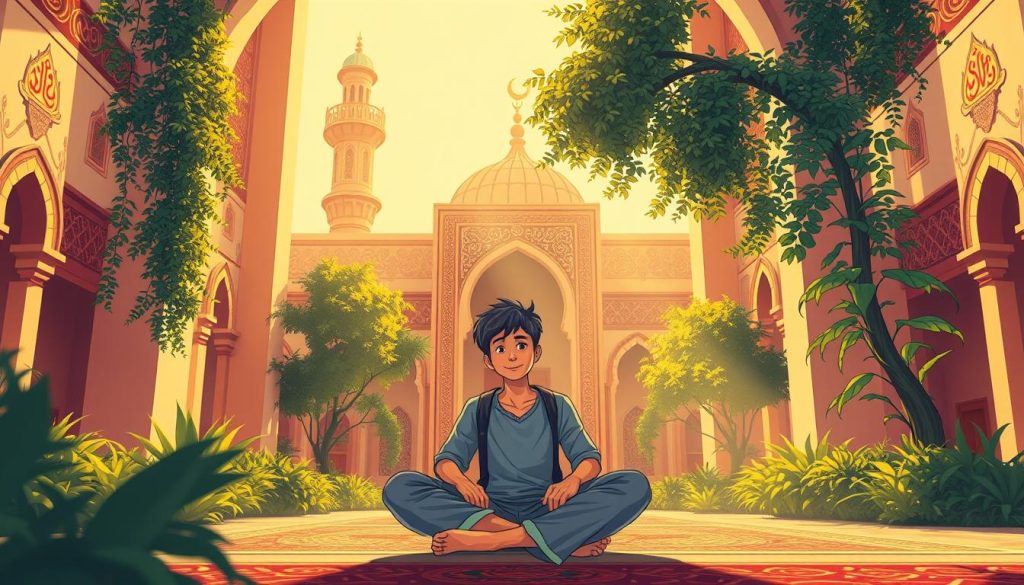
The role of Islamic values for youth is immense. These values offer a moral compass for young people. They help them face life’s challenges while staying true to their faith.
By embracing honesty and integrity, young Muslims can develop a strong moral compass. This guides their actions and decisions, leading to a more fulfilling life.
Kindness and Compassion: Core Islamic Values
Kindness and compassion are key in Islam, helping build a caring community. Teaching these values to the young is vital for a better society.
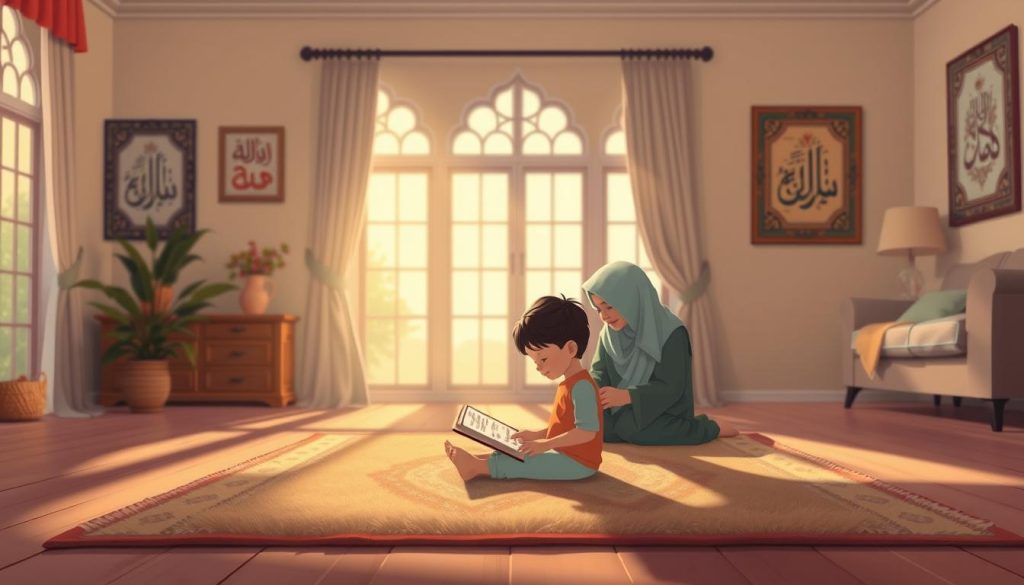
Acts of Kindness in Daily Life
Islam values kindness, shown through daily actions. We’re encouraged to be kind to family, neighbours, and nature. Simple gestures like smiling and helping others are seen as important.
The Prophet Muhammad (peace be upon him) said, “A smile is charity.” This shows even small acts of kindness matter. By doing these acts daily, we grow more caring and compassionate.
“The best among you are those who have the best manners and character.” – Prophet Muhammad (peace be upon him)
This Hadith stresses the importance of good character and manners in Islam. These are closely tied to kindness and compassion.
| Acts of Kindness | Benefit |
|---|---|
| Smiling at others | Spreads joy and positivity |
| Helping those in need | Fosters a sense of community |
| Being considerate towards others | Promotes understanding and empathy |
Empathy Towards Others
Empathy is crucial in Islam, teaching us to understand and share others’ feelings. It helps us form deeper connections in our communities.
The Quran tells us to be merciful and compassionate, as in Surah Al-Anbiya, verse 107: “And We have not sent you, [O Muhammad], except as a mercy to the worlds.” This verse highlights the role of mercy and compassion in our interactions.
By combining kindness with empathy, young Muslims can develop a strong moral compass. This guides them to be positive forces in society.
The Importance of Community in Islam
Islam values community highly, urging Muslims to unite for the good of all. This unity is based on the Quran and Hadith, which highlight the need for togetherness and support.
By forming strong connections with others, Muslims find a sense of belonging. This is crucial for the young, who are urged to be active in their communities. They should take part in activities that bring people together and foster understanding.
Building Strong Bonds with Others
Creating strong bonds in the community involves several key practices:
- Engaging in acts of kindness and charity
- Participating in communal activities, such as prayer and community events
- Offering support to those in need, whether emotional, financial, or physical
These actions not only strengthen community ties but also give young people a sense of purpose. By being involved, they learn valuable life skills like leadership, empathy, and teamwork.
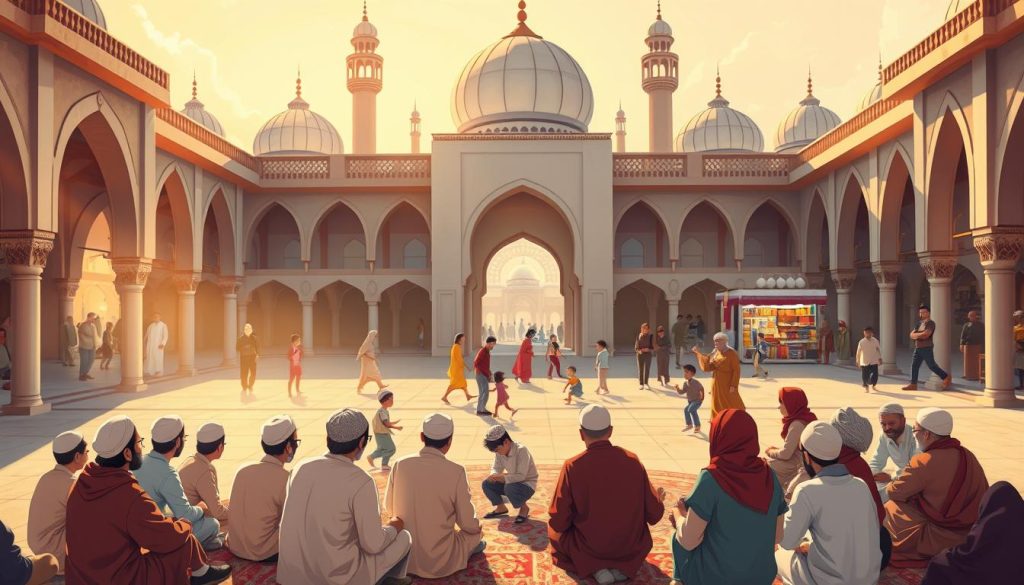
Helping Those in Need
Helping those in need is a core part of Islamic teachings, showing compassion and social responsibility. Young people are encouraged to notice the needs of others and help with kindness and generosity.
This can mean volunteering at local charities or supporting friends emotionally. By doing so, young Muslims develop empathy and understanding. These are key for moral guidance for young people.
Living these values daily benefits the community and helps young individuals grow. As we follow islamic teachings for youth, we see the community’s role in shaping our values and actions.
Respect and Honour: Key Tenets of Islamic Teachings
At the heart of Islamic ethics are respect and honour. These values create a culture of integrity and compassion. They guide Muslims in their daily lives, shaping how they interact with family, community, and society.

Understanding Respect for Elders
In Islam, showing respect to elders is key. The Quran and Hadith stress treating parents and elderly relatives with kindness and obedience. This respect goes beyond family to the whole community, where elders are seen as wise guides.
We are taught to honour our elders by listening to their stories, seeking their advice, and caring for them in old age. This strengthens family bonds and keeps cultural and religious heritage alive.
Honouring Your Commitments
Honouring commitments is vital in Islamic teachings. It means keeping promises, being truthful, and standing by one’s word. In a society built on trust, Muslims are urged to be accountable and reliable.
By honouring our commitments, we build strong, trustworthy relationships. This helps create a more stable and just society. In today’s fast world, integrity and reliability are crucial.
In conclusion, respect and honour are at the core of Islamic ethics. They are essential for the well-being of individuals and communities. Embracing these values helps us build a more compassionate, trustworthy, and harmonious society.
The Value of Education and Knowledge
In Islam, education and knowledge are very important. They are the base for growing personally and as a society. Seeking knowledge is seen as a lifelong journey that benefits both individuals and communities.
Looking for knowledge is not just a suggestion; it’s a must. It builds a culture of learning and understanding. This pushes young Muslims to be curious and love learning, a love that lasts a lifetime.
Pursuit of Knowledge in Islam
In Islam, finding knowledge is a sacred duty. The Quran and Hadith talk a lot about how important it is. For example, the first message the Prophet Muhammad (peace be upon him) got was “Read! In the name of your Lord who created” (Quran 96:1), showing how key reading and learning are.
This Islamic value is key for youngsters. It makes them love learning and want to understand the world. By teaching young people Islamic values, we help them be curious and seek knowledge that helps them and their communities.
Lifelong Learning as a Virtue
Lifelong learning is a virtue Islam values a lot. It’s not just about school but understanding the world and its complexities. Muslims are urged to keep learning all their lives, whether it’s about religion or the world that helps them grow personally and professionally.
By embracing lifelong learning, young people can grow and adapt to new challenges. This not only helps them personally but also helps society as a whole.
In conclusion, education and knowledge are very important in Islam. By teaching these values to youngsters, we help them live fulfilling lives, make smart choices, and positively impact their communities.
The Role of Gratitude
Gratitude is very important in Islam. It helps us feel thankful and content. It’s a powerful virtue that can change young people’s lives for the better.
Recognising Blessings in Everyday Life
It’s key to see the good in everyday life. We should teach young people to notice the small joys. Like a beautiful sunset or a good cup of coffee.
Keeping a gratitude journal or sharing thanks with others can help. It makes them more thankful. This practice can be done with family or friends.

Expressing Appreciation to Others
Being thankful to others is also crucial. We should thank those who help us and show kindness. Saying “thank you” or writing a note can strengthen relationships.
Gratitude helps young people connect better with their community. It builds a sense of belonging. This is important for islamic teachings for youth and moral guidance for young people.
In summary, gratitude is key for young Muslims. It helps them see the good in life and appreciate others. As we guide them, we must highlight gratitude’s role in their faith and growth.
Self-Discipline and Personal Responsibility
Islam values self-discipline and personal responsibility a lot. These values help shape a person’s character and actions. They guide us to live a good life.
The Significance of Self-Control
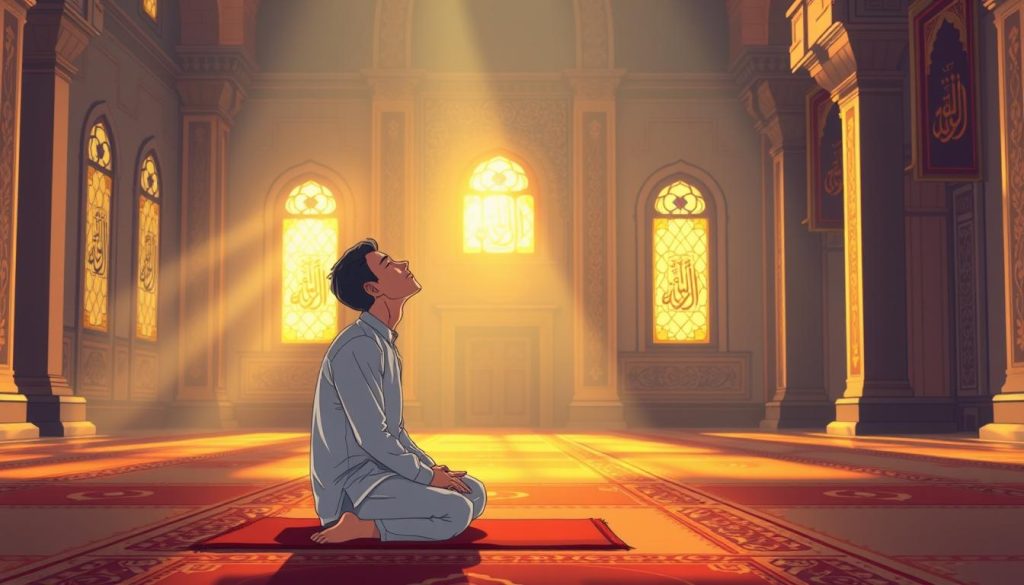
Self-control is key to self-discipline. It helps us manage our actions, feelings, and desires. By controlling ourselves, Muslims can stay away from bad habits and choose actions that follow Islamic teachings.
Fasting in Ramadan is a great example of self-control. It means giving up worldly desires to grow spiritually.
Being mindful of our actions is crucial. It helps us make better choices and grow in self-discipline.
Being Accountable for Actions
Personal responsibility means taking charge of our actions and decisions. In Islam, we’re encouraged to own up to our deeds and mistakes. This makes us more responsible and helps us improve ourselves.
Let’s look at why personal responsibility matters:
| Aspect | Description | Islamic Value |
|---|---|---|
| Self-Reflection | Regularly examining one’s actions and intentions | Promotes self-awareness and growth |
| Admitting Mistakes | Acknowledging errors and seeking forgiveness | Fosters humility and accountability |
| Making Amends | Taking corrective action for past wrongs | Encourages restitution and healing |
By taking personal responsibility, we build a strong moral compass. For more wisdom, check out Lessons from the Prophets. It teaches us to instill Islamic values in young people and understand youth and Islamic ethics.
Embracing Diversity and Tolerance
Embracing diversity and tolerance is key in Islam. It’s important for young people in the UK. Understanding different cultures helps build a harmonious community.
Understanding Different Cultures
Islam teaches respect and learning from other cultures. The Quran shows God’s greatness through our diversity. Young Muslims can learn to empathize and work together with others.
The Prophet Muhammad (peace be upon him) said,
“The best among you are those who have the best manners and character.”
This shows how important good character is when meeting people from other cultures.
Promoting Peaceful Coexistence
Promoting peace is a core Islamic value. Young people can help by joining community activities. This brings people together, making everyone feel valued.
Nurturing Islamic values like tolerance and compassion is crucial. We can do this by living these values every day and in our community efforts.
Spiritual Growth and Reflection
Spiritual growth is key in Islam, helping believers understand themselves and their faith better. As we live, building a strong spiritual base is crucial for facing life’s hurdles.
The Journey of Self-Discovery
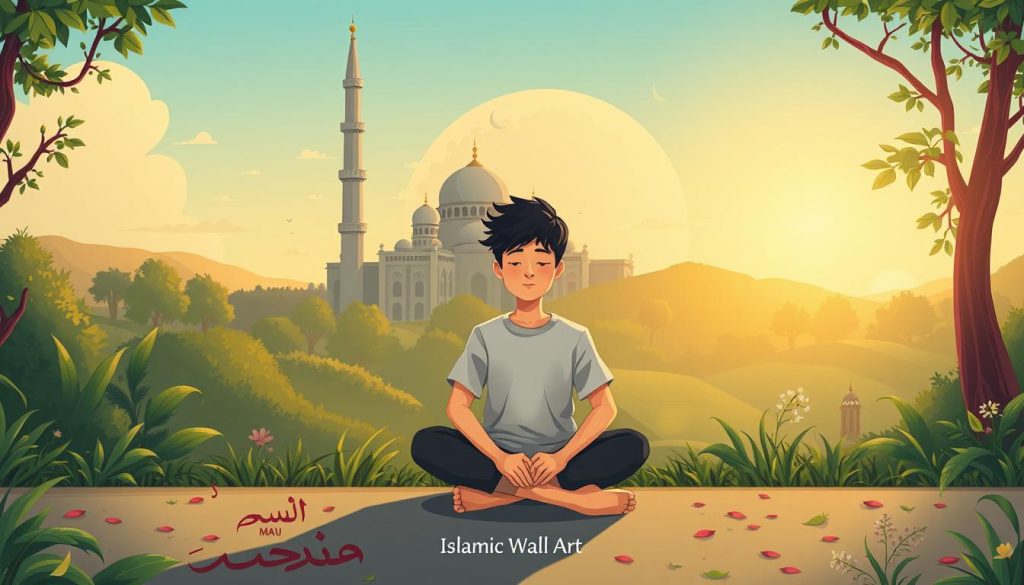
The path of self-discovery is a deep part of Islamic teachings. It pushes young people to look within and find their life’s purpose. This path includes:
- Knowing one’s strengths and weaknesses
- Learning about oneself through reflection and prayer
- Welcoming personal growth and spiritual development
Starting this journey helps young Muslims find their identity and purpose. It aligns with islamic values for youngsters that support spiritual growth.
Importance of Prayer and Worship
Prayer and worship are at the heart of Islam. They help believers connect with their Creator and find guidance. The role of prayer and worship is seen in:
| Aspect | Benefit |
|---|---|
| Prayer | Offers spiritual comfort and solace |
| Worship | Builds a sense of community and unity among Muslims |
| Reflection | Encourages personal growth and self-improvement |
“And when My servants ask you concerning Me, then I am near. I respond to the invocation of the supplicant when he calls upon Me.” – Quran 2:186
This verse shows prayer and worship’s importance in Islam. It talks about the direct bond between the believer and their Creator. By making these practices part of their daily lives, young people can deepen their understanding of islamic teachings for youth. They can also build a strong spiritual base.
Application of Islamic Values in Modern Life
Young people today face many challenges that test their character and strength. We think that teaching Islamic values can help them overcome these hurdles.
Challenges in Modern Life
Young people are under a lot of pressure, from social media to school work. Learning about Islamic ethics can give them a solid base for life.
Practical Application
We can live by Islamic values every day. This means being aware of our actions, caring for others, and always trying to get better. It helps young people find their moral compass and make good choices.
By living by Islamic values, young people can lead meaningful lives. They will be guided by their faith and a strong sense of right and wrong.
FAQ
What are the key Islamic values that every young person should know?
Young people should know values like honesty, kindness, respect, and self-discipline. These values help build a strong moral base. They also help navigate life’s challenges.
How can young people apply Islamic values in their daily lives?
Young people can live by Islamic values by being thankful, praying, and reflecting on themselves. They should also be honest, kind, and respectful to others.
What is the significance of community in Islam?
Community is key in Islam. It builds strong bonds, helps those in need, and promotes social responsibility. These are vital for a harmonious community.
How can young people cultivate self-discipline and personal responsibility?
Young people can grow self-discipline by controlling themselves and being accountable. They should aim to be more responsible and disciplined.
What is the importance of education and knowledge in Islam?
Islam values knowledge highly. It encourages lifelong learning and curiosity. This helps young people love learning.
How can young people promote peaceful coexistence and tolerance?
Young people can foster peace by embracing diversity and understanding cultures. They should aim for a harmonious community.
What is the role of gratitude in Islam?
Gratitude is crucial in Islam. It teaches appreciation for life’s blessings. It helps young people stay positive and optimistic.
How can young people balance their faith with the demands of modern life?
Young people can balance faith and life by living Islamic values daily. They should be honest, kind, and respectful to others.
What is the significance of spiritual growth and reflection in Islam?
Spiritual growth and reflection are vital in Islam. They promote self-awareness and spiritual development. They help young people connect deeply with their faith and find purpose.
How can young people instil Islamic values in their daily lives while facing modern challenges?
Young people can live by Islamic values by understanding their importance. They should incorporate these values into their routines. This builds resilience and moral character.