



Getting kids involved in Islamic practices is rewarding. It helps them feel connected to their faith and community early on. We think adding inspirational stories and wisdom to daily life makes these activities more fun and meaningful.
As parents, we aim to give our kids a place where faith, creativity, and quality time meet. This way, we can build lasting memories and help them understand their heritage better.
We want to make Islamic values fun and easy for kids to grasp. In this article, we share 12 cool ideas to try with your kids. These activities are designed to make family time both fun and fulfilling.
Key Takeaways
- Engage kids in Islamic practices through storytelling and creative activities.
- Foster a sense of community and faith from a young age.
- Blend faith, creativity, and quality time for a fulfilling family experience.
- Make Islamic values accessible and enjoyable for children.
- Promote a deeper understanding of Islamic heritage through fun activities.
The Importance of Engaging Kids in Islamic Practices
Islamic practices are full of chances for kids to learn and grow spiritually. By taking part in these practices, children can understand their faith better. They learn about its values.
Understanding Islamic Values
Islamic values come from the Quran and Hadith. These values include kindness, honesty, and respect for others. For example, rahma (mercy) is key in Islam. It teaches Muslims to be kind to all living things.
We can see these values in Islamic stories. For instance, Prophet Muhammad’s (peace be upon him) kindness to the poor and orphans shows the value of generosity and kindness.
“The best among you are those who have the best manners and character.” – Prophet Muhammad (peace be upon him)
The Role of Family in Learning
The family is very important in a child’s Islamic education. Parents and guardians can teach Islamic values by living them and involving kids in Islamic activities.
Here are some ways families can get kids involved in Islamic practices:
- Praying together every day
- Reading Quranic stories and talking about them
- Celebrating Islamic holidays and traditions
Together, families can make a supportive space for their children’s spiritual growth and development.
| Activity | Age Group | Objective |
|---|---|---|
| Daily Prayers | 5-10 years | Establish a prayer routine |
| Quranic Storytelling | 4-8 years | Introduce Quranic values |
| Islamic Crafts | 6-12 years | Encourage creativity and learning |
Creative Crafts for Islamic Education
We explore the world of Islamic crafts, where creativity meets spirituality. This provides a unique learning experience for kids. Engaging in creative projects introduces children to Islamic values and practices. It makes learning fun and interactive.
Making Prayer Mats
Making prayer mats is a meaningful Islamic craft for kids. It teaches them about prayer’s importance in Islam. It also lets them show their creativity.
By designing their own prayer mats, kids learn about cleanliness and prayer rituals. They can use fabric, felt, or recycled materials like old clothes or plastic bags. They can decorate their mats with Islamic patterns, Quran verses, or simple geometric designs.
This hands-on activity helps children understand prayer’s value. It shows the effort in creating something meaningful.
Designing Islamic Pattern Art
Islamic pattern art is known for its beauty and complexity. It features intricate geometric designs. By creating Islamic pattern art, children learn about Islam’s rich cultural heritage.
This activity encourages creativity, patience, and appreciation for Islamic art’s aesthetic. Children can use drawing, painting, or digital tools to create their art. They can explore patterns like tessellations, symmetry, and calligraphy.
Incorporating inspirational stories from Islamic history or the Quran into their art adds meaning. For example, they can create art inspired by the Prophet Muhammad’s journey to Medina. They can illustrate key elements of the story, using Islamic patterns and motifs.
This enhances their understanding of Islamic history and develops their artistic skills.
Fun and Educational Islamic Games
We can make learning Islamic values fun for kids with games. These games entertain and teach children about their faith. This is great for parents and teachers.
Games are a great way to teach Islamic values to kids. By adding Islamic stories to games, we make learning fun and interactive.
Learning through Board Games
Board games are a classic way to teach Islamic values and history. For example, games about Prophets’ stories or the Five Pillars of Islam are both fun and educational.
Here are some board game ideas for Islamic education:
- Games that teach Quranic stories
- Quizzes on Islamic history
- Board games that simulate the Hajj pilgrimage
Interactive Digital Learning Tools
Digital tools offer a modern way to teach Islamic values. Apps and online platforms have interactive lessons, quizzes, and games for all ages.
Using digital tools has many benefits:
- Personalized learning experiences
- Access to lots of educational content
- Tracking progress and finding areas to improve
Al-Ghazali, a famous Islamic scholar, said,
“The knowledge of the self is the key to the knowledge of God.”
| Game Type | Age Group | Learning Outcome |
|---|---|---|
| Board Games | 6-12 years | Understanding Islamic stories and values |
| Digital Apps | 5-15 years | Learning Arabic, Quranic recitation, and Islamic history |
By using both board games and digital tools, we can offer a full Islamic education program for kids.
Incorporating Stories from the Quran
Storytelling is a cherished tradition in Islam, and the Quran is a rich source of inspiring stories for children. These stories teach valuable lessons on morality, faith, and living righteously. By sharing these stories, we help our children understand Islamic values and principles better.
The art of storytelling is not just about sharing information. It’s about creating a connection with the listener. When we share stories from the Quran, we teach our children about Islamic history and values. We also foster a sense of community and shared heritage.
Storytelling Techniques
Effective storytelling is more than just recounting events. It’s about bringing the story to life and making it relatable. Here are some techniques to enhance your storytelling:
- Use expressive language and voice modulation to capture the child’s imagination.
- Relate the story to the child’s everyday life, making the lessons more tangible.
- Encourage interaction by asking questions and prompting the child to predict what might happen next.
For more inspiring stories, explore our collection of stories on miracles of the prophets. It offers a wealth of learning resources for children.
Recommended Books for Children
There are many books that retell the Quran’s stories in a way suitable for children. These books are beautifully illustrated, making the stories engaging. When choosing books, look for those that:
- Are age-appropriate, with content that is neither too simplistic nor too complex.
- Include illustrations that help children visualize the story.
- Provide moral lessons and discussion points.
By incorporating stories from the Quran into our children’s routine, we give them a strong foundation in Islamic values. We also help them connect deeper with their faith.
Celebrating Islamic Holidays with Kids
Getting kids involved in Islamic holidays can help them feel closer to their faith and culture. We can make these days fun and educational for them. This is by adding a variety of enjoyable activities.
Planning a Memorable Eid Celebration
Eid is a great time to create memories with our kids. Here are some ideas to make it special:
- Decorate the house together with Eid-themed decorations.
- Prepare traditional Eid dishes and involve kids in the cooking process.
- Organize Eid gift-giving, teaching children the value of giving and sharing.
By getting our kids involved, we make the celebration more fun. We also teach them about Eid’s importance.

Ramadan Activities for Families
Ramadan is a time for spiritual growth and family bonding. Here are some activities to make Ramadan fun for kids:
| Activity | Description | Age Group |
|---|---|---|
| Ramadan Calendar | Create a calendar with 30 windows, one for each day of Ramadan, filled with activities or treats. | 5-10 years |
| Iftar Preparation | Involve kids in preparing iftar, teaching them about different recipes and the importance of breaking the fast. | 7-12 years |
| Taraweeh Together | Attend taraweeh prayers together as a family, making it a special bonding experience. | All ages |
By getting our kids involved in Ramadan activities, we help them understand and appreciate this blessed month more.
Gardening as an Islamic Activity
Gardening lets us connect with nature, a key part of Islamic teachings. It helps us appreciate the natural world and its Creator more.
Growing Herbs for Prayer
Growing herbs like mint, basil, and rosemary is rewarding. They can be used for salat or as gifts. This teaches kids patience, hard work, and the value of nature’s blessings.
Herbs like mint are important in Islamic tradition. By growing them, kids connect with Islamic heritage.
The Significance of Nature in Islam
Nature shows Allah’s creation, as the Quran says. Islam teaches us to reflect on nature’s beauty and protect it. Gardening teaches kids to care for the earth.
Gardening also teaches about amanah (trusteeship) and caring for the earth. It enriches their spiritual lives and teaches them to protect the environment.
Adding gardening to islamic activities for kids is creative and fun. It teaches valuable lessons through physical activity, creativity, and spiritual growth. It’s a project that benefits the whole family.
Cooking and Sharing Traditional Meals
Getting kids to help in the kitchen is both fun and educational. It teaches them about Islamic culture and life skills. Letting them pick recipes and prepare ingredients makes it even more special.
Fun Recipes for Kids to Try
Kids can help with many traditional Islamic recipes. Some fun and easy options include:
- Making Ma’amoul, a shortbread-like cookie filled with dates or nuts, perfect for Eid celebrations.
- Preparing Thareed, a bread soup dish that is a comforting and simple meal.
- Cooking Koshari, an Egyptian dish made with pasta, lentils, tomato sauce, and fried onions.
For more ideas on fun Islamic activities and crafts, you can visit our page on fun Islamic activities.
The Importance of Sharing Food
In Islam, sharing food is seen as a form of charity. It helps strengthen community bonds. Cooking and sharing meals with others is a key part of Islamic culture.
By getting kids involved in cooking and sharing meals, we teach them about generosity and community. It’s a valuable learning experience that teaches them the importance of sharing and caring for others.
Learning Arabic Through Play
Exploring Islamic education, we find that learning Arabic through games is very effective. It’s key for kids to connect with Islam. They can read the Quran and understand its teachings better.
“The Quran was revealed in Arabic, and understanding its language is key to unlocking its wisdom,” says the Quran’s importance. Making learning fun and engaging helps kids love the language and its spiritual value.
Games to Teach the Arabic Alphabet
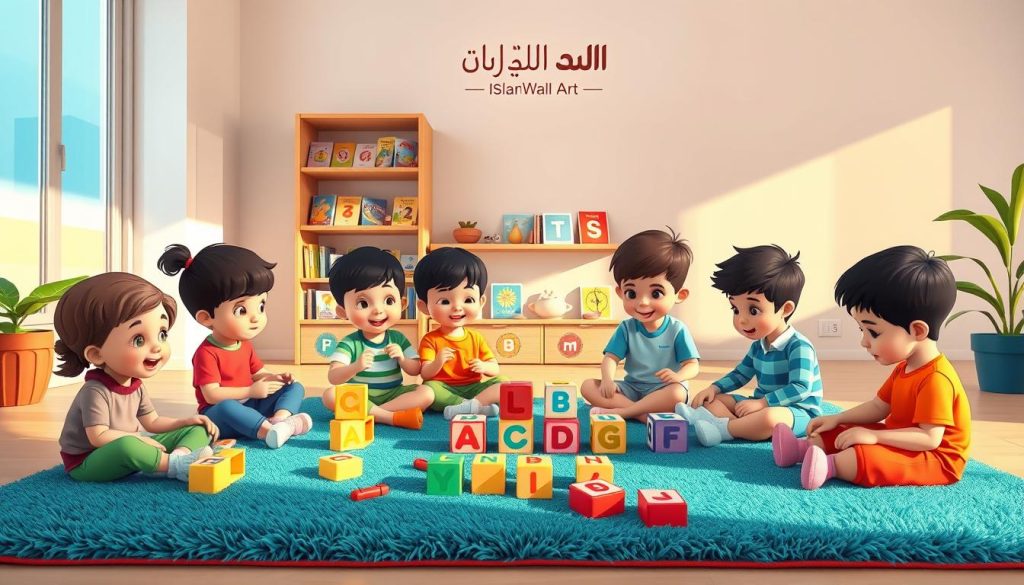
There are many educational games to teach the Arabic alphabet. Alphabet flashcards with pictures help kids link letters to objects. Creating a scavenger hunt with items around the house for different Arabic letters is also fun.
- Alphabet matching games
- Arabic letter tracing apps
- Letter-themed puzzles
These games teach the Arabic alphabet. They also improve problem-solving and hand-eye coordination.
Fun Phrases for Everyday Use
When kids know the Arabic alphabet, they can learn fun phrases for everyday use. Simple greetings like “As-salamu alaykum” (peace be upon you) and responses like “Wa alaykum as-salam” (and upon you be peace) are key. Role-playing these phrases makes learning fun and interactive.
“Language is the blood of the soul into which thoughts run and out of which they grow.” This quote highlights Arabic’s importance for Muslims.
By adding these interactive lessons to daily routines, kids build a strong Arabic foundation. This enhances their understanding and practice of Islam.
Engaging in Charity and Community Service
As Muslims, we’re encouraged to do charity work. Getting our kids involved is rewarding and teaches them a lot. Charity and community service show kids the value of kindness and helping others.
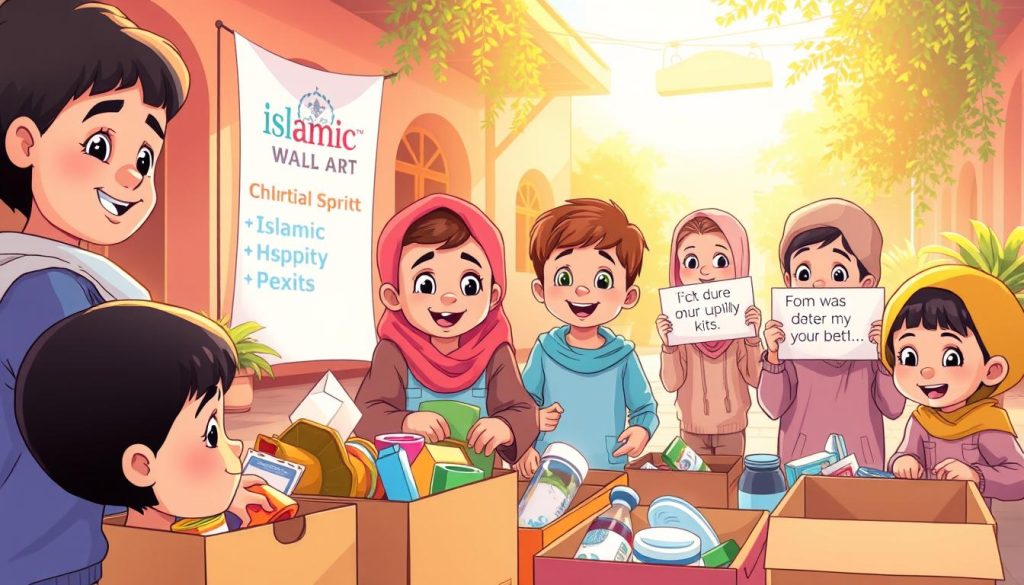
Volunteering as a family helps teach these values. It also helps the community. We can find local charities or groups that match our values and let families help out.
Volunteer Projects for Families
There are many volunteer projects for families. Here are a few:
- Organizing food drives or distributing meals to the needy
- Participating in charity walks or runs
- Visiting nursing homes or hospitals to spend time with the elderly or those in need of companionship
- Engaging in environmental clean-up initiatives
These activities help the community and teach kids about giving. They learn how their actions can make a difference.
Teaching the Value of Giving
To teach kids about giving, we should show them by example. Make giving a regular part of your family’s life. Let your kids help choose which charities to support.
This lets them feel involved and understand the value of their contributions. As they grow, this will be a big part of their Islamic values and a lasting legacy.
Educational Field Trips
We think taking kids on educational field trips is a great idea. It makes learning fun and engaging. These trips give kids hands-on experiences that help them understand Islamic practices better.
Visiting Local Mosques
Visiting local mosques is a valuable experience for kids. They get to see the mosque’s architecture and learn about its history. Many mosques have guided tours for kids, making it a fun and interactive way to learn.

Exploring Islamic Cultural Centres
Islamic cultural centres have lots of activities and exhibitions for kids. These centres are a great place for kids to learn about Islamic art, history, and culture. It’s a fun and interactive way to learn.
As one Islamic scholar said,
“The best way to learn is by experiencing and observing.”
Educational field trips let kids explore and learn about Islamic heritage in a hands-on way.
Creating a Family Islamic Journal
We think it’s great to write down our thoughts and dreams every day. It’s a way to grow closer to our faith. Making a family Islamic journal is fun. It lets everyone share their feelings and stories.
Recording Reflections and Experiences
Writing down our thoughts helps us understand our faith better. It makes us thankful for what we have. This practice is important for our spiritual growth.
Setting Goals and Aspirations
Writing down our goals helps us focus on what we want to achieve. It’s a way to grow personally. It also makes learning about Islam more fun and complete.
Keeping a family Islamic journal is special. It keeps track of our spiritual journey. It’s a valuable tool for reflection and guidance.
FAQ
What are some engaging Islamic activities for kids?
We suggest creative crafts, educational games, and storytelling. Outdoor activities like gardening are also great. These activities help kids connect with their faith and understand Islamic values better.
How can I make Islamic education fun for my children?
Try interactive lessons like board games and digital tools. Cooking traditional meals and visiting mosques are also good ideas. Exploring Islamic cultural centres can be very enriching.
What are some inspirational stories from the Quran that I can share with my kids?
The Quran has many stories of prophets and righteous individuals. Stories like Prophet Muhammad’s journey to Ta’if and Prophet Yusuf’s story are inspiring. There are many children’s books that tell these stories in a fun way.
How can I help my children develop a love for Arabic?
Learning Arabic can be fun for kids. Use games and activities to teach the alphabet and phrases. Practising Arabic through play and daily use is also helpful.
What are some ways to celebrate Islamic holidays with kids?
Celebrating holidays like Eid and Ramadan is a great way to engage kids with their faith. Decorate your home, cook traditional meals, and do charitable activities for Eid. In Ramadan, involve kids in fasting, prayer, and spiritual activities.
How can I encourage my children to participate in charity and community service?
Charity and community service are key Islamic values. Encourage kids to volunteer at soup kitchens or charity walks. This helps them develop compassion and empathy.
What are some educational field trips that can enhance my child’s Islamic knowledge?
Visiting mosques, cultural centres, and attending lectures are great for learning. Historical sites and landmarks related to Islam are also good choices.
How can I help my child develop a habit of reflection and goal-setting?
Start a family Islamic journal for reflection and goal-setting. Use it to document daily thoughts, goals, and progress. This fosters mindfulness and spiritual growth.