



Parents play a crucial role in nurturing their child’s faith and character. As guardians of their spiritual growth, they seek ways to deepen their child’s understanding of Islamic heritage. We believe that introducing Islamic teachings early on is vital. It helps shape their values and perspectives.
Mixing old quran education for kids with new teaching ways is smart. It gives them a full learning experience. This helps their spiritual growth and makes them feel part of a community, boosting wellbeing.
Key Takeaways
- Early start with Islamic teaching for kids is key to their spiritual growth.
- Using both old and new teaching methods is good.
- Islamic education for children’s growth includes building character and faith.
- Parents are crucial in shaping their kids’ Islamic identity.
- Mixing Islamic heritage with modern art can inspire faith.
The Foundations of Islamic Education for Children’s Development
Islamic education for kids is the start of a lifelong journey. It helps them grow in faith and character. We believe it’s essential for their overall development.
Starting early with Islamic education is essential. It teaches moral and ethical values. This builds a strong faith base. As they grow, they learn about Islam’s teachings, like kindness and honesty.
https://www.youtube.com/watch?v=h9ptTuEuXgESpiritual Growth in Early Years
The early years are key for a child’s spiritual growth. They learn basic Islamic practices and values, and spiritual growth comes from stories of prophets and the Quran.
Learning about Islam helps children understand their faith better. This is important for a strong spiritual base. We suggest parents make Islamic learning fun and interactive for their kids.
“The best gift a parent can give their child is a strong faith and good character.”
Character Formation Through Islamic Values
Building good character is a key part of Islamic education. Islamic teachings guide in developing good character. Values like honesty and kindness are taught, helping children become responsible and caring.
By focusing on character, parents help their children develop a strong moral compass. This benefits not just the individual but also society as a whole.
- Instilling moral and ethical values
- Fostering a deep understanding of Islamic teachings
- Encouraging positive social behaviours
We see Islamic education as vital for the next generation. Starting early sets a strong foundation. This way, children grow up knowing their faith and living its values.
Core Elements of Islamic Education for Children
Islamic education for kids should cover key areas. It’s not just about learning facts. It’s about growing their faith, character, and actions.
Quranic Recitation and Memorisation Techniques
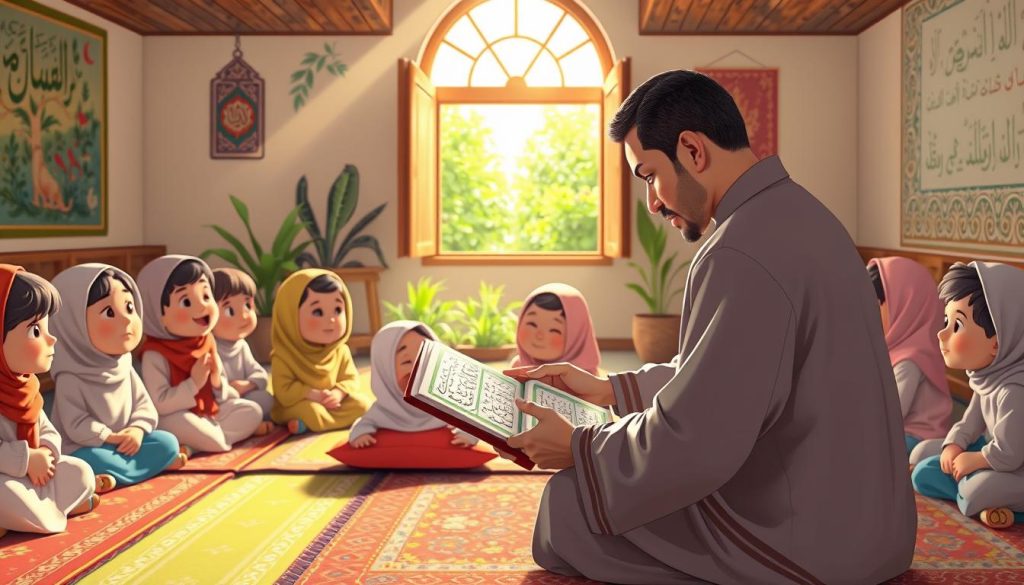
The Quran is Islam’s holy book. Learning to read and memorise it is crucial. Kids learn Tajweed, the right way to say the Quran. Memorising, or Hifz, helps them understand its teachings.
Good ways to teach include:
- Starting with the basics of the Arabic alphabet and pronunciation
- Using interactive and engaging teaching tools, such as apps and online resources
- Encouraging regular practice and review
- Providing positive reinforcement and rewards for milestones achieved
 View original
 quran education for children
Understanding Fundamental Islamic Principles
Islamic teachings are full of important principles. These guide a Muslim’s faith, worship, and actions. Kids must learn these to build a strong faith.
Some key principles include:
| Principle | Description |
| Tawhid (Oneness with God) | The belief in one God, Allah, the sole creator and sustainer of the universe. |
| Prophethood | The belief in prophets sent by God, including Adam, Abraham, Moses, Jesus, and Muhammad. |
| Akhirah (Afterlife) | The belief in an afterlife where individuals are held accountable for their deeds. |
Practical Application of Islamic Teachings in Daily Life
Islamic teachings are meant to be lived, not just learned. Kids should apply Islamic values in their daily life.
“And We have honoured the children of Adam” (Quran 17:70). This verse shows the importance of treating children with respect and guiding them right.
Ways to apply teachings include:
- Performing the five daily prayers
- Fasting during Ramadan
- Giving charity and doing kind acts
- Being honest and trustworthy in all interactions
By focusing on these areas, parents and teachers can give kids a well-rounded Islamic education. This education helps grow their faith, character, and actions.
Creating an Effective Islamic Learning Environment at Home
Creating a good space for Islamic learning at home is key for a child’s spiritual growth. A supportive environment helps shape a child’s faith and values.
To make such a space, setting up routines and practices that promote Islamic values is vital. Start by making daily Islamic activities a part of family life.
Establishing Daily Islamic Routines and Practices
Practices like the five daily prayers, Quran recitation, and dhikr (remembrance of Allah) boost a child’s Islamic knowledge. Start with simple steps that grow with the child.
- Start with short Quran sessions and increase time as the child gets more involved.
- Get kids to join in daily prayers, first by watching and then by participating.
- Add Islamic supplications to daily life, like before meals and waking up.
Incorporating Islamic Visual Arts and Resources
Adding Islamic visual arts and resources also enriches a child’s learning. Islamic wall art, posters, and interactive materials make learning fun and engaging.
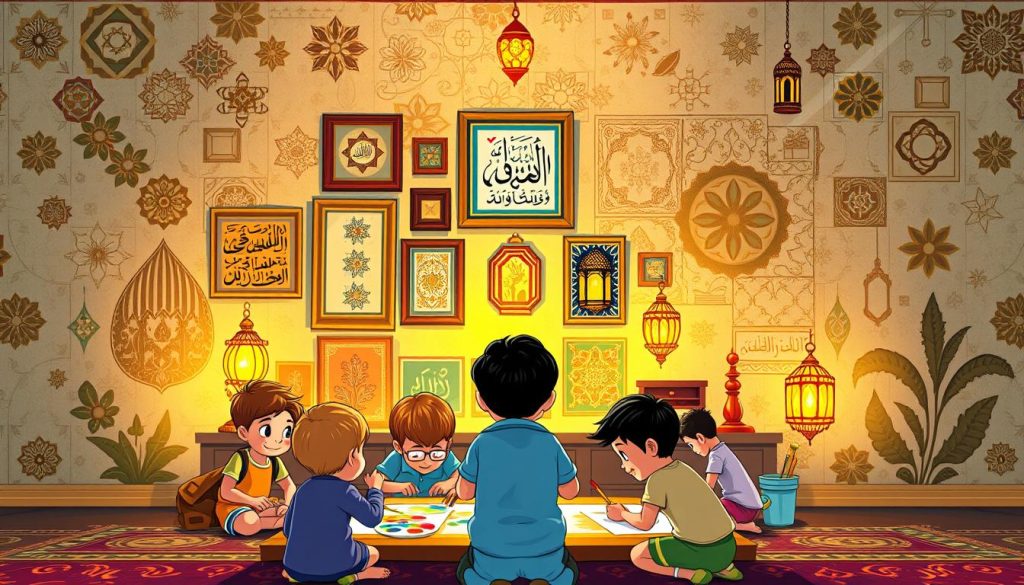
Here are some ways to add Islamic visual arts:
- Show Islamic calligraphy and artwork that shows Islamic values and principles.
- Use Islamic storybooks, puzzles, and games that teach in a fun way.
- Make a special area for Islamic learning with inspiring quotes and images.
By setting up daily Islamic routines and adding Islamic visual arts, parents can make a great Islamic learning space at home. This approach helps kids understand and connect deeply with their faith.
The Role of Madrasa Education in Children’s Islamic Learning Journey
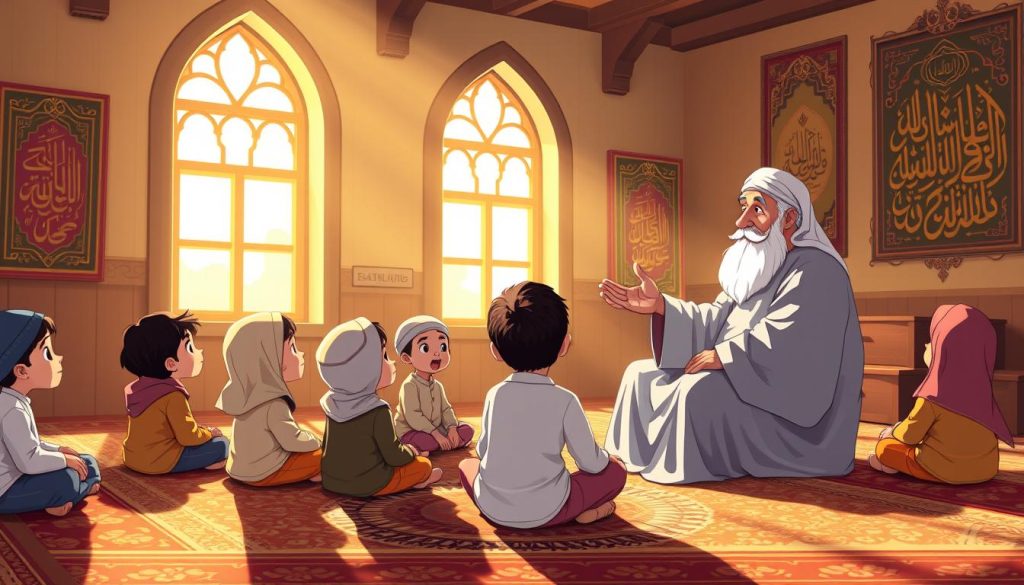
Madrasa education is essential for children learning about Islam. It gives them a place to learn, grow their faith, and meet others with similar beliefs.
Benefits of Structured Islamic Classes in UK Madrasas
UK madrasas offer many benefits for kids. They learn about Islam in a clear, step-by-step way. Children learn the Quran and Islamic laws in a well-organised way.
Madrasa education also helps kids feel like they are part of a community. They learn together, make friends, and grow closer to their faith. This community feeling is significant for their spiritual and social growth.
Balancing Madrasa and British Mainstream Education
Muslim kids need to balance madrasa and mainstream education. Madrasa teaches Islamic knowledge, while mainstream education gives them skills for the world.
Parents and teachers can help kids manage their time. By planning well, kids can do well in Islamic and secular studies.
- Make a routine for the madrasa and the school.
- Help kids use what they learn in the madrasa daily.
- Support kids in learning both Islamic and secular knowledge.
By finding the right balance, Muslim kids in the UK get an excellent education. They learn for both their spiritual and worldly lives.
Innovative Approaches to Islamic Teaching for Kids
We can make Islamic teaching more effective by using interactive and technology-based methods. By using interactive learning techniques, we can meet different learning styles. This makes Islamic education fun and easy for kids to understand.
Technology is a key innovative approach. Educational apps, online platforms, and digital resources offer a fun way for kids to learn about Islam. For example, apps that teach Quranic recitation with quizzes make learning exciting.
Interactive and Technology-Based Learning Methods
Interactive learning includes virtual environments, educational games, and multimedia presentations. These tools help kids grasp complex Islamic concepts easily.
- Utilising educational apps for Quranic studies
- Incorporating online Islamic educational platforms
- Creating virtual learning environments for Islamic studies
Arts, Crafts, and Visual Learning in Islamic Education
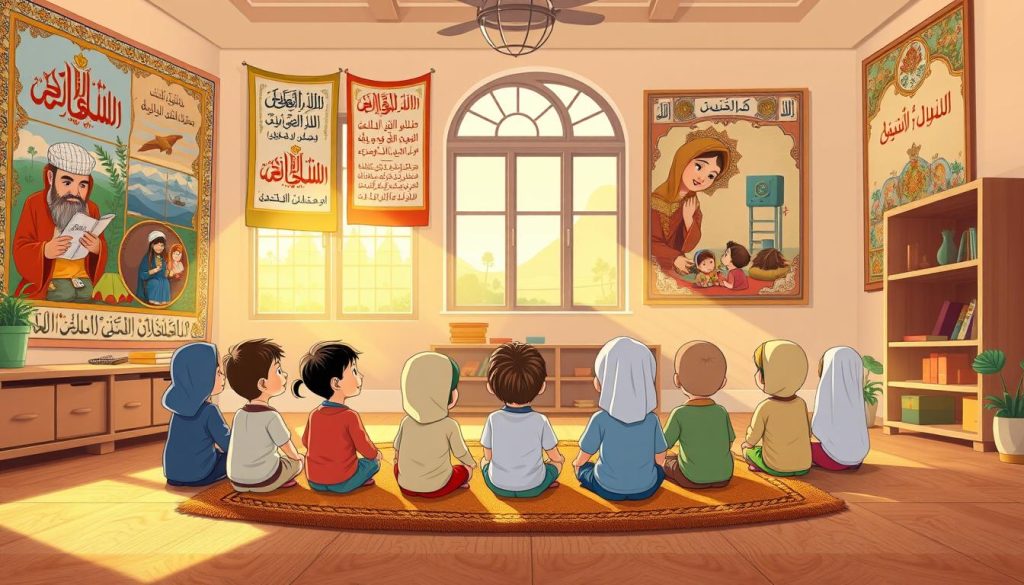
Arts and crafts are key in islamic teaching for kids. Drawing and painting help kids show they understand Islamic values.
Effective methods include:
- Creating Islamic art projects that depict important Islamic events or figures
- Using crafts to teach about Islamic rituals and practices
- Incorporating storytelling with visual aids to convey Islamic morals
By combining arts and crafts with traditional teaching, we offer a full and engaging Islamic education for children.
Age-Appropriate Islamic Studies for Kids
Teaching Islamic studies to children is vital for their faith. It’s important to make the lessons fit their age and understanding. This way, they find the content interesting and easy to grasp.
As kids grow, so does their grasp of Islamic teachings. It’s crucial to adjust the education to match their developmental stage. This ensures they learn in a way that suits them best.
Early Years (Ages 3-7) Islamic Education
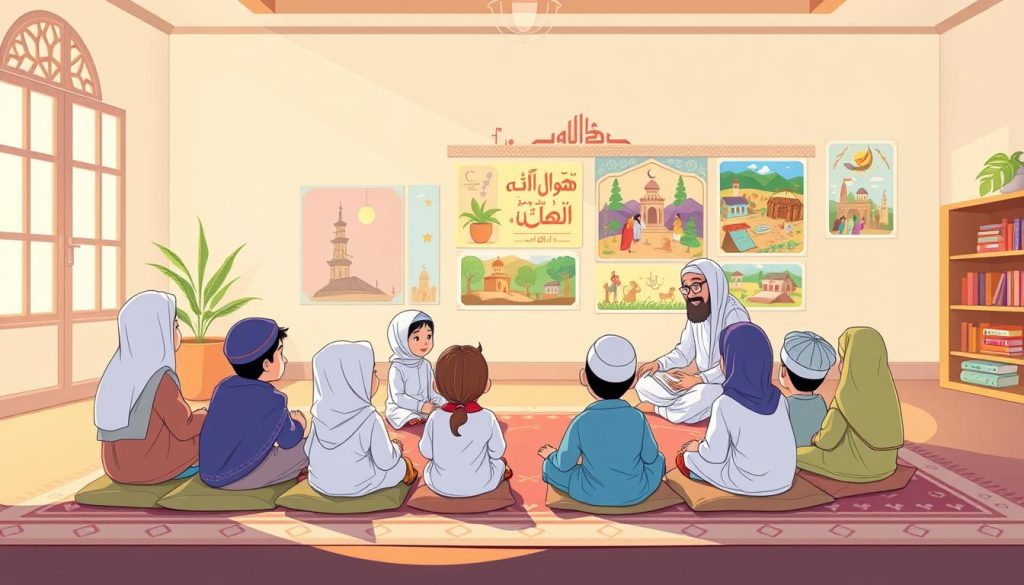
For young ones, learning should be fun and hands-on. We use visual aids and interactive games to make Islamic stories and values exciting.
- Simple Islamic stories
- Basic Islamic vocabulary
- Introduction to basic Islamic practices
At this age, we focus on making Islamic practices and values appealing. This lays a solid foundation for their future learning.
Primary School (Ages 8-11) Islamic Learning
When kids start primary school, they can grasp more complex ideas. We introduce them to detailed stories of Islamic history and principles.
- Detailed stories of prophets and Islamic history
- Understanding the importance of Islamic practices
- Basic understanding of the Quran
This stage is crucial for deepening their Islamic knowledge. It helps them see how to apply it in daily life.
Secondary School (Ages 12+) Islamic Studies
For older kids, Islamic studies become more in-depth. We explore how to apply Islamic principles today and interpret Islamic texts.
- In-depth study of the Quran and Hadith
- Islamic jurisprudence and its application
- Discussions on contemporary issues from an Islamic perspective
At this level, kids learn to think deeply about their faith. They prepare to be well-informed and practicing Muslims.
Integrating Quran Education for Children into British Family Life
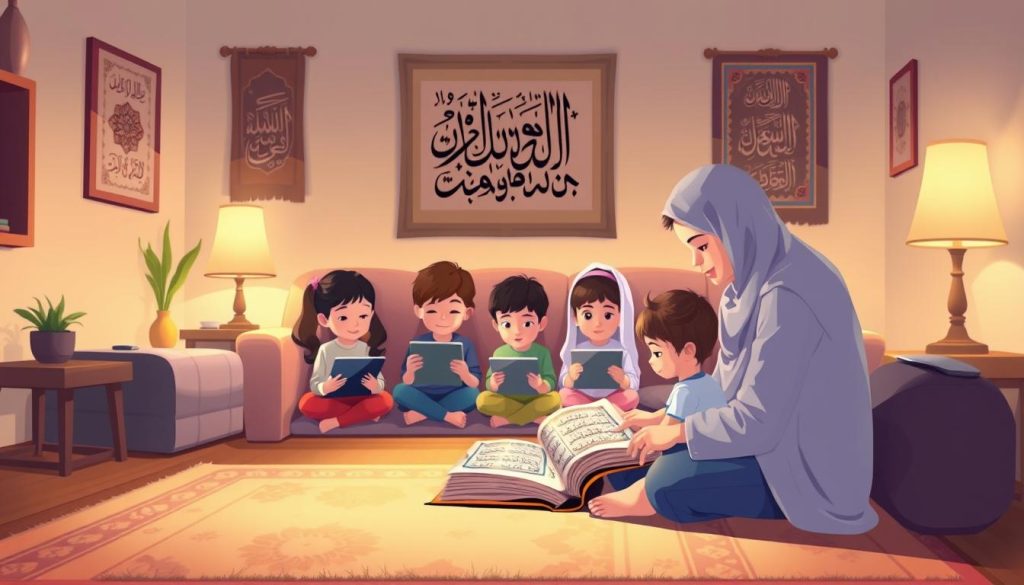
For many Muslim families in the UK, teaching the Quran is key for their kids’ spiritual growth. It’s vital to mix modern life with our faith’s timeless values. Making Quran education a fun part of family life is crucial.
Making Quranic Learning Engaging and Relevant
To keep kids interested, we can use fun ways to teach the Quran. This includes:
- Using storybooks that bring Quranic stories to life
- Engaging in educational games that teach Quranic verses and their meanings
- Utilising apps and online resources that offer interactive Quranic lessons
Using these tools, our children can form a strong bond with the Quran.
Practical Tips for Consistent Quran Study in Busy Schedules
Keeping up with Quran study is key. Here are some tips to help you, even when life gets hectic:
| Tip | Description | Benefit |
| Set a Regular Time | Choose a specific time each day for Quran study | Helps create a routine and a habit |
| Start Small | Begin with short sessions and then increase the time | Makes it less overwhelming for kids |
| Make it a Family Affair | Get everyone in the family involved in Quran study | Builds unity and support |
Following these tips, our children can stay committed to their Quranic education, even with a busy schedule.
Building Community Through Children’s Islamic School Activities
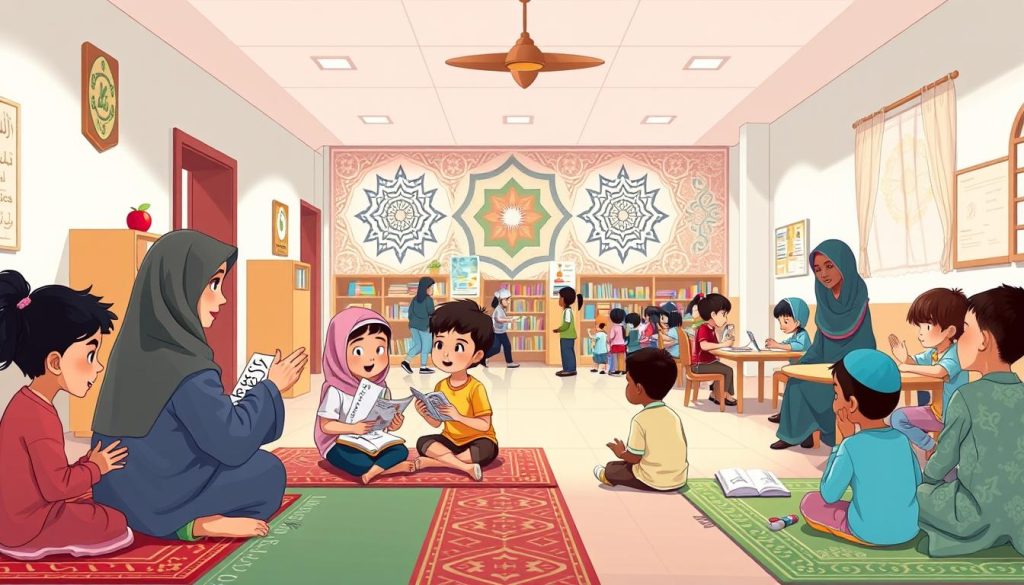
We help young Muslims feel part of a community through Islamic school activities. These activities boost social responsibility, spiritual growth, and understanding of Islamic values.
Islamic Festivals and Celebrations in the UK Context
Islamic festivals and celebrations bring children together. They teach kids about being thankful, generous, and the value of community.
To make these festivals fun for kids, we can:
- Host Eid parties at school or community centres
- Get kids involved in traditional Islamic crafts and activities
- Invite speakers to share the meaning of Islamic festivals
Community Service and Charitable Projects for Young Muslims
Community service is a big part of Islamic education. It helps kids develop empathy, compassion, and a sense of responsibility.
Here are some community service ideas for young Muslims:
| Project | Age Group | Objective |
| Food drives and charity collections | 8-11 years | Teaching children about the importance of helping those in need |
| Visiting local nursing homes | 12+ years | Fostering a sense of respect and care for the elderly |
| Environmental clean-up initiatives | 8-18 years | Promoting stewardship of the environment |
Adding community service and charity projects to Islamic school activities, we help kids grow into caring and responsible individuals.
Developing a Comprehensive Islamic Education Curriculum for Children
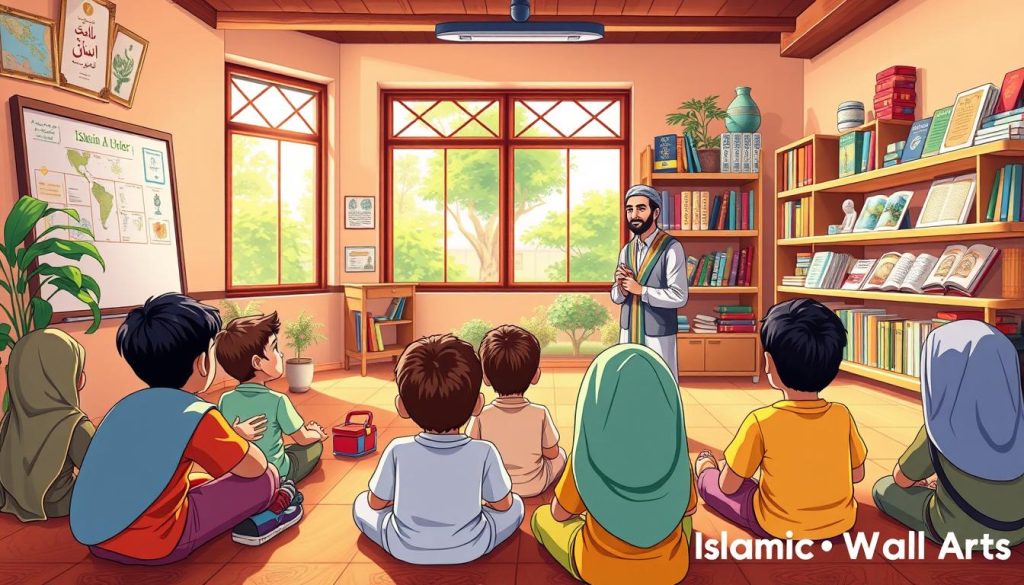
A well-rounded Islamic education is key for British Muslim kids. It gives them religious knowledge and helps them see their faith in today’s world.
A good Islamic education curriculum should cover many subjects. These subjects should help kids grow spiritually, morally, and intellectually. They should be about things kids see and experience every day.
Essential Subjects and Topics for British Muslim Children
When making an Islamic education curriculum, it’s important to include key subjects. These should be relevant to British Muslim kids. Some of these include:
- Quranic studies and memorization
- Understanding of fundamental Islamic principles
- Islamic history and significant events
- Practical application of Islamic teachings in daily life
- Character formation through Islamic values
These subjects help kids understand their faith better. They learn how to apply it in their everyday lives.
Resources and Materials for Home and School Use
To make an Islamic education curriculum work, you need the right resources. These can be:
| Resource Type | Description | Usage |
| Textbooks and Workbooks | Comprehensive textbooks and workbooks that cover various aspects of Islamic education | Home and School |
| Digital Resources | Apps, e-books, and online platforms that provide interactive Islamic learning materials | Home and School |
| Multimedia Materials | Videos, audios, and slideshows that can be used to engage children in Islamic learning | School |
Using these resources, parents and teachers can make Islamic learning fun and effective for kids.
We can improve Islamic education by regularly checking and updating our resources. This keeps the curriculum fresh and compelling for kids’ Islamic education.
Addressing Challenges in Islamic Learning for Youngsters in Britain
The journey of Islamic education for young Muslims in the UK is not without its challenges. Young Muslims in Britain face unique difficulties that can impact their ability to practice and understand their faith effectively.
Maintaining Motivation and Interest in Islamic Studies
One significant challenge is maintaining motivation among youngsters to engage with Islamic studies. In a world filled with distractions, it can be difficult for young minds to focus on their religious education.
To address this, we can make Islamic studies more engaging by incorporating interactive and technology-based learning methods. Utilising apps, online resources, and multimedia content can make Islamic education more appealing and accessible.
- Using educational apps that teach Quranic recitation and Islamic principles
- Incorporating Islamic history and stories of prophets into their curriculum
- Encouraging participation in Islamic competitions and events
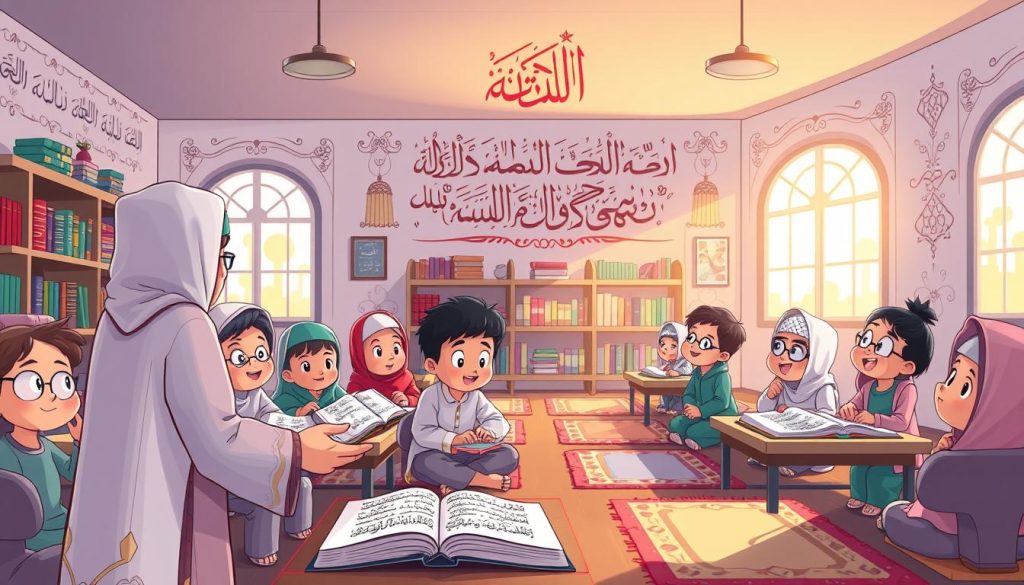 View original
 Islamic education for young Muslims in Britain
Navigating Cultural Contexts and Identity in the UK
Young Muslims in the UK face challenges in navigating their cultural and religious identity. It’s hard to balance Islamic values with modern British culture.
We should encourage young Muslims to embrace their identity while respecting the broader culture. This can involve:
- Engaging in community activities that promote Islamic values
- Participating in interfaith dialogues to foster understanding and respect
- Learning about the history and contributions of Muslims in the UK
By addressing these challenges, we can ensure young Muslims in Britain have a fulfilling Islamic learning experience.
Conclusion: Nurturing the Next Generation of British Muslims
Nurturing the next generation of British Muslims requires a mix of approaches. Early Islamic education is crucial for a child’s faith and character. It lays the foundation for a lifelong commitment to Islamic teachings.
Parents and educators can make a big difference by incorporating Islamic teachings into daily life. A supportive community helps children build a strong faith. This way, they can be positive members of society, balancing their religious duties with civic responsibilities.
We must tackle the challenges young Muslims face in Britain and ensure they get the Islamic education they need. This education helps them grow spiritually and develop their character. By doing this, we prepare the next generation of British Muslims to succeed and make a difference in their communities.
FAQ
What is the importance of Islamic education for children?
Islamic education is key for kids. It helps them understand and love their Islamic heritage. It also helps them grow up with good morals and social skills.
How can parents introduce Islamic teachings to their children?
Parents can start by creating daily routines, such as prayer and Quran recitation. They can also use Islamic art and resources at home.
What are the core elements of Islamic education for children?
Islamic education for kids focuses on a few key areas. These include learning the Quran, understanding Islamic principles, and applying these teachings daily.
How can madrasa education benefit children’s Islamic learning?
Madrasa education offers a structured learning environment. It lets kids learn with peers, helping them build a strong faith and apply Islamic teachings in their lives.
How can parents balance madrasa education with British mainstream education?
Parents can balance both by ensuring a well-rounded education. This includes Islamic and secular knowledge. They can also make Islamic teachings part of daily routines.
What are some innovative approaches to Islamic teaching for kids?
New ways to teach Islamic studies include interactive and tech-based methods. Arts, crafts, and visual learning make it fun and accessible.
How can parents make Quranic learning engaging for their children?
Parents can make learning the Quran fun by using stories and games. They can also find tips for consistent study, even when schedules are busy.
What is the role of Islamic schools in building community among young Muslims?
Islamic schools are key in building community. They organize activities like Islamic festivals and community service. This helps kids understand the value of community and social responsibility.
How can parents develop a comprehensive Islamic education curriculum for their children?
Parents can create a detailed curriculum by including essential subjects and topics. They should also provide resources for home and school use.
What are some challenges faced by young Muslims in Britain in maintaining their Islamic faith?
Young Muslims in Britain may struggle to stay motivated in Islamic studies. They also face cultural and identity challenges. A supportive community and daily Islamic teachings can help.