As a parent, you want the best for your child and for them to have a strong moral compass.
Islamic teachings for children can help shape their values and character.
You’re not alone in wanting to instil these values. Islamic education is a way to nurture their spiritual, emotional, and intellectual growth.
Key Takeaways
- Understanding the significance of Islamic education in modern times
- Exploring the benefits of Islamic teachings for children’s development
- Discovering practical ways to integrate Islamic values into daily life
- Learning how Islamic education can foster a stronger sense of community
- Nurturing a child’s spiritual growth through Islamic practices
Understanding the Foundations of Islamic Education
The basics of
Islamic education aim for a balanced and complete learning experience. It draws from a deep history and key principles.
Core Principles and Values
The heart of Islamic education is
Tawhid, or the belief in one God. The Quran stresses the value of knowledge and wisdom and urges believers to seek them.
Tawhid (Oneness of God) as the Central Concept
Tawhid is more than a belief; it guides a Muslim’s life. The Quran says, “And We have certainly honoured the children of Adam” (17:70), which shows humans’ dignity.
Emphasis on Knowledge and Learning in Islam
Islam values knowledge and learning highly. The Prophet Muhammad (peace be upon him) said, “Seeking knowledge is an obligation upon every Muslim” (Sunan Ibn Majah). This shows the importance in Islam.
Historical Development of Islamic Educational Systems
The history of Islamic education is rich and varied. It spans centuries, from early mosque schools to today’s institutions.
From Mosque Schools to Modern Institutions
Early mosque schools were key in spreading Islamic knowledge. As Islamic civilisation grew, so did its schools, leading to famous universities like Al-Azhar.
British Islamic Educational Traditions
In Britain, Islamic education blends tradition with modern learning. Many schools offer both traditional and modern curricula for British Muslims.
The Significance of Islamic Education in Modern Times
In today’s complex world, Islamic education is more important than ever. You are part of a global community. Here, Islamic values guide personal and societal growth.
Balancing Religious Knowledge with Contemporary Education
One big challenge is mixing religious education with modern studies.
Islamic education is not just about learning religious texts. It’s about blending Islamic values into your studies.
Integrating Islamic Values with the National Curriculum
You can get a balanced education by adding Islamic values to your studies. For example, maths, science, and literature can be taught with Islamic ethics. This way, you see how Islamic teachings apply to daily life.
| Subject |
Islamic Integration |
Benefit |
| Mathematics |
Understanding zakat (charity) calculations |
Appreciating the importance of charity |
| Science |
Exploring the Islamic perspective on the universe |
Enhancing understanding of the natural world |
| Literature |
Studying Islamic literature and poetry |
Appreciating the rich cultural heritage of Islamic civilisation |
Addressing Misconceptions About Islamic Education
There are many wrong ideas about
Islamic education. Some think it’s only about religious rules, ignoring other educational areas.
Common Myths and Their Factual Corrections
One myth is that Islamic education is old-fashioned and doesn’t tackle modern problems. But,
Hadith learning and other Islamic studies offer insights into today’s issues. This makes Islamic education very relevant today.
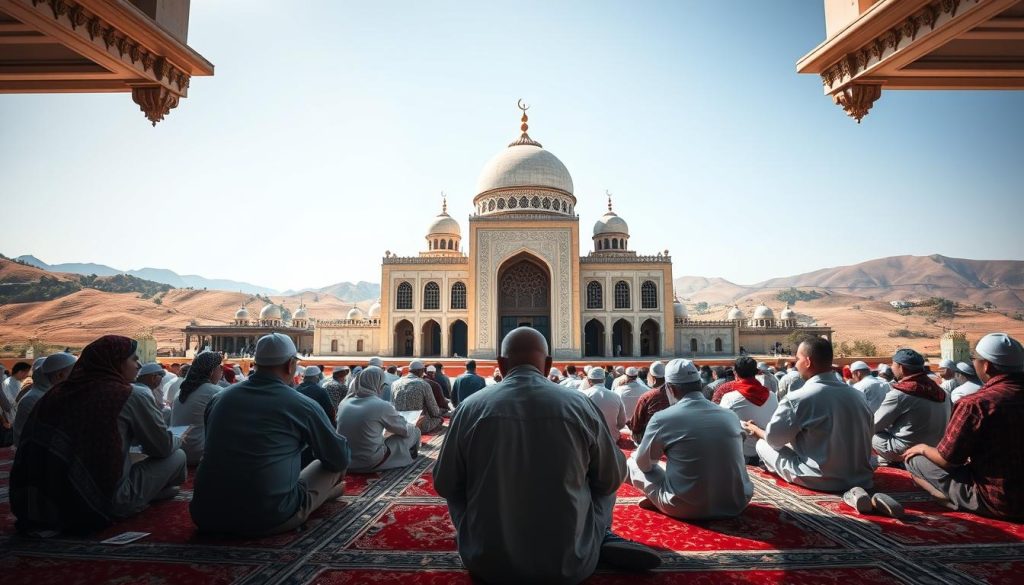
Knowing the real value of Islamic education helps you see its importance. It’s about combining faith with knowledge. This leads to a more balanced and fulfilling life.
Establishing a Strong Quranic Foundation
Building a strong foundation in Quranic studies is key to a deep understanding of Islamic education. The Quran is the main guide for Muslims, and knowing its teachings is vital for spiritual growth and development.
Methods for Effective Quran Memorisation
Memorising the Quran well needs understanding, practice, and repetition. Start by breaking the Quran into smaller parts. Focus on one part at a time.
Practical Techniques for Different Learning Styles
People learn in different ways. Knowing your learning style helps you memorise the Quran better. For example, visual learners might find video recordings helpful, while auditory learners prefer listening to audio recordings.
- Repetition: Repeat verses many times to remember them.
- Understanding: Try to grasp the meaning of the verses you memorise.
- Practice: Regularly recite the Quran to strengthen your memorisation.
Understanding Tajweed Rules and Recitation
Tajweed rules are crucial for correct Quran recitation. Knowing these rules improves your recitation and ensures correct pronunciation.
Step-by-Step Approach to Proper Pronunciation
To improve pronunciation, listen to a skilled reciter first. Then, practice reciting with them. Online resources and apps can also help with Tajweed rules and exercises.
| Tajweed Rule |
Description |
Example |
| Idgham |
Merging of two letters |
Min Nās |
| Iqlab |
Conversion of a letter |
Nūn to Mīm |
| Ikhfa’ |
Concealment of a letter |
Nūn before certain letters |
Integrating Quranic Teachings into Daily Life
Bringing Quranic teachings into your daily life profoundly impacts your spiritual growth and character. Start by reflecting on the Quranic verses you read. Then, try to apply their teachings to your daily actions.
Applying Quranic Wisdom to Contemporary Challenges
The Quran guides on life’s aspects, like moral values, social justice, and personal conduct. Understanding and applying Quranic wisdom helps you face today’s challenges with a strong moral compass.

By building a strong Quranic foundation, you deepen your understanding of Islamic education. This strengthens your faith connection.
Incorporating Hadith Learning into Your Educational Journey
Exploring Islamic education can be greatly enhanced by learning Hadith. Hadith are the sayings and actions of the Prophet Muhammad. They give us practical insights into Islamic principles.
Selecting Authentic Hadith Collections for Study
Choosing authentic Hadith collections is key.
Sahih Bukhari and
Sahih Muslim are top choices. In the UK, many resources offer these collections with translations and explanations.
Recommended Resources for UK Learners
In the UK, the
Islamic Foundation and
Darussalam are great for Hadith study. Online,
Sunnah.com makes authentic Hadith easy to find.
Practical Approaches to Understanding Hadith Context
It’s important to understand the context of the Hadith. This means looking at the historical background and the language used.
Historical and Linguistic Analysis Techniques
Studying the
asbab al-wurud and the language of Hadith helps. Scholars use these methods to understand the Prophet’s teachings better.
Applying Prophetic Teachings in Contemporary Situations
Learning Hadith is about applying the Prophet’s teachings today. This needs careful thought, considering both the past and now.
Case Studies and Practical Examples
Case studies and examples show how to use the Prophet’s teachings today. For example, teachings on compassion and justice can guide us in making ethical choices.
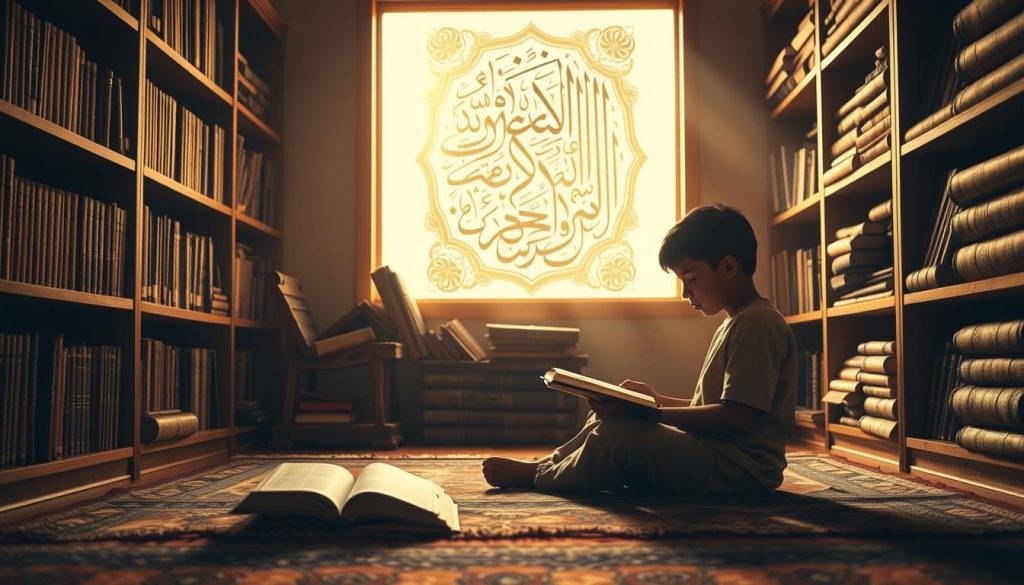
Exploring Islamic History: Beyond Dates and Events
Understanding
Islamic history means looking beyond dates. It’s about the educational, cultural, and scientific achievements of Muslim scholars. Islam’s story is complex and has greatly influenced global civilization.
Key Historical Periods and Their Educational Significance
The history of Islamic civilisation is filled with important periods. The early days saw the start of the first Islamic schools.
Timeline of Islamic Educational Development
| Period |
Significant Events |
Educational Developments |
| 632-661 CE |
Era of the Rightly Guided Caliphs |
Initial Islamic educational frameworks |
| 8th-13th Century |
Golden Age of Islam |
Advancements in various sciences, the establishment of madrasas |
Learning from the Golden Age of Islamic Scholarship
The Golden Age was a time of great intellectual achievements. Scholars made big
contributions to science, mathematics, and medicine.
Contributions to Science, Mathematics, and Medicine
Muslim scholars made important discoveries. They advanced algebra and developed new surgical techniques.
Connecting Historical Lessons to Present Challenges
Historical Muslim scholars faced their own challenges. They used knowledge and critical thinking to overcome them.
Drawing Inspiration from Historical Muslim Scholars
Scholars like Al-Khwarizmi and Ibn Sina (Avicenna) show the high intellectual rigour and innovation in Islamic scholarship.
The Power of Islamic Education in Character Development
Islamic education helps create well-rounded individuals with strong moral character. It combines spiritual, intellectual, and physical growth, making it a complete way to build character.
Integrating Spiritual, Intellectual, and Physical Development
Islamic education focuses on balancing human development. It ensures growth in all areas: spiritual, intellectual, and physical.
Holistic Approaches to Education
A holistic education aims to nurture the whole person. It includes:
- Spiritual Development: Practices like prayer and reflection deepen faith.
- Intellectual Growth: Studying Islamic sciences and other subjects improves critical thinking and knowledge.
- Physical Well-being: Healthy lifestyles and physical activities boost overall health.
Building Character Through Islamic Ethics
Islamic ethics are key in shaping character. Understanding and applying Islamic values helps develop strong morals.
Practical Exercises for Moral Development
Practical exercises can improve moral development. Some effective practices include:
- Reflecting on the Quran and Hadith to grasp Islamic values.
- Getting involved in community service to grow empathy and compassion.
- Practising self-reflection and self-improvement.
Fostering Critical Thinking Within an Islamic Framework
Critical thinking is vital in Islamic education. It helps individuals tackle complex issues while staying true to their faith.
Balancing Tradition with Intellectual Inquiry
Islamic education promotes balancing traditional knowledge with intellectual curiosity. This balance helps address modern challenges effectively.
| Aspect of Development |
Islamic Educational Approach |
Benefits |
| Spiritual |
Prayer, Reflection, Quranic Study |
Deepens faith, enhances spiritual growth |
| Intellectual |
Study of Islamic Sciences, Critical Thinking |
Fosters knowledge and critical thinking skills |
| Physical |
Healthy Lifestyle, Physical Activities |
Promotes overall well-being, physical health |
Islamic Education for Children: Age-Appropriate Methods
Teaching Islam to kids needs to match their age and needs. As they grow, so does their ability to learn. This means we must change how we teach them to keep them engaged.
Early Childhood Islamic Learning (Ages 3-7)
For little ones, learning about Islam should be fun and hands-on. At this age, we introduce simple Islamic ideas in a fun way.
Playful Approaches to Basic Islamic Concepts
Parents and teachers can use stories, games, and activities to teach basic Islamic values. Stories can help kids learn about prophets and key Islamic events.
Recommended Resources for Parents and Educators
Many tools are available to help with early Islamic learning. These include children’s books, educational apps, and activity books that teach Islamic values.
Primary School Age Islamic Education (Ages 8-12)
When kids start primary school, they can learn more about Islam. It’s important to keep them interested with fun activities.
Building on Fundamentals with Engaging Activities
Islamic quizzes, art projects, and group talks can help kids understand more. These activities should be both enjoyable and educational.
Teenage Islamic Learning Strategies (Ages 13-18)
Teenagers are figuring out who they are and may have deep questions about their faith.
Addressing Faith Questions and Identity Development
It’s key to create a safe space for teens to ask faith questions. Talking and debating Islamic topics helps them explore their beliefs.
| Age Group |
Islamic Education Focus |
Recommended Activities |
| 3-7 |
Basic Islamic Concepts |
Storytelling, Games, Activity Books |
| 8-12 |
Complex Islamic Concepts |
Quizzes, Art Projects, Group Discussions |
| 13-18 |
Faith Exploration and Identity |
Discussions, Debates, Reflective Journaling |
Implementing Islamic Parenting Principles
Starting on the path of
Islamic parenting takes patience, compassion, and a strong faith. It’s key to create a space that supports your children’s spiritual, emotional, and mental growth.
Creating a Home Environment Conducive to Islamic Learning
Your home should be where you live by Islamic values every day. This means
setting a good example with your actions and behaviour.
Balancing Discipline with Compassion
Islamic parenting is about discipline and
compassion. How the Prophet Muhammad (peace be upon him) raised children shows us how to balance these.
Addressing Challenging Questions from Children
Children sometimes ask tough questions that need careful answers. It’s important to give
age-appropriate answers that are honest and reassuring.
Age-Appropriate Responses to Difficult Topics
When talking about sensitive topics, adjust your answer to your child’s understanding. This prevents confusion and encourages open talks.
Navigating Islamic Education in British Society
Wondering how to mix Islamic education into your life in Britain? As a Muslim, it’s key to balance regular school with learning about Islam. This helps you grow in all areas.
Supplementing Mainstream Education with Islamic Knowledge
To find a balance, add Islamic studies to your regular school. You can do this in several ways, like:
- Going to weekend schools for Islamic education.
- Joining after-school programmes for Islamic studies.
Weekend Schools and After-School Programmes
These programmes give a place to learn Islamic values. They also let you meet others with the same beliefs. Many mosques and Islamic centres in Britain have these, making it easy to find one.
Building Community Support Networks
Creating a network of people with similar beliefs can boost your learning. You can do this by:
- Connecting with local mosques and Islamic centres.
- Joining community events that share Islamic values.
Connecting with Local Mosques and Islamic Centres
Local mosques are key for Islamic activities, like learning and community events. Participating in these places can give you support and resources for your studies.
Addressing Cultural Conflicts Constructively
When you’re in a multicultural place like Britain, you might face cultural differences. Handling these needs requires careful thought, including:
- Understanding why these conflicts happen.
- Getting advice from wise people in your community.
Case Studies and Resolution Strategies
Looking at how others solved cultural conflicts can teach you. By learning from these, you can find ways to deal with your own challenges.
Digital Resources and Tools for Islamic Education
The internet has changed how we learn about Islam, making many resources available. You can find everything from online courses to apps that help you understand Islamic studies better.
Evaluating Online Islamic Courses and Programmes
Choosing online Islamic courses needs careful thought. Look at the course’s quality and if it’s relevant. Check the institution’s reputation, the teachers’ qualifications, and what the course covers.
Quality Assessment Criteria
To judge a course’s quality, search for reviews and testimonials. Also, check if it’s accredited by known Islamic education bodies. Make sure it meets your learning goals and covers the subject well.
Recommended Apps and Websites for Different Age Groups
Different digital tools are made for different ages. Kids can use
SalatKids and
IslamicLearning for fun learning, while adults might prefer
SeekersGuidance and
IslamicOnlineUniversity for deeper Islamic studies.
UK-Based and International Resources
You can find resources from the UK and around the world. For health advice, try the
British Islamic Medical Association. For scholarly views,
Islamqa is a good place to start.
Maintaining Digital Safety While Accessing Islamic Content
It’s important to stay safe online when looking for Islamic content. Be careful about where you get your information, and make sure it’s trustworthy.
Parental Controls and Monitoring Strategies
Parents should keep an eye on their kids’ online activities. Use tools to control what they can see and do online. This keeps them safe from harmful content.
Conclusion: Embracing the Lifelong Journey of Islamic Education
As you keep learning about Islam, you’re not just getting facts. You’re starting a journey of spiritual growth and self-improvement. The lessons from Islamic education will help you face life’s challenges and make choices that reflect your faith.
Parents, teaching your kids about Islam is key for their growth. By mixing religious teachings with modern education, you help them become caring and knowledgeable. This way, they can grow up well-rounded.
Think about what we’ve talked about. Islamic education isn’t just for school. It’s a lifelong journey of learning, practising, and getting better. By joining this journey, you’ll better understand Islam and connect with your community.
FAQ
What is the significance of Islamic education in a child’s development?
Islamic education is key for a child’s growth. It shapes their faith, morals, and mind. It helps them face life’s challenges with confidence and wisdom.
How can parents effectively integrate Islamic values into their child’s daily life?
Parents can make their home a place of Islamic learning. They should lead by example and include Islamic teachings in daily routines. Activities that teach Islamic knowledge, like weekend schools, are also helpful.
What are some recommended resources for teaching Islamic education to children?
For teaching Islamic education, online courses, apps, and websites are great. They cater to different ages. Islamic educational websites, apps for Quranic recitation, and books that teach Islamic values are popular choices.
How can one balance religious knowledge with contemporary education?
Balancing religious and modern education is possible. It involves integrating Islamic studies into regular school or supplementing with weekend schools. This approach ensures a well-rounded education.
What are some effective methods for memorising the Quran?
To memorise the Quran, set goals and create a good learning space. Use techniques like repetition and recitation. Getting help from a qualified teacher is also beneficial.
How can one apply Prophetic teachings to contemporary situations?
To apply Prophetic teachings, understand the Hadith well. Study authentic Hadith collections and learn from scholars. They can provide examples and guidance.
What are some practical strategies for addressing cultural conflicts constructively?
To address cultural conflicts, talk openly and respectfully. Seek common ground and listen to others. Being aware of cultural nuances is crucial.
How can parents maintain digital safety while accessing Islamic content online?
Parents can keep their children safe online by using parental controls and monitoring. Be aware of online risks. Seek advice from scholars and online resources on digital safety.