

Islamic calligraphy stands as one of the most revered sacred art forms in Muslim culture. This artistic practice of handwriting transforms Arabic script into stunning visual compositions that transcend mere communication. For centuries, calligraphy has been the primary vehicle for preserving and honoring the Qur’an, Islam’s holy text believed to be the literal word of God.
Beyond religious manuscripts, Islamic calligraphy adorns mosque walls, ceramic tiles, textiles, and metalwork. The flowing lines and geometric precision of Arabic script create a visual harmony that reflects the divine order of the universe. This art form emerged from the prohibition of figurative imagery in religious contexts, channeling artistic expression into the beauty of the written word.
Historical Evolution of Islamic Calligraphy
The development of Islamic calligraphy is intrinsically linked to the spread of Islam and the need to preserve the Qur’an. In 7th-century Arabia, as the Islamic faith emerged, the Arabic script was relatively simple and functional. However, as Islam expanded beyond the Arabian Peninsula, calligraphy evolved into a sophisticated art form that reflected the cultural diversity of the Islamic world.
Under the Umayyad Caliphate (661-750 CE), the first distinctly Islamic calligraphic styles began to emerge. The early Muslims recognized the importance of preserving the Qur’an with precision and clarity, leading to the development of more structured writing systems. During this period, the angular Kufic script became the standard for Qur’anic manuscripts.
The Abbasid era (750-1258 CE) witnessed a golden age for Islamic calligraphy. The establishment of Baghdad as a center of learning and culture fostered artistic innovation. Ibn Muqla, a 10th-century vizier and master calligrapher, revolutionized Arabic script by establishing proportional rules that remain influential today. His system, known as “the proportioned script,” created harmony and balance in letter forms.

The Ottoman Empire (1299-1922) elevated calligraphy to unprecedented heights. Ottoman sultans were often accomplished calligraphers themselves, and the imperial court patronized master artists. Under Ottoman influence, scripts like Thuluth and Diwani reached their aesthetic pinnacle. The tradition of obtaining an ijazah (license) to practice calligraphy formalized training and maintained high standards.
The prohibition of figurative representation in religious contexts played a significant role in calligraphy’s prominence. While this restriction is often oversimplified (as figurative art did exist in secular Islamic contexts), it channeled artistic energy toward perfecting the written word. Calligraphy became the primary means of decorating sacred spaces, creating a distinctly Islamic visual language.
Major Calligraphy Styles
Islamic calligraphy encompasses a rich variety of styles, each with distinct characteristics and applications. These styles evolved across different regions and periods, reflecting local artistic traditions while maintaining the sacred essence of the Arabic script.
Kufic Script: The Foundation of Islamic Calligraphy
Kufic is the oldest formalized Arabic script, characterized by its angular, geometric letterforms. Developed in the late 7th century in Kufa, Iraq, this script features:
- Bold, rectangular letter shapes with strong horizontal extensions
- Minimal use of curves and flourishes
- Geometric precision and monumental appearance
- Often written without diacritical marks in early examples

Kufic was the primary script for early Qur’an manuscripts from the 8th to 10th centuries. Its clarity and formality made it ideal for monumental inscriptions on buildings and coins. Over time, Kufic developed into several variants, including Square Kufic (used in architectural decoration), Floriated Kufic (with floral embellishments), and Eastern Kufic (with elongated vertical strokes).
Naskh Script: The Legible Standard
Naskh emerged in the 10th century as a more fluid and readable alternative to Kufic. The name derives from the Arabic word for “copying,” reflecting its primary use in transcribing manuscripts. Key features include:
- Rounded, flowing letterforms with clear proportions
- Consistent baseline alignment and letter spacing
- Full use of diacritical marks and vowel signs
- Balance between aesthetic beauty and readability

Ibn Muqla standardized Naskh in the 10th century, establishing rules of proportion that revolutionized calligraphy. Due to its exceptional legibility, Naskh became the standard for Qur’anic manuscripts from the 12th century onward and remains the basis for modern Arabic typography and printed Qur’ans.
Thuluth Script: The Majestic Style
Thuluth, meaning “one-third” in Arabic (possibly referring to the proportion of the pen used), is renowned for its majestic appearance and complex composition. This ornamental script features:
- Elongated, flowing letters with dramatic curves
- Precise balance between ascending and descending elements
- Intricate ligatures and overlapping characters
- Often embellished with elaborate flourishes

Thuluth reached its aesthetic peak during the Ottoman period and became the preferred script for mosque inscriptions and ceremonial texts. Its complexity made it a benchmark for calligraphic mastery, with artists spending decades perfecting their technique. Today, Thuluth remains highly prestigious in traditional calligraphy circles.
Regional Variations
As Islamic calligraphy spread across diverse regions, distinctive regional styles emerged:
Persian Nastaʿlīq
Developed in 14th-century Persia, Nastaʿlīq combines elements of Naskh and Ta’liq scripts. Its distinctive features include:
- Sloping horizontal lines and suspended appearance
- Graceful, dance-like rhythm and movement
- Short vertical strokes with broad horizontal sweeps
- Primarily used for Persian poetry and literature
Ottoman Diwani
Created in the 16th century for Ottoman court documents, Diwani is characterized by:
- Highly cursive and densely structured composition
- Letters stacked upon each other with complex ligatures
- Flowing lines that ascend from right to left
- Often embellished with decorative dots and marks

Cultural & Spiritual Significance
Islamic calligraphy transcends mere aesthetic beauty to embody profound spiritual and cultural meanings. The Arabic script itself is considered sacred as the vehicle for divine revelation in the Qur’an. As Dr. Seyyed Hossein Nasr, renowned Islamic scholar, explains: “Calligraphy is the geometry of the spirit made visible through the movement of the hand guided by inner harmony.”

In Islamic tradition, the act of writing beautiful script is considered a form of devotion. Calligraphers traditionally begin their work with the Basmala (“In the name of God, the Most Gracious, the Most Merciful”) and perform ritual purification before writing sacred texts. The meticulous attention to proportion, balance, and execution reflects the Islamic values of order, harmony, and excellence.
The symbolism of Arabic script extends beyond religious contexts. Letters themselves carry mystical significance in Sufi traditions, where they are seen as cosmic principles and keys to understanding divine mysteries. The letter Alif (ا), for example, represents divine unity and the straight path to God.
Architectural Expression
Islamic calligraphy transforms architecture into “speaking buildings” that communicate religious texts and cultural values. From the intricate inscriptions of the Alhambra Palace in Spain to the monumental calligraphy adorning the Taj Mahal in India, script becomes an integral element of architectural design.

Calligraphic inscriptions typically serve multiple functions in architecture:
- Conveying Qur’anic verses relevant to the building’s purpose
- Identifying patrons and commemorating construction dates
- Creating visual rhythm and decoration across surfaces
- Establishing a sacred atmosphere through divine words
Contemporary Interpretations
Modern artists continue to draw inspiration from Islamic calligraphy while pushing its boundaries. The Hurufiyya movement, emerging in the mid-20th century across the Arab world, incorporated calligraphic elements into contemporary art as an expression of cultural identity during post-colonial nation-building.
Today’s calligraffiti artists like eL Seed blend traditional calligraphy with street art aesthetics, creating large-scale public works that bridge cultural divides. As contemporary artist Shirin Neshat observes: “Calligraphy allows us to reconnect with our heritage while speaking to universal human experiences of beauty, meaning, and transcendence.”

Practical Applications Today
Islamic calligraphy continues to thrive in the modern world, adapting to new contexts while maintaining its connection to tradition. Beyond religious manuscripts and architecture, calligraphy has found its way into everyday life through various practical applications.
Home Décor and Fashion
Islamic calligraphy has become increasingly popular in interior design, offering both aesthetic beauty and spiritual significance. Contemporary homes feature calligraphic art pieces that range from traditional framed works to modern canvas prints and sculptural installations. Popular themes include the 99 Names of Allah, verses from the Qur’an, and poetic expressions.

Fashion designers have incorporated calligraphic elements into clothing, accessories, and jewelry. From subtle embroidered details to bold graphic statements, these pieces allow individuals to carry meaningful text as personal expression. Luxury brands have also embraced Islamic calligraphy in limited edition collections, recognizing its universal appeal and artistic value.
Digital Media and Typography
The digital revolution has opened new frontiers for Islamic calligraphy. Digital artists create animated calligraphy that brings traditional forms to life through movement and interaction. Social media platforms have become galleries for calligraphers to share their work globally, connecting artists and enthusiasts across cultural boundaries.
Typography designers have developed digital Arabic fonts inspired by classical calligraphic styles, making these traditional aesthetics accessible in contemporary communications. Mobile applications now offer tools for learning and practicing calligraphy, democratizing access to this art form.
Cultural Preservation and Education
Recognizing the importance of preserving calligraphic traditions, UNESCO has inscribed various forms of Islamic calligraphy on its Lists of Intangible Cultural Heritage. This recognition supports conservation efforts and raises awareness about calligraphy’s cultural significance.
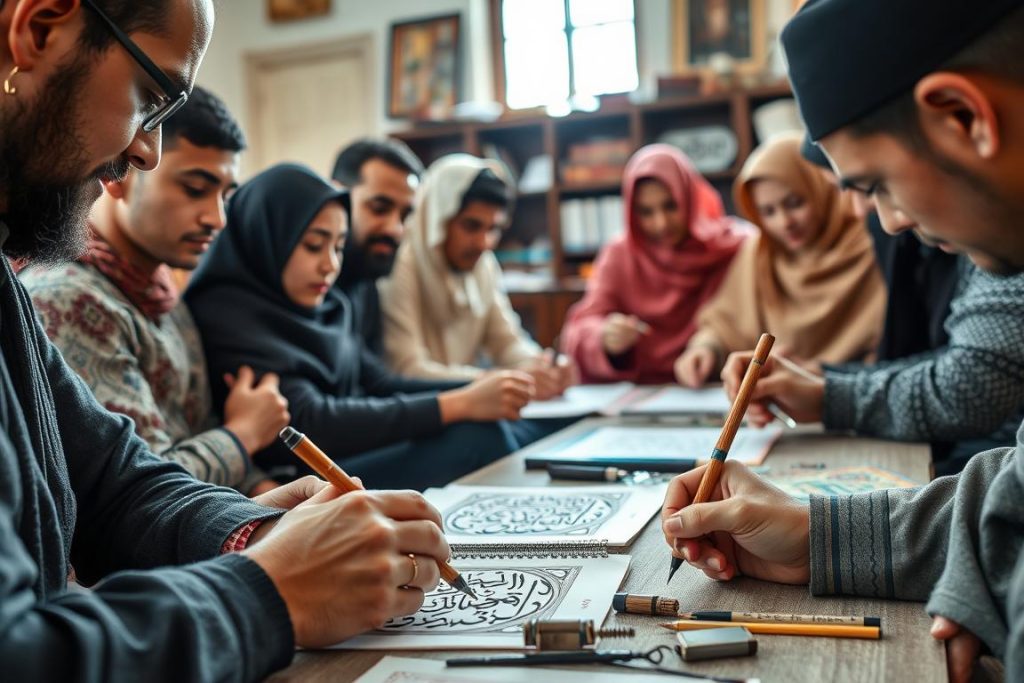
Workshops and educational programs have proliferated worldwide, allowing new generations to learn traditional calligraphic techniques. These range from intensive traditional training with master calligraphers to introductory courses for hobbyists and art students. Many cultural institutions offer calligraphy classes as part of their community outreach and cultural exchange initiatives.
Conclusion
Islamic art calligraphy stands as a testament to the enduring power of written language transformed into visual art. From its origins in 7th-century Arabia to its contemporary global presence, calligraphy continues to evolve while maintaining its essential connection to Islamic spiritual and cultural values.
The beauty of Islamic calligraphy lies not only in its aesthetic appeal but in its ability to communicate across time and cultural boundaries. As both a sacred tradition and a living art form, it invites continued exploration, appreciation, and practice in our increasingly visual world.

Discover the Art of Islamic Calligraphy
Join our online workshop to learn traditional techniques from master calligraphers. Perfect for beginners and experienced artists alike.
Register for WorkshopBring Islamic Calligraphy Into Your Home
Explore our collection of authentic calligraphy art pieces created by skilled artists using traditional techniques.
Explore Calligraphy CollectionContinue Your Journey
Explore our curated resources to deepen your understanding of Islamic calligraphy history, techniques, and contemporary applications.
Discover More Resources