



Teaching the Quran to young minds is key to their spiritual growth. It’s important to start teaching Islamic values early. This helps them grow in a positive way.
Guiding our children spiritually can be inspiring. We can make quran lessons for kids fun and interactive. This helps them connect with their faith more deeply.
We want to help parents teach the Quran at home. We aim to create a supportive space. This space helps children build a strong Islamic education base.
Key Takeaways
- Creating a conducive learning environment for kids
- Making quran lessons engaging and interactive
- Incorporating inspirational stories into islamic education
- Setting achievable goals for children’s quran learning
- Leading by example in practicing Islamic values
Understanding the Importance of Quran Education
Quran education is more than just reciting words. It’s about grasping and using its teachings every day. By teaching the Quran to kids, we help them understand their faith deeply and how to apply it in life.
The Spiritual Significance
The Quran guides Muslims spiritually. It teaches us to live with kindness, fairness, and mercy. Teaching children the Quran helps them see the spiritual value of their faith. It also strengthens their bond with Allah.
Building a Strong Foundation
Quran education is key for a child’s spiritual growth. Through quran memorization for kids, they form a deep connection with the divine text. This understanding is vital for their moral and ethical development.
Connecting Faith with Daily Life
The Quran’s teachings cover all parts of life, not just religious acts. Learning the Quran helps kids see how to live its teachings every day. Online quran classes for kids make this connection clear.
By starting children’s quran learning early, we foster a lifelong bond with the Quran. This enriches their spiritual journey and guides them towards a path of righteousness and compassion.
Choosing the Right Methodology for Teaching
Teaching the Quran to kids is a big responsibility. We must find the right mix of old and new teaching methods. This keeps kids interested and learning well.
Interactive Learning Approaches
Interactive learning is key to keeping kids hooked on Quran studies. Interactive Quran games and multimedia make learning fun and effective. For example, apps that teach tajweed through quizzes help kids learn and remember better.
Some great interactive ways include:
- Using videos and animations to explain tough ideas
- Games that teach Quran words and stories
- Group activities that boost teamwork and discussion
“The way to get started is to quit talking and begin doing.” –
These methods make learning fun and lively.
Traditional vs. Modern Techniques
Traditional methods like recitation and tajweed classes are essential. But, adding modern tools like digital resources can make learning better. These tools help kids learn in new and exciting ways.
| Method | Traditional | Modern |
|---|---|---|
| Recitation Practice | Face-to-face classes | Online recitation apps |
| Tajweed Learning | Textbook-based learning | Interactive multimedia resources |
By mixing old and new, we can offer a full and engaging Quran education for kids.
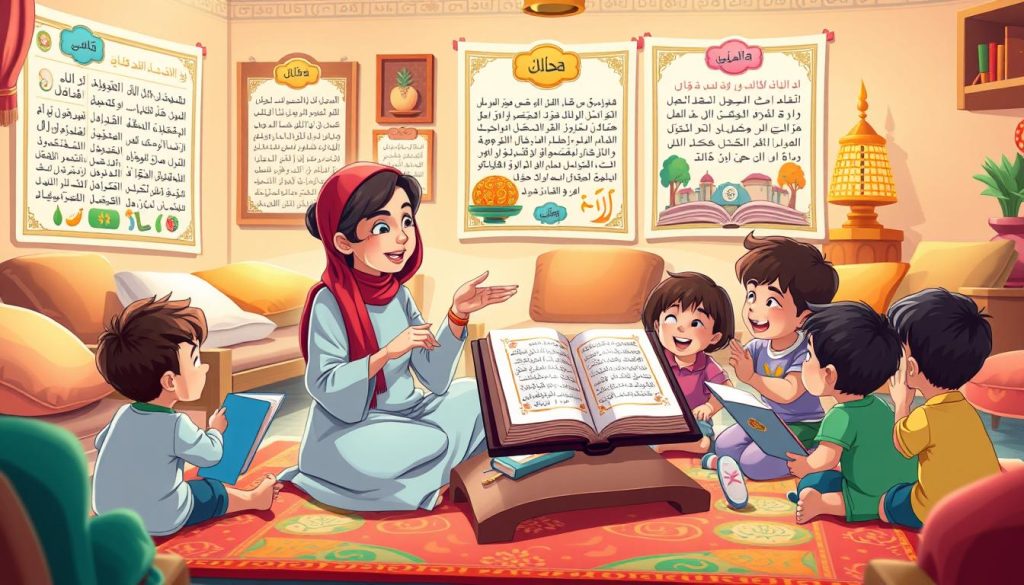
Creating a Positive Learning Environment
We think a supportive atmosphere is key for kids learning the Quran. A well-organised space makes learning better and helps them connect more with the Quran.
The Role of a Comfortable Space
A quiet and comfy spot is crucial for learning. We suggest setting aside a special area for Quran study. This area should be free from distractions, so kids can focus.
Key elements of a comfortable space include:
- Quiet and peaceful atmosphere
- Comfortable seating and good lighting
- Minimal distractions

Encouragement and Motivation
Encouragement and motivation are important for kids to stay interested in learning the Quran. We recommend giving regular praise and rewards for their achievements.
Effective ways to encourage children include:
- Regular positive feedback
- Setting achievable goals and rewarding progress
- Celebrating their successes
Establishing a Routine
Having a regular routine is vital for steady progress in Quran learning. We advise picking a specific time and day for Quran study. This makes it a habit.
| Benefits of a Routine | Tips for Establishing a Routine |
|---|---|
| Consistency in learning | Set a specific time and day |
| Improved retention | Start with small, achievable sessions |
| Develops discipline | Be consistent and patient |
By using these strategies, we can make a positive learning space. This supports kids’ Quran education and helps them love learning for life.
Tailoring Lessons to Different Ages
Teaching the Quran to children of all ages is key. As they grow, their minds and spirits change. This means we must adjust how we teach them.
Activities for Young Children
Young kids need interactive and engaging activities. We can use games, stories, and pictures to keep them interested. For example, we can make a “Quranic Alphabet” chart to help them learn Arabic letters.
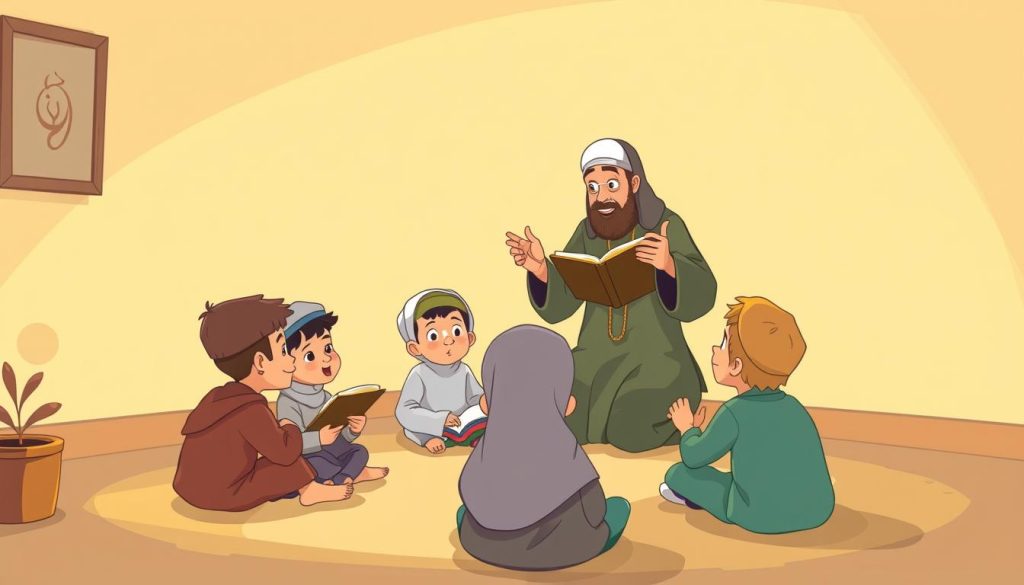
We can make learning fun with games and activities. This helps kids enjoy learning the Quran. It sets a strong foundation for their spiritual journey.
Engaging Pre-teens
Pre-teens can handle more complex Quran discussions. We can use online Quran classes for interactive learning. This lets them see how the Quran applies to their lives.
| Age Group | Learning Activities | Objectives |
|---|---|---|
| Young Children | Recitation games, storytelling | Foster love for Quran, basic understanding |
| Pre-teens | Complex discussions, online classes | Deeper understanding, application in daily life |
| Teenagers | In-depth analysis, historical context | Critical thinking, spiritual growth |
Supporting Teenagers’ Understanding
Teenagers can dive into Islamic laws and the Quran’s history. By studying the Quran’s stories and teachings, they develop critical thinking skills. This gives them a deeper understanding of their faith.
By adjusting our teaching for each age, we create a supportive and engaging learning environment. This environment helps kids grow spiritually and love the Quran for life.
Incorporating Stories from the Quran
Quranic stories are more than just history. They are lessons that shape young minds. By teaching these stories, we help children grasp the moral and spiritual teachings of Islam.

Lessons Through Narratives
Stories from the Quran teach complex morals in a fun way. For example, the tale of Prophet Yusuf (Joseph) teaches patience, forgiveness, and faithfulness. It shows how to stay strong when things get tough.
“And, the story of Yusuf and his brothers is full of lessons for those who seek to learn.” – Quran 12:7
Through these stories, kids learn about Islamic values. They see how these values work in real life.
Engaging Children’s Imagination
Quranic stories grab kids’ attention, making lessons stick. By using stories, we make learning fun and memorable. We can make these tales come alive with vivid descriptions and pauses.
- Use pictures or videos to make stories more engaging.
- Ask kids to imagine themselves in the story, linking it to their lives.
- Discuss with open-ended questions to spark thought and conversation.
Moral Teachings Embedded in Stories
The Quran’s stories are packed with moral lessons. They help kids know what’s right and wrong. For instance, the story of Prophet Musa (Moses) and the Pharaoh teaches about justice and humility.
| Quranic Story | Moral Lesson |
|---|---|
| Prophet Yusuf (Joseph) | Patience and forgiveness |
| Prophet Musa (Moses) and the Pharaoh | Standing up for justice, humility |
| Prophet Ayub (Job) | Perseverance and trust in Allah |
By diving into these stories, we guide kids to develop a strong moral compass. They gain a deeper understanding of Islamic teachings.
Using Technology as an Educational Tool
Technology has changed how kids learn the Quran, making it more fun and easy. We can use digital tools to make learning more engaging and effective for young students.
Apps and Online Resources
Many apps and online platforms help kids learn the Quran. They offer features like:
- Interactive tajweed lessons
- Quran recitation practice with audio feedback
- Memorization tools with repetition and tracking features
Popular online platforms offer online Quran classes for kids. These classes are taught by qualified teachers and include interactive elements. This makes learning more fun.
Multimedia Content
Videos and animations can make learning more interesting. They help explain complex ideas in a simple way. We can use multimedia to:
- Explain the historical context of Quranic stories
- Illustrate the application of Quranic teachings in daily life
- Provide visual aids for memorization and understanding
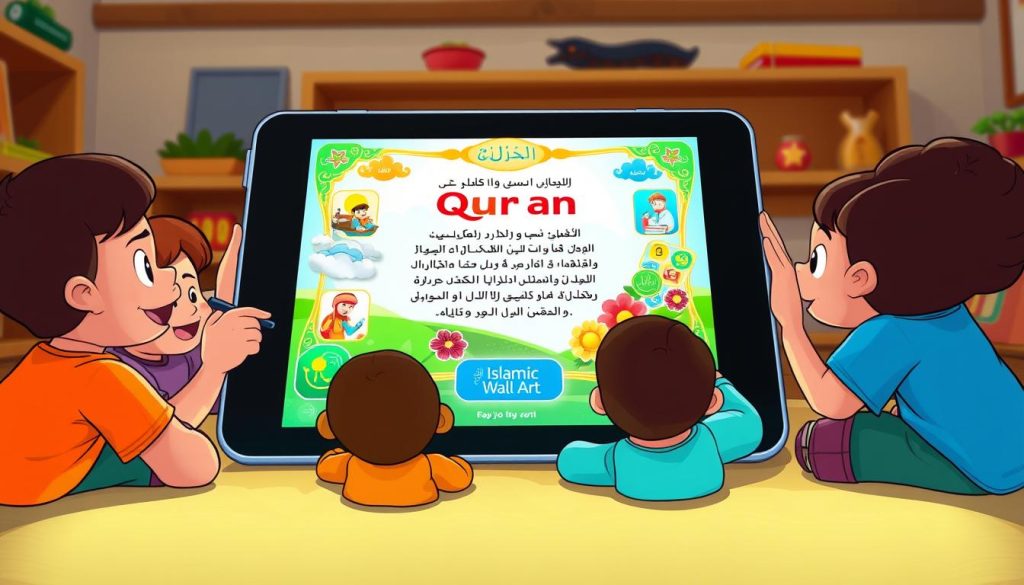
Balancing Screen Time
Technology has many benefits, but we need to balance it with other learning activities. It’s important to set guidelines. This ensures technology use is not too much and supports traditional learning.
| Activity | Recommended Duration | Benefits |
|---|---|---|
| Quran App Usage | 20-30 minutes per session | Improved tajweed, memorization, and understanding |
| Online Quran Classes | 1-2 hours per week | Personalized instruction, interactive learning |
| Multimedia Content | 15-20 minutes per session | Enhanced engagement, visual learning |
By using technology wisely, we can make Quran education more engaging and effective for kids.
Encouraging Memorisation Techniques
We think memorising the Quran can be fun and rewarding for kids. The right methods make it enjoyable. It helps them connect deeply with their faith.
Effective Tools for Memorisation
There are many tools to make memorising the Quran fun. Flashcards with verses and translations are great. Recitation apps and online platforms also offer interactive learning.
Some popular tools include:
- Flashcards with Quranic verses
- Recitation apps like ‘Quran Majeed’
- Online Quran learning platforms
Fun Memorisation Games
Gaming can make memorising the Quran fun and interactive. We can use games to test kids’ knowledge of Quranic verses. For example:
| Game | Description | Age Group |
|---|---|---|
| Quranic Verse Matching | A game where children match verses with their translations | 6-10 years |
| Recitation Challenge | A competition where children recite verses accurately | 8-12 years |
| Story Sequencing | Children sequence stories from the Quran in the correct order | 7-11 years |
Setting Realistic Goals
Setting achievable goals is key to keeping kids motivated. Start with small targets and gradually increase the difficulty. This builds confidence and reinforces learning.
Tips for Setting Goals:
- Begin with short surahs or verses
- Increase the length and complexity over time
- Regularly review and adjust goals based on progress
By using effective tools, fun games, and realistic goals, we can create a supportive environment. This helps kids memorise the Quran.
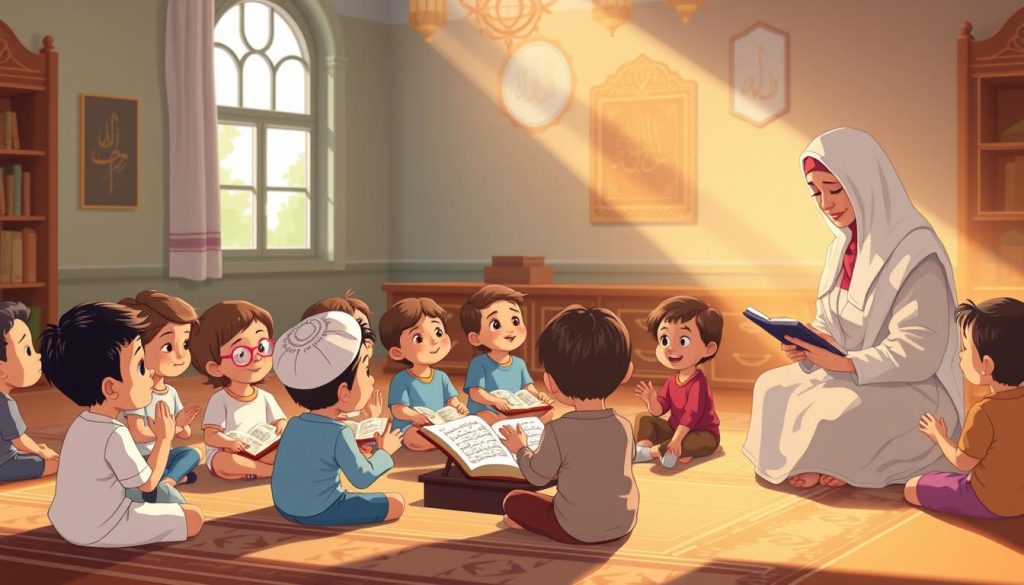
Involving the Family in Learning
Getting the family involved in Quran learning makes a great space for spiritual growth. When families join in, kids tend to grasp Islamic values better.
Family Quran Study Sessions
Setting up regular family Quran study times is a great way to bond spiritually. These sessions boost understanding and family ties. It’s smart to pick a weekly time for this.
In these sessions, we can dive into the Quran’s teachings and history. This shared learning is very rewarding for everyone.
Cultivating a Supportive Community
A supportive community is key for a child’s spiritual growth. Family involvement in Quran learning builds a supportive space. This support greatly improves a child’s learning.
We can also reach out to other families with similar values. This wider community offers more support and resources.
Encouraging Discussion
Talking about the Quran’s teachings deepens understanding and application of Islamic values. Family discussions help kids see how the Quran applies to their lives.
Creating a safe space for these discussions strengthens our bond with the Quran. It boosts knowledge and spiritual practice.
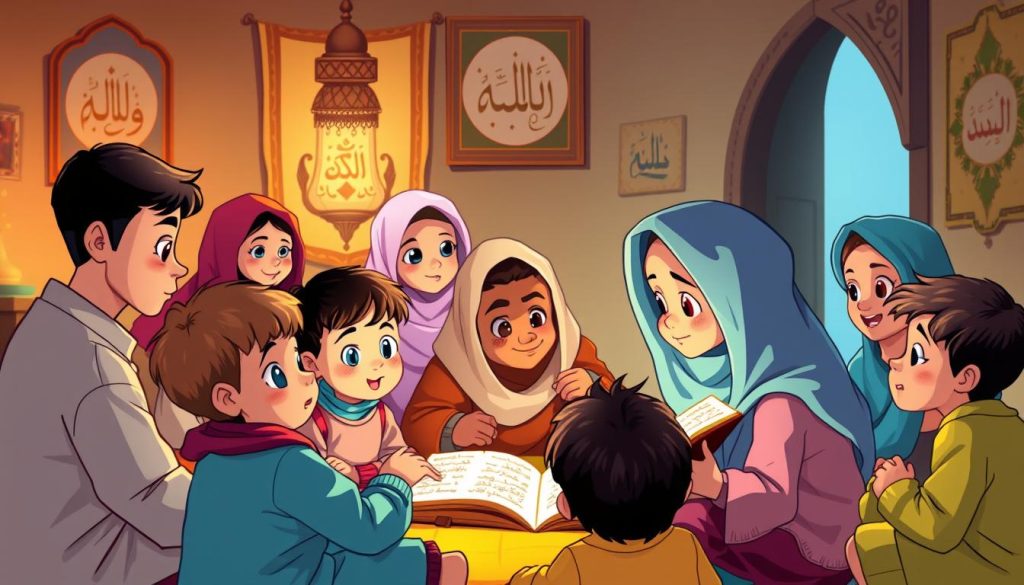
Family involvement in Quran learning creates a supportive space for spiritual growth. This approach deeply impacts a child’s grasp and use of Islamic values.
Monitoring Progress and Celebration
Teaching Quran to children is a journey. We must watch their progress and celebrate their wins. This keeps them motivated and interested. By using good ways to check their progress, we see how they’re doing in memorizing the Quran.
Effective Assessment Methods
We use tests and quizzes to check their understanding. These tests help them learn more. They make sure they know the Quran well.
Achievements and Milestones
It’s important to celebrate every small win. This makes them feel proud and keeps them wanting to learn more. It shows them the value of studying the Quran.
Lifelong Learning
We want them to love learning the Quran forever. By making it fun and rewarding, we help them grow spiritually. This journey of learning is lifelong.
FAQ
What are the best ways to teach the Quran to children?
Mix traditional and modern teaching methods. Use interactive learning, online classes, and tajweed classes. This makes learning fun and engaging.
How can I make Quran education more engaging for my child?
Use stories from the Quran and multimedia content. Make memorisation fun with games and activities. This makes learning the Quran enjoyable.
What role does technology play in Quran education?
Technology is a great tool for learning the Quran. It offers apps, online classes, and multimedia content. But, remember to balance screen time with other activities.
How can I encourage my child to memorise the Quran?
Use flashcards and recitation apps. Make memorisation fun with games. Set achievable goals to keep them motivated.
Why is it essential to involve the family in Quran learning?
Family involvement strengthens bonds and creates a supportive community. It encourages discussion and deepens understanding of Islamic values.
How can I monitor my child’s progress in Quran education?
Use regular recitation practice and quizzes. This helps you see how they’re doing and where they need to improve.
What are some effective ways to teach Quran recitation to children?
Practice recitation often and use online resources. Games and activities that focus on correct pronunciation and tajweed are also helpful.
How can I create a positive learning environment for my child to learn the Quran?
Make a comfortable learning space. Provide encouragement and motivation. Establish a regular routine to support their learning.