Islamic wall art with Quranic verses can make your living space peaceful and meaningful. The verse “Wamin Ayatihi” is special for its spiritual value and beauty. It is a favourite among those who love Islamic art.
Choosing wall art that shows your faith can make your home look remarkable and uplifting. Islamic Wall Arts has a wide range of products. They mix traditional Islamic art with modern designs beautifully.
Understanding Quranic Verses in Wall Art: Wamin Ayatihi and Beyond
Choosing wall art that shows your faith can make your home look remarkable and uplifting. Islamic Wall Arts has a wide range of products. They mix traditional Islamic art with modern designs beautifully.
Key Takeaways
- Quranic verses can add a meaningful touch to your home decor.
- “Wamin Ayatihi” is a significant verse in Islamic art.
- Islamic wall art can create a serene and spiritual environment.
- Islamic Wall Arts offers a range of beautiful and meaningful products.
- Incorporating Islamic art can enhance your living space.
The Sacred Beauty of Quranic Verses in Home Décor
Surrounding yourself with Quranic verses can turn your home into a spiritual haven. Adding
Quranic verses wall decor makes your space beautiful and reminds you of your faith.
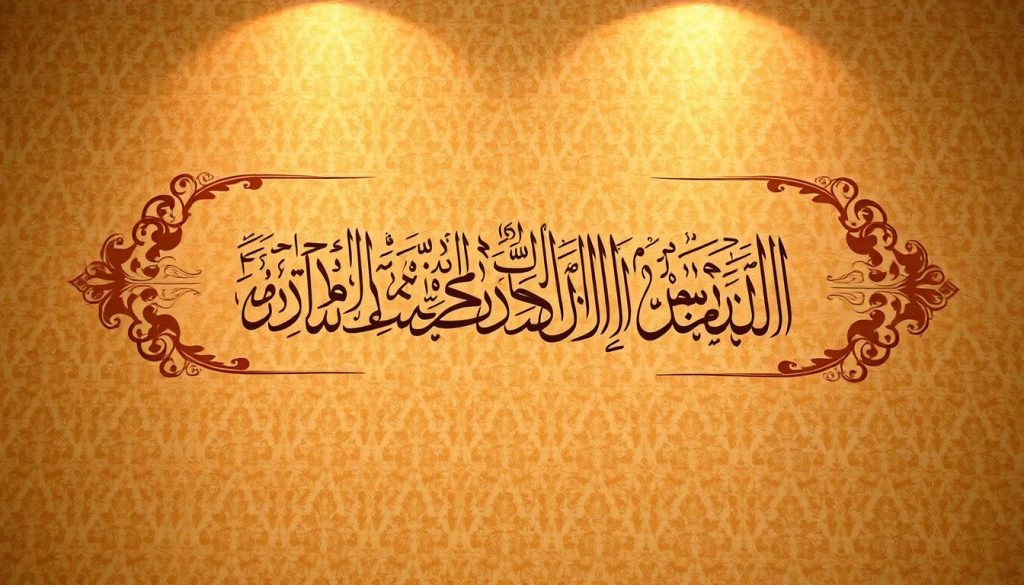
The Spiritual Significance of Surrounding Yourself with Divine Words
Putting Quranic verses in your decor keeps divine words central to your life. It brings peace and calm, perfect for reflection and prayer. Choosing
Islamic art home decor does more than decorate; it nurtures your spiritual growth.
How Quranic Art Transforms Living Spaces
Quranic art adds spiritual depth to your spaces. The calligraphy and designs in
Quranic verses wall decor enhance any room’s look. It also sparks interesting conversations about Islamic art with visitors.
Thoughtfully placing Quranic art balances your home’s beauty and spirituality, making it a unique and special place.
Understanding Quranic Verses in Wall Art: Wamin Ayatihi and Beyond
Exploring Quranic verses in home décor, ‘Wamin Ayatihi’ stands out. It’s filled with deep meaning and importance. Seeing this verse in
Islamic wall art can deepen your appreciation for its beauty and spiritual value.
The Meaning and Context of “Wamin Ayatihi”
‘Wamin Ayatihi’ means “And among His signs” in English. It usually comes before a verse that shows one of Allah’s miracles. This phrase is from Surah Ar-Rum (Chapter 30, Verse 21), talking about mates from the same soul. It highlights the value of companionship and love.
This verse is often used in Islamic art. It shows Allah’s oneness and how we are all connected. The Quran’s ‘Wamin Ayatihi’ context encourages us to think about Allah’s signs in creation and nature.
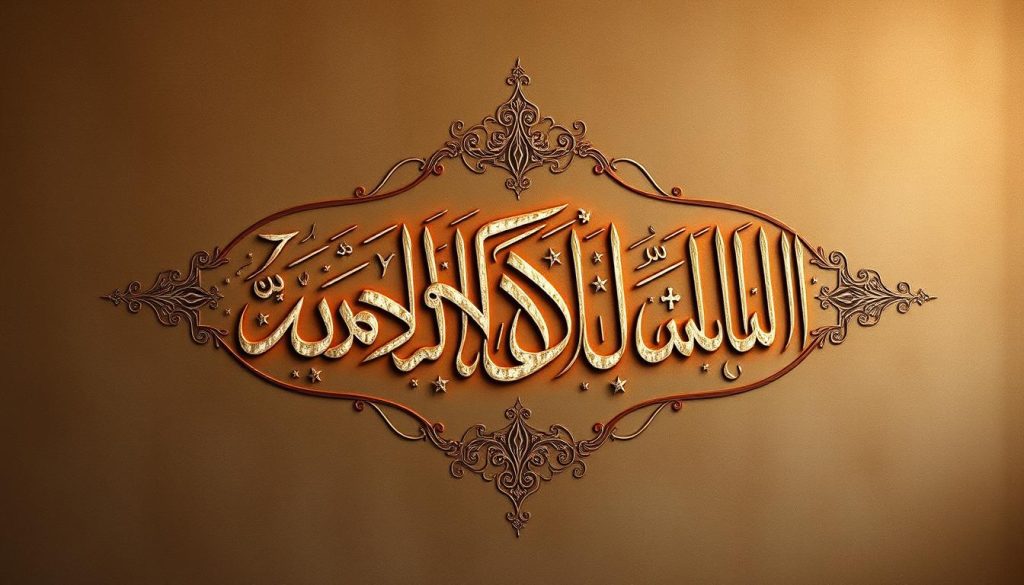
Why This Verse Resonates in Contemporary Islamic Homes
In today’s Islamic homes, ‘Wamin Ayatihi’ speaks to unity, love, and Allah’s oneness. It reminds us of the importance of family and the divine love in all creation.
The verse’s beauty in wall art comes from its calligraphy. It can be traditional or modern, making it a favourite for those wanting meaningful décor.
| Aspect |
Significance |
Aesthetic Appeal |
| Spiritual Significance |
Reminds of Allah’s oneness and creation |
Varied calligraphic styles |
| Family and Love |
Emphasises companionship and unity |
Ornate and beautiful representations |
| Daily Reminder |
Serves as a constant reminder of faith |
Central piece in home décor |
By understanding ‘Wamin Ayatihi,’ you can better understand its meaning in
Islamic wall art. This enriches your space with beauty and significance.
The Art of Quranic Calligraphy: Styles and Traditions
In Islamic art,
Quranic calligraphy is a treasured tradition. It goes beyond decoration; it’s a way to share the Quran’s message with beauty and grace.
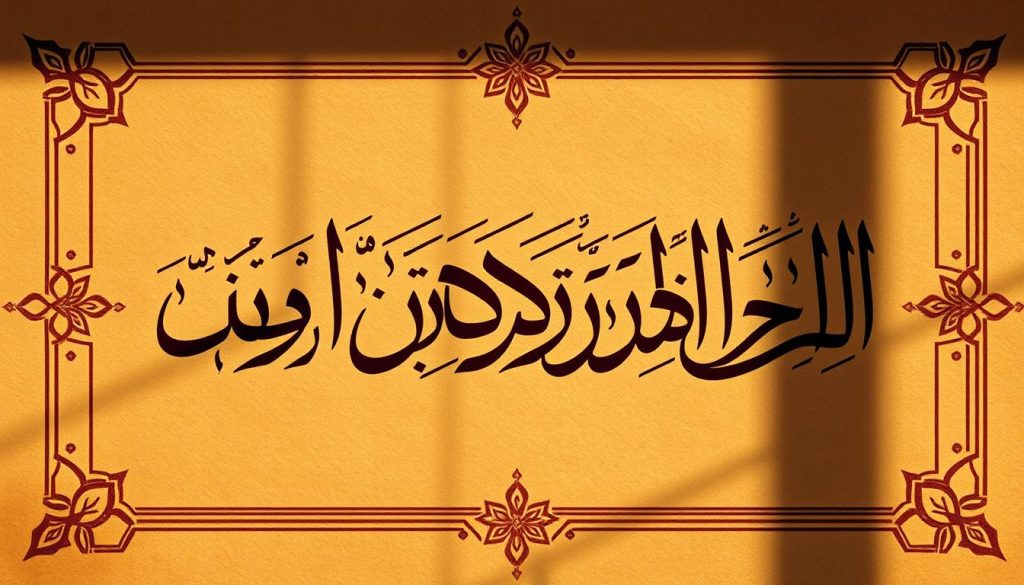
Classical Arabic Calligraphy Styles Used in Quranic Art
Classical Arabic calligraphy is known for its detailed designs and exactness. Famous styles in Quranic art include:
- Kufic: This script is old and loved for its geometric shapes.
- Naskh: It’s clear and easy to read, making it great for Quranic texts.
- Thuluth: Its big, elegant letters are perfect for headings.
These styles have been honed for centuries. Each one adds to the beauty of
Quranic calligraphy.
Modern Interpretations and Innovations in Quranic Calligraphy
Modern artists are mixing old styles with new ideas. This creates a fresh look at Islamic art.
New trends include:
- Abstract Calligraphy: Artists make abstract pieces that respect traditional calligraphy.
- Digital Calligraphy: Digital tools make calligraphers more precise and creative.
- Experimental Media: Using new materials and media gives Quranic calligraphy a modern edge.
These changes keep the art alive and make it more appealing to everyone.
Popular Quranic Verses for Home Display
Many Muslims display Quranic verses in their homes to bring divine blessings and peace. This practice, using
Islamic wall art with Quranic verses, is popular. It’s not just for looks but also its spiritual value.
The Quran has verses that offer comfort, guidance, and solace. Some verses are more popular for home display. They have deep meanings and bring a sense of peace.
Ayatul Kursi: The Throne Verse
Ayatul Kursi, or the Throne Verse, is highly revered. It’s in Surah Al-Baqarah (2:255) and talks about Allah’s power and sovereignty. Homes with Ayatul Kursi in
Quranic verses wall hangings are believed to be protected and blessed.
“Allah! There is no god but He, the Living, the Self-subsisting, Eternal. No slumber can seize Him, nor sleep. His are all things in the heavens and on earth. Who is there that can intercede in His presence except as He permits? He knows what is before, after, or behind them. Nor shall they compass aught of His knowledge except as He wills. His throne extends over the heavens and the earth, and He feels no fatigue in guarding and preserving them for He is the Most High, the Supreme.”
Surah Al-Ikhlas: Purity of Faith
Surah Al-Ikhlas, the 112th chapter, declares God’s oneness. It’s a key part of Islamic faith, showing Allah’s unity and uniqueness. Homes with Surah Al-Ikhlas in their décor reaffirm faith. It’s chosen for its simplicity and profound meaning.
| Surah |
Verse |
Significance |
| Al-Baqarah |
Ayatul Kursi (2:255) |
Protection and Blessings |
| Al-Ikhlas |
112:1-4 |
Purity of Faith |
| Various |
Bismillah |
Beginning with Allah’s Name |
Bismillah: Beginning with Allah’s Name
“Bismillah” or “Bismillah ir-Rahman ir-Rahim” is a powerful invocation. Muslims use it to begin actions, seeking blessings and guidance. Adding Bismillah to
Islamic wall art reminds one to start each day with Allah’s remembrance. It fosters gratitude and humility.
Choosing Quranic verses for home display is important. Please take a look at the meaning and significance of each verse. Ayatul Kursi, Surah Al-Ikhlas, or Bismillah each offer unique spiritual benefits. They enhance the home environment with peace and divine presence.
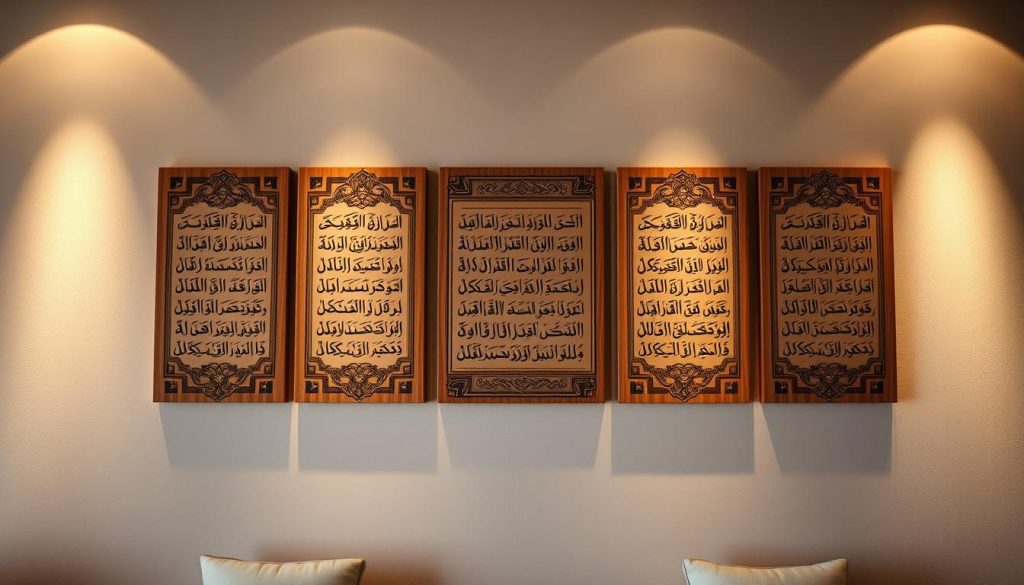
Selecting the Perfect Quranic Wall Art for Your Home
Choosing the right Quranic wall art is key to adding Islamic art to your home. It should match your style and enhance your home’s look. It also needs to carry spiritual meaning.
Quranic wall art can make your home peaceful and meaningful. Consider your home’s style and how the art will fit in.
Matching Art to Your Interior Design Style
When picking Quranic wall art, think about your home’s design. Modern homes look great with simple, clean designs. Traditional homes might prefer more detailed calligraphy and frames.
Key considerations include:
- The colour scheme of your home
- The style of your furniture
- The overall ambience you wish to create
Considerations for Size, Placement and Lighting
The art’s size should match the wall. A big piece can stand out in a big room, but a small piece is better for smaller spaces.
| Size |
Placement |
Lighting |
| Large: Statement piece |
Main living areas or entrance halls |
Natural or spotlighting to highlight |
| Small: Complementary piece |
Corridors, bedrooms, or study areas |
Soft ambient lighting for a serene effect |
Good lighting makes Quranic wall art stand out. Think about how light changes the art’s look during the day.
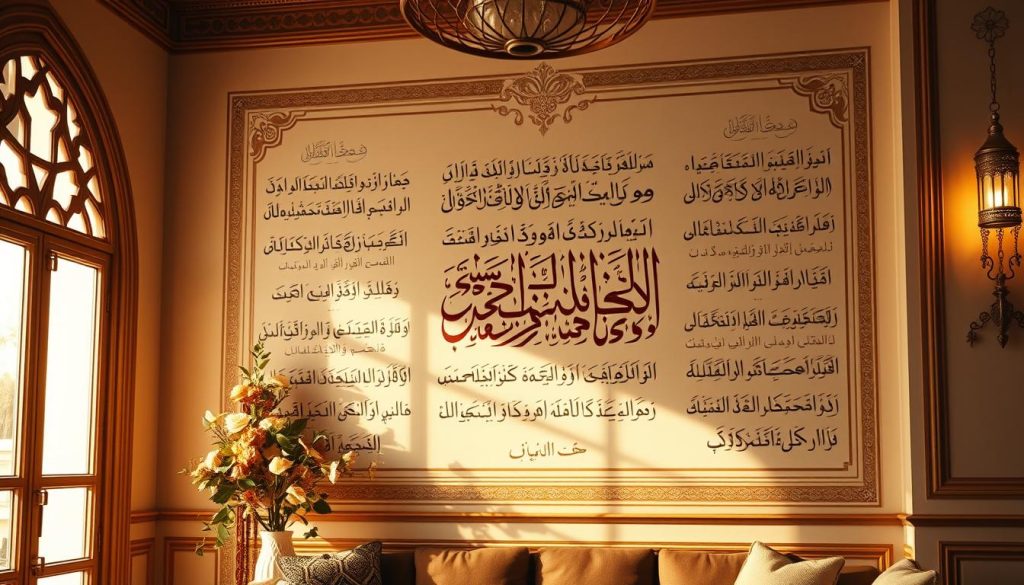
The Craftsmanship Behind Islamic Wall Art’ Collections
Exploring Islamic wall art reveals a mix of tradition and modernity. It combines old techniques with new methods. This blend creates beautiful, meaningful pieces.
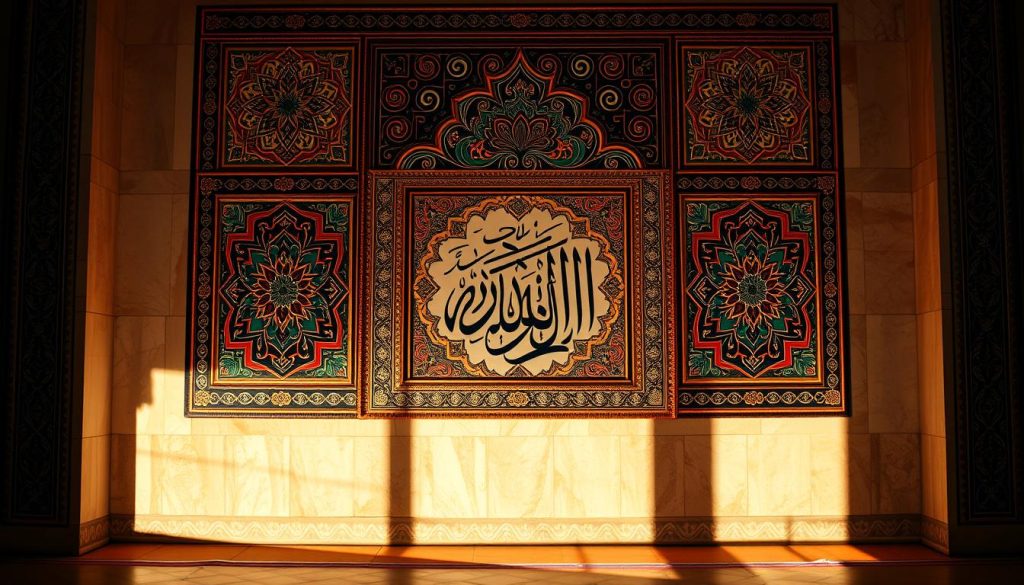
Traditional Techniques Meet Modern Production
Islamic wall art starts with ancient techniques. Skilled artisans use these methods to bring Quranic verses to life. Yet, modern techniques are also used to make the art appealing today.
This mix of old and new makes the art both timeless and modern.
Key traditional techniques include:
- Handwritten Quranic calligraphy
- Intricate geometric patterns
- Use of natural materials such as wood and parchment
Artisans use modern tools like digital printing and laser cutting. These tools improve the artwork’s precision and durability.
Materials and Finishes: What Makes Quality Islamic Wall Art
The quality of Islamic wall art depends on materials and finishes. High-quality materials make the art last longer and look better. Common materials are canvas, wood, and metal, each with its own look.
The finish greatly affects the artwork’s look. For example, a matte finish can make calligraphy stand out, while a glossy finish can make colours pop.
When you choose Islamic wall art, please think about the materials and finishes. A well-made piece decorates your space and shows your faith and heritage.
Personalised Quranic Verses: Creating Bespoke Islamic Art
Personalised Quranic verses let you blend your faith into your home décor with custom wall hangings. This unique approach to Islamic art strengthens your bond with divine words.
Commissioning Custom Quranic Calligraphy
Getting custom Quranic calligraphy is a chance to own stunning and meaningful art. You pick verses that speak to you, making the art beautiful and spiritually rich. You work with skilled calligraphers to create your piece in various styles.
This results in
bespoke Islamic art that shows your taste and beliefs. It’s perfect for decorating your home or finding a unique gift. Custom Quranic calligraphy is a thoughtful and special choice.
Meaningful Gifts for Special Occasions
Personalised Quranic verses are
exceptional gifts for weddings, births, or anniversaries. They show deep thought and spirituality, making them very special. By picking a verse that fits the occasion or the person, you create a lovely and meaningful gift.
These art pieces can become treasured family heirlooms, passed down for generations. They remind us of the love and care behind the gift, making them a unique way to celebrate.
Incorporating Islamic Wall Art in Different Rooms
Islamic wall art can make your home serene and elegant. It’s perfect for entrance halls and bedrooms. By choosing Quranic verses wisely, you can make your space inspiring and reflective of your faith.
Entrance Halls: First Impressions with Bismillah
The entrance hall is where guests first see your home. A
Bismillah calligraphy piece can make it welcoming. This verse, “In the name of Allah, the most compassionate, the most merciful,” sets a positive tone.
Living Spaces: Conversation Pieces and Daily Reminders
In living spaces, Islamic wall art can spark conversations and remind you of your faith. A beautiful
Ayat al-Kursi piece is both aesthetically pleasing and spiritually significant. It makes your living room more than just a room.
Bedrooms: Peaceful Verses for Restful Spaces
Bedrooms are for rest and relaxation. Islamic wall art can make them peaceful. A calm piece with
Surah Al-Falaq or
Surah An-Nas can help you sleep better and feel protected.
| Room |
Suggested Verse |
Atmosphere Created |
| Entrance Hall |
Bismillah |
Welcoming and Reflective |
| Living Space |
Ayat al-Kursi |
Inspiring and Conversational |
| Bedroom |
Surah Al-Falaq or Surah An-Nas |
Peaceful and Soothing |
Caring for Your Quranic Wall Art: Preservation Tips
Looking after your Quranic wall art is key to keeping its beauty and spiritual value. It’s a lovely part of your home and needs care to last long.
Cleaning and Maintenance Recommendations
For your wall art to stay perfect, clean it gently. Use a soft, dry cloth to dust it often. If you need a deeper clean, dampen the cloth with distilled water. But, don’t use tap water as it might harm the art.
Best Practices for Maintenance:
| Material |
Cleaning Method |
Frequency |
| Canvas |
Gentle dusting with a soft cloth |
Weekly |
| Wood |
Damp cloth with distilled water |
Monthly |
| Metal |
Dry cloth, avoid moisture |
Bi-annually |
Protecting Art from Environmental Factors and
Sunlight, moisture, and extreme temperatures can harm your wall art. Think about where you place it, and stay away from direct sunlight and humid areas.
By following these tips, your
Islamic wall art will stay beautiful for many years. It will continue to inspire and comfort you in your home.
The Growing Popularity of Islamic Wall Art in British Homes
Islamic wall art is becoming more popular in British homes. It shows a deeper connection to faith and culture. It’s not just about looks; it’s about making spaces that feel spiritually meaningful.
You’re part of a growing group that sees the beauty and meaning in Islamic art. By displaying Quranic verses, you make your home more beautiful. You also create a space for reflection and peace.
Celebrating Faith Through Artistic Expression
Islamic wall art lets you show your faith beautifully. The detailed calligraphy and designs remind you of your beliefs, and they bring calm and serenity to your home.
Artistic expression through Islamic wall art connects you to your faith every day. Whether it’s the stunning calligraphy of Ayatul Kursi or the peaceful Surah Al-Ikhlas, each piece shows the beauty of Islamic art.
Creating Inclusive Spaces with Beautiful Messaging
Adding Islamic wall art to your home décor makes it inclusive. The messages of peace, love, and compassion in Quranic verses can touch people from all backgrounds.
By choosing Islamic wall art, you’re not just decorating. You’re creating a welcoming space. The messages in these art pieces can start conversations. They help bridge cultural gaps and promote respect.
Embracing Islamic wall art is a way to share your faith and culture. It enriches your home with meaningful décor that touches the heart.
Conclusion: Embracing Divine Words in Your Living Space
Exploring Quranic verses in wall art shows how “Wamin Ayatihi” adds spirituality and beauty to your Quranic home. Adding Quranic
verses wall hangings to your decor is more than looks. It’s about making a space that reflects your faith and values.
Choosing Islamic wall art that speaks to you does more than beautify your home. It surrounds you with divine reminders. From the detailed calligraphy of Ayatul Kursi to the calm beauty of Surah Al-Ikhlas, each piece inspires and comforts.
Think about how
Quranic verses and wall hangings can enrich your daily life. Let these verses turn your home into a peaceful sanctuary of reflection.
FAQ
What is the significance of “Wamin Ayatihi” in Islamic wall art?
“Wamin Ayatihi” is a verse from the Quran. It shows Allah’s creation and power. It’s used in Islamic wall art to inspire and help grow spiritually.
How do I choose the right Quranic verse for my home decor?
Choose a verse that means a lot to you and fits your home’s look. Think about the verse’s meaning and how it looks in different calligraphy styles. Islamic Wall Arts has many options to choose from.
What are the different styles of Quranic calligraphy available?
Quranic calligraphy has many styles, like Kufic, Diwani, and Naskh. There are also modern styles that mix old and new. Islamic Wall Arts has a wide range to match your taste.
Can I customise my Quranic wall art with a specific verse or design?
Yes, Islamic Wall Arts lets you create custom calligraphy. You can make a piece that’s just right for you.
How do I care for my Quranic wall art to ensure its longevity?
To keep your wall art in good shape, don’t put it in direct sunlight or near water. Gently dust it with a soft cloth. If it needs a deeper clean, ask a professional.
What are some popular Quranic verses used in wall art?
Popular verses include Ayatul Kursi, Surah Al-Ikhlas, and Bismillah. They’re meaningful and look great. You can find them in many styles of Islamic Wall Art.
How can I incorporate Islamic wall art into different rooms in my home?
Use Islamic wall art to set the mood in each room. For example, Bismillah welcomes guests in the entrance halls. Choose calming verses for bedrooms to help you relax.
What materials and finishes are used in Islamic Wall Arts’ collections?
Islamic Wall Arts uses top-notch materials like handcrafted wood, metal, and canvas. These materials make the art durable and beautiful, and the right material and finish can make the artwork even more special.