



Did you know that kids who say Islamic prayers often keep their faith as adults? This shows how important it is to teach young Muslims sacred verses.
In today’s world, it’s key to connect kids with their faith. We think teaching them meaningful recitations early helps them stay faithful as they grow.
These short but powerful verses offer wisdom, protection, and guidance. Even the youngest can learn and use them in their daily lives. It’s incredible how these teachings are easy for kids to grasp.
Our guide covers essential prayers for Muslim kids. It explains their meanings, benefits, and how to teach them well. This is for parents, guardians, or teachers to help kids grow spiritually.
Let’s explore how these beautiful recitations can make everyday moments memorable. They help kids grow closer to their faith.
Key Takeaways
- Regular recitation of short surahs builds a lifelong spiritual foundation
- Islamic prayers provide wisdom, protection and guidance for children
- Simple verses are easily memorised even by young children
- Daily practice creates meaningful spiritual routines
- Teaching children prayers helps them develop a personal connection with Allah
- Parents and educators play a crucial role in spiritual education
The Spiritual Significance of Daily Recitations
Daily recitations of Quranic verses and duas are key in Islamic spiritual practice. They connect believers to their Creator. These moments of remembrance add divine presence and guidance to our lives.
Through these practices, we shape our spiritual identity. They strengthen our faith foundation.
The Prophet Muhammad ﷺ said: “The people of Paradise will not have any regrets except for those moments in which they were not engaged in the dhikr (remembrance) of Allaah.” This shows how important daily recitations are for our spiritual well-being.
The Benefits of Reciting Quranic Verses
Reciting Quranic verses regularly has many benefits. It makes us more mindful and strengthens our Islamic connection. It also offers comfort during tough times.
| Type of Recitation | Spiritual Benefit | Best Time | Emotional Impact |
| Morning Adhkar | Protection throughout the day | After Fajr prayer | Confidence and security |
| Short Surahs | Divine connection | During prayers | Peace and tranquillity |
| Evening Duas | Reflection and gratitude | After Maghrib | Contentment and closure |
| Bedtime Recitations | Protection during sleep | Before sleeping | Serenity and trust |
The Divine Connection Through Quranic Verses
Regularly engaging with Quranic verses builds a personal bond with Allah’s words. These verses guide and comfort us through life’s stages.
The Quran says: “Verily, in the remembrance of Allah do hearts find rest” (Quran 13:28). This verse highlights the unique peace recitation brings.
For children, early exposure to the Quran plants seeds of faith. Its melody appeals to young minds, making faith concepts accessible early on.
Daily recitation is a dialogue with our Creator that grows in meaning. The words we recite become part of our hearts, offering a spiritual anchor in life’s uncertainties.
Building Spiritual Resilience Through Regular Practice
Regular recitation of Quranic verses and duas builds spiritual strength. It helps us face life’s challenges with faith and confidence.
This spiritual resilience helps us process difficult emotions through faith. When faced with hardship, those who recite Allah’s words have divine wisdom to draw upon.
Daily recitations create spiritual milestones in our day. They remind us of our purpose and priorities. These pauses help us stay focused and not get lost in worldly concerns.
For British Muslims, this resilience is crucial in modern life. Regular recitation of short surahs and duas offers a portable sanctuary. It helps us stay connected to faith amidst busy lives and diverse environments.
By starting these practices early and keeping them up, we build a strong faith foundation. These familiar words become precious as we go through life’s different seasons.
Understanding Short Surahs and Duas in Islamic Tradition
The Islamic tradition values short surahs and duas as easy ways to connect with the divine. These brief texts are potent tools that help Muslims feel closer to Allah. They are perfect for both new and long-time Muslims, thanks to their simple yet deep meanings.

What Defines a “Short” Surah
In the Quran, short surahs have fewer verses. They are in the Quran’s final part, Juz’ Amma. Despite their length, they carry deep spiritual messages. This makes them perfect for memorisation and daily recitation.
The most popular short surahs include:
- Surah Al-Fatiha (The Opening) – 7 verses
- Surah Al-Ikhlas (Sincerity) – 4 verses
- Surah Al-Falaq (The Daybreak) – 5 verses
- Surah An-Nas (Mankind) – 6 verses
- Surah Al-Asr (Time) – 3 verses
These surahs are great for kids and new Muslims because they are easy to start with.
The Role of Duas in Muslim Devotion
Duas, or prayers, are key in Islamic prayers. They are personal talks with Allah. The Prophet Muhammad (peace be upon him) said, “Dua is worship” (Tirmidhi), showing their importance in faith.
Duas help believers thank Allah, ask for forgiveness, seek guidance, and protection. Unlike Quranic verses, many duas let people express their feelings and needs. This fosters a close spiritual bond.
Duas add to Quranic recitation by offering prayers for different life moments. They help Muslims deal with challenges or celebrate good times.
Historical Context and Importance
Teaching short surahs and duas has a long history in Islamic education. The Prophet Muhammad (peace be upon him) taught children seven short surahs early on. This tradition is still followed today in Muslim communities around the world.
For centuries, these texts have been the basis of Islamic education. They are often the first religious texts children memorise, and their simplicity makes them great for learning basic Islamic teachings.
Throughout history, scholars have gathered authentic duas from the Quran and Sunnah. Collections like Hisnul Muslim (Fortress of the Muslim) are key resources for daily Islamic prayers, showing how important these spiritual tools have always been in Muslim life.
Benefits of Incorporating Short Surahs and Duas in Daily Life
Adding short surahs and duas to our daily lives brings many benefits. They change us in profound ways. These verses feed our souls, calm our minds, and connect us with the Divine.
Spiritual Benefits and Rewards
The rewards of reciting short surahs and duas are huge in Allah’s eyes. The Prophet Muhammad (peace be upon him) shared many hadiths about these rewards. For example, saying Surah Al-Ikhlas three times is like reading one-third of the Quran.
These recitations are like spiritual money, earning us good deeds. Many people feel lighter and clearer after making these recitations a habit. This guidance is invaluable when we face challenging times.

Psychological and Emotional Well-being
Reading the Quran has many benefits for our minds. Studies show it can lower anxiety and stress. The sound of Arabic is calming, like mindfulness.
People of all ages who read these verses focus better and control their emotions. These verses teach us positive values. They help us face life’s challenges.
Many British Muslims start and end their day with these recitations. It helps them stay balanced in their busy lives. It’s like emotional bookends.
Building a Stronger Relationship with Allah
One significant benefit is getting closer to Allah. These daily talks change how we see the Divine, making Allah a loving presence in our lives.
By practising regularly, we learn to talk to Allah in all situations. We celebrate, seek comfort, and find guidance. One young person said, “Reciting these duas feels like talking to Allah directly.”
| Aspect of Life | Benefits of Regular Recitation | Example Practice | Reported Outcome |
| Spiritual Growth | Accumulation of rewards | Reciting Al-Ikhlas thrice daily | Equivalent to reading 1/3 of the Quran |
| Mental Health | Anxiety reduction | Morning and evening adhkar | Decreased stress levels |
| Emotional Balance | Improved regulation | Recitation during emotional triggers | Greater resilience |
| Divine Connection | Strengthened relationship | Consistent daily duas | Feeling of divine presence |
Essential Short Surahs for Daily Recitation
For British Muslims wanting to deepen their faith, certain short surahs are very helpful. These short chapters from the Quran are full of wisdom. They can change how we see Allah and don’t take much time to fit into our busy lives. These surahs are great for both new Muslims and those wanting to grow their practice of the Quran teachings.
Surah Al-Fatiha: The Opening
Known as “The Mother of the Quran,” Surah Al-Fatiha is the first chapter. It’s recited in every prayer, making it a key part of a Muslim’s daily life. It talks about Allah’s mercy, our need for guidance, and our complete trust in Him.
Its profound teachings make Al-Fatiha key for those on a spiritual journey.
Surah Al-Ikhlas: The Sincerity
Surah Al-Ikhlas, though short with only four verses, holds significant spiritual value. The Prophet Muhammad (peace be upon him) said it’s as valuable as one-third of the Quran. It clearly states Allah’s oneness, the heart of Islamic belief.
Powerful Short Surahs for Specific Needs
Some short surahs and duas in the Quran are special for tackling life’s challenges. They act as spiritual tools, offering guidance, protection, and comfort. Muslims use these verses when they face specific situations.
These short surahs are easy to memorise but have a significant impact. They help us deal with the needs of daily life. Let’s look at some of these powerful Quranic passages.
Ayatul Kursi: The Throne Verse for Protection
Ayatul Kursi is a key verse from Surah Al-Baqarah (2:255). It’s seen as the most potent protective verse. The Prophet Muhammad said it was the greatest verse revealed to him.
This verse talks about Allah’s power and knowledge. Many Muslims say it after prayers and before bed. It acts as a shield against harm. The Prophet said it protects us all night long.
| Surah | Length | Core Message | Recommended Times for Recitation | Special Virtue |
| Al-Fatiha | 7 verses | Seeking guidance and mercy | In every prayer, during supplications | Gateway to the Quran’s wisdom |
| Al-Ikhlas | 4 verses | Allah’s perfect oneness | After obligatory prayers, before sleep | Equal to one-third of the Quran |
| Al-Falaq | 5 verses | Protection from external evils | Morning, evening, before sleep | Spiritual shield against harm |
| An-Nas | 6 verses | Protection from internal whispers | Morning, evening, and during anxiety | Defence against negative thoughts |
| Al-Asr | 3 verses | Value of time and path to success | When meeting others, during transitions | Complete formula for salvation |
Surah Al-Kafirun: Affirming Faith
Surah Al-Kafirun is short but powerful. It highlights the difference between Islamic monotheism and other beliefs. It helps Muslims stay true to their faith while respecting others.
The Prophet Muhammad often recited this surah in the first rak’ah of the Sunnah prayer and in the witr prayer. It gives strength and clarity to those facing faith challenges.
Surah Al-Nasr: Gratitude for Victory
Surah Al-Nasr was revealed near the end of the Prophet’s life. It teaches us to be grateful for success. It reminds us that all victories come from Allah.
This surah helps us stay humble when we succeed. It’s about more than just worldly success. It’s about growing spiritually.
Surah Al-Masad: Overcoming Obstacles
Surah Al-Masad talks about opposition to Islam. But it teaches us to overcome obstacles in our faith. It shows that wealth and status can’t protect against divine guidance.
This surah reassures us to stand firm in our beliefs. It teaches that divine justice will prevail, even when things seem tough.
“Whoever recites Ayatul Kursi after every obligatory prayer, nothing will prevent them from entering Paradise except death.”
Reported in An-Nasa’i
Morning and Evening Duas for Protection
In Islamic tradition, morning and evening adhkar act as divine armour. They offer believers protection and blessings all day and night. These daily recitations create a spiritual shield, helping Muslims face life’s challenges with confidence and faith.
Today’s fast-paced world makes spiritual grounding essential. It provides stability in our lives.
Morning Adhkar: Starting the Day with Blessings
The morning adhkar gives us divine protection as we start each day. After Fajr prayer, we recite “Asbahna wa asbahal mulku lillah” (We have reached the morning, and the kingdom belongs to Allah). This acknowledges Allah’s sovereignty over all things.
For complete protection, we recommend saying “Bismillahilladhi la yadurru ma’asmihi shay’un fil-ardi wa la fis-sama'” (In the name of Allah, with whose name nothing on earth or in heaven can cause harm) three times. Many British Muslims teach this powerful supplication to children. It gives them confidence as they go to school.
Another key morning dua is “A’oodhu bi kalimatillahit-tammati min sharri ma khalaq” (I seek refuge in the perfect words of Allah from the evil of what He has created). These morning supplications bring calm and purpose, setting a positive tone for the day.
Evening Adhkar: Closing the Day with Remembrance
As daylight fades, evening adhkar mirrors the protection of morning. They create spiritual continuity throughout our day. The evening version of the morning remembrance, “Amsayna wa amsal mulku lillah” (We have reached the evening, and the kingdom belongs to Allah), helps us transition to restful nights.
Many British Muslim families gather after Maghrib prayer to recite these protective muslim supplications together. This strengthens family bonds and seeks divine protection. It creates a peaceful atmosphere and teaches children to remember Allah daily.
Evening adhkar also include seeking refuge from night’s trials: “Allahumma inni a’udhu bika min sharri ma sana’tu, wa min sharri ma lam asna'” (O Allah, I seek refuge in You from the evil of what I have done and from the evil of what I have not done). This acknowledges our limitations and our dependence on Allah’s protection.
The Prophet’s Recommended Bedtime Recitations
The Prophet Muhammad (peace be upon him) taught specific bedtime recitations for comfort. Reciting Ayatul Kursi before sleep invokes Allah’s supreme protection throughout the night. The last two verses of Surah Al-Baqarah bring additional blessings.
The protective trio of surahs—Al-Ikhlas, Al-Falaq, and An-Nas—form a powerful shield against spiritual and psychological disturbances during sleep. The Prophet taught us to recite these surahs, then blow into our palms and pass them over our bodies before sleeping.
Many British Muslim parents have bedtime routines with these daily recitations. They explain to children how Allah watches over them at night. This practice fosters spiritual connection and emotional security, helping children develop a lifelong habit of seeking Allah’s protection through beautiful muslim supplications.
Essential Duas for Daily Activities
The Islamic dua collection includes beautiful prayers for our daily lives. These short prayers turn everyday moments into chances to connect with the divine. Using these duas, we remember Allah all day, growing our spiritual awareness and thankfulness.
Duas Before and After Meals
Starting meals with “Bismillah” brings blessings into our daily eating. It reminds us that all food comes from Allah. After eating, saying “Alhamdulillahi alladhi at’amana wa saqana wa ja’alana minal muslimeen” shows our thanks.
Teaching kids these duas helps them see food as a gift from Allah. Meals are more than just food; they are spiritual nourishment.
Duas for Entering and Leaving Home
Our homes should be places of peace and blessings. When we come in, say “Bismillahi walajna, wa bismillahi kharajna, wa ‘ala Rabbina tawakkalna”. It’s a prayer of entering and leaving in Allah’s name.
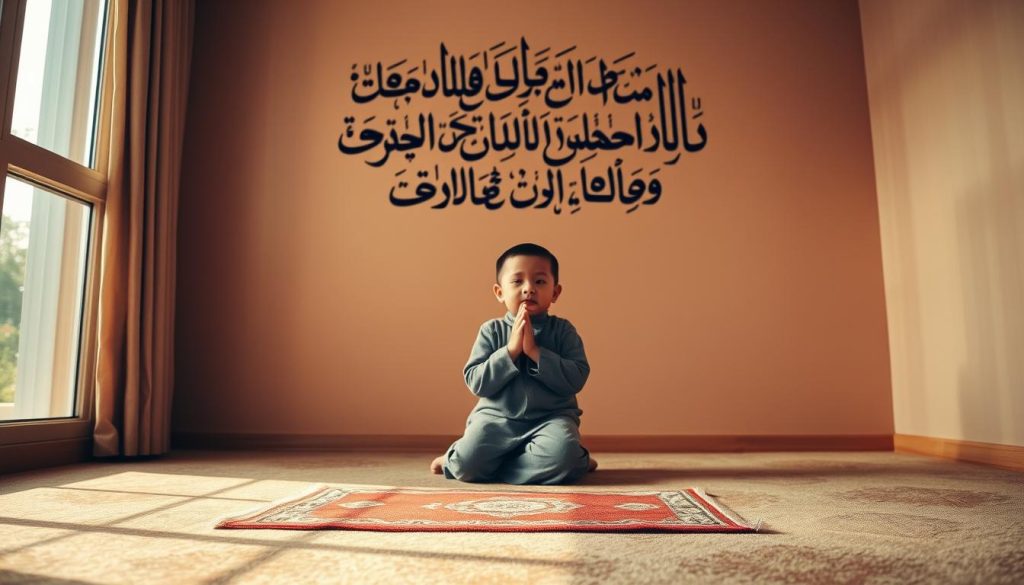
Powerful Duas for Seeking Forgiveness and Guidance
For British Muslims, saying duas for forgiveness and guidance is crucial. These prayers help us connect with Allah’s mercy and wisdom. They offer comfort and direction when we’re unsure.
Adding these duas to our daily routines strengthens our bond with Allah. It helps us grow spiritually and stay strong. Let’s explore some powerful duas that can change our relationship with Allah and deepen our faith.
Forms of Istighfar: Seeking Allah’s Forgiveness
Istighfar, or seeking Allah’s forgiveness, has many forms. The simplest is saying “Astaghfirullah” (I seek forgiveness from Allah). You can tell this anywhere, anytime.
For a deeper cleanse, many use: “Astaghfirullaha Rabbi min kulli dhanbin wa atubu ilaih” (I seek forgiveness from Allah, my Lord, for all my sins and turn to Him in repentance).
The Prophet Muhammad (PBUH) taught that istighfar purifies the heart. Many families in the UK say these prayers before bed. It helps them reflect and renew their spirits before sleep.
Duas for Guidance in Decision-Making
When we face big decisions, asking Allah for guidance is wise. The dua of Istikhara is the most detailed. It starts with:
“Allahumma inni astakhiruka bi’ilmika, wa astaqdiruka biqudratika” (O Allah, I seek Your guidance by Your knowledge, and I seek ability by Your power).
This dua shows Allah’s perfect knowledge and asks for His direction. We teach children this prayer for even small decisions. It helps them trust Allah’s wisdom from a young age.
For everyday guidance, the simple prayer “Rabbi yassir wala tu’assir” (My Lord, make it easy and not difficult) is comforting and helpful.
Duas for Spiritual Enlightenment and Knowledge
In Islam, seeking knowledge is very important. Duas like “Rabbi zidni ilma” (My Lord, increase me in knowledge) connect learning with spiritual growth. They remind us that accurate understanding comes from Allah.
Many British Muslim students say this dua before studying or exams. It links their academic efforts with spiritual development, making learning a complete experience.
Another beautiful dua for enlightenment is: “Allahumma inni as’aluka ‘ilman nafi’an, wa rizqan tayyiban, wa ‘amalan mutaqabbalan” (O Allah, I ask You for beneficial knowledge, good provision, and acceptable deeds).
| Purpose | Arabic Dua | English Translation | Recommended Time | Spiritual Benefit |
| Simple Forgiveness | Astaghfirullah | I seek forgiveness from Allah | Anytime, especially after mistakes | Immediate spiritual relief |
| Complete Forgiveness | Astaghfirullaha Rabbi min kulli dhanbin wa atubu ilaih | I seek forgiveness from Allah for all my sins and turn to Him in repentance | Morning and evening adhkar | Deep spiritual cleansing |
| Decision Guidance | Dua of Istikhara | O Allah, I seek Your guidance by Your knowledge… | Before important decisions | Divine direction in choices |
| Knowledge Seeking | Rabbi Zidni Ilma | My Lord, increase me in knowledge | Before studying or learning | Enhanced understanding and wisdom |
Using these powerful duas in our daily lives gives us spiritual guidance. Teaching children these prayers early helps them grow spiritually. It makes seeking forgiveness and guidance a lifelong habit.
Comforting Duas for Times of Difficulty
In tough times, British Muslims find solace in ancient duas. These muslim supplications are more than words; they connect us to Allah when we need it most. They are spiritual anchors, helping us stay strong and faithful during hard times.
Islamic tradition offers guidance for every challenge we face. Whether it’s emotional pain, health issues, or money troubles, there’s a dua for it. These prayers remind us that Allah’s mercy can overcome any problem, and seeking His help is our strength.
Dua of Prophet Yunus for Relief from Distress
Prophet Yunus’s prayer is a powerful tool for those in distress. He recited it while in the whale’s belly. “Lā ilāha illā anta, subḥānaka, innī kuntu minaz-zālimīn” (There is no deity except You; exalted are You. I have been among the wrongdoers) holds deep spiritual significance.
This dua teaches us to turn to Allah in our darkest moments. The Quran tells us that Allah answered Prophet Yunus’s prayer, showing us hope and divine help in impossible times.
Duas for Anxiety and Worry
Anxiety and worry are common challenges for British Muslims. The dua “Allāhumma innī a’ūdhu bika minal-hammi wal-ḥazan” (O Allah, I seek refuge in You from anxiety and sorrow) helps manage these feelings.
Combining this dua with deep breathing can calm nerves before significant events. Regularly saying it brings peace and reminds us that Allah is our source of calm.
Duas for Physical and Mental Healing
When health issues arise, Muslims seek dua for recovery. The prayer “Allāhumma rabban-nās, adhhibil-ba’s, washfi antash-shāfī, lā shifā’a illā shifā’uka, shifā’an lā yughādiru saqama” addresses both body and mind.
This dua, meaning “O Allah, Lord of mankind, remove the affliction and bring about healing, for You are the Healer, and there is no healing except Your healing—a healing that leaves no illness behind,” encourages medical care and divine intervention. It shows the Islamic way of balancing faith with action for complete healing.
Duas for Financial Difficulties and Debt
Many British Muslims face financial worries, more so in hard times. The dua “Allāhumma innī a’ūdhu bika minal-faqri wal-qillati wadh-dhillah” (O Allah, I seek refuge in You from poverty, scarcity, and humiliation) offers spiritual guidance.
For those with debt, “Allāhumma ikfinī bi ḥalālika ‘an ḥarāmika wa aghninī bi faḍlika ‘amman siwāk” (O Allah, suffice me with what You have allowed instead of what You have forbidden, and make me independent of all others beside You) is a powerful prayer. It teaches trust in Allah’s provision while promoting wise financial management.
Using these duas daily brings comfort and builds resilience. They remind us that we’re never alone in our struggles—Allah’s mercy and guidance are always with us.
Practical Techniques for Memorising Short Surahs and Duas
Memorising Allah’s words is easier with the proper methods. It’s not just about learning by heart. It’s about connecting deeply with the words. Many British Muslims have found ways to make these spiritual treasures a part of their lives.
Effective Memorisation Methods
Knowing how you learn best is key. Visual learners do well with colourful Arabic text and transliteration. Those who learn by doing might like tracing letters or using gestures for verses.
Starting with simple phrases and gradually adding more words works well. Families often use the “three times” method. This means repeating new material three times before each prayer, making 15 daily repetitions.
Listening to qualified reciters helps with pronunciation and tajweed. This is crucial for those who don’t speak Arabic. It ensures you learn the correct way to recite from the start.
Creating a Structured Learning Schedule
Being consistent is essential. Set aside 10-15 minutes each day for Quran practice. Many find the time after Fajr prayer best, while others prefer after Maghrib.
Break your goals into weekly targets. Aim to learn one new short surah or dua each week. This will allow for revision and solidify your learning.
| Time of Day | Activity | Duration | Benefits |
| After Fajr | New memorisation | 10 minutes | Fresh mind, quiet environment |
| During commute | Listening to recitation | 15-30 minutes | Utilises idle time |
| After Asr | Revision of previous material | 5-10 minutes | Reinforces morning learning |
| After Maghrib | Family recitation practice | 10-15 minutes | Builds community, accountability |
Recommended Apps and Resources for British Muslims
There are great digital tools for British Muslims. Apps like Quran for Kids and Muslim Kids TV offer fun learning. They have British English interfaces, making them great for young learners and new Muslims.
The Learn Quran Kids YouTube channel helps with pronunciation. It features British reciters who teach proper tajweed in familiar accents. This allows learners to connect with their British and Muslim sides while mastering recitation.
Local mosques offer weekend Quran circles. These are great for learning surahs together. The Noor Kids subscription box also provides activities and resources for families committed to learning.
“The one who recites the Quran and masters it is with the noble, righteous scribes, and the one who recites the Quran and struggles with it, and finds it difficult, will have a double reward.”
– Sahih Bukhari
Integrating Short Surahs and Duas into Modern British Muslim Life
Adding short surahs and duas to our lives in the UK needs careful thought. We face challenges like busy work and school schedules. Yet, these prayers keep us connected to our faith all day.
By being creative, we can make daily recitations a source of strength. It’s not just an extra task but a way to find peace.
Finding Time for Recitation in Busy Schedules
It’s not about finding big chunks of time. Instead, you can find moments in your day. Many families recite Al-Fatiha in the morning or listen to the Quran during breakfast.
Using “trigger point” recitations is helpful. Connect duas to daily activities like driving or hearing the adhan. This turns everyday moments into chances to remember Allah without taking up more time.
| Daily Activity | Recommended Recitation | Approximate Time | Benefit |
| Morning commute | Morning adhkar | 5-10 minutes | Protection throughout the day |
| Lunch break | Ayatul Kursi | 1-2 minutes | Midday spiritual renewal |
| Before meetings | Short dua for guidance | 30 seconds | Clarity and confidence |
| Evening family time | The Mu’awwidhat | 3-5 minutes | Family protection and bonding |
| Bedtime routine | Evening adhkar | 5-10 minutes | Peaceful sleep and spiritual closure |
Teaching Children the Beauty of Islamic Supplications
Teaching children about adkaar is more than just memorising. Share the meanings and contexts of duas in a way they can understand. This helps them see the value and importance of these prayers.
Many families make special moments around these teachings. They might light a lamp during evening adhkar or use prayer beads that children enjoy. These experiences make the dua collection more engaging for kids.
Telling stories about the Prophet’s life and how he used these supplications helps children connect emotionally. When they see these prayers as a way to connect with Allah and their heritage, recitation becomes meaningful. It’s not just something they do; it’s a part of who they are.
Conclusion: Embracing the Transformative Journey with Short Surahs and Duas
The beauty of Islamic prayers is their timeless wisdom and spiritual protection. By adding short Surahs and Duas to our daily lives, we strengthen our bond with Allah, which grows stronger as we journey through life.
For British Muslims, these brief prayers offer peace and spiritual nourishment in busy lives. They turn everyday tasks into sacred moments, bringing blessings into our homes, workplaces, and hearts.
Learning from these prayers shapes our worldview and guides our choices. They also offer comfort when we face challenges. Teaching these words to children helps them grow spiritually strong and find their identity.
By embracing these divine words, we connect with many Muslims who found strength in them. This journey is not just about memorising verses. It’s about living the wisdom they hold.
You can start today by adding one new Dua or Surah to your routine. Small, consistent steps can lead to profound spiritual change. This change brings you closer to Allah and the peace of remembering Him.
FAQ
What are the most essential short surahs every Muslim should learn first?
Start with Surah Al-Fatiha, recited in every prayer. Then, learn Surah Al-Ikhlas, as the Prophet Muhammad (peace be upon him) said it’s one-third of the Quran. Also, teach the protective pair Surah Al-Falaq and Surah An-Nas. Lastly, Surah Al-Asr teaches us about time and success.
How can I help my child memorise short surahs and duas effectively?
Use the “repeat after me” method with short phrases. Visual aids with colourful Arabic text and transliteration help. Listen and repeat with audio recordings for correct pronunciation. Recite new material three times before each prayer.
Make a daily “Quran time” of 10-15 minutes. Use visual progress charts to track and motivate your child.
What are the spiritual benefits of teaching children short surahs and duas?
Teaching children these recitations connects them to Allah’s reward system. It builds good deeds and a personal relationship with Allah. This connection gives strength and comfort, helping children face challenges.
Which duas are recommended for protection in the morning and evening?
For morning, teach “Asbahna wa asbahal mulku lillah” and “Bismillahilladhi la yadurru ma’asmihi shay’un fil-ardi wa la fis-sama'” three times. For evening, use “Amsayna wa amsal mulku lillah” and Ayatul Kursi. Also, recite the protective surahs (Al-Ikhlas, Al-Falaq, and An-Nas) before sleep.
What duas can help children cope with anxiety and worry?
Teach “Allahumma inni a’udhu bika minal-hammi wal-hazan” for anxiety and worry. Deep breathing with this dua can calm children. The dua of Prophet Yunus—”La ilaha illa anta, subhanaka, inni kuntu minaz-zalimeen”—also helps.
How can busy British Muslim families integrate Quranic recitation into their daily routines?
Mix recitation into daily life, not as a separate activity. Recite Al-Fatiha during the school run or listen to Quran at breakfast. Discuss new duas during dinner. Use “trigger points” like entering the car or hearing the adhan for recitation.
Consistency is more important than the amount of time. Even five minutes a day is better than longer sessions now and then.
What are some recommended apps and resources for British Muslims teaching children the Quran?
“Quran for Kids” and “Muslim Kids TV” apps are great for learning. They have British English interfaces. Weekend Quran circles at mosques are also good.
“Noor Kids” sends a monthly box with Islamic activities. “Learn Quran Kids” YouTube channel helps with pronunciation using British reciters.
What duas should children learn for everyday activities?
Teach “Bismillah” at meal starts and “Alhamdulillahi alladhi at’amana wa saqana wa ja’alana minal muslimeen” at meal ends. For leaving, use “Bismillahi, tawakkaltu ‘alallaahi, wa laa hawla wa laa quwwata illaa billaah.” For travel, teach “Subhan-alladhi sakhkhara lana hadha wa ma kunna lahu muqrineen.” When dressing, say “Alhamdulillahilladhi kasani hadha wa razaqanihi min ghayri hawlin minni wala quwwah.”
How do short surahs and duas benefit a child’s psychological well-being?
Regular Quran recitation reduces anxiety and improves focus in children. Arabic recitation calms the nervous system. It instils positive values and resilience.
Parents see children who recite these prayers as more emotionally stable and mindful. They feel secure through their connection with Allah.
What is the historical significance of teaching children short surahs?
Short surahs and duas have been taught to children for generations. The Prophet Muhammad (peace be upon him) taught seven short surahs to children early on. These texts introduce Islamic principles and connect children to centuries of tradition.